泰国 · Fire Bar 'Danio'
概要
| 字段 | 值 |
|---|---|
| 类别 | 鱼 |
| 学名 | 'Inlecypris' maetaengensis |
| 别名 | 泰國、Devario maetaengensis |
| 分类 | 鲤形目 Cypriniformes › 鲤科 Cyprinidae › 'Inlecypris' |
| 水体 | 淡水 |
| 原产地 | 泰国 |
| 成体体长 | 5 cm |
| 饲养难度 | 中等 |
| 最小水体 | 68 L |
| 最小缸长 | 75 cm |
| 群居方式 | 群游 |
| 性情 | 温和 |
| 特征 | 会跳缸: 是 |
| 外部数据 | seriouslyfish inlecypris-maetaengensis;fishbase 27513 |
水质参数
| 参数 | 耐受范围 | 最适范围 | 单位 |
|---|---|---|---|
| 水温 | 20–26 | — | °C |
| pH | 6–8 | — | — |
| 总硬度 | 2–15 | — | dGH |
概述
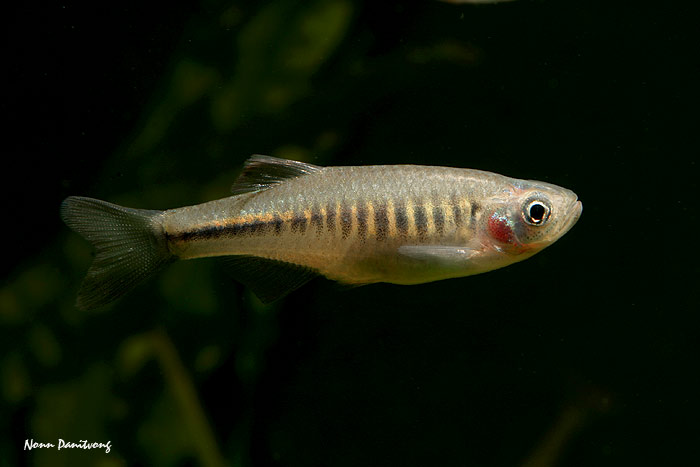
泰国('Inlecypris' maetaengensis)是泰国北部的小型溪流鱼,体侧竖纹逐步变深再变浅,中央纵向暗纹由相邻斑块连成。它与若干近缘种相似,学名属名上的引号表示分类位置尚有疑问。
分布与栖息地
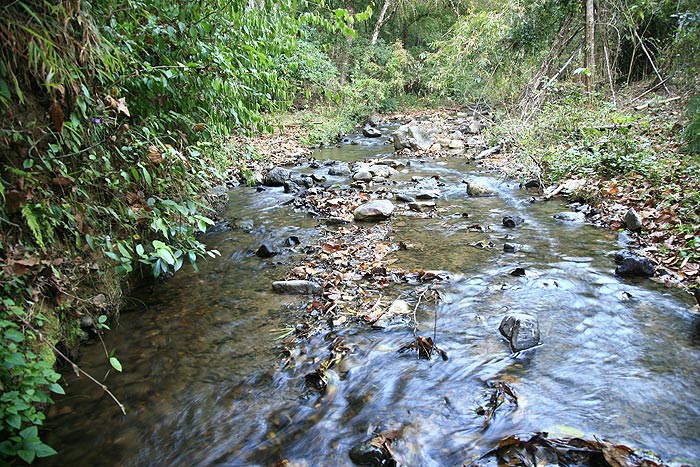
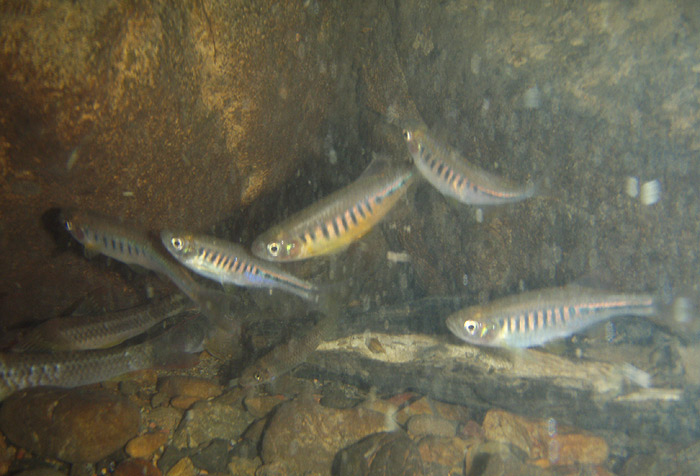
为泰国北部特有种,已知仅见于湄南河上游的滨河支流水系,模式产地为清迈以北的湄登河。生活在清澈小溪,水流中等至较快,底部有沙、砾石和岩石,采集生境没有水生植物。
饲养环境
可用沙、细砾、圆石和沉木模拟溪流,附生的铁皇冠、黑木蕨或水榕可用于造景。预计不耐有机污染积累,宜保持成熟而清洁的系统、高溶氧及适度水流,无需极强冲水。每周换水三成至一半作为常规维护,盖板必须严密以防跳缸。
食性与喂食
野外很可能主要吃昆虫及幼虫。人工饲养一般接受多种食物,可用优质小粒干粮作基础,定期搭配红虫、水蚤、丰年虾等活饵与冷冻饵料。
习性与混养
性情温和,建议至少八至十条成群,使鱼更放松,群内等级互动也能分散追逐,雄鱼面对同类时发色更好。缸友应在体型、活动方式和环境要求上相配。
雌雄区分
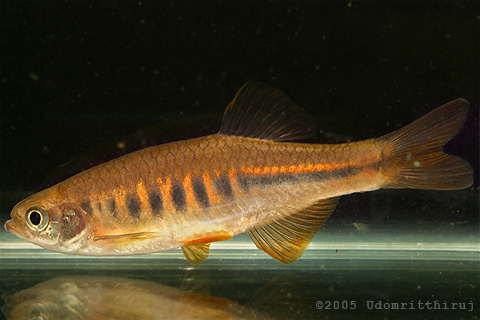
成熟雌鱼一般更高、更大而颜色较淡;繁殖雄鱼颜色会明显加强。
繁殖
可参考散卵、不护卵的繁殖方式安排育苗。另设弱光缸,使用成熟水,以隔卵网、玻璃珠、细叶草或产卵拖把保护卵,辅以温和充氧。水微酸至中性、温度在适宜范围上段,放入一至两对充分调养的亲鱼。
若状态合适,通常一天内产卵,雌鱼随后会明显消瘦。不论是否看见产卵,两天后都应移走亲鱼。卵一般一至一天半孵化,数日后平游,早期喂草履虫,再逐渐转用丰年虾无节幼体、微虫和细粉粮。
补充说明
完整侧线、吻须和上颌须,以及由相邻斑点连成的体侧中线,可帮助与近似鱼区分。旧属名不应直接当成另一物种。
图片
图片来自 SeriouslyFish,版权归各摄影者所有。
English
Overview
'Inlecypris' maetaengensis is a small northern Thai stream fish with changing-depth flank bars and a central line built from adjoining blotches. Similar relatives can be confused with it. Quotation marks around the generic name signal uncertainty in placement rather than a separate ornamental strain.
Distribution & habitat
It is known only from parts of the Ping tributary system in the upper Chao Phraya basin of northern Thailand. The type site lies in the Mae Taeng River north of Chiang Mai. Clear small streams over sand, gravel, and rock, with moderate to swift current and no aquatic plants, characterize collection habitat.
Aquarium setup
Use worn rocks, sand, gravel, and wood for a stream-style enclosure. Hardy attached plants can be included even though field sites lack vegetation. Sensitivity to organic accumulation is considered probable, so maintain clean mature filtration, high oxygen, and moderate circulation. Extreme flow is unnecessary. Weekly changes of about one-third to one-half are advised, together with a very secure lid.
Diet & feeding
Insects and larvae are considered very likely natural prey. Captive fish generally accept prepared foods readily. Supplement a quality small dry staple with regular live or frozen additions.
Behaviour & compatibility
Maintain eight to ten or more peaceful individuals together. A proper group encourages confidence, male coloration, and internal hierarchical interactions. Select companions with compatible size, activity, and environmental requirements.
Sexual dimorphism
Females usually become deeper-bodied and slightly larger, with less vivid coloration. Reproductively active males brighten considerably.
Breeding
An egg-scattering approach without parental care provides the suggested breeding framework. Prepare a dim tank containing mature water, gentle aeration, and fine plants, mops, mesh, or marbles to shelter eggs. Use slightly acidic to neutral water near the warmer end of the usual range.
Introduce one or two conditioned pairs. Ready fish may spawn within a day, after which the female looks slimmer. Remove adults after two days even if spawning was missed. Hatching typically takes one to one and a half days, with swimming several days later. Infusoria precede nauplii, microworms, and fine prepared foods.
Notes
A complete lateral line, both rostral and upper-jaw barbels, and the linked central blotches help distinguish similar fishes. Historical generic names do not necessarily represent separate species.
来源
- https://www.seriouslyfish.com/species/inlecypris-maetaengensis(抓取于 2026-10-10)
inlecypris-maetaengensis · 文件: data/species/inlecypris-maetaengensis.md · 状态: 草稿