Hypsibarbus malcolmi · Goldfin Tinfoil Barb
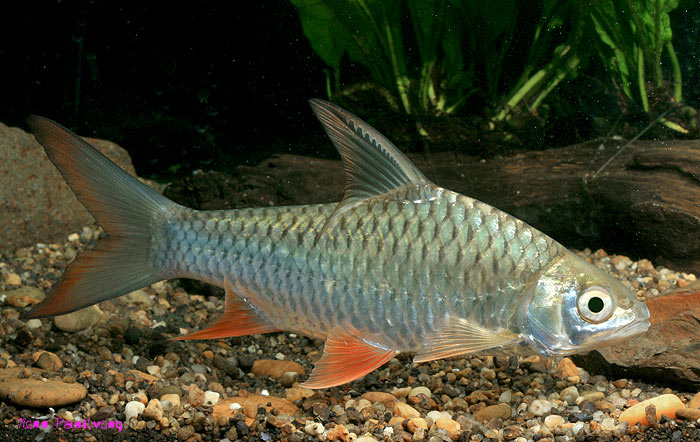
概要
| 字段 | 值 |
|---|---|
| 类别 | 鱼 |
| 学名 | Hypsibarbus malcolmi |
| 别名 | Acrossocheilus malcolmi |
| 分类 | 鲤形目 Cypriniformes › 鲤科 Cyprinidae › Hypsibarbus |
| 水体 | 淡水 |
| 原产地 | 柬埔寨、老挝、马来西亚、泰国 |
| 成体体长 | 50 cm |
| 饲养难度 | 中等 |
| 群居方式 | 群游 |
| 外部数据 | seriouslyfish hypsibarbus-malcolmi;fishbase 27525 |
| 性情 | 温和 |
水质参数
| 参数 | 耐受范围 | 最适范围 | 单位 |
|---|---|---|---|
| 水温 | 20–26 | — | °C |
| pH | 6–8 | — | — |
| 总硬度 | 2–15 | — | dGH |
概述
Hypsibarbus malcolmi 是体形很大的河流鲤科鱼,只适合公共水族馆或极大型私人设施。其持续活动、群体需求和猛烈摄食,会使普通混养缸很快失去适宜空间,即使它本身不具攻击性也不例外。
分布与栖息地
见于老挝、泰国和柬埔寨的湄公河水系,泰国湄南河、湄功河,以及马来半岛的一些小流域。
湄公河种群有季节迁徙:旱季活动于较大河道,湿季进入小支流和淹水森林。似乎更喜欢有岩石的流水环境,不能据此推定适合水库等人工静水环境。
饲养环境
需要能长期容纳成年群体的巨型设施,开阔游动区和水质比复杂造景更重要。若条件充足,可用石砾、磨圆巨石和沉木搭建河流景观。
保持洁净、高溶氧,避免有机废物积累;它可能不耐受这类污染,不能把大容积本身当作无需有效维护的理由。
食性与喂食
野外食物记录包括有机碎屑和较大的水生无脊椎动物,取食似乎较灵活。
同属在缸内通常易于接受食物,可提供活或冷冻红虫、水蚤、丰年虾,搭配优质薄片、颗粒以及充足植物性食物,而不是只用一种食物长期维持。
习性与混养
不具明显攻击性,但可能吃小鱼,持续游动和抢食会干扰慢游或胆小的伙伴。相处是否合适,不能只看会不会主动追咬。
同属属群游鱼,通常建议六条或更多同养,这会进一步提高设施要求,不能让群体数量超过成年空间承载能力。
雌雄区分
成熟雌鱼可能体高更大、体形也更大,尚不宜仅凭这些倾向判断幼鱼雌雄。
补充说明
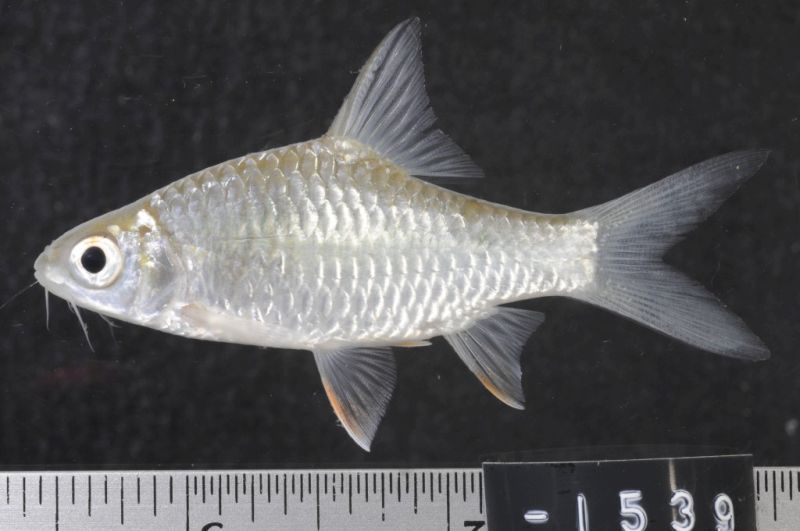
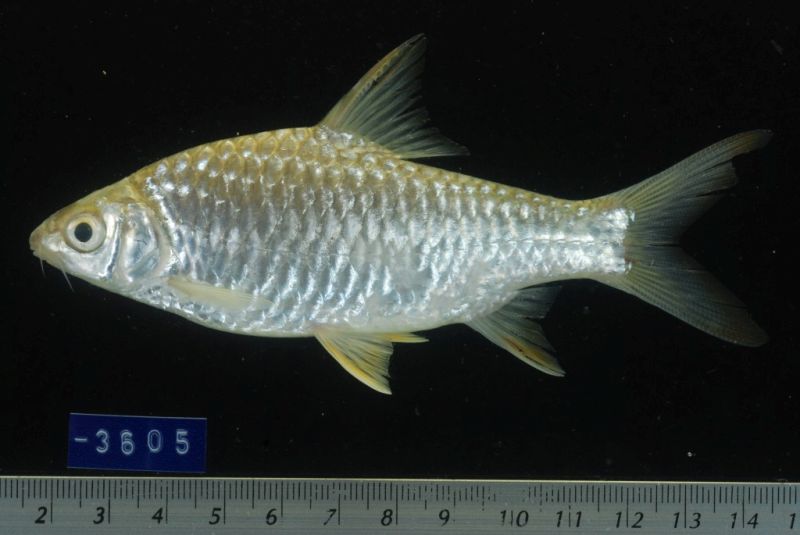
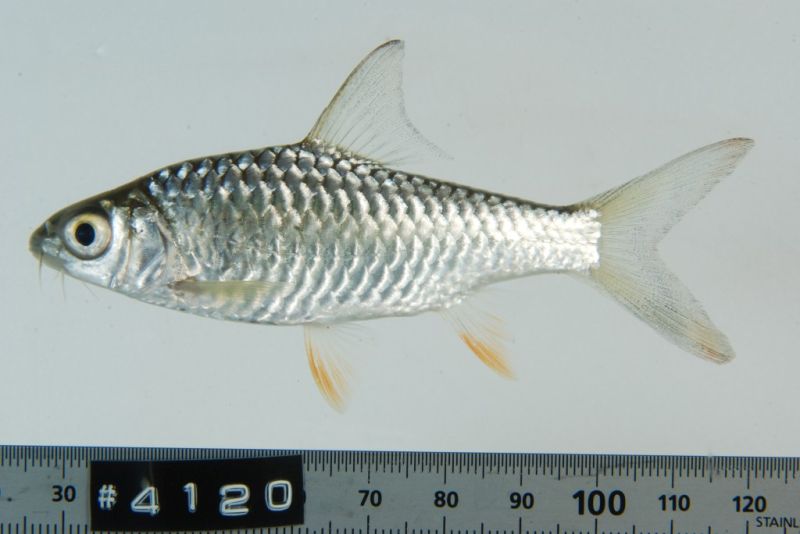
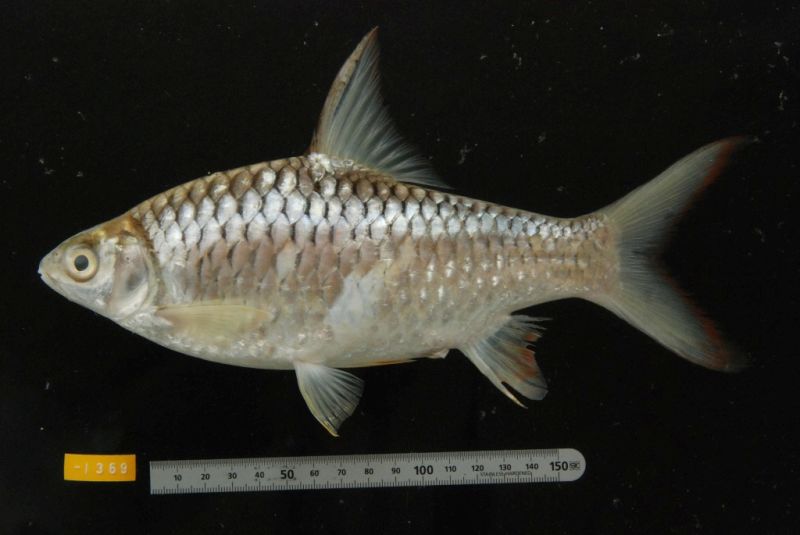
背鳍中部较暗,侧线管有部分分枝,鳞片及鳃耙计数共同用于与近似种区分。英文商品名中的“金鳍”不能替代学名核对,也不能说明鱼会保持幼年尺寸。
图片
图片来自 SeriouslyFish,版权归各摄影者所有。
English
Overview
Hypsibarbus malcolmi is a very large river cyprinid appropriate only for public displays or exceptionally spacious private facilities. Continuous swimming, social needs, and energetic feeding overwhelm ordinary community arrangements even though the fish is not aggressive.
Distribution & habitat
It occurs in the Mekong systems of Laos, Thailand, and Cambodia, Thailand's Chao Phraya and Mae Klong drainages, and some smaller Peninsular Malaysian watersheds.
Mekong fish move seasonally between major channels in the dry period and smaller tributaries or flooded forest during wetter months. Rocky flowing habitats appear preferred. Suitability for reservoirs and other artificial still waters should not be assumed.
Aquarium setup
Facilities must accommodate the adult group over the long term. Open swimming room and water quality outweigh elaborate decoration. Where adequate space exists, gravel, rounded boulders, and branches can create a river-style display.
Keep water clean and oxygen-rich, preventing organic waste accumulation. Sensitivity to this pollution is considered likely; a large volume alone does not remove the need for effective maintenance.
Diet & feeding
Wild records include organic detritus and larger aquatic invertebrates, suggesting flexible foraging.
Members of the genus generally accept aquarium food readily. Live or frozen bloodworms, Daphnia, and brine shrimp can accompany quality flakes or granules and abundant plant material, rather than relying indefinitely on a single item.
Behaviour & compatibility
It is not aggressive, but may swallow small fishes. Constant movement and vigorous feeding can disturb slow or timid companions, so the absence of deliberate attacks is only one part of compatibility.
Schooling behavior is characteristic of the genus, and six or more individuals are generally recommended. This increases, rather than relaxes, the scale of adult accommodation required.
Sexual dimorphism
Mature females may have deeper bodies and attain larger sizes. These tendencies should not be used as a certain way to sex juveniles.
Notes
A dark middle portion of the dorsal fin, some branching in the lateral-line canals, and scale and gill-raker counts help distinguish the species. A goldfin trade label does not substitute for checking identity or planning around adult size.
来源
- https://www.seriouslyfish.com/species/hypsibarbus-malcolmi(抓取于 2026-10-10)
hypsibarbus-malcolmi · 文件: data/species/hypsibarbus-malcolmi.md · 状态: 草稿