萨尔温海蜥鱼
概要
| 字段 | 值 |
|---|---|
| 类别 | 鱼 |
| 学名 | Hampala salweenensis |
| 别名 | 薩爾溫海蜥魚 |
| 分类 | 鲤形目 Cypriniformes › 鲤科 Cyprinidae › Hampala |
| 水体 | 淡水 |
| 原产地 | 缅甸、泰国 |
| 成体体长 | 20.1 cm |
| 饲养难度 | 中等 |
| 最小水体 | 864 L |
| 最小缸长 | 240 cm |
| 群居方式 | 群游 |
| 水流偏好 | 高 |
| 特征 | 会跳缸: 是;吃小鱼: 是 |
| 外部数据 | seriouslyfish hampala-salweenensis;fishbase 47857 |
| 食性 | 肉食 |
水质参数
| 参数 | 耐受范围 | 最适范围 | 单位 |
|---|---|---|---|
| 水温 | 20–26 | — | °C |
| pH | 6–8 | — | — |
| 总硬度 | 2–20 | — | dGH |
概述
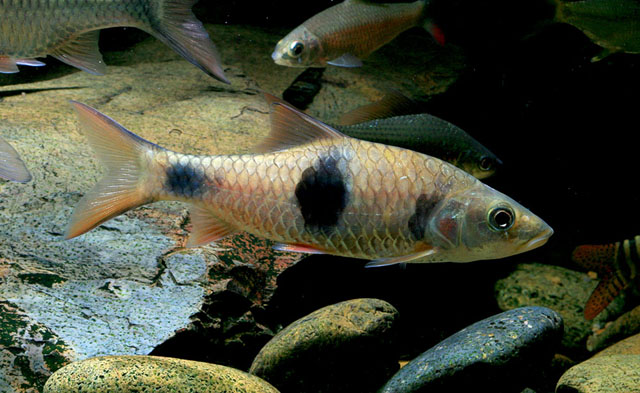
萨尔温海蜥鱼(Hampala salweenensis)虽然现有中文名含“海”,却是萨尔温江流域的淡水鲤科鱼。体侧两块较圆的暗斑,以及尾鳍两叶的黑色边缘,有助于辨认。它在观赏鱼市场并不常见。
分布与栖息地
为萨尔温江流域特有种,已知记录涉及泰国西北部拜河支流和缅甸掸邦的南邦河等,完整分布范围仍不清楚。偏好清澈、富氧的河流,底质可为沙、砾石、岩石或泥,也能在高低海拔的静水与流水中出现。
饲养环境
需要宽敞的大缸和开阔游动区域。可用圆石、砾石及少量沉木布置,但水质与空间优先。过滤和造流应保证清洁水与充分溶氧,避免有机废物积累。它会受惊跳跃,缸盖必须结实并严密贴合。
食性与喂食
属于捕食性鱼,野外可能吃小鱼、昆虫和淡水甲壳动物。幼鱼可用红虫、小蚯蚓、碎虾,成鱼可接受整虾、贻贝及更大的动物性饵料,干粮不应独占食谱。容易贪食,要控制分量,不宜大量喂牛心、鸡肉,也不必依赖可能带病的活饵鱼。
习性与混养
对吞不下的鱼通常较温和,但会吞食合口的鱼,并可能在抢食时压制迟缓或胆小的缸友。可选择体型相当的健壮鱼。至少五条成群较合适;只养两三条时弱势鱼可能受到过度追逐,独养则容易紧张。
雌雄区分
性成熟雌鱼可能比雄鱼更厚实。
补充说明
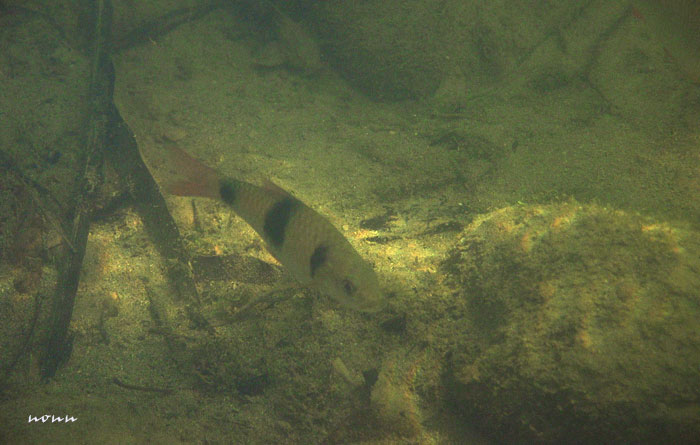
两块暗斑分别位于背鳍起点下方和尾柄。大个体暗纹可能减淡,不能只凭斑块的深浅判断身份。
图片
图片来自 SeriouslyFish,版权归各摄影者所有。
English
Overview
Hampala salweenensis is a freshwater cyprinid from the Salween basin, seldom encountered in ornamental trade. Two rounded flank blotches and black edges on both tail lobes provide useful recognition clues.
Distribution & habitat
Known records lie in northwestern Thailand and Myanmar, including tributaries of the Pai and the more northerly Nam Pang. The full extent of its Salween distribution remains unclear. It favors clear oxygenated rivers over varied substrates, while also tolerating upland or lowland waters with differing flow.
Aquarium setup
Provide a large enclosure with extensive clear swimming room. Stones, gravel, and limited wood can suggest a river setting, but water quality and usable space take priority. Established filtration and circulation must maintain cleanliness and oxygen supply. Use a robust close-fitting cover to contain startled leaps.
Diet & feeding
This is a predatory fish; smaller fish, insects, and freshwater crustaceans are considered likely natural prey. Juveniles can take bloodworms, small worms, and chopped shrimp. Larger individuals accept whole shrimp, mussels, and other appropriately sized animal foods. Dry preparations should remain part of a varied diet.
Avoid overfeeding, heavy use of mammalian or poultry meat, and dependence on live feeder fish carrying disease risks.
Behaviour & compatibility
Fish too large to swallow are generally treated peacefully, but smaller ones remain prey. Rapid movement and feeding enthusiasm can overwhelm timid companions. Choose robust fish of comparable size. A group of five or more distributes hierarchical attention; pairs or trios may expose subordinates to excessive pressure, whereas single fish may remain nervous.
Sexual dimorphism
Mature females may become fuller-bodied than males.
Notes
The forward blotch lies below the dorsal-fin origin and the second crosses the caudal peduncle. Markings can fade with increasing size, so their intensity alone is not a reliable identification test.
来源
- https://www.seriouslyfish.com/species/hampala-salweenensis(抓取于 2026-10-10)
hampala-salweenensis · 文件: data/species/hampala-salweenensis.md · 状态: 草稿