大鳞裂峡魮 · Hampala Barb
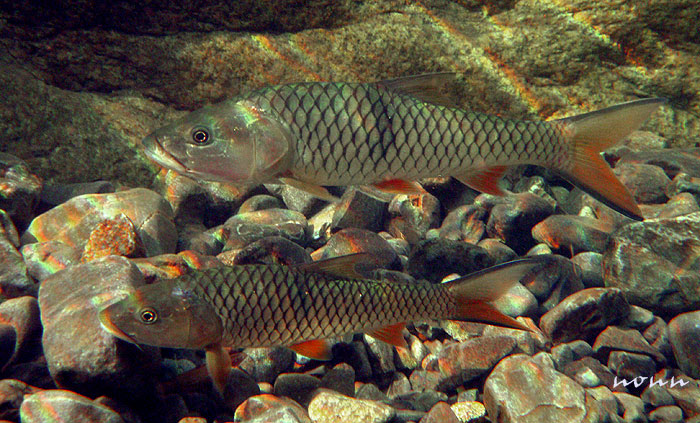
概要
| 字段 | 值 |
|---|---|
| 类别 | 鱼 |
| 学名 | Hampala macrolepidota |
| 别名 | 大鱗裂峽魮、Barbus hampal、Heteroleuciscus jullieni、Barbus hampal var. bifasciata |
| 分类 | 鲤形目 Cypriniformes › 鲤科 Cyprinidae › Hampala |
| 水体 | 淡水 |
| 原产地 | 文莱、柬埔寨、中国、印度尼西亚、老挝、马来西亚、缅甸、泰国、越南 |
| 成体体长 | 70 cm |
| 饲养难度 | 中等 |
| 群居方式 | 群游 |
| 水流偏好 | 高 |
| 特征 | 会跳缸: 是;吃小鱼: 是 |
| 外部数据 | seriouslyfish hampala-macrolepidota;fishbase 4803 |
| 食性 | 肉食 |
| 繁殖方式 | 产卵 |
水质参数
| 参数 | 耐受范围 | 最适范围 | 单位 |
|---|---|---|---|
| 水温 | 20–26 | — | °C |
| pH | 5.5–8 | — | — |
| 总硬度 | 2–20 | — | dGH |
概述
大鳞裂峡魮(Hampala macrolepidota)是体型很大、力量强的开放水域捕食鱼,普通家庭鱼缸不适合。它既是食用鱼,也是游钓对象,不能因市场出售幼鱼就认为长期饲养容易。
分布与栖息地
广泛分布于缅甸、泰国及湄公河地区,向南到马来半岛、婆罗洲、苏门答腊和爪哇。部分水体中的分布与人为放养有关。常见于清澈、富氧的河流,也能适应湖库和其他静水环境;较大个体据称常在干流深潭和淹没的树木之间活动,雨季会进入淹水森林。
饲养环境
只能考虑公共展示设施或特别大型的私人水族系统。保留大面积无障碍游动区,圆石、砾石和沉木应让位于活动空间。需要清洁水质、高溶氧及充分循环,不能容忍有机废物长期积累。盖板必须结实、沉重且严密,防止受惊跳出。
食性与喂食
野外主要吃小鱼、昆虫和淡水甲壳动物,胃中的植物材料可能来自猎物肠道。幼鱼可用红虫、小蚯蚓和碎虾,成鱼可喂整虾、贻贝、蚯蚓和适合的食用小鱼。可搭配干粮,但不宜只用干粮,并应控制分量,避免贪食过量。
不应大量投喂牛心、鸡肉等肉类,也无需用活饵鱼诱食;活饵鱼可能把疾病和寄生虫带入系统。
习性与混养
会以吸入方式捕获猎物,对吞不下的鱼通常相对温和。然而成年鱼游速快、抢食强,容易压制慢游或胆小的鱼,缸友必须体型相称且健壮。至少五条群养有助于分散等级冲突;两三条时弱势鱼受压可能更重,独养又容易紧张。
雌雄区分
成熟雌鱼可能比雄鱼身体更厚实。
繁殖
野外会在雨季进入被淹没的森林产卵,尚无明确的水族箱繁殖记录。
补充说明
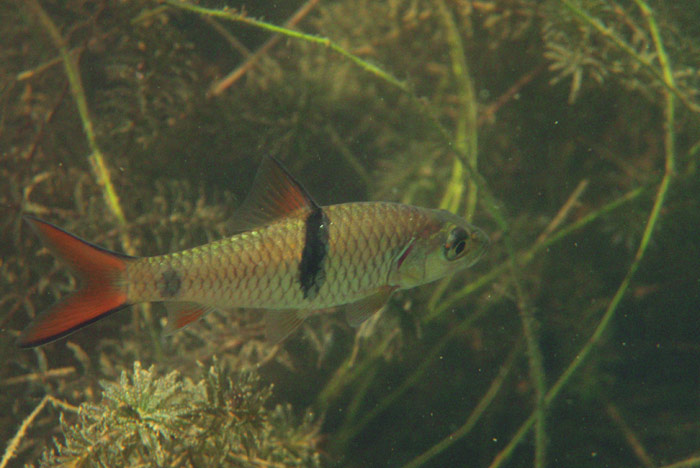
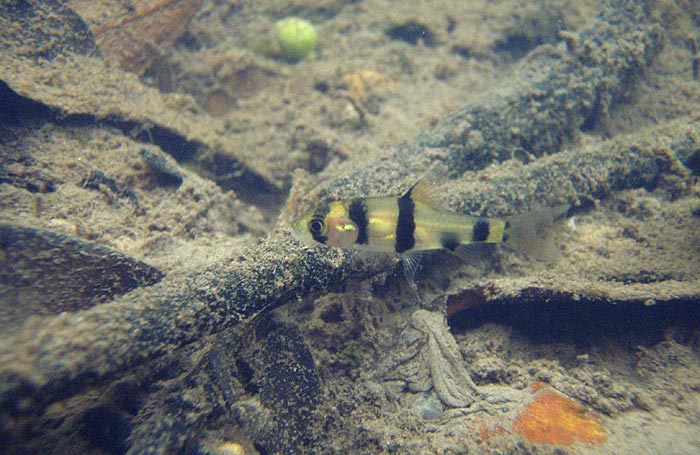
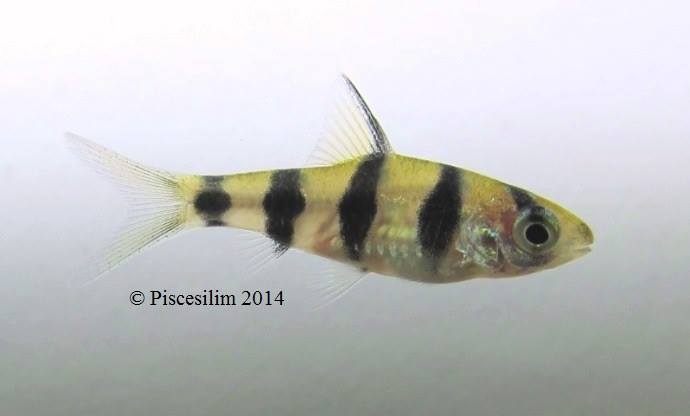
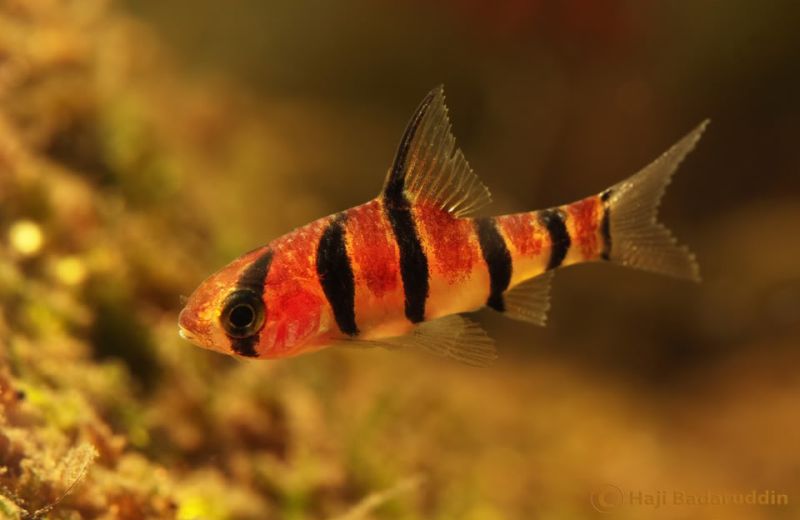
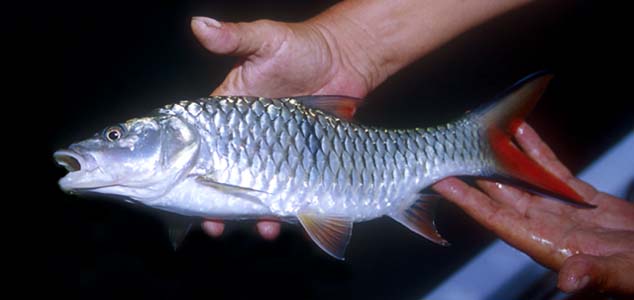
体侧深色竖带从背鳍前方起向下延伸,尾鳍上下叶有黑色边缘条纹。幼鱼与其他同属鱼相似,而大型成鱼的暗纹又会变淡,辨认时需考虑年龄。
图片
图片来自 SeriouslyFish,版权归各摄影者所有。
English
Overview
A powerful open-water predator, Hampala macrolepidota is unsuitable for ordinary domestic aquariums. Its role as a food and sport fish better reflects its eventual scale than the small juveniles sometimes offered in shops.
Distribution & habitat
The broad range extends through Myanmar, Thailand, and the Mekong region, then south to the Malay Peninsula and the major Sunda islands. Stocking has contributed to its occurrence in some waters. Clear, oxygenated rivers are favored, although lakes and reservoirs are also occupied.
Large fish reportedly frequent deep main-channel pools, often around submerged timber. Seasonal floods provide access to forested feeding and spawning areas.
Aquarium setup
Only public exhibits or exceptionally large private installations are appropriate. Preserve expansive clear swimming space, using gravel, boulders, and wood sparingly. Excellent filtration, oxygenation, and circulation are essential because accumulated organic waste is poorly tolerated. A heavy secure cover is necessary for a fish capable of a forceful escape jump.
Diet & feeding
Wild prey includes smaller fish, insects, and freshwater crustaceans. Plant remains may arrive indirectly inside prey. Match food size to growth: bloodworms and chopped shrimp suit youngsters, while adults take larger worms, mussels, whole shrimp, and suitable small food fish. Dried preparations can be included without becoming the entire diet.
Portion control matters with this enthusiastic feeder. Avoid heavy use of mammalian or poultry meat, and do not rely on live feeder fish that can introduce parasites and disease.
Behaviour & compatibility
It sucks prey into the mouth and is otherwise relatively peaceful toward fish it cannot swallow. Size, speed, and feeding dominance still exclude timid or slow companions. Use robust partners of comparable dimensions. Five or more individuals distribute hierarchical pressure better than two or three; solitary fish may behave nervously.
Sexual dimorphism
A mature female is likely to be more heavily built than a male.
Breeding
Wild spawning accompanies rainy-season movement into flooded forest. Confirmed aquarium breeding remains unrecorded.
Notes
The main dark band starts ahead of the dorsal fin, and both tail lobes have black marginal lines. Juvenile similarities and fading markings in very large adults complicate identification.
来源
- https://www.seriouslyfish.com/species/hampala-macrolepidota(抓取于 2026-10-10)
hampala-macrolepidota · 文件: data/species/hampala-macrolepidota.md · 状态: 草稿