异裂峡魮 · Spotted Hampala Barb
概要
| 字段 | 值 |
|---|---|
| 类别 | 鱼 |
| 学名 | Hampala dispar |
| 别名 | 異裂峽魮 |
| 分类 | 鲤形目 Cypriniformes › 鲤科 Cyprinidae › Hampala |
| 水体 | 淡水 |
| 原产地 | 柬埔寨、老挝、泰国 |
| 成体体长 | 35 cm |
| 饲养难度 | 中等 |
| 最小水体 | 864 L |
| 最小缸长 | 240 cm |
| 群居方式 | 群游 |
| 水流偏好 | 高 |
| 特征 | 会跳缸: 是;吃虾: 是;吃小鱼: 是 |
| 外部数据 | seriouslyfish hampala-dispar;fishbase 16178 |
| 食性 | 肉食 |
| 繁殖方式 | 产卵 |
水质参数
| 参数 | 耐受范围 | 最适范围 | 单位 |
|---|---|---|---|
| 水温 | 20–25 | — | °C |
| pH | 6–8 | — | — |
| 总硬度 | 2–20 | — | dGH |
概述
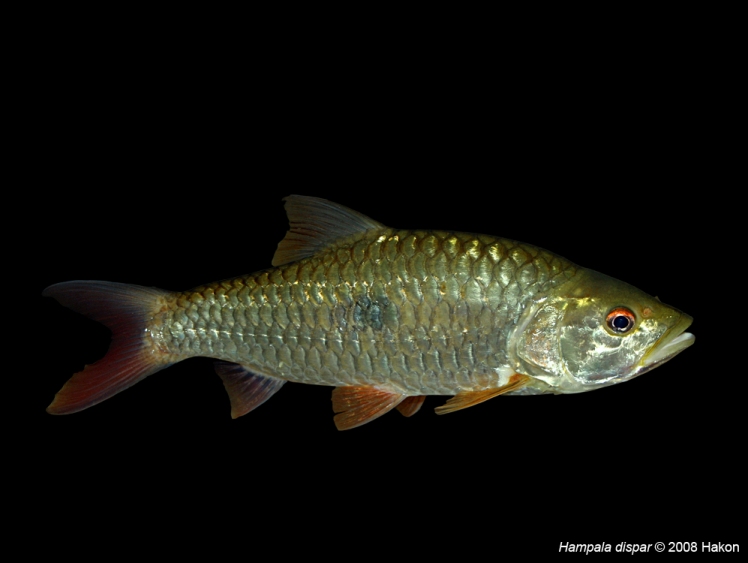
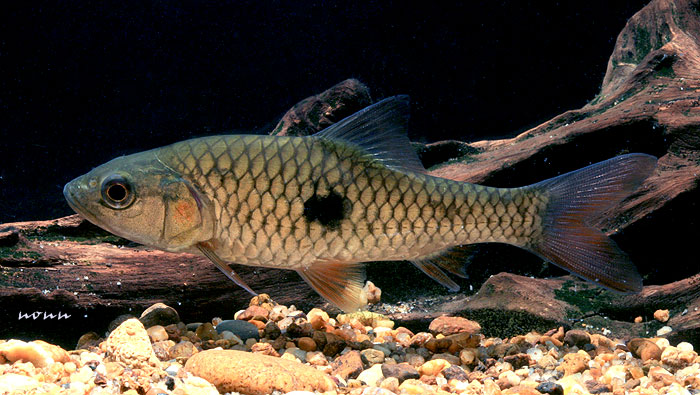
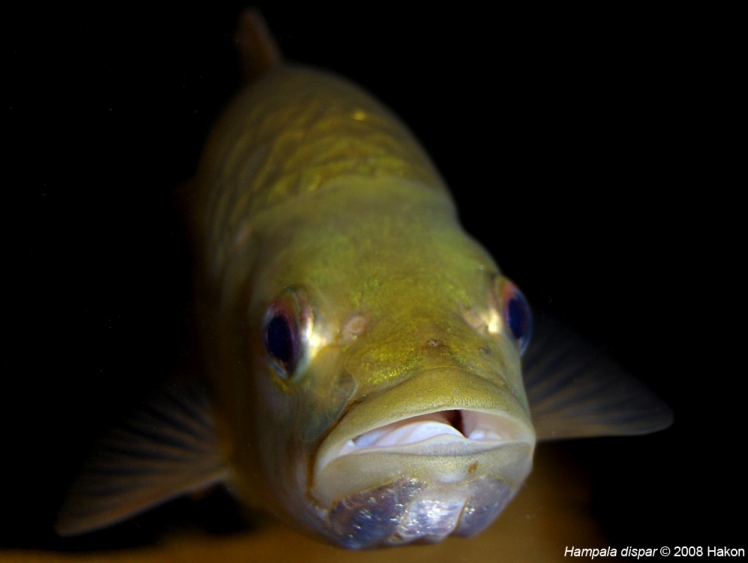
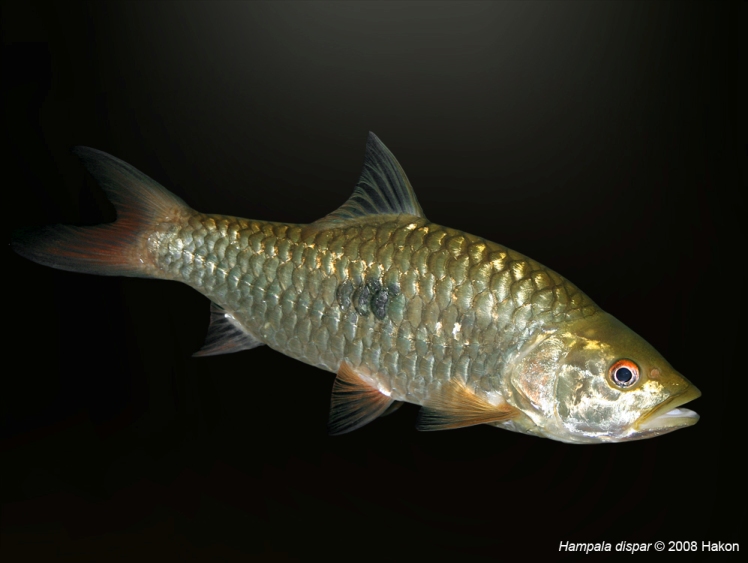
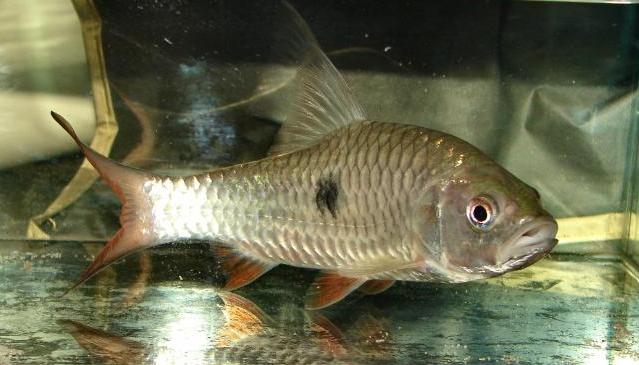
异裂峡魮(Hampala dispar)游动迅速、口大且善捕食,适合有大型系统经验的饲养者。体侧单个暗斑和较不清晰的尾鳍边缘条纹可辅助辨认,幼鱼与近缘种尤其容易混淆。
分布与栖息地
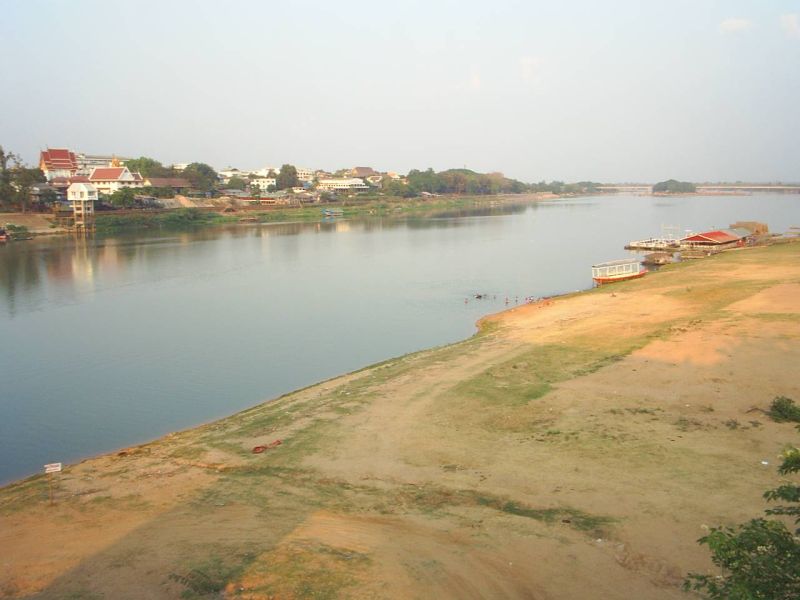
主要分布在老挝北部、泰国与柬埔寨相连的湄公河流域。偏好清澈、富氧的河流,也能出现于高低海拔的流水或静水水域。雨季进入淹没的森林取食和产卵,一些种群如今生活在水库等人工改变的水体中。
饲养环境
需要很大的开阔游动空间,水质的重要性高于造景。可以用砾石、圆石和少量沉木模拟河流,但不能占满游动区域。它不耐有机废物积累,过滤、造流和充氧应足够,水必须持续清洁。受惊时跳跃有力,需沉重且贴合严密的盖板。
食性与喂食
野外胃含物显示主要吃蟹、虾和昆虫,也捕食小鱼。幼鱼可喂红虫、小蚯蚓和碎虾,成鱼可用整虾、贻贝、较大蚯蚓和小型食用鱼等,干粮不宜独占食谱。它容易贪食,投喂应控制分量。
不宜大量使用牛心、鸡肉等哺乳动物或禽类肉。也没有必要依赖活饵鱼,后者会增加寄生虫和疾病输入的风险。
习性与混养
对吞不下的鱼通常相对温和,但速度和抢食能力可能压制胆小、迟缓的缸友。成年后力量更强,应选择体型相近、足够健壮的鱼。至少五条同养较合适;只养两三条时弱势鱼容易持续受追逐,独养则常紧张。
雌雄区分
成熟雌鱼可能比雄鱼更厚实。
繁殖
野外雨季在淹水林地繁殖,水族箱繁殖尚无明确记录,不能把野外迁移规律直接变成缸内催产方法。
图片
图片来自 SeriouslyFish,版权归各摄影者所有。
English
Overview
Hampala dispar combines a large mouth with speed and powerful feeding behavior. It requires a genuinely large installation despite being smaller than some relatives. A solitary flank blotch and relatively indistinct dark tail edges help identification, although young fish can be difficult to distinguish.
Distribution & habitat
Its range lies in the Mekong basin across northern Laos, Thailand, and Cambodia. Clear oxygen-rich rivers are favored, but it also occupies varied upland and lowland waters, including impoundments. Rainy-season flooding allows entry into forest for feeding and reproduction.
Aquarium setup
Prioritize open swimming room and excellent water quality over decorative complexity. Gravel, worn boulders, and a little wood can suggest a river without obstructing movement. Strong filtration, circulation, and oxygenation are needed because organic waste is poorly tolerated. Secure a heavy lid: startled fish can leap forcefully.
Diet & feeding
Wild stomach examinations show mainly crabs, shrimp, and insects, with smaller fish also eaten. Juveniles can take bloodworms, chopped shrimp, and small earthworms. Adults accept larger worms, whole shrimp, mussels, and suitable small food fish. Prepared food should supplement a varied menu rather than replace it entirely.
Control portions because these fish readily gorge. Avoid large amounts of mammalian or poultry meat. Live feeder fish are unnecessary and can introduce pathogens or parasites.
Behaviour & compatibility
Fish beyond swallowing size are usually treated relatively peacefully. Nevertheless, slow or timid species may lose access to food as this predator grows stronger. Choose comparably sized, robust partners. Keep at least five: pairs or trios risk concentrating aggression on subordinates, while a lone individual may remain nervous.
Sexual dimorphism
Mature females are likely to develop a heavier body than males.
Breeding
Natural spawning takes place in flooded forest during the rains. Aquarium reproduction has not been established, so seasonal field behavior should not be presented as a complete captive method.
来源
- https://www.seriouslyfish.com/species/hampala-dispar(抓取于 2026-10-10)
hampala-dispar · 文件: data/species/hampala-dispar.md · 状态: 草稿