Garra spilota
概要
| 字段 | 值 |
|---|---|
| 类别 | 鱼 |
| 学名 | Garra spilota |
| 分类 | 鲤形目 Cypriniformes › 鲤科 Cyprinidae › Garra |
| 水体 | 淡水 |
| 原产地 | 缅甸 |
| 成体体长 | 6.9 cm |
| 饲养难度 | 中等 |
| 最小水体 | 81 L |
| 最小缸长 | 90 cm |
| 群居方式 | 群游 |
| 性情 | 温和 |
| 水流偏好 | 高 |
| 特征 | 会跳缸: 是 |
| 外部数据 | seriouslyfish garra-spilota;fishbase 61924 |
水质参数
| 参数 | 耐受范围 | 最适范围 | 单位 |
|---|---|---|---|
| 水温 | 20–26 | — | °C |
| pH | 6–7.5 | — | — |
| 总硬度 | 2–12 | — | dGH |
概述
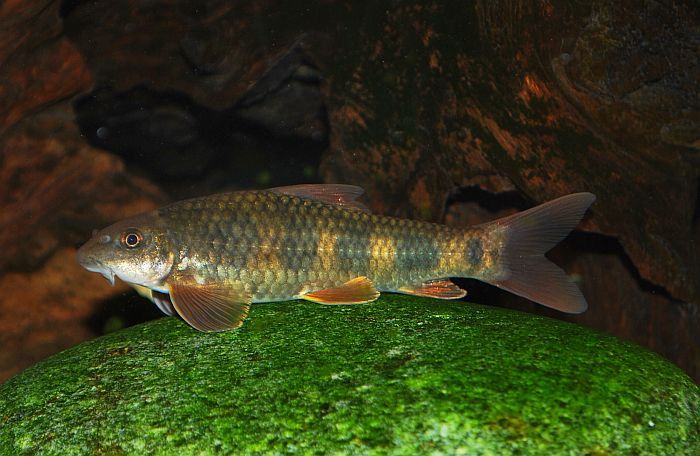
Garra spilota 是带红色鱼鳍和体侧深色斑块的小型墨头鱼,适合水质稳定、富氧的溪流缸。它会刮食表面生物膜,但不能只靠吃藻维生;同种间竞争比部分近亲轻,仍应提供足够空间与至少 3~4 条的同伴。
分布与栖息地
可能仅分布于缅甸西部若开山脉。最初采于山脉东坡、伊洛瓦底江水系内的一条小溪,其他商业采集点尚不明确。
采集点位于竹林丘陵,水清澈无色,以中等速度流过岩石和砾石,溪段浅窄,既有树荫遮蔽处,也有较开阔区域。
饲养环境
可用磨圆岩石、砂、细砾、小型巨石和沉木布置河流景观,耐受水流的附生水草可固定在布景上。重点是洁净、富氧和稳定水质,循环量宜超过每小时缸水体积的十倍,必要时增加造流或气石。
较强照明有助于硬表面形成供刮食的生物膜,缸必须充分成熟后再放鱼。它能攀爬玻璃,缸盖需严密,不能只防止普通跳跃。
食性与喂食
会吃藻,但并非纯植食。可搭配活或冷冻红虫、水蚯蚓、丰年虾、切碎虾肉和优质沉底饲料,其中部分应有较高植物性成分,如螺旋藻。
黄瓜、瓜类、焯过的菠菜或西葫芦可偶尔提供,也可使用混合干粮、贝肉泥、水果和蔬菜的凝胶饵,保持动物性与植物性食物的变化。
习性与混养
较和平,适合经过选择、空间较大的溪流鱼群落。似乎喜欢同种陪伴,至少 3~4 条较合适,同种领地与竞争行为比一些墨头鱼轻,但这不等于完全没有个体间摩擦。
雌雄区分
许多墨头鱼能从头吻珠星区别雌雄,本种这一特征却仅很弱地发育,不适合照搬。成熟雌鱼可能更圆厚,抱卵时尤其如此,仍只是倾向性线索。
补充说明
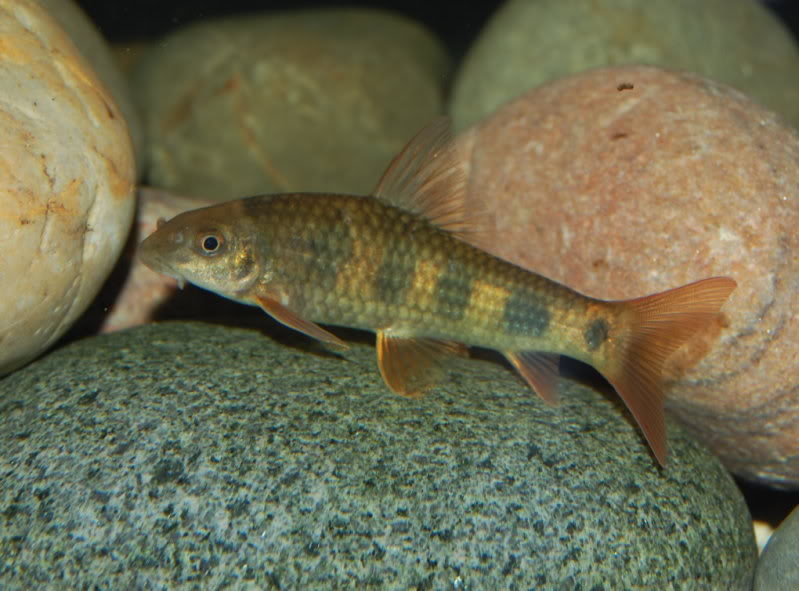
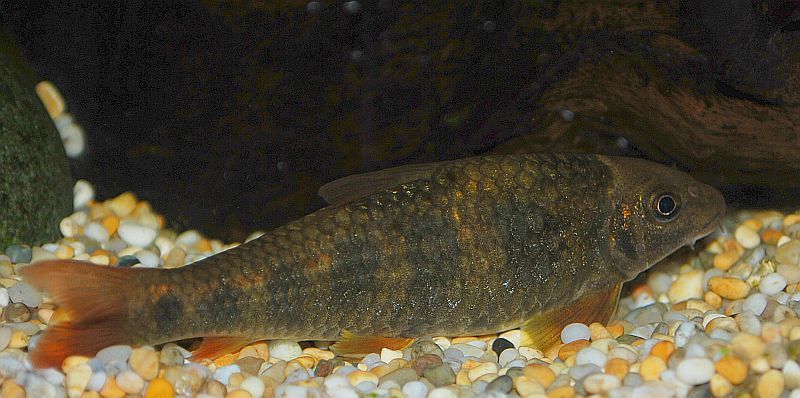
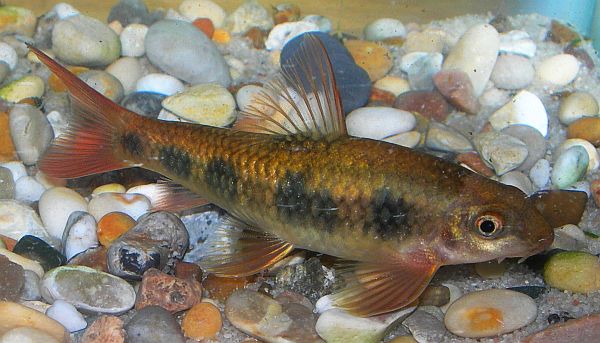
红鳍、体侧成列深斑和特殊的上唇软组织结构有助于识别。名称中的种加词也指向斑块,而不是一种通用于所有红鳍墨头鱼的商品名。
图片
图片来自 SeriouslyFish,版权归各摄影者所有。
English
Overview
Garra spilota is a small garra with reddish fins and a row of dark flank blotches. Stable, oxygen-rich stream accommodation suits it. Surface grazing does not make it an algae-only fish, and its relatively mild competition with conspecifics still calls for adequate room and at least three or four companions in the group.
Distribution & habitat
It may be restricted to the Rakhine Yoma mountains of western Myanmar. The original collection came from a small Irrawaddy tributary draining the eastern slopes; additional commercial collection sites remain uncertain.
That locality ran through hilly bamboo forest. Clear, colorless water moved moderately over rock and gravel in a shallow, narrow channel with both shaded and more open sections.
Aquarium setup
Rounded stones, sand, fine gravel, small boulders, and wood create a suitable stream layout. Hardy attached plants can be secured to the structure. Clean water, oxygenation, and stability matter most. Turnover preferably exceeds ten tank volumes per hour, with pumps or air stones supplementing circulation as needed.
Bright illumination encourages grazing surfaces to develop biofilm. Introduce the fish only after the aquarium has matured biologically. It can climb glass, so the cover must prevent escape by climbing as well as jumping.
Diet & feeding
Algae is consumed, but the diet is not exclusively plant-based. Combine live or frozen bloodworms, tubificid worms, brine shrimp, or chopped prawn with quality sinking preparations. Some dry foods should provide a substantial plant component, such as spirulina.
Cucumber, melon, blanched spinach, or zucchini can be offered occasionally. Mixed gel foods containing dry feed, shellfish puree, fruit, and vegetables provide another way to maintain variety.
Behaviour & compatibility
It is relatively peaceful in a carefully chosen, spacious community of stream fishes. Conspecific company appears beneficial, with three or four fish a minimum group. It is less competitive and territorial toward its own kind than some other garras, which does not imply that all friction is absent.
Sexual dimorphism
Snout and head tubercles are useful in sexing some garras, but their development is rudimentary here. Mature females may have a rounder profile, especially when carrying eggs; this remains a tentative clue.
Notes
Reddish fins, serial flank blotches, and distinctive soft tissue on the upper lip aid recognition. The species epithet refers to its spotted pattern and should not be treated as a general label for every red-finned garra.
来源
- https://www.seriouslyfish.com/species/garra-spilota(抓取于 2026-10-10)
garra-spilota · 文件: data/species/garra-spilota.md · 状态: 草稿