Garra flavatra · Panda Garra
概要
| 字段 | 值 |
|---|---|
| 类别 | 鱼 |
| 学名 | Garra flavatra |
| 分类 | 鲤形目 Cypriniformes › 鲤科 Cyprinidae › Garra |
| 水体 | 淡水 |
| 原产地 | 缅甸 |
| 成体体长 | 9 cm |
| 饲养难度 | 中等 |
| 最小水体 | 81 L |
| 最小缸长 | 90 cm |
| 群居方式 | 群游 |
| 性情 | 温和 |
| 水流偏好 | 高 |
| 特征 | 会跳缸: 是 |
| 外部数据 | seriouslyfish garra-flavatra;fishbase 61929 |
| 繁殖方式 | 产卵 |
水质参数
| 参数 | 耐受范围 | 最适范围 | 单位 |
|---|---|---|---|
| 水温 | 22–27 | — | °C |
| pH | 6.5–7.5 | — | — |
| 总硬度 | 2–12 | — | dGH |
概述
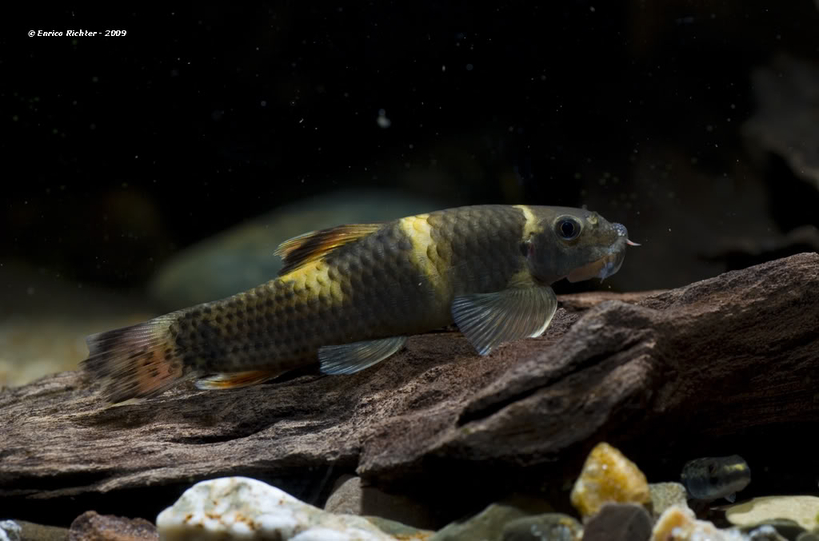
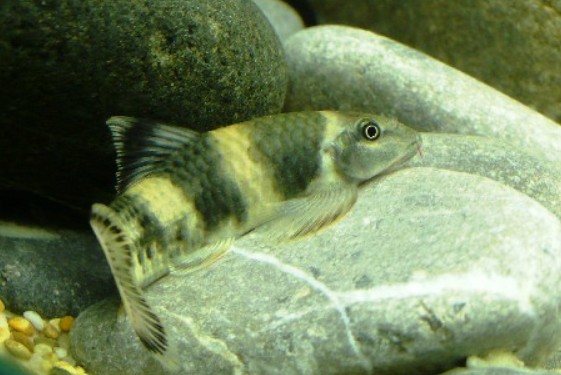
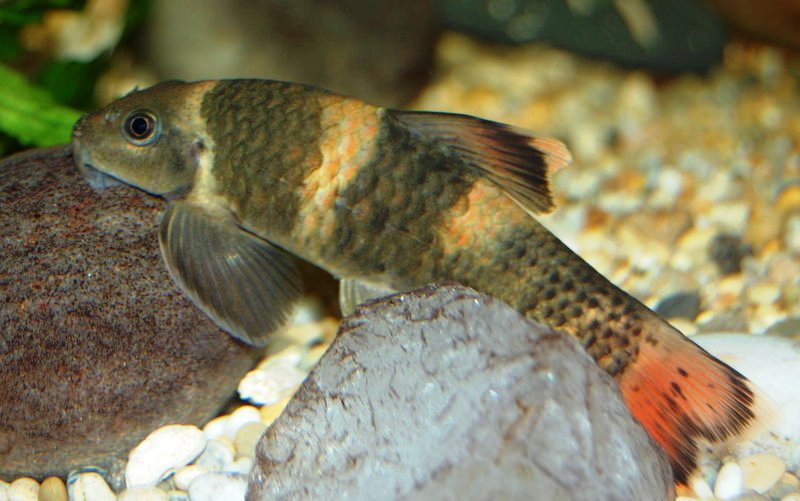
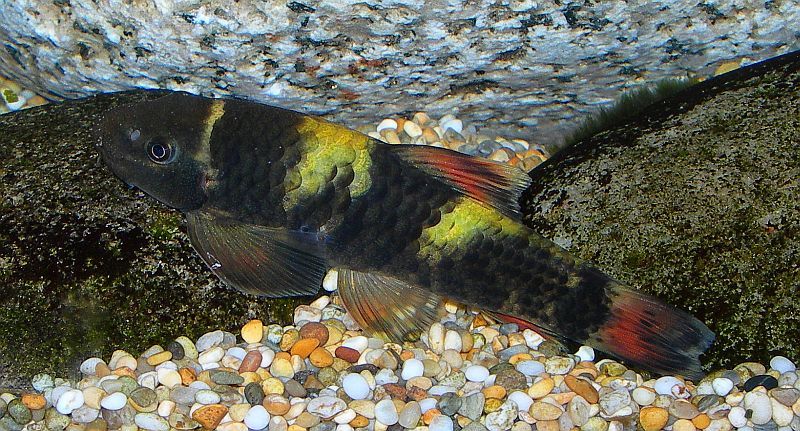
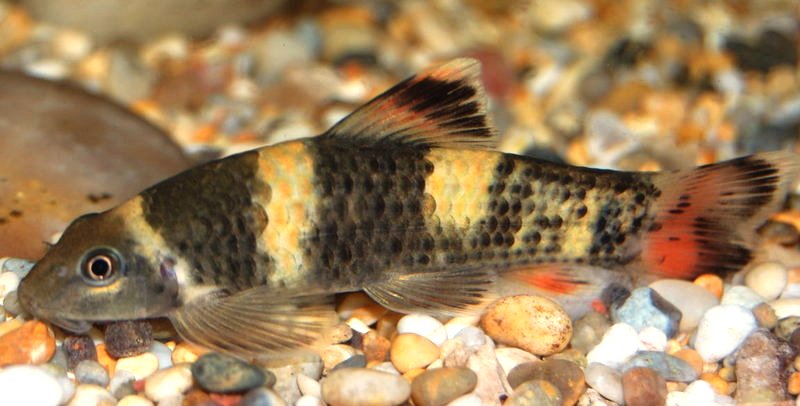
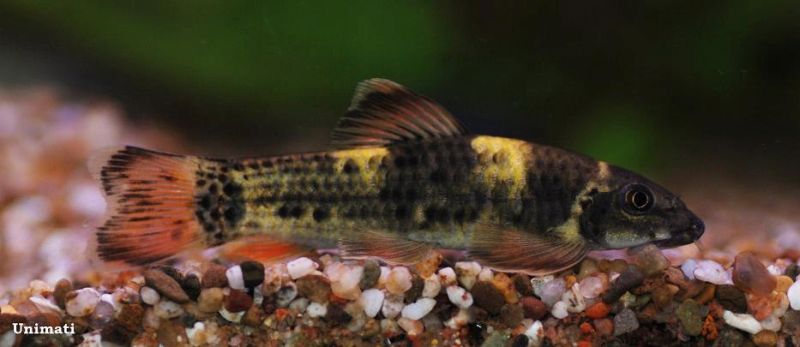
Garra flavatra 是缅甸若开山脉的溪流鱼,黄黑相间的体色和部分个体的红色使它很醒目,贸易中常见“Panda Garra”等名称。它刮食表面生物膜,但并非只吃藻;稳定成熟的环境、富氧流水和合理小群安排更重要。
分布与栖息地
缅甸西部若开山脉特有,最初采集于西坡的若干河溪。早期调查时间短,实际分布可能比已记录的少数采点更广。
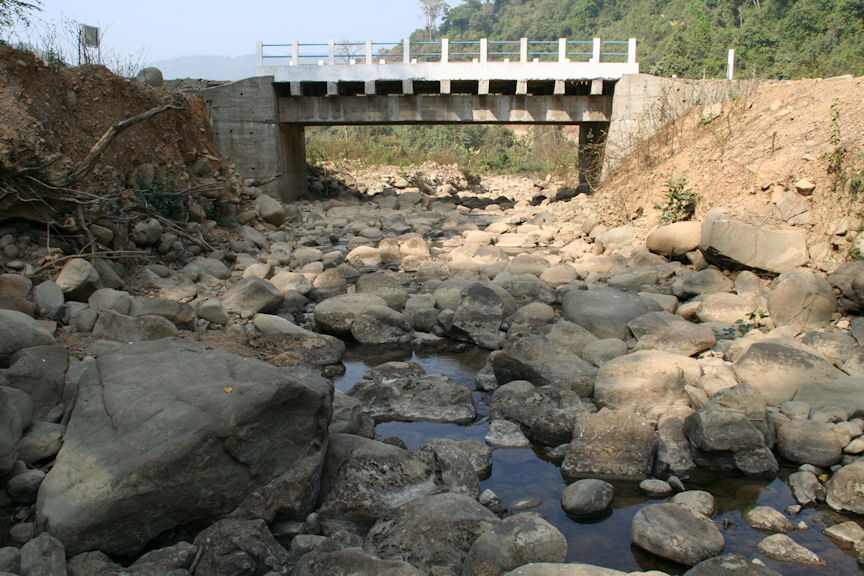
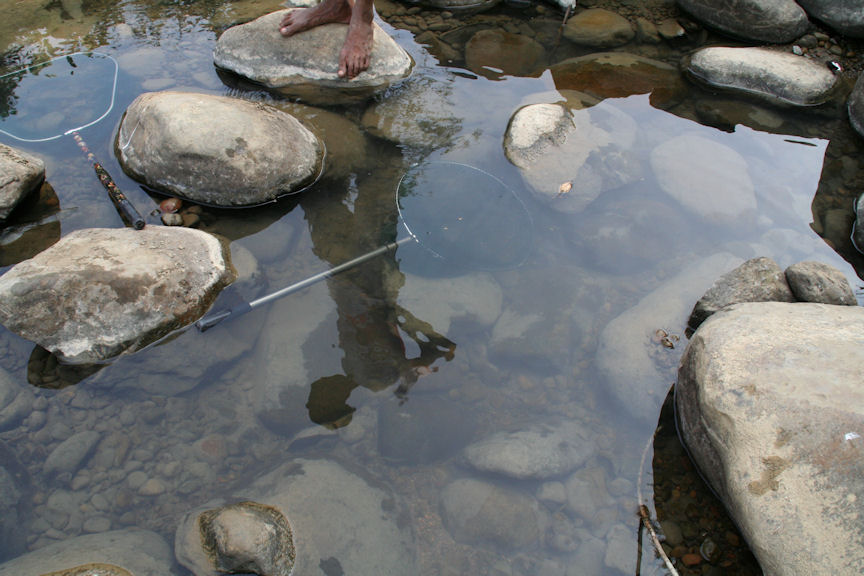
旱季模式点是一段约 30 cm 深、3 m 宽的林边浅溪,底部为砾石、卵石及岩块,清澈缓流形成小潭。其他记录来自浅而近乎静止的潭区,或石底、间有沙地的急缓流交替河段,水深最多约 1.5 m。
这些旱季景象不代表它喜欢长期缺氧静水。当地五月至十月雨季会使溪流加深一米以上、流速明显增加,饲养时仍应按喜流水鱼安排。
饲养环境
建议用沙、细砾、大小圆石及少量较大石块,搭配沉木根枝,营造溪流。耐受附生的蕨类、水榕可固定在造景上,较亮照明促进硬表面形成生物膜。
水必须洁净、含氧充足,循环量宜达到每小时缸水体积十倍以上,必要时增加造流和曝气。新缸缺乏稳定水质及成熟生物膜,不宜直接放入。它能沿玻璃攀爬,缸盖及边缘开口必须严密。
食性与喂食
不能只依赖藻。提供红虫、水丝蚓、丰年虾、切碎虾肉等动物性食物,并搭配优质沉底干粮,其中一部分应含较多螺旋藻等植物性成分。
黄瓜、瓜类、焯软菠菜或西葫芦可偶尔补充,也可将干粮、贝肉泥、果蔬混合成凝胶饵。多样食物比单纯期待它“清缸”更合适。
习性与混养
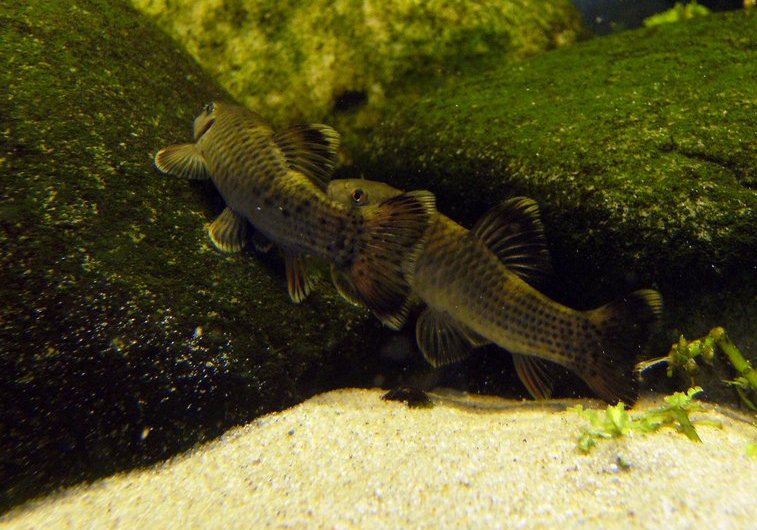
通常较温和,适合谨慎选择的大型溪流鱼群落。对同种却不总是容忍,野外以松散群体活动,单独养时反而可能更容易攻击外形相似的异种。
空间允许时建议三至四条或更多,群体会形成等级,争执可表现为冲撞、展鳍和体色整体变淡。这样同缸其他鱼通常较少受到骚扰,但仍须给弱势个体留退避空间。
雌雄区分
成熟雄鱼头部、侧线附近及尾柄会出现明显疣突,身体通常比雌鱼纤细。
繁殖
缅甸仰光已有自 2008 年开始的商业繁殖记录。繁殖场观察到主要在五月至七月产卵,以含藻干粮、活水丝蚓及偶尔切碎蚯蚓调理,维持较强水流。成熟配对另移至有持续流水的繁殖缸。
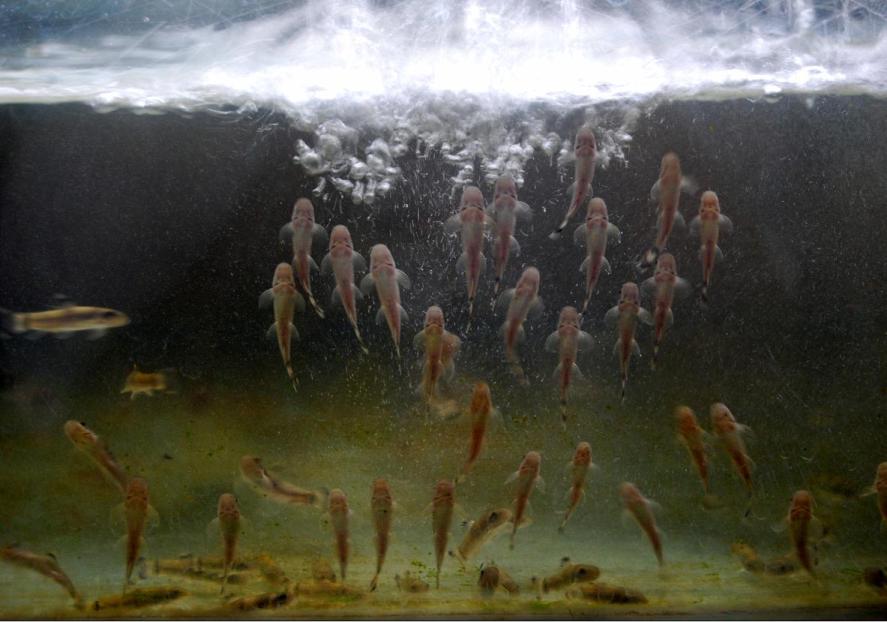
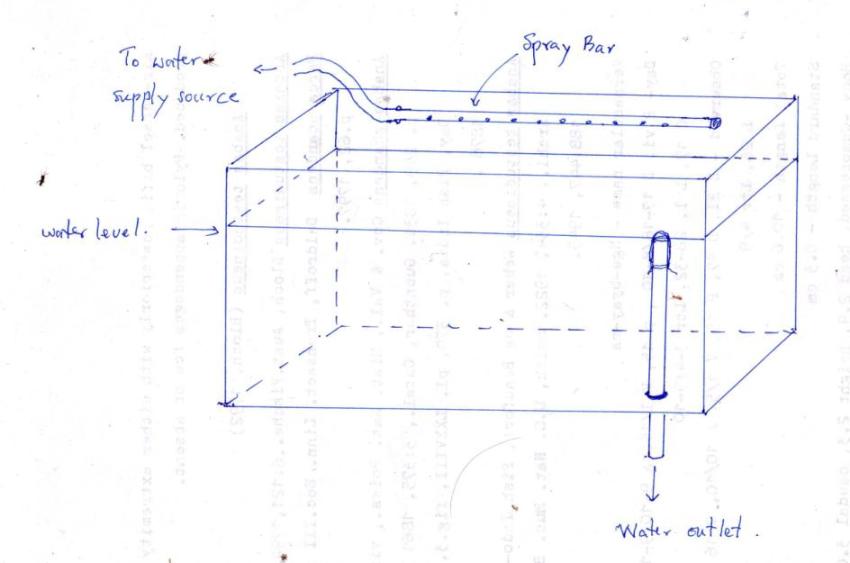
该流程使用电导率约 80 µS、接近中性的水,从水面上方喷淋管流入,由底部出水管排走;出水口有类似细网的防护,以避免吸走卵和幼鱼。这是具体繁殖场的流程,不代表普通缸只需复制一个数值即可成功。
通常清晨产卵,受精卵透明,直径约 1.5~1.8 mm,约 24~30 小时孵化。之后依靠卵黄约 72 小时,再喂蛋黄悬液;约一周后能吃丰年虾无节幼体,长到约 15 mm 可逐渐采用成鱼食谱。繁育者认为富氧流水对幼鱼开口和生长有促进作用。
补充说明
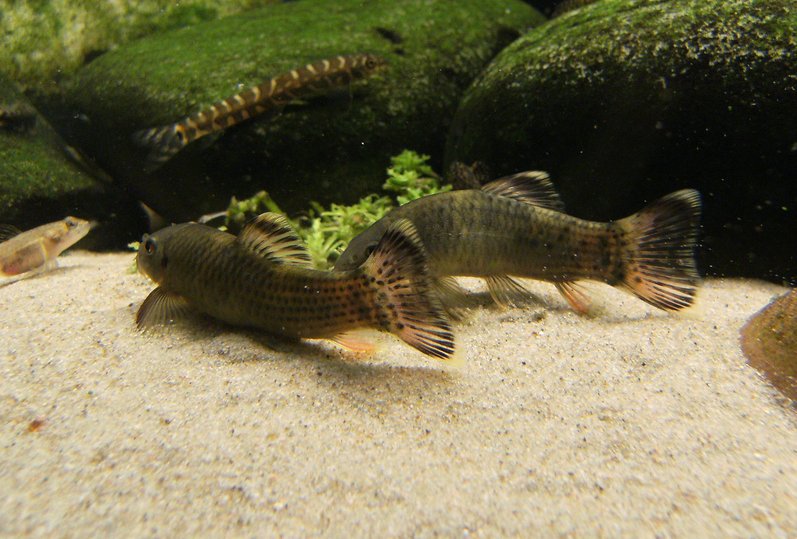
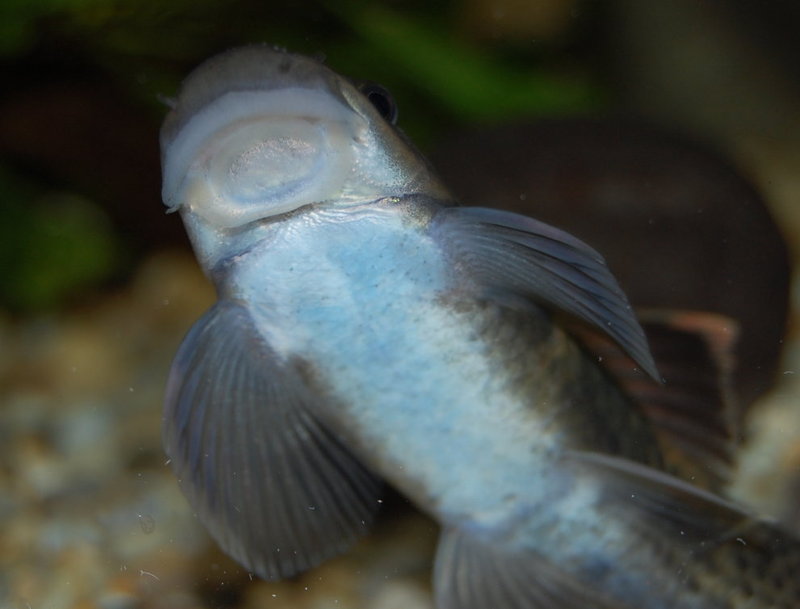
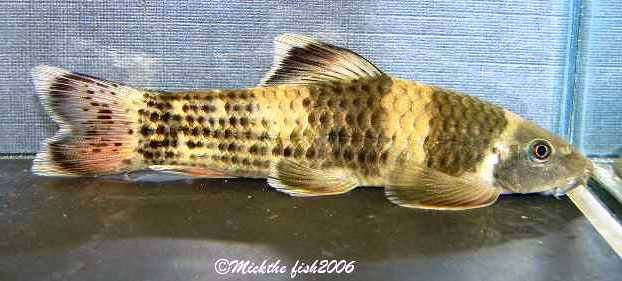
2005 年进入观赏鱼贸易,个体间黄色、红色强弱可有明显差异,尚不清楚是否对应不同地理群体。它不是鳅类;除体色外,两对口须、无明显吻突、约二十七至二十九枚侧线鳞等,可作为识别的辅助特征。
图片
图片来自 SeriouslyFish,版权归各摄影者所有。
English
Overview
The yellow-and-black stream fish Garra flavatra, often traded as Panda Garra, can also develop striking red areas. Surface grazing does not make algae a complete diet. Mature conditions, oxygenated current, and a carefully arranged small group are more important than treating it as aquarium cleanup equipment.
Distribution & habitat
It is endemic to western Myanmar's Rakhine Yoma. Early collections involved a few west-slope streams and rivers, but short survey time probably underestimated its full distribution.
The dry-season type site was a forest-edge stream about 30 cm deep and 3 m wide, with gravel, pebbles, rocks, and small clear slow-water pools. Other sites included shallow nearly stagnant pools and alternating riffles and pools over stone with sandy patches, reaching about 1.5 m deep.
These dry-season observations do not imply a preference for permanently stagnant, oxygen-poor water. The May–October monsoon deepens streams by over a meter and increases flow. Aquarium care should still accommodate a current-loving fish.
Aquarium setup
Build a stream layout from sand, fine gravel, rounded stones, occasional larger rocks, and roots. Hardy attached ferns or Anubias are suitable. Fairly bright light promotes growth on hard surfaces for grazing.
Maintain clean oxygen-rich water, preferably circulating more than ten aquarium volumes per hour, with extra circulation or aeration if needed. Stable water and established surface growth rule out immature aquariums. Fish can climb glass, so the cover and openings around equipment must be secure.
Diet & feeding
Offer more than algae: bloodworms, tubifex, Artemia, and chopped shrimp complement quality sinking dry foods. Some prepared food should contain substantial plant ingredients such as spirulina.
Cucumber, melon, softened spinach, or zucchini can be offered occasionally. Mixed gel foods incorporating dry feed, shellfish puree, fruit, and vegetables have also worked. Deliberate varied feeding is preferable to relying on grazing alone.
Behaviour & compatibility
It is relatively peaceful toward suitably selected stream-fish companions, but tolerance of its own species is imperfect. Wild fish form loose aggregations, and solitary aquarium fish may direct more aggression toward similar-looking species.
Where space permits, maintain three or four or more. A hierarchy develops, with disputes involving rushing, fin displays, and paler body color. Other companions are generally less targeted in this arrangement, although subordinate fish still need retreats.
Sexual dimorphism
Mature males develop prominent tubercles on the head, beside the lateral line, and around the tail base. They are usually slimmer than females.
Breeding
Commercial reproduction in Yangon has been reported since 2008. The breeder observed spawning mainly from May through July, conditioning adults with algae-rich preparations, live tubifex, occasional chopped earthworms, and strong flow. Ripe pairs were moved to separate continuously flowing spawning tanks.
That system used near-neutral water at about 80 µS conductivity, entering through a spray bar above the surface and leaving through a bottom drain protected with fine material against loss of eggs or fry. This describes a particular farm's process, not a guarantee that matching one water value will produce home success.
Spawning occurs early in the morning. Fertilized eggs are transparent and about 1.5–1.8 mm across, hatching after 24–30 hours. Yolk reserves last roughly another 72 hours, followed by egg-yolk suspension as food. Artemia nauplii are accepted at around a week, with the adult menu possible at approximately 15 mm. The breeder considered oxygenated flow beneficial for feeding and growth.
Notes
Aquarium availability began in 2005. Yellow and red intensity varies markedly, with any link to geographic populations unresolved. It is not a loach. Two pairs of barbels, no pronounced proboscis, and roughly 27–29 lateral-line scales provide additional identification clues beyond color.
来源
- https://www.seriouslyfish.com/species/garra-flavatra(抓取于 2026-10-10)
garra-flavatra · 文件: data/species/garra-flavatra.md · 状态: 草稿