坎宝墨头鱼 · False SAE
概要
| 字段 | 值 |
|---|---|
| 类别 | 鱼 |
| 学名 | Garra cambodgiensis |
| 别名 | 条纹墨头鱼、坎寶墨頭魚、條紋墨頭魚、Cirrhina cambodgiensis、Garra taeniata、Garra spinosa、Garra taeniatops、Garra parvifilum、Discogobio dienbieni |
| 分类 | 鲤形目 Cypriniformes › 鲤科 Cyprinidae › Garra |
| 水体 | 淡水 |
| 原产地 | 柬埔寨、老挝、马来西亚、泰国、越南 |
| 成体体长 | 15 cm |
| 饲养难度 | 中等 |
| 最小水体 | 243 L |
| 最小缸长 | 120 cm |
| 群居方式 | 群游 |
| 性情 | 温和 |
| 水流偏好 | 高 |
| 特征 | 会跳缸: 是 |
| 外部数据 | seriouslyfish garra-cambodgiensis;fishbase 27164 |
| 食性 | 杂食 |
| 繁殖方式 | 产卵 |
水质参数
| 参数 | 耐受范围 | 最适范围 | 单位 |
|---|---|---|---|
| 水温 | 20–27 | — | °C |
| pH | 6–7.5 | — | — |
| 总硬度 | 1–12 | — | dGH |
概述
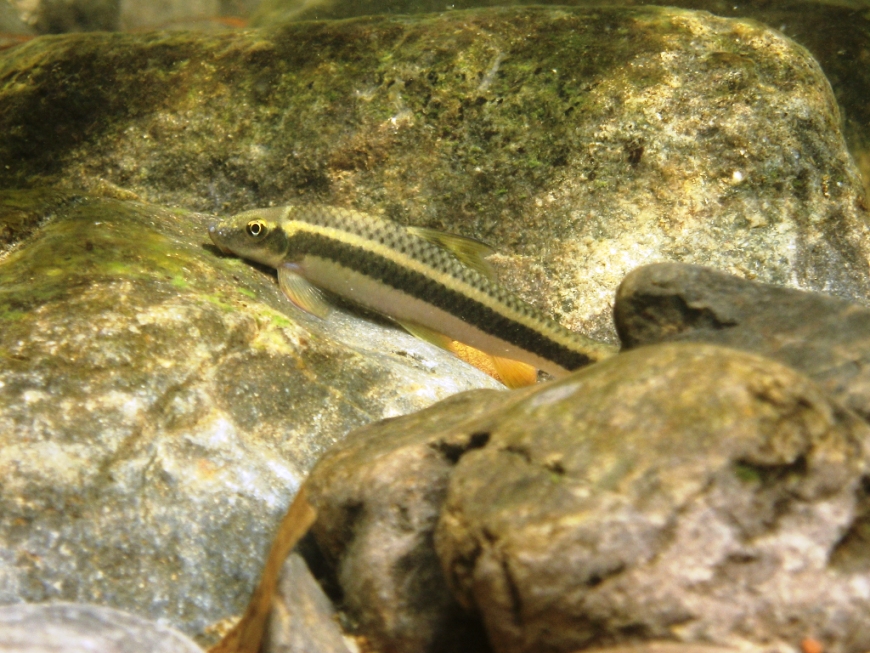
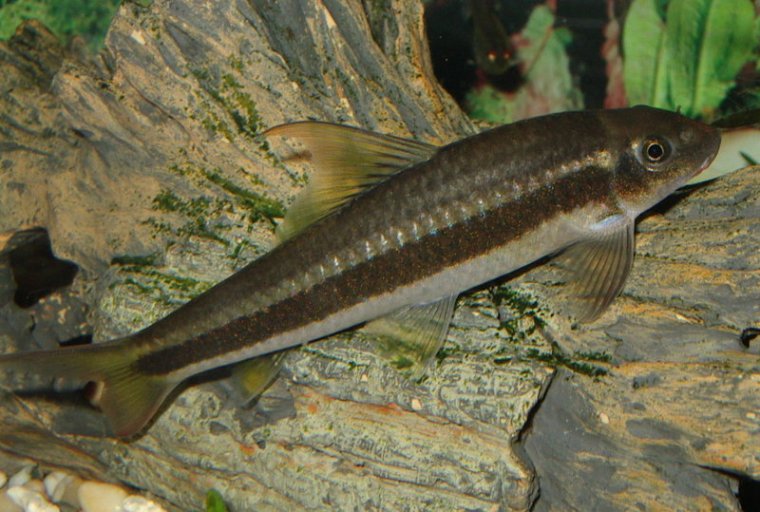
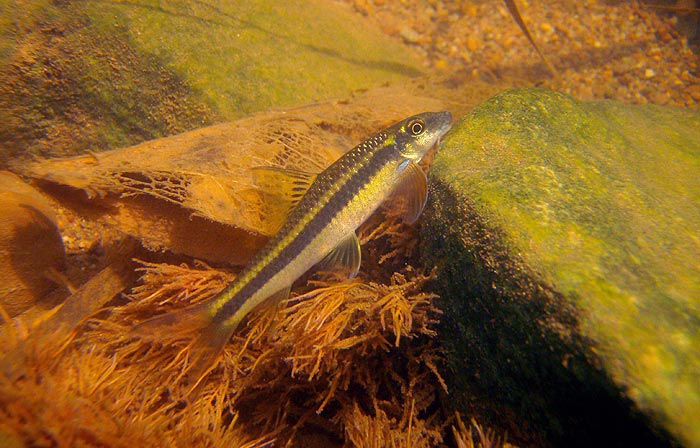
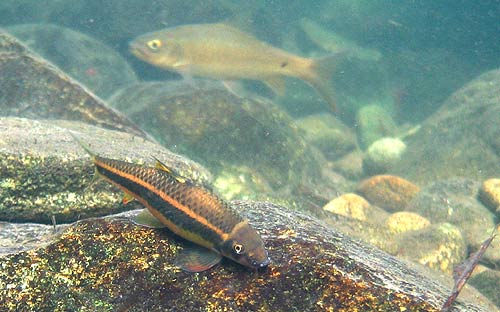
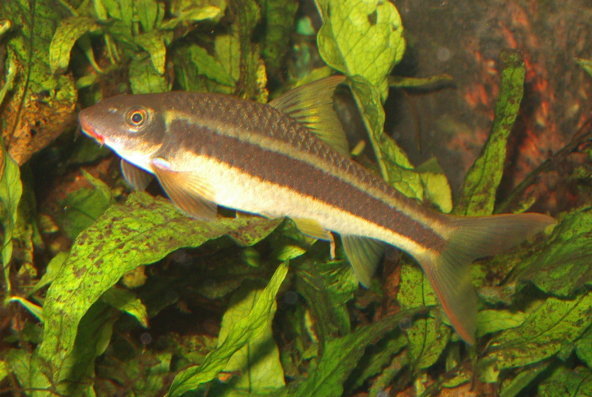
坎宝墨头鱼(Garra cambodgiensis)常和穗唇魮类食藻鱼混淆。它的侧面黑条止于尾柄,下唇有吸附结构,背鳍也有斑带;这些特征比泛用的商品标签更适合用于辨认。
分布与栖息地
原产湄公河中下游、泰国昭披耶河与湄功河水系,以及泰国半岛和马来半岛北部一些小河流。更偏向源头与支流的急流水段,水清、含氧高,光照帮助硬表面生物膜生长;大雨时也可能暂时变浑。
饲养环境
用沙砾、圆滑石块、沉木与附生水草模拟溪流,留出啃食面及退避空间。成熟过滤、高溶氧与足够流动很重要,循环量可争取每小时超过缸水量 10 倍。较亮光照可养出生物膜,不能放入不成熟的新缸;顶部应严密,它能够沿玻璃攀爬。
食性与喂食
并非纯植食鱼。提供红虫、丰年虾、碎虾肉等动物性食物,配合含藻类植物成分的下沉干粮,偶尔加黄瓜、瓜果或烫软蔬菜。
习性与混养
总体较温和,适合经过挑选的大型流水混养缸。同种容忍度有限,但单养可能攻击相似鱼,空间足够时可养 3~4 条或更多。群内会建立等级,冲撞、展鳍、颜色变淡以及雄鱼伸展吻突都可见于争斗。
雌雄区分
繁殖雄鱼口部鲜红,雌鱼明显厚实。两性头吻部都可有追星,但雄鱼一般更发达。
繁殖
已有激素诱导产卵研究,卵约 15~16 小时孵化,育苗使用轮虫和小型水蚤,实验中首月成活率较高。这个结果属于受控研究,不能直接当作家庭缸的自然繁殖成功率,是否用于观赏鱼商业生产也不明确。
补充说明
旧商品学名 Garra taeniata 仍可能出现,但它是本种的同物异名。野生混合批次可能带入其他条纹食藻鱼,应逐条核对外形。
图片
图片来自 SeriouslyFish,版权归各摄影者所有。
English
Overview
Often confused with striped algae eaters, Garra cambodgiensis has a flank stripe ending at the caudal peduncle, a modified adhesive lower lip and markings on the dorsal fin. These features are more useful than generic sales names.
Distribution & habitat
Its range includes the central and lower Mekong, other major Thai basins and northern Peninsular Malaysia. Swift tributaries and headwaters are favored over lowland main channels. Usually clear waters may become turbid after heavy rain.
Aquarium setup
Create grazing surfaces and retreats with rounded stones and wood. Established filtration, oxygenation and substantial circulation are priorities; turnover exceeding ten tank volumes hourly is suggested. Light encourages surface growth. Secure the lid because this fish can climb the glass.
Diet & feeding
Do not rely on algae alone. Combine sinking plant-rich foods with small animal meals such as brine shrimp, bloodworms or chopped shrimp. Vegetables and fruit can provide occasional variety.
Behaviour & compatibility
A suitably sized stream community can work well. Three or four or more conspecifics may be preferable where space permits, as lone fish can direct aggression toward look-alikes. Expect rank-related displays, including chasing, fin spreading and temporary paling.
Sexual dimorphism
Breeding males develop vivid red mouthparts, while ripe females are fuller. Head tubercles occur in both sexes but are usually stronger in males.
Breeding
A controlled study achieved hormone-induced spawning, with hatching after roughly fifteen to sixteen hours. Rotifers and small cladocerans were used for early feeding. Strong experimental survival does not establish a home-aquarium success rate, and commercial use of the method remains uncertain.
Notes
The old name Garra taeniata persists in sales despite being a synonym. Mixed wild shipments may contain other striped grazers, making specimen-by-specimen identification worthwhile.
来源
- https://www.seriouslyfish.com/species/garra-cambodgiensis(抓取于 2026-10-10)
garra-cambodgiensis · 文件: data/species/garra-cambodgiensis.md · 状态: 草稿