Epalzeorhynchos kalopterum · Flying Fox
概要
| 字段 | 值 |
|---|---|
| 类别 | 鱼 |
| 学名 | Epalzeorhynchos kalopterum |
| 别名 | Barbus kalopterus、Epalzeorhynchos kalopterus、Epalzeorhynchos kallopterus |
| 分类 | 鲤形目 Cypriniformes › 鲤科 Cyprinidae › Epalzeorhynchos |
| 水体 | 淡水 |
| 原产地 | 印度尼西亚、马来西亚、泰国 |
| 成体体长 | 16 cm |
| 饲养难度 | 中等 |
| 最小水体 | 243 L |
| 最小缸长 | 120 cm |
| 群居方式 | 独居 |
| 领地性 | 是 |
| 外部数据 | seriouslyfish epalzeorhynchos-kalopterum;fishbase 10832 |
| 食性 | 杂食 |
水质参数
| 参数 | 耐受范围 | 最适范围 | 单位 |
|---|---|---|---|
| 水温 | 20–26 | — | °C |
| pH | 6–7.5 | — | — |
| 总硬度 | 2–12 | — | dGH |
概述
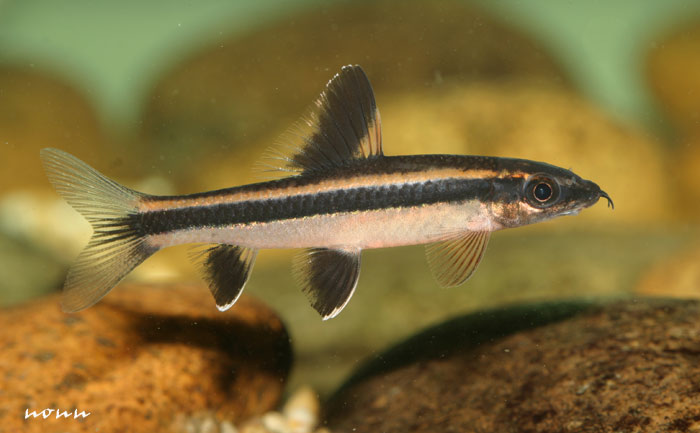
Epalzeorhynchos kalopterum 常以“Flying Fox”出售,红黑相间、带白边的鳍和两对口须有助于辨认。它会随年龄增长变得更有领地性,且可能活过 15 年,不能只按幼鱼大小和“食藻”标签决定购买。
分布与栖息地
记录主要涉及泰国南部、马来半岛,以及婆罗洲、苏门答腊和爪哇。模式产地为婆罗洲班贾尔马辛,相关水系包括卡哈扬河、巴里托河和卡普阿斯河;苏门答腊记录见于因德拉吉里河、巴当哈里河与穆西河。
常在溪流和河流的沙石表面觅食,雨季进入淹水林及泛滥平原。人为开发可能干扰这类迁移,部分历史种群减少甚至消失,具体分布状况仍不清楚。
饲养环境
遮蔽充足时不太挑布景,溪流式布置较适合:砾石、圆滑大石、沉木根枝,加上能附生的蕨类和水榕。较明亮光照可促进石面长藻,通常不会损坏软叶水草。
它对有机废物积累不耐受,需高溶氧、适中水流及清洁稳定的水。多条群养所需空间远大于单鱼最低缸规格,不能只增加藏身物而不增加有效领地。
食性与喂食
以表面附着生物为主食,其中包含藻、小型甲壳动物及昆虫幼体,并非纯粹草食。规律喂红虫、水蚤、丰年虾等小型活饵或冷冻饵,同时提供优质薄片、颗粒和植物性食物。
去壳豌豆、黄瓜、焯软西葫芦、菠菜和切碎水果可作补充。适应后会到中层取食,也会持续梳理石块表面生物膜;不要把除藻当作它能自行解决全部营养的理由。
习性与混养
幼鱼常躲藏,长大后对外形相似的鱼容易持续追赶,尤其是同属及其他类似食藻鱼。个体间攻击程度有差异,但不能用少数和平共处经验保证所有搭配。
多数其他底层鱼,包括慈鲷和鲶鱼,宜避免;部分鳅类有共处经验,但鳅类彼此也不一定兼容。上层可选择健壮、活跃的群游鱼,并尽量最后放入本种,减少先占据全缸的机会。
大多数情况下以只养一条本种为宜。极大且遮蔽充分的缸才可尝试同种共处,预计每条至少需要直径约 1 m 的领地,且仍须观察弱势鱼。
雌雄区分
成熟雌鱼明显更厚实,幼鱼无法可靠凭外观分辨。
繁殖
商业生产已通过激素辅助繁殖供应市场,但普通私人水族箱中尚无成熟可用的繁殖方法。
补充说明
旧资料常把种加词写作 kalopterus,2013 年按属名语法性别改正为 kalopterum。它虽然刮藻,效率却不应与专门的除藻鱼等同。
“假飞狐”“暹罗飞狐”等商品名可能混用在不同属的鱼上。红黑鳍的白边及两对口须,比笼统的“黑线、食藻”外观更有辨识价值。
图片
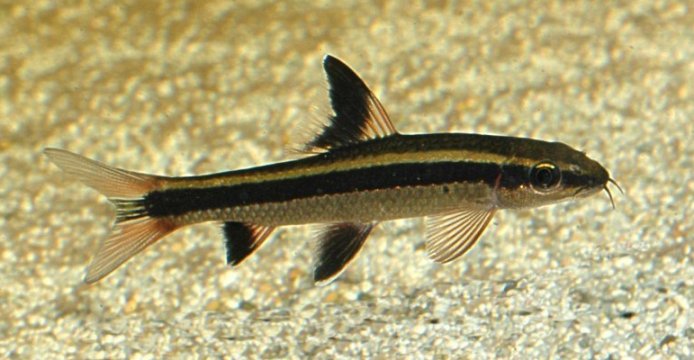
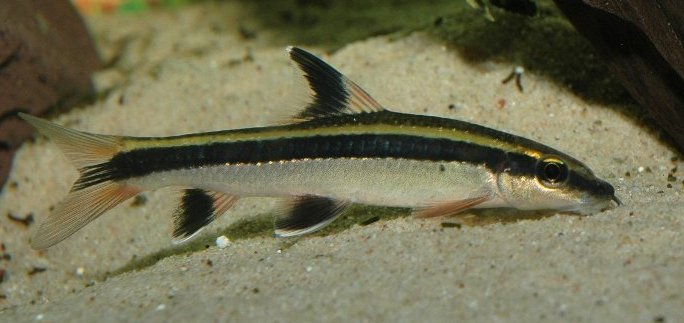
图片来自 SeriouslyFish,版权归各摄影者所有。
English
Overview
White-edged red-and-black fins and two pairs of barbels help identify Epalzeorhynchos kalopterum, commonly traded as Flying Fox. Territorial behavior intensifies with age, and individuals can exceed 15 years. Juvenile size and an algae-eater label conceal a substantial long-term commitment.
Distribution & habitat
Records mainly concern southern Thailand, the Malay Peninsula, and Borneo, Sumatra, and Java. Banjarmasin on Borneo is the type locality; associated drainages include the Kahayan, Barito, and Kapuas. Sumatran records include the Indragiri, Batang Hari, and Musi.
Fish graze sandy and rocky river or stream bottoms and enter flooded forest or floodplains seasonally. Development may disrupt these movements. Declines or losses among historical populations leave the precise range uncertain.
Aquarium setup
Cover matters more than a rigid decorative formula, although a river layout is well suited. Use gravel, smooth rocks, roots, and attached ferns or Anubias. Bright illumination encourages surface algae, while soft-leaved plants generally remain intact.
High oxygen availability, moderate circulation, and clean stable water are important because organic waste is poorly tolerated. Multiple specimens need far more room than minimum single-fish accommodation; extra hiding places alone do not create adequate territories.
Diet & feeding
Grazing supplies algae together with small crustaceans, insect larvae, and other surface organisms. Offer regular small live or frozen bloodworms, water fleas, and Artemia, plus good flakes, granules, and vegetable foods.
Shelled peas, cucumber, softened zucchini, spinach, and chopped fruit provide variety. Settled fish feed in midwater as well as browse growth on stones. Algae removal should not be mistaken for a complete feeding plan.
Behaviour & compatibility
Juveniles often hide, but adults can persistently harass similarly shaped fishes, especially close relatives and comparable algae grazers. Individual behavior varies, so isolated peaceful examples cannot guarantee a successful pairing.
Most other bottom dwellers, including cichlids and catfishes, are best avoided. Some loaches have coexisted successfully, but those loaches are not automatically compatible with one another. Robust active schooling fishes higher in the water are better candidates. Add this species last to reduce prior ownership of the whole aquarium.
One specimen is appropriate in most cases. Cohabitation should be attempted only in exceptionally spacious, well-sheltered aquariums, with each fish expected to require a territory approximately 1 m across. Continue monitoring subordinate fish.
Sexual dimorphism
Mature females are markedly fuller-bodied. Juveniles cannot be sexed dependably by appearance.
Breeding
Commercial production uses hormonal assistance, but a practical method for ordinary private aquariums is not established.
Notes
The older spelling kalopterus was corrected to kalopterum in 2013 to agree grammatically with the genus. Although it grazes algae, it should not be bought on the assumption that it performs like a specialized algae-control fish.
False flying fox and Siamese flying fox labels are applied to fishes from several genera. The white-edged colored fins and paired sets of barbels are more useful clues than a black stripe or algae-grazing behavior alone.
来源
- https://www.seriouslyfish.com/species/epalzeorhynchos-kalopterum(抓取于 2026-10-10)
epalzeorhynchos-kalopterum · 文件: data/species/epalzeorhynchos-kalopterum.md · 状态: 草稿