红尾黑鲨 · Red-Tailed Black Shark
概要
| 字段 | 值 |
|---|---|
| 类别 | 鱼 |
| 学名 | Epalzeorhynchos bicolor |
| 别名 | 双色野鲮、雙色角魚、雙色野鯪、Labeo bicolor、双色角鱼 |
| 分类 | 鲤形目 Cypriniformes › 鲤科 Cyprinidae › Epalzeorhynchos |
| 水体 | 淡水 |
| 原产地 | 泰国 |
| 成体体长 | 12.5 cm |
| 饲养难度 | 中等 |
| 最小水体 | 243 L |
| 最小缸长 | 120 cm |
| 群居方式 | 独居 |
| 领地性 | 是 |
| 外部数据 | seriouslyfish epalzeorhynchos-bicolor;fishbase 10835 |
| 食性 | 杂食 |
| 性情 | 攻击性 |
水质参数
| 参数 | 耐受范围 | 最适范围 | 单位 |
|---|---|---|---|
| 水温 | 20–26 | — | °C |
| pH | 6–8 | — | — |
| 总硬度 | 2–15 | — | dGH |
概述
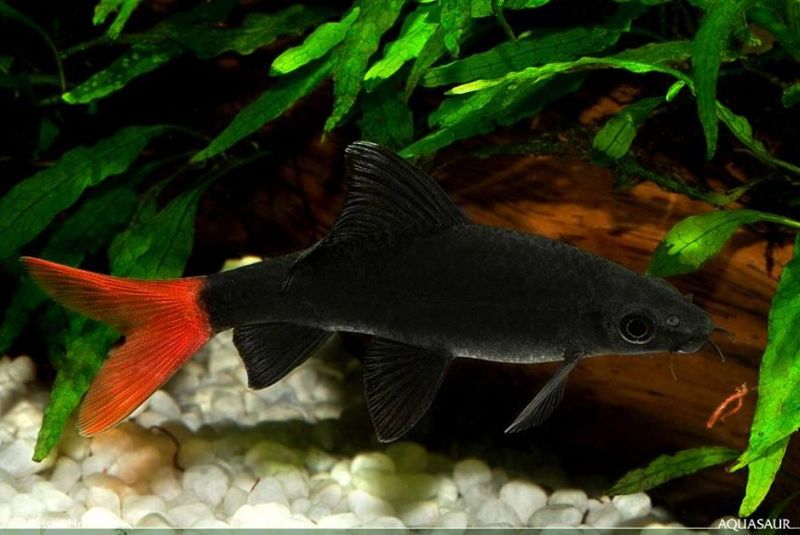
红尾黑鲨(Epalzeorhynchos bicolor)黑色身体与红色尾鳍对比鲜明,但它并不是适合随意混养的“工具鱼”。长大后领地意识会加强,尤其容易攻击外形相近的鱼,且可能活过十五年,购买前应考虑长期安置。
分布与栖息地
原生于泰国中部和西部,历史记录涉及美功河、湄南河及邦巴功河下游。野生种群曾一度被认为消失,之后又发现少量记录,分布状况仍不清楚。美功河的一次确认记录来自有沙和大石、清澈且流动的河段。商品个体来自商业繁殖。
饲养环境
有足够遮蔽时对装饰形式不算苛刻。可用大小不一的岩石、砾石、沉木和附生水草营造河道,明确分隔活动空间。较明亮的石面有利于藻类及附着微生物生长,供它刮食。维持成熟过滤、洁净水质、较高溶氧和适度水流,避免有机废物积累。
食性与喂食
主要刮食附着生物群,其中包括藻类、小型甲壳类和昆虫幼虫。不能仅靠缸内藻类养活,应提供优质薄片或颗粒,并搭配红虫、水蚤、丰年虾及新鲜植物性食物。去壳豌豆、黄瓜、烫软的西葫芦、菠菜和切碎水果都可丰富菜单。适应后也会离开底部到中层抢食。
习性与混养
幼鱼可能常躲藏,成鱼则会主动守域并追逐同伴。多数情况下建议每缸只养一尾;同种及外形、取食方式相近的底栖鱼容易成为攻击目标,底栖慈鲷和多数鲶类也应谨慎避开。上层可考虑健壮、活跃、群游的鲤科鱼,但仍须匹配环境和体型。
个体差异明显,部分鳅类似乎较少被攻击,但这不是所有鳅都可随意搭配的保证。若计划混养,宜让红尾黑鲨最后入缸,减少它先占据整个空间的机会。只有极大、遮蔽丰富的缸才可谨慎尝试多尾,每尾可能需要直径约一米的领地。
雌雄区分
成熟雌鱼明显更厚实;幼鱼不能可靠地凭外观分性。雄鱼背鳍、臀鳍等不成对鳍可能略长,但这一点不宜作唯一依据。
繁殖
商品鱼由养殖场大量繁育,并采用激素辅助。家庭水族箱中尚无明确自然繁殖记录,不宜把商业繁殖可行等同于家缸容易繁殖。
补充说明
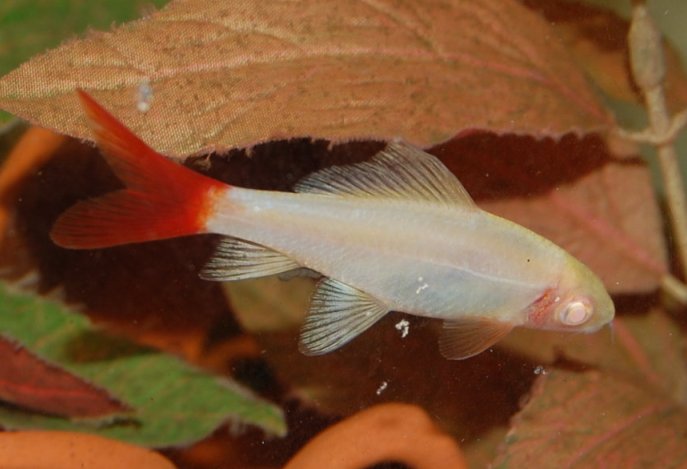
它虽吃藻,却不应以除藻效率为购买理由。白尾或其他异常鳍色的近似商品鱼未必就是同一物种,某些色型的身份仍有疑问,应避免仅凭尾色套名。
图片
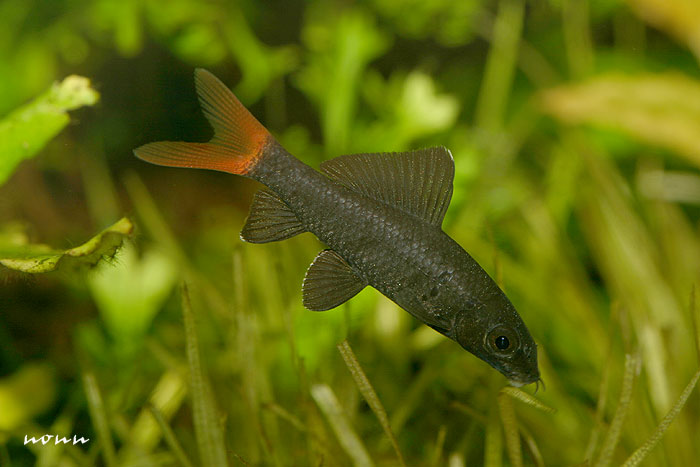
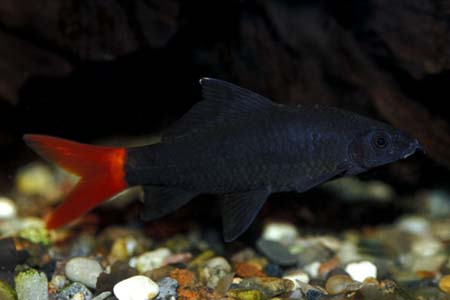
图片来自 SeriouslyFish,版权归各摄影者所有。
English
Overview
The black body and red tail of Epalzeorhynchos bicolor are striking, but this is a demanding territorial fish rather than a casual algae-cleaning addition. Aggression toward similar fishes increases with maturity, and a lifespan exceeding fifteen years makes long-term planning relevant.
Distribution & habitat
It originates from central and western Thailand, with historical records in the lower Mae Klong, Chao Phraya and Bangpakong systems. Small wild populations were rediscovered after the species had been considered lost, and its distribution remains poorly understood. One confirmed Mae Klong site was a clear flowing channel over sand and large rocks. Aquarium supplies are commercially bred.
Aquarium setup
Abundant cover matters more than a particular decorative style. Rocks, gravel, wood and attached plants can form a river setting with visually separated areas. Brighter exposed stones encourage attached algae and microorganisms for browsing. Maintain effective established filtration, clean water, ample oxygen and moderate circulation.
Diet & feeding
It grazes a mixed surface community of algae, tiny crustaceans and insect larvae. Aquarium growth alone is not an adequate feeding plan. Offer quality prepared food, small live or frozen foods and fresh plant ingredients. Peeled peas, cucumber, softened zucchini, spinach and chopped fruit add variety. Settled fish also rise into open water to feed.
Behaviour & compatibility
Young fish may remain hidden, while adults increasingly defend space and chase companions. One per aquarium is the practical choice in most cases. Conspecifics and similarly shaped bottom grazers are especially vulnerable; bottom-oriented cichlids and most catfishes are also poor choices. Robust, active shoaling cyprinids using the upper aquarium are more promising, provided size and environmental requirements fit.
Individual behavior varies. Some loaches appear less likely to be targeted, but this is not permission to combine arbitrary loach species. Add the red-tailed fish last to reduce the chance of it claiming the whole tank. Multiple specimens require an exceptionally large, sheltered system, with each potentially needing a territory about a meter across.
Sexual dimorphism
Mature females are considerably fuller-bodied. Juveniles cannot be reliably sexed externally. Slightly longer unpaired fins may occur in males, but this is not a dependable standalone test.
Breeding
Commercial farms produce large numbers using hormone assistance. A reliable natural breeding record from private aquaria is lacking, so commercial success should not be interpreted as an easy home project.
Notes
Although it browses algae, cleaning performance is a poor reason to buy it. White-tailed or otherwise unusual lookalikes may have unresolved identities; fin color alone should not determine a species label.
来源
- https://www.seriouslyfish.com/species/epalzeorhynchos-bicolor(抓取于 2026-10-10)
epalzeorhynchos-bicolor · 文件: data/species/epalzeorhynchos-bicolor.md · 状态: 草稿