鳡
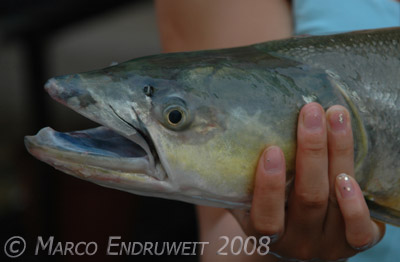
概要
| 字段 | 值 |
|---|---|
| 类别 | 鱼 |
| 学名 | Elopichthys bambusa |
| 别名 | 鱤、Leuciscus bambusa、Nasus dauricus、Gymnognathus harmandi、Scombrocypris styani |
| 分类 | 鲤形目 Cypriniformes › 鲤科 Cyprinidae › Elopichthys |
| 水体 | 淡水 |
| 原产地 | 中国、蒙古、俄罗斯、越南 |
| 成体体长 | 200 cm |
| 饲养难度 | 中等 |
| 群居方式 | 独居 |
| 性情 | 温和 |
| 外部数据 | seriouslyfish elopichthys-bambusa;fishbase 12068 |
| 食性 | 肉食 |
| 特征 | 吃小鱼: 是 |
概述
鳡(Elopichthys bambusa)是东亚大型食鱼性鲤科鱼,强大的游泳能力和最终体型决定了它不适合家庭水族箱。即使市场偶尔出售幼鱼,也应按未来大型捕食鱼的需求判断,不能只考虑眼前尺寸。
分布与栖息地
广泛分布于东亚,从俄罗斯黑龙江水系延伸至越南北部蓝江流域,并见于中国多个大河。偏好主河道,避开更冷的上游及源头溪流。黑龙江种群成鱼春季在中游繁殖,夏季进入泛滥平原觅食,冬季留在主要支流;幼鱼和亚成鱼早期多利用流域下部。
饲养环境
仅适合大型公共展示设施或极大型、专门设计的私人系统。成熟的大型过滤、高溶氧和一定水体流动不可缺少,维护强度很高,每周约五成至七成换水是相应建议的一部分。普通家庭缸无法满足长期空间与维护需求。
食性与喂食
野外专门捕食鱼类。幼鱼可尝试红虫、小蚯蚓、切碎虾肉,较大个体可接受鱼肉条、整虾、蚌肉及较大蚯蚓;即使接受干颗粒,也不宜把颗粒作为唯一主食。
不要投喂牛心、鸡肉等哺乳类或禽类肉。也不应依赖来源不明的活饵鱼,它们可能带入寄生虫和疾病,未经良好调养的饵鱼营养也不可靠。
习性与混养
对于大到不能吞食的同伴,鳡相对温和;这不削弱其捕食能力。任何可入口的小鱼都有被吞食风险,混养判断必须以成鱼体型差及实际设施为前提。
繁殖
野外繁殖与季节迁移相关,黑龙江种群在春季利用河流中段繁殖。现有这类生活史观察不能直接转化为家庭繁殖方案。
补充说明
鳡属仅有这一物种,在原生分布区也是重要食用鱼。幼鱼进入观赏贸易,不代表其成年后适合常规观赏饲养。
图片
图片来自 SeriouslyFish,版权归各摄影者所有。
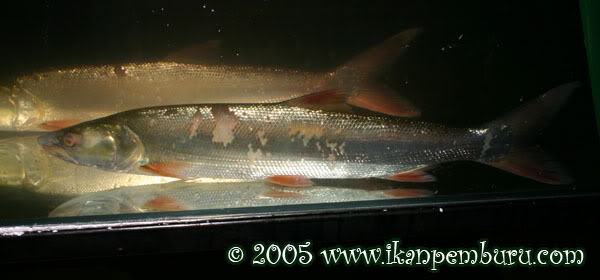
English
Overview
A powerful East Asian piscivore, Elopichthys bambusa is unsuitable for a home aquarium. Occasional availability of juveniles does not change the eventual space and maintenance demands of this very large predator.
Distribution & habitat
The range stretches from the Amur system in Russia to northern Vietnam's Lam drainage, including numerous major Chinese rivers. It favors main channels over colder headwaters. In the Amur, adults reproduce in the middle river during spring, feed on floodplains in summer and overwinter in major tributaries. Younger fish initially use lower parts of the drainage.
Aquarium setup
Only major public installations or exceptionally large specialist private systems are appropriate. Substantial mature filtration, highly oxygenated water and some circulation are required. Intensive maintenance includes suggested weekly water replacement of roughly half to two-thirds of the total volume. Ordinary domestic tanks cannot provide adequate lifelong accommodation.
Diet & feeding
Wild feeding is specialized on fish. Young specimens may accept small worms, bloodworms and chopped shrimp. Larger fish can take fish strips, whole shrimp, mussel and larger earthworms. Pellets may be accepted but should not become the main diet.
Avoid mammal and bird meat such as beef heart or chicken. Unreliable live feeder fish also introduce disease and parasite risks, and poorly conditioned feeders offer questionable nutritional value.
Behaviour & compatibility
It can be relatively peaceful toward fishes that are too large to swallow. This is compatible with being an effective predator: smaller companions remain at risk. Any compatibility assessment must account for adult size differences and the capabilities of the facility.
Breeding
Natural reproduction is linked to seasonal movements, with Amur adults using middle-river areas in spring. Such life-history observations do not constitute a practical home-aquarium breeding procedure.
Notes
This is the sole member of its genus and an important food fish across much of its range. The sale of juveniles as ornamentals should not be taken as evidence that adults fit conventional aquarium keeping.
来源
- https://www.seriouslyfish.com/species/elopichthys-bambusa(抓取于 2026-10-10)
elopichthys-bambusa · 文件: data/species/elopichthys-bambusa.md · 状态: 草稿