Eirmotus octozona
概要
| 字段 | 值 |
|---|---|
| 类别 | 鱼 |
| 学名 | Eirmotus octozona |
| 分类 | 鲤形目 Cypriniformes › 鲤科 Cyprinidae › Eirmotus |
| 水体 | 淡水 |
| 原产地 | 马来西亚、泰国 |
| 成体体长 | 3.6 cm |
| 饲养难度 | 中等 |
| 最小水体 | 54 L |
| 最小缸长 | 60 cm |
| 群居方式 | 群游 |
| 外部数据 | seriouslyfish eirmotus-octozona;fishbase 17384 |
水质参数
| 参数 | 耐受范围 | 最适范围 | 单位 |
|---|---|---|---|
| 水温 | 22–26 | — | °C |
| pH | 5–7 | — | — |
| 总硬度 | 1–8 | — | dGH |
概述
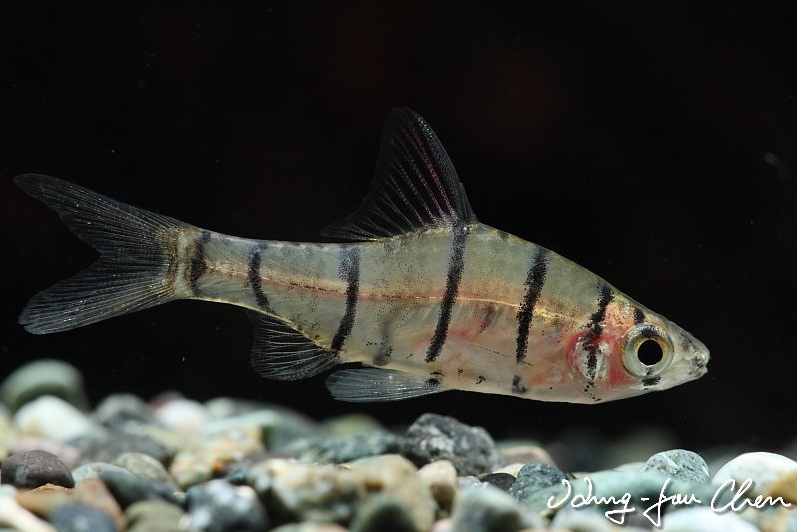
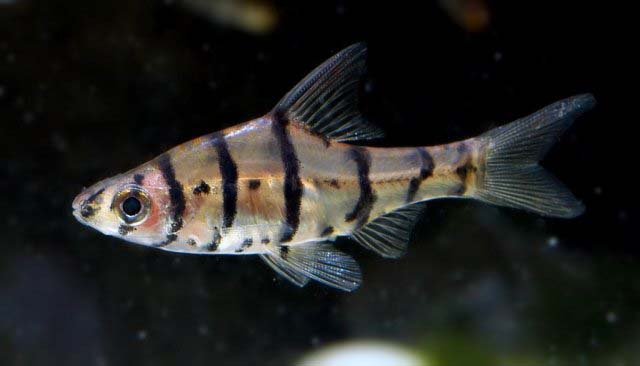
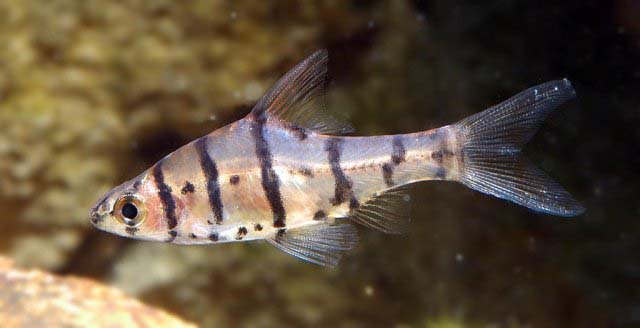
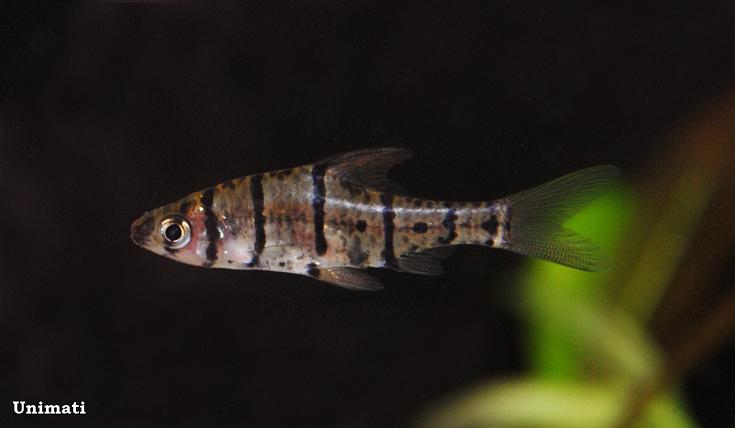
Eirmotus octozona 具有八道深色体侧条纹,是需要安静同伴和细小食物的群居鱼。它与 Eirmotus insignis 常共用“false eight-banded barb”贸易名,选购时应注意实际体纹及背鳍标记。
分布与栖息地
可追溯的贸易采集来自马来半岛柔佛州。最初模式标本是据称来自泰国 Bueng Boraphet 湖的观赏鱼,但后来的广泛调查没有再次在那里记录到;若确实产于泰国,可能只在南部半岛地区。
采集者曾提及柔佛州亚依淡附近泥炭沼泽林,但当地栖境受扰动、破坏较重,不能把历史地点当作现存种群状况的保证。婆罗洲记录可能实际指近似种。本种具体栖境仍未确认,林溪、沼泽或湖缘等不同环境不能直接由同属成员套用。
饲养环境
可采用密植水草缸或弱光森林溪流式布置,柔软底床上放沉木根枝、落叶,并种耐阴蕨类、莫丝或椒草。保持轻柔过滤,不需强流。
本属进口个体经常状态不佳,对水化学变化似乎敏感。成熟稳定的缸很重要,规律每次换约 10% 的水,减少大幅波动。
食性与喂食
天然可能吃小型无脊椎动物、藻及浮游动物。适口干粮可以接受,但每天仍应补充小型活饵或冷冻水蚤、丰年虾等,不能只依靠干粮。
进口初期常虚弱且不积极抢食,先提供细小活饵帮助开口,稳定后再加入冷冻饵和干粮。留意是否被其他鱼抢走食物。
习性与混养
不适合有大型、活跃或抢食强势鱼的普通综合缸。小型温和鲤科鱼较合适,体型小的脂鲤或底层鲶鱼也可能适配,但后者仍属待观察的选择。
至少八至十条同种能降低紧张,表现更自然的群体活动。雄鱼竞争雌鱼注意时,体色和展示会更明显。
雌雄区分
成年雄鱼明显比雌鱼纤细,状态良好时不成对鳍会显淡红色。
繁殖
尚无可直接采用的人工繁殖记录。
补充说明
体侧八道条纹由吻端至尾柄依次排列。肛门前有较大且清晰的黑斑,从侧面及腹面都能看到;背鳍不分枝鳍条呈黑色,有时延伸到第一根分枝鳍条,其余部分大致透明。相比只数八道条纹,这些细节更有助于与近似种区分。
本属具有头部感觉乳突、不完整侧线且没有口须。曾长期仅认识一个种,2008 年修订后区分出多个外观相近成员,因此历史商品名并不等同准确鉴定。
图片
图片来自 SeriouslyFish,版权归各摄影者所有。
English
Overview
Eight dark body bars characterize Eirmotus octozona, a small shoaling fish needing quiet companions and tiny food. It shares the false eight-banded barb trade name with Eirmotus insignis, so dorsal markings and other details deserve attention when buying.
Distribution & habitat
Traceable commercial collections come from Johor on the Malay Peninsula. The aquarium specimens used for the original description were supposedly from Thailand's Bueng Boraphet, but subsequent extensive sampling did not find it there. Any Thai occurrence may be confined to the southern peninsula.
Collectors have mentioned peat-swamp forest near Ayer Hitam, Johor. Extensive habitat disturbance prevents assuming that historical sites still support intact populations. Bornean reports probably concern a similar species. Its precise habitat is unconfirmed; the different stream, swamp, and lake-margin environments occupied by relatives cannot all be assigned to it.
Aquarium setup
A densely planted aquarium or dim forest-stream layout is appropriate. Use a soft bottom, roots, branches, and leaves with tolerant ferns, mosses, or Cryptocoryne. Keep filtration gentle rather than producing strong current.
Imported members of the genus often arrive in poor condition and appear sensitive to changing water chemistry. Use a mature stable aquarium and regular changes of about 10% to limit abrupt shifts.
Diet & feeding
Small invertebrates, algae, and zooplankton are possible natural foods. Suitable dry preparations are accepted, but daily tiny live or frozen water fleas, Artemia, and similar offerings remain useful.
New imports may be weak and hesitant. Begin with small live prey, adding frozen and dry foods after they settle. Check that competitors are not taking the food first.
Behaviour & compatibility
Large, boisterous, or forceful feeders make an ordinary community unsuitable. Small peaceful cyprinids are better companions. Small characins or bottom catfishes may also work, but those possibilities still need observation.
At least eight to ten individuals reduce nervousness and promote natural group behavior. Males competing for female attention display stronger color and more conspicuous interactions.
Sexual dimorphism
Adult males are distinctly slimmer. In good condition their unpaired fins develop a pale reddish tint.
Breeding
No established aquarium breeding method is available.
Notes
The eight bars extend from the snout to the tail base. A large clear black mark before the anus is visible from the side and below. Unbranched dorsal rays are dark, sometimes including the first branched ray, while most remaining fin tissue is clear. These features distinguish similar fish more effectively than simply counting bars.
The genus has head sensory papillae, an incomplete lateral line, and no barbels. Its long history as a single recognized species ended with the 2008 revision, so old trade names should not be treated as precise identifications.
来源
- https://www.seriouslyfish.com/species/eirmotus-octozona(抓取于 2026-10-10)
eirmotus-octozona · 文件: data/species/eirmotus-octozona.md · 状态: 草稿