Eirmotus insignis
概要
| 字段 | 值 |
|---|---|
| 类别 | 鱼 |
| 学名 | Eirmotus insignis |
| 分类 | 鲤形目 Cypriniformes › 鲤科 Cyprinidae › Eirmotus |
| 水体 | 淡水 |
| 原产地 | 印度尼西亚 |
| 成体体长 | 3.6 cm |
| 饲养难度 | 中等 |
| 最小水体 | 54 L |
| 最小缸长 | 60 cm |
| 群居方式 | 群游 |
| 外部数据 | seriouslyfish eirmotus-insignis;fishbase 64659 |
水质参数
| 参数 | 耐受范围 | 最适范围 | 单位 |
|---|---|---|---|
| 水温 | 20–26 | — | °C |
| pH | 5–7 | — | — |
| 总硬度 | 1–8 | — | dGH |
概述
Eirmotus insignis 是胆小、摄食较慢的小型群居鱼,初到缸时尤其需要安静环境和细小活饵。它与同属外形相似的鱼共享“false eight-banded barb”商品名,背鳍黑纹才是更有用的鉴别线索。
分布与栖息地
已知来自印度尼西亚婆罗洲西加里曼丹的卡普阿斯河流域,以及苏门答腊东侧的勿里洞岛。卡普阿斯记录多集中于桑高与布都西包之间的中游。
常见于浅而缓流、树荫浓密的雨林溪流及沼泽,水下与岸边植物繁茂,水可能较浑,底部为泥、落叶和枯枝。林冠使环境昏暗,水通常较软、弱酸,鱼藏在悬垂根系及水草间。
饲养环境
适合密植缸或森林溪流式布置,采用柔软底床、弱光、沉木根枝和落叶,辅以耐阴蕨类、莫丝和椒草。过滤水流无需很强。
本属进口鱼常体况较差,对水化学波动似乎敏感。必须使用成熟稳定的缸,规律少量换水,每次约 10%,避免因急于清理而大幅改变环境。
食性与喂食
野外可能摄食小型无脊椎动物、藻和浮游动物,尚不是已经确认的完整食谱。缸中能吃适口干粮,但不能只喂干粮,每天宜有细小活饵或冷冻水蚤、丰年虾等。
刚进口时可能虚弱、害羞甚至不愿开口,优先用小型活饵吸引摄食,稳定后再逐渐引入冷冻饵与干粮。不要只看到食物入水就认为它已经吃饱。
习性与混养
多数普通综合缸并不合适,较大或过于活跃的鱼容易使它受惊、抢走食物。小型、温和的鲤科鱼较合适;也可围绕卡普阿斯河的小型鱼组成原生境方向的群落,但须逐一核对各自需求。
至少八至十条能减少紧张,并让群体行为更自然。雄鱼争取雌鱼注意时,体色及互动会更明显。
雌雄区分
成熟雌鱼预计身体比雄鱼明显圆润,应结合体况与成熟程度判断。
繁殖
尚无可采用的人工繁殖记录。
补充说明
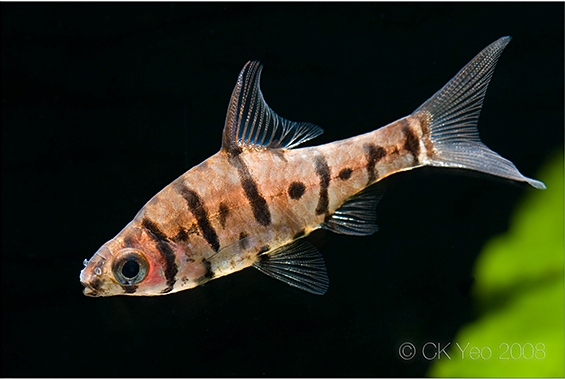
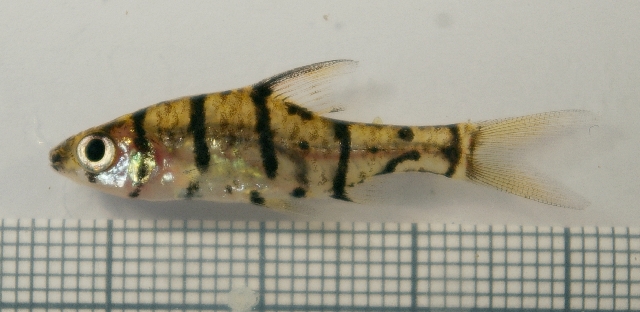
同属鱼通常具有八道暗色竖纹,但只数体纹无法区分。此种背鳍前两根不分枝鳍条及第三根基部较黑,后段较淡;分枝鳍条约三分之二高度处有一排淡黑斑。肛门前的小黑点从侧面可见,且比部分近似种的黑斑小。
本属具有头部感觉乳突、不完整侧线和无口须等特征。2008 年修订后认识到多种外观近似成员,共用商品名时应更加注意实际形态。
图片
图片来自 SeriouslyFish,版权归各摄影者所有。
English
Overview
Timid and hesitant at feeding, Eirmotus insignis needs quiet surroundings and tiny live foods during its initial adjustment. The shared false eight-banded barb trade name obscures differences from related fishes; dorsal markings provide more useful identification clues.
Distribution & habitat
Records involve the Kapuas basin of West Kalimantan on Indonesian Borneo and Belitung Island east of Sumatra. Most Kapuas collections fall between Sanggau and Putussibau.
Shallow shaded rainforest streams and swamps have slow water, dense vegetation, and mud, leaves, and fallen branches beneath often turbid water. Canopy cover keeps light low; water is generally soft and mildly acidic. Roots and plants shelter the fish.
Aquarium setup
Dense planting or a forest-stream arrangement works well. Combine a soft bottom, low light, roots, branches, and leaves with tolerant ferns, mosses, and Cryptocoryne. Strong filtration flow is unnecessary.
Imported members of this genus frequently arrive depleted and appear sensitive to chemical fluctuations. Use a mature, stable aquarium and regular small water changes of about 10%, avoiding abrupt environmental shifts.
Diet & feeding
Tiny invertebrates, algae, and zooplankton are presumed wild foods rather than a confirmed full menu. Appropriately sized dry food is accepted, but supplement it daily with tiny live or frozen water fleas, Artemia, and similar items.
New arrivals can be weak or reluctant to feed. Small live prey is the best starting point, with frozen and dry alternatives introduced after settling. Food entering the aquarium does not prove that this shy fish obtained its share.
Behaviour & compatibility
Most ordinary communities are unsuitable because larger or boisterous companions can intimidate it and dominate feeding. Small gentle cyprinids are better candidates. A Kapuas-themed community is possible, provided the requirements of each proposed species are checked.
Keep at least eight to ten. Companions reduce nervousness and promote natural interactions; courting males show stronger color and more conspicuous display behavior.
Sexual dimorphism
Mature females are expected to be noticeably rounder-bodied. Interpret this in relation to condition and maturity.
Breeding
No documented aquarium method is available.
Notes
Eight dark bars are typical of the genus but do not establish species identity. Here, black on the front dorsal rays occupies the first two unbranched rays and the lower half of the third, fading above. A row of faint dark marks crosses the branched rays at roughly two-thirds of fin height. A small mark ahead of the anus is visible laterally.
Head sensory papillae, an incomplete lateral line, and absent barbels characterize the genus. The 2008 revision recognized several similar members, making shared trade labels particularly unreliable.
来源
- https://www.seriouslyfish.com/species/eirmotus-insignis(抓取于 2026-10-10)
eirmotus-insignis · 文件: data/species/eirmotus-insignis.md · 状态: 草稿