阿氏盘齿魮
概要
| 字段 | 值 |
|---|---|
| 类别 | 鱼 |
| 学名 | Discherodontus ashmeadi |
| 别名 | 阿氏盤齒魮、Barbus ashmeadi |
| 分类 | 鲤形目 Cypriniformes › 鲤科 Cyprinidae › Discherodontus |
| 水体 | 淡水 |
| 原产地 | 柬埔寨、老挝、泰国 |
| 成体体长 | 13.5 cm |
| 饲养难度 | 中等 |
| 最小水体 | 243 L |
| 最小缸长 | 120 cm |
| 群居方式 | 群游 |
| 性情 | 温和 |
| 外部数据 | seriouslyfish discherodontus-ashmeadi;fishbase 27108 |
| 游动层 | 底层 |
| 特征 | 夜行性: 否 |
水质参数
| 参数 | 耐受范围 | 最适范围 | 单位 |
|---|---|---|---|
| 水温 | 23–26 | — | °C |
| pH | 6–7.5 | — | — |
| 总硬度 | 2–12 | — | dGH |
概述
阿氏盘齿魮(Discherodontus ashmeadi)是温和、偏下层活动的群游鱼,但运输和转移时十分娇弱。离水容易应激、掉鳞,受伤部位又易感染,因此入缸过程和搬运方式与日常水质同样重要。
分布与栖息地
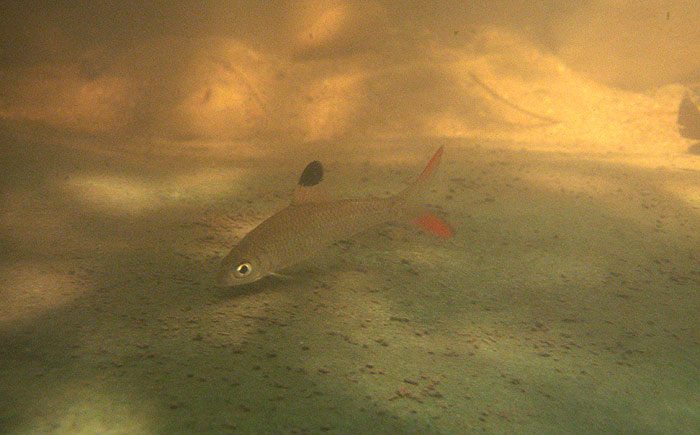
记录涉及泰国、老挝、柬埔寨的湄公河及美功河流域,分布范围仍有不同解释,种群可能相当局部化。多见于清澈的森林溪流和小河,急流与深潭交替,较缓处积有落叶、树枝和根系。白天会到较深、较快的水中觅食,夜间回到浅而平静的位置休息,并非夜行鱼。
饲养环境
适合宽敞、躲藏点丰富的溪流缸,以石块、砾石、大型圆石和沉木形成明暗区。可种耐养附生水草,较明亮处的藻膜供其啄食。保持高溶氧、适度水流和洁净水体,每周换水约三成至一半。
它不耐水质剧变,入缸前宜花数小时缓慢适应,不能放入过滤未成熟的缸。转移时把袋子或容器置于水下接鱼,尽量避免离水和掉鳞。
食性与喂食
野生胃内容物显示主要摄食水生及陆生无脊椎动物,也会在石面浏览、啄食附着生物膜。人工饲养应规律供应红虫、水蚤、丰年虾等活饵或冷冻饵,配合优质薄片和颗粒。
习性与混养
适合与需要高溶氧、无攻击性的鱼同养,大部分时间待在缸的下层。除非空间非常宽裕,应避免加入占据底部的慈鲷。至少六尾成群有助于减少紧张并呈现自然互动,雄鱼求偶竞争时颜色更好。
雌雄区分
成熟雌鱼通常更大、身体明显更厚实。
补充说明
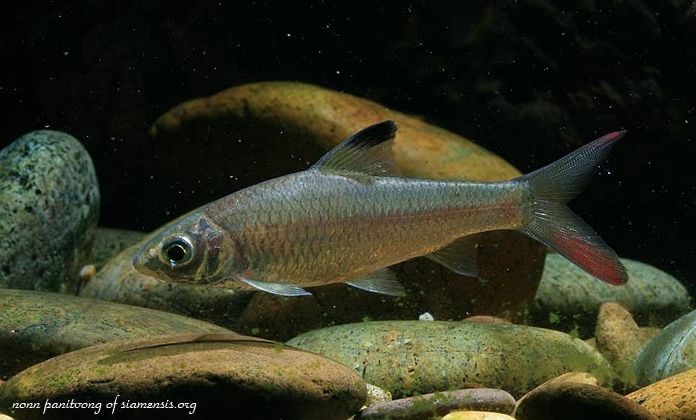
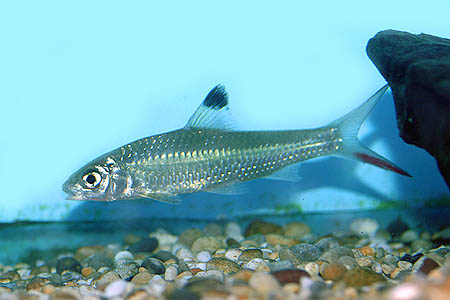
背鳍和尾鳍偏红或粉红,背鳍上的明显黑斑成年后仍保留,可与相似种结合比较。旧说将其视为夜行鱼,可能只是因为夜间更容易在浅水休息处采到。
图片
图片来自 SeriouslyFish,版权归各摄影者所有。
English
Overview
Peaceful and lower-water oriented, Discherodontus ashmeadi is nevertheless exceptionally delicate during handling. Removal from water can trigger shock and scale loss, with exposed areas prone to infection. Transfer technique therefore matters as much as routine aquarium maintenance.
Distribution & habitat
Records involve the Mekong and Mae Klong systems of Thailand, Laos and Cambodia, though interpretations of the full range differ and populations may be localized. Forest streams and smaller rivers combine clear rapids with pools and sheltered deposits of wood and leaves. The fish feeds in deeper, faster water by day, then rests in shallow quiet areas at night.
Aquarium setup
Use a spacious, well-sheltered river layout with gravel, stones, larger rounded rocks and wood forming shaded retreats. Hardy attached plants can be used, while illuminated surfaces develop growth for grazing. Maintain high oxygen levels, moderate circulation and clean water, with weekly changes of about a third to half of the volume.
Only use an established biological system. Acclimate slowly over several hours where possible, avoiding abrupt chemistry changes. For transfers, receive the fish into a bag or container while it remains underwater rather than lifting it into the air.
Diet & feeding
Wild stomach contents indicate predominantly aquatic and terrestrial invertebrates. Fish also browse surface biofilms on rocks. Provide regular small live or frozen meals alongside good flakes or granules.
Behaviour & compatibility
Compatible, nonaggressive fishes requiring oxygen-rich water are suitable companions. Much of its time is spent low in the aquarium. Bottom-occupying cichlids are best avoided unless the tank is exceptionally large. At least six conspecifics help reduce nervousness and support natural male displays.
Sexual dimorphism
Mature females are generally larger and noticeably heavier-bodied.
Notes
Pink or red dorsal and tail coloration and a dorsal blotch retained into adulthood help distinguish it from similar species. Its former nocturnal reputation appears to have arisen because fish resting in shallow water were easier to collect after dark.
来源
- https://www.seriouslyfish.com/species/discherodontus-ashmeadi(抓取于 2026-10-10)
discherodontus-ashmeadi · 文件: data/species/discherodontus-ashmeadi.md · 状态: 草稿