Devario xyrops · Blue Moon 'Danio'
概要
| 字段 | 值 |
|---|---|
| 类别 | 鱼 |
| 学名 | Devario xyrops |
| 分类 | 鲤形目 Cypriniformes › 鲤科 Cyprinidae › Devario |
| 水体 | 淡水 |
| 原产地 | 缅甸 |
| 成体体长 | 8 cm |
| 饲养难度 | 中等 |
| 最小水体 | 243 L |
| 最小缸长 | 120 cm |
| 群居方式 | 群游 |
| 特征 | 会跳缸: 是 |
| 外部数据 | seriouslyfish devario-xyrops;fishbase 65024 |
水质参数
| 参数 | 耐受范围 | 最适范围 | 单位 |
|---|---|---|---|
| 水温 | 18–26 | — | °C |
| pH | 6–8 | — | — |
| 总硬度 | 2–15 | — | dGH |
概述
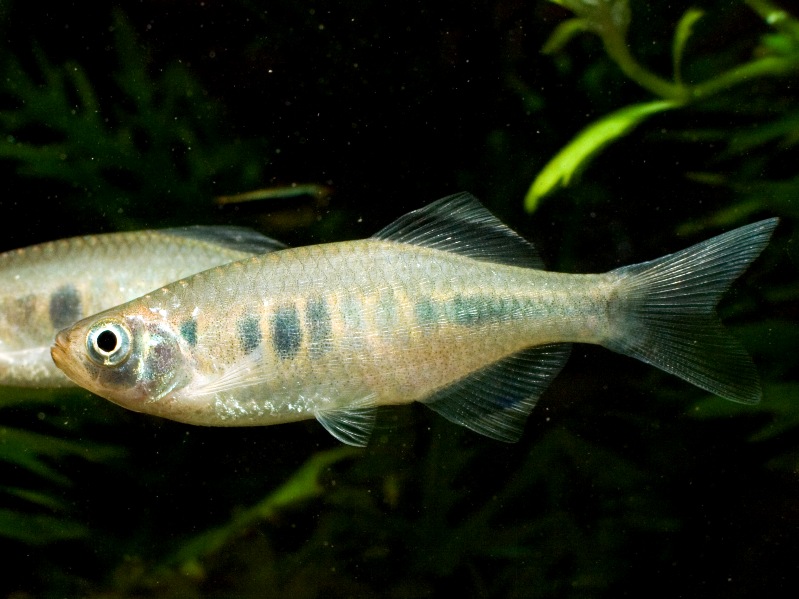
Devario xyrops 是缅甸若开山脉西坡的群游鱼,曾以“broken line”代号进入贸易。体前部数条短竖纹聚成暗斑,体后部接一条宽暗色横纹,是它引人注意的外观特征。
分布与栖息地
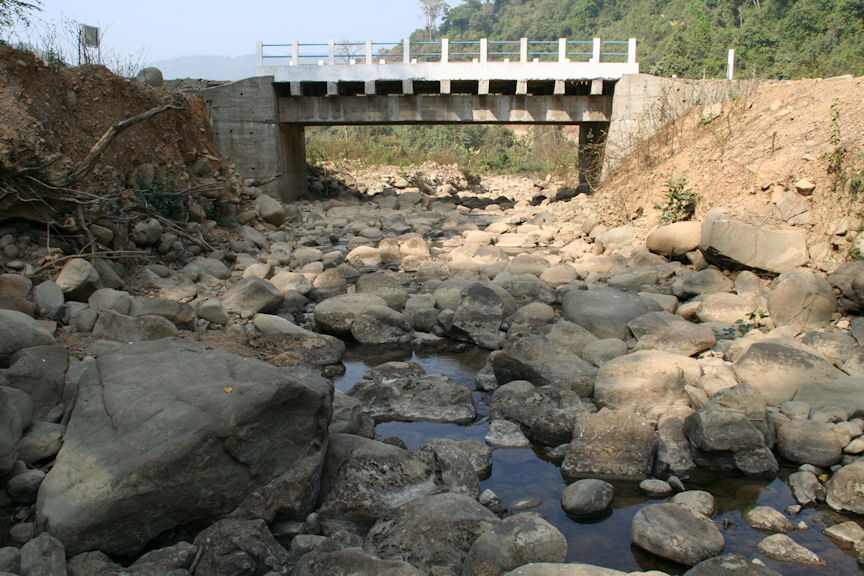
已知分布限于若开邦丹兑南北、若开山脉西坡流出的小溪和小河。当地雨季主要在五月至十月,旱季溪流常退缩为彼此相连的小水潭,雨季水深可增加一米以上,流速也明显加快。
旱季模式点为林中小河,水潭宽约 2 m、深不超过 1 m,水清澈无色,缓流至近乎静止。另一采点为约 30 cm 深、3 m 宽的浅溪,底部有砾石、卵石、岩块和落叶。森林边缘农业利用的变化也影响采点周围景观。
饲养环境
适合溪流式布置,以圆滑石块、沙、细砾和沉木根枝形成结构,配耐受的附生蕨类、水榕等。虽然野外有明显季节变化,日常缸内不必模拟急涨水或激流。
宜维持清洁稳定的水、高溶氧和适中循环,避免有机污染积累。每周换水约 30%~50%,缸盖必须严密,防止活跃鱼跃出。
食性与喂食
天然很可能主要吃昆虫及幼体。缸中通常能接受多数饵料,优质干粮可作基础,并规律补充红虫、水蚤、丰年虾等小型活饵或冷冻饵。
习性与混养
不以主动攻击见长,但不停游动与抢食会使慢游、胆小鱼紧张。较合适的是宽敞缸中体型接近、健壮的同伴。
至少八至十条同种有助于降低紧张、分散等级竞争,雄鱼在同伴间通常更显色。群体仍需充分游动空间,不能用鱼数代替空间。
雌雄区分
成熟雌鱼预计腹部更圆、体型略大,颜色比雄鱼淡,判断应结合成熟程度。
繁殖
本属通用的散卵、无亲鱼照护方法可以作为尝试方向,不宜当作本种每一步均已验证的固定流程。成熟密植缸中有时可自然出现少量幼鱼;希望提高存活率时,可设独立弱光繁殖环境,用隔卵网、塑料草垫、玻璃珠、细叶草或产卵拖把阻挡亲鱼吃卵。
采用成熟水,弱酸至中性,温度取适温范围上端,并用气石或气动海绵过滤轻柔供氧。调理后将一至两对成熟亲鱼放入,准备充分时通常约一天产卵,雌鱼腹部会变瘦;约两天后无论是否观察到产卵都应移走成鱼。
属级通用记录的孵化多约 24~36 小时,再过数天自由游动。先喂草履虫等微小饵料,长大后再接受丰年虾无节幼体、微虫及粉状干粮。
补充说明
体前暗斑由四至五条部分合并的短竖纹组成,也可能连成一块,后半身为宽暗纹。相似的同属 Devario anomalus 体形更浅、侧线鳞较多;本种通常约三十一至三十三枚侧线鳞,后者约三十三至三十五枚,不能只看中央暗纹就认定身份。
图片
图片来自 SeriouslyFish,版权归各摄影者所有。
English
Overview
Known before description as broken line, Devario xyrops is a schooling fish from the western Rakhine Yoma. Short anterior bars combine into a dark patch, followed by a broad horizontal stripe on the rear body.
Distribution & habitat
It is known from small streams and rivers draining the mountain range's western side north and south of Thandwe. Rakhine's main rainy season runs from May to October. Dry-season channels contract into linked pools; rains can deepen them by over a meter and greatly increase current.
At the dry-season type locality, a forest river formed pools about 2 m wide and no deeper than 1 m, containing clear colorless water with little or no flow. Another collection site was roughly 30 cm deep and 3 m wide, over gravel, pebbles, rocks, and leaves. Changes in agricultural use also affected the surrounding forest-edge landscape.
Aquarium setup
Rounded stones, sand, fine gravel, and roots make a suitable stream layout, with hardy attached ferns or Anubias. Seasonal floods and rapid water-level changes need not be reproduced in routine care.
Favor stable clean water, abundant oxygen, and moderate circulation while preventing organic waste buildup. Change approximately 30–50% weekly and fit the lid securely against jumping.
Diet & feeding
Insects and larvae are strongly suspected principal natural foods. Most aquarium offerings are accepted. Use quality dry food with regular small live or frozen bloodworms, water fleas, and Artemia.
Behaviour & compatibility
It is not notably aggressive, but continual movement and vigorous feeding can stress slow or timid companions. Similar-sized robust fish are better choices in spacious accommodation.
A group of at least eight to ten helps reduce nervousness and distribute social competition. Rival males often display stronger color. Numbers cannot substitute for adequate swimming room.
Sexual dimorphism
Mature females are expected to be larger, fuller-bellied, and less colorful. Consider maturity when interpreting these differences.
Breeding
The genus's general egg-scattering method offers a possible approach rather than a fully verified species-specific sequence. Small numbers of young may appear in mature planted aquariums. A separate dim breeding setup can improve survival using mesh, artificial grass, marbles, fine plants, or mops to keep adults away from eggs.
Use mature slightly acidic to neutral water at the warmer end of the suitable range, with gentle air-driven filtration or aeration. Add one or two well-conditioned pairs. Ready fish commonly spawn within a day, leaving females visibly slimmer; remove adults after about two days whether laying was seen or not.
Generic accounts give roughly 24–36 hours to hatching and several further days to free swimming. Begin with Paramecium or similar minute food, then introduce Artemia nauplii, microworms, and powdered dry foods as the young grow.
Notes
The anterior blotch comprises four or five partly merged bars that may form a solid patch, with a broad stripe behind it. The similar Devario anomalus is shallower-bodied and has more lateral-line scales: approximately 33–35 compared with 31–33 here. The central dark pattern alone cannot settle identification.
来源
- https://www.seriouslyfish.com/species/devario-xyrops(抓取于 2026-10-10)
devario-xyrops · 文件: data/species/devario-xyrops.md · 状态: 草稿