掸邦
概要
| 字段 | 值 |
|---|---|
| 类别 | 鱼 |
| 学名 | Devario shanensis |
| 别名 | 撣邦、Danio shanensis、Brachydanio shanensis、Inlecypris shanensis |
| 分类 | 鲤形目 Cypriniformes › 鲤科 Cyprinidae › Devario |
| 水体 | 淡水 |
| 原产地 | 缅甸 |
| 成体体长 | 6 cm |
| 饲养难度 | 中等 |
| 最小水体 | 72 L |
| 最小缸长 | 80 cm |
| 群居方式 | 群游 |
| 性情 | 温和 |
| 特征 | 会跳缸: 是 |
| 外部数据 | seriouslyfish devario-shanensis;fishbase 24701 |
| 繁殖方式 | 散卵 |
水质参数
| 参数 | 耐受范围 | 最适范围 | 单位 |
|---|---|---|---|
| 水温 | 18–26 | — | °C |
| pH | 6–8 | — | — |
| 总硬度 | 2–15 | — | dGH |
概述
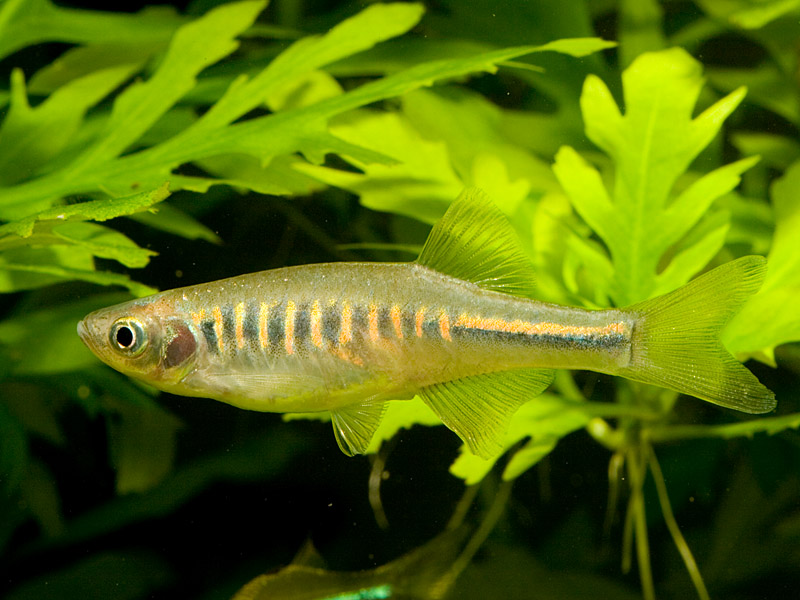
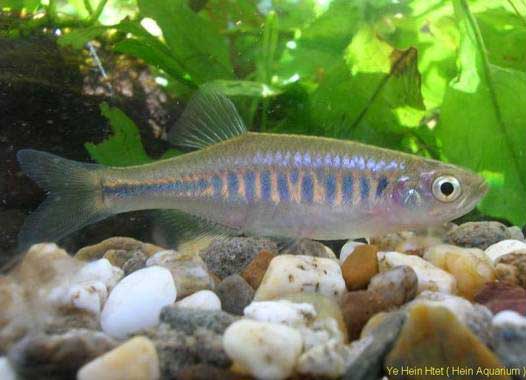
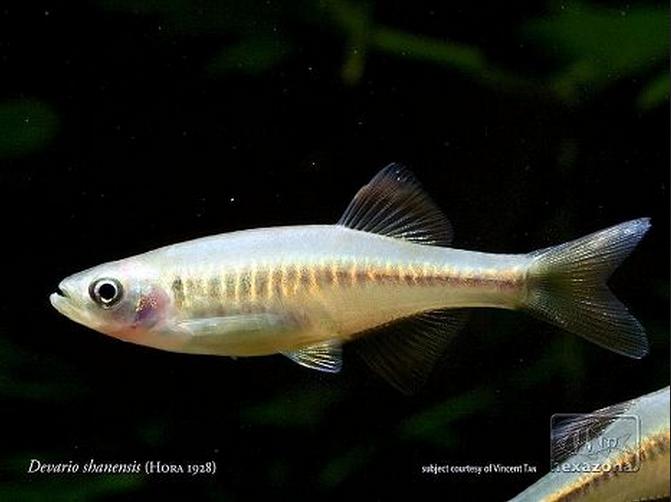
Devario shanensis 是来自缅甸掸邦的温和群游鱼,前半身体侧有窄竖纹,后方连接一条颜色连续的横带。与花纹相近种相比,横带不是一串黑斑拼成,这是有用的辨识线索。
分布与栖息地
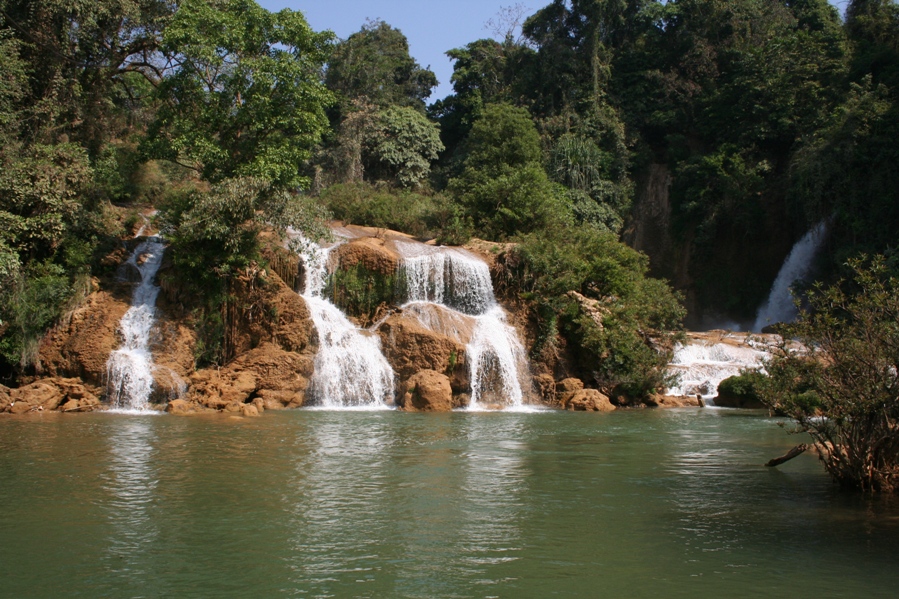
已知来自掸邦的杜塔瓦底河与萨尔温江水系,完整分布范围仍未厘清。曾在清澈、流速较快的溪流采到,底部有岩石、卵石和沙。
饲养环境
可用圆滑河石、沙、细砾、少量大石与沉木营造流水环境,耐养水草可固定在硬景观上。保持洁净水质、充足溶氧及适度水流,避免有机废物积累;建议每周换水约三成至一半。无需极强水流,严密缸盖则不可少。
食性与喂食
野外很可能以昆虫和幼虫为主。人工饲养通常不挑食,以优质干粮搭配红虫、水蚤、丰年虾等小型活饵或冷冻饵即可形成较丰富的菜单。
习性与混养
性情温和,可与环境需求相容的鱼组成混养群落。建议八至十尾或更多一起养,减少紧张,也让雄鱼有正常的竞争展示机会;群体中的等级互动通常集中于同种之间。
雌雄区分
成熟雌鱼体形较深、略大且颜色较淡,繁殖雄鱼色彩明显增强。
繁殖
散卵且不护卵,成熟水草缸中偶尔可能自然保留下少量鱼苗。若想提高成活率,可另设昏暗繁殖缸,用成熟水与温和增氧,并以网格、细叶植物或产卵拖把保护卵。调养后的一两对亲鱼可能在一天内产卵,约两天后应移出,即使没有亲眼看到产卵。
卵通常约一天至一天半孵化,具体受温度影响,数天后鱼苗自由游动。先供应草履虫等微小饵料,再随着口径增长转用微虫、丰年虾幼体及细粉饲料。
补充说明
旧名称中可能使用其他属名;本种的侧线完整程度也有变化,不能只凭一个特征鉴定,应结合体侧横带和须的发育情况。
图片
图片来自 SeriouslyFish,版权归各摄影者所有。
English
Overview
A peaceful shoaling fish from Myanmar, Devario shanensis has narrow bars at the front of the flanks and a continuously pigmented stripe behind them. The unbroken rear band helps distinguish it from similar fishes whose stripe consists of adjoining blotches.
Distribution & habitat
Known records concern the Duthawadi and Salween drainages in Shan State, although the full range remains uncertain. Specimens have been collected from clear, fast streams over rocks, pebbles and sand.
Aquarium setup
Rounded stones, sand, gravel and wood can create an appropriate flowing-water layout, with hardy plants attached to the hardscape. Maintain clean water, ample oxygen and moderate circulation. Weekly changes of around a third to half of the volume help control organic accumulation. Extreme current is unnecessary, but a secure cover is essential.
Diet & feeding
Insects and larvae are considered the likely principal natural foods. Aquarium fish are generally easy to feed. Quality dry products can be combined with small live or frozen invertebrates for a varied diet.
Behaviour & compatibility
Its mild temperament permits a thoughtfully chosen community with compatible environmental needs. Eight to ten or more conspecifics are preferable to a few individuals, reducing nervousness and encouraging male displays. Most social ranking interactions then remain within the group.
Sexual dimorphism
Mature females are larger, deeper-bodied and less strongly colored. Reproductive males intensify their coloration.
Breeding
This species scatters eggs and does not guard them. A few fry may survive unaided in an established planted tank. For better control, use a separate dim aquarium with mature water, gentle aeration and mesh, plants or mops protecting eggs. Condition adults and introduce one or two pairs; spawning may occur within a day. Remove adults after roughly two days even if spawning was not seen.
Hatching commonly takes about one to one and a half days, depending on temperature, with free swimming several days later. Begin with microscopic foods and progress to larger live foods and fine powders as the fry develop.
Notes
Older names may place the species in another genus. Lateral-line completeness also varies, so identification should combine several features, including stripe structure and barbel development.
来源
- https://www.seriouslyfish.com/species/devario-shanensis(抓取于 2026-10-10)
devario-shanensis · 文件: data/species/devario-shanensis.md · 状态: 草稿