大 · Giant 'Danio'
概要
| 字段 | 值 |
|---|---|
| 类别 | 鱼 |
| 学名 | Devario malabaricus |
| 别名 | Danio malabaricus、Perilampus malabaricus、Danio micronema、Eustira ceylonensis、Paradanio aurolineatus、Perilampus aurolineatus、Perilampus canarensis、Perilampus mysoricus |
| 分类 | 鲤形目 Cypriniformes › 鲤科 Cyprinidae › Devario |
| 水体 | 淡水 |
| 原产地 | 印度、斯里兰卡 |
| 成体体长 | 8 cm |
| 饲养难度 | 中等 |
| 最小水体 | 243 L |
| 最小缸长 | 120 cm |
| 群居方式 | 群游 |
| 特征 | 会跳缸: 是 |
| 外部数据 | seriouslyfish devario-malabaricus;fishbase 4760 |
水质参数
| 参数 | 耐受范围 | 最适范围 | 单位 |
|---|---|---|---|
| 水温 | 18–25 | — | °C |
| pH | 6–8 | — | — |
| 总硬度 | 2–15 | — | dGH |
概述
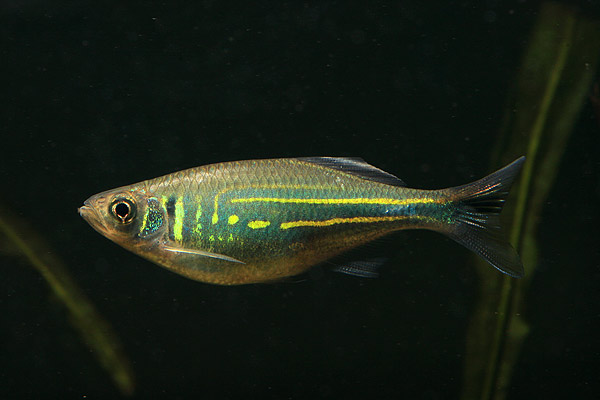
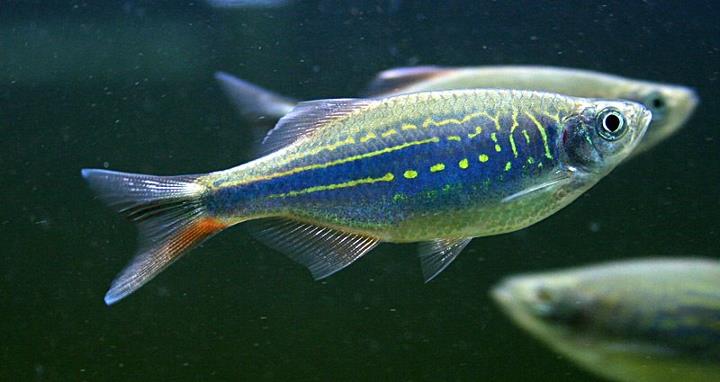
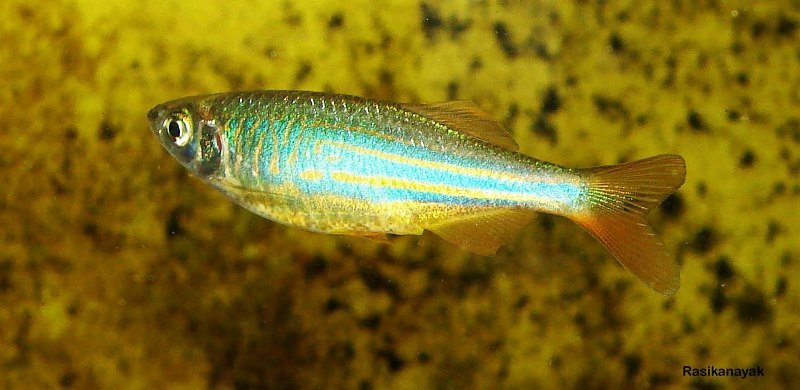
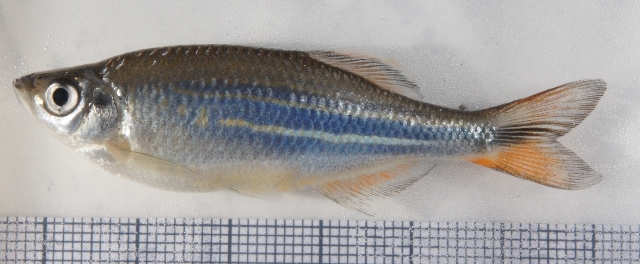
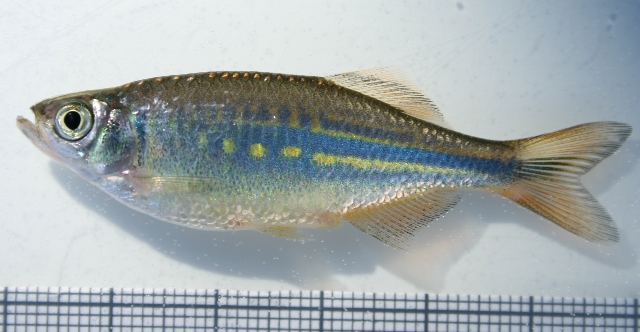
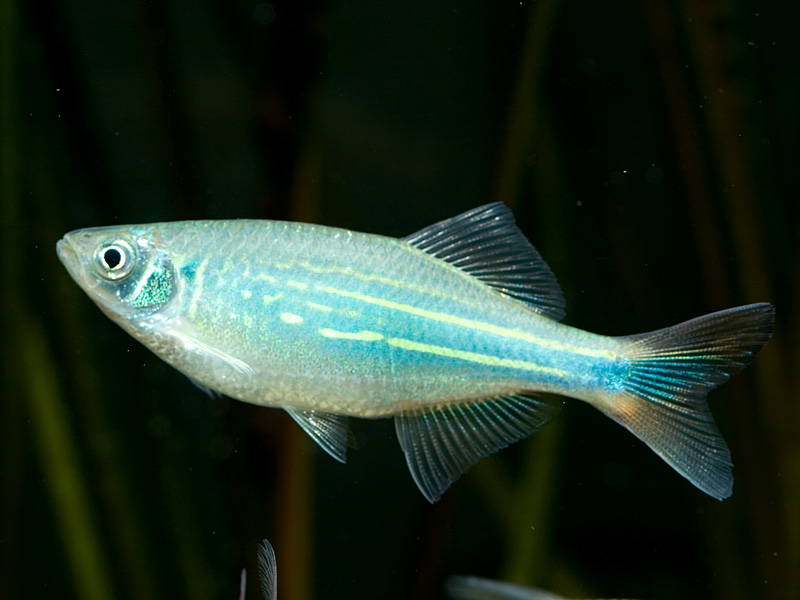
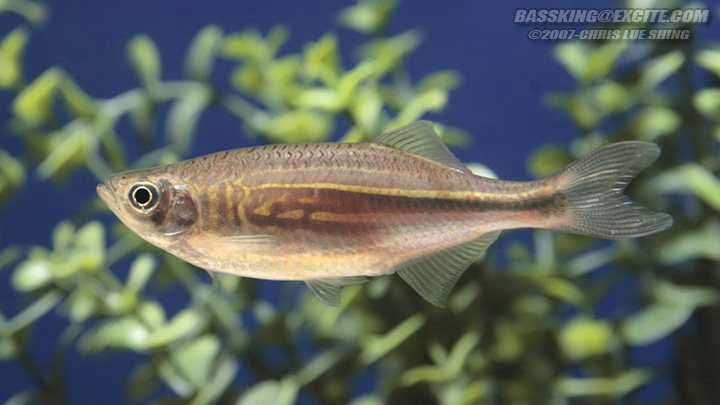
Devario malabaricus 是较高身、蓝黄相间的活跃群游鱼,市场上的“巨型斑马鱼”经常属于本种。旧商品标签和饲养资料可能使用其他学名,确认身份时应结合体形和花纹。
分布与栖息地
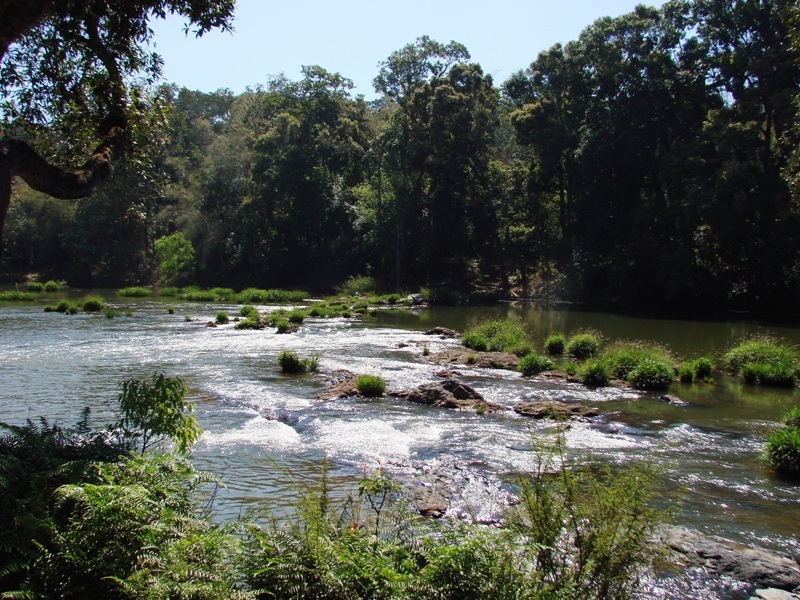
传统记录覆盖印度半岛和斯里兰卡,但真实分布可能更窄,或限于印度向西流的河流,甚至集中在喀拉拉邦,仍有待厘清。它生活在清澈、含氧丰富的山溪和小河上游,底部多沙砾、石块,岸边植被提供遮蔽;旱季一些种群会留在残存水潭中。
饲养环境
需要足够长的游泳空间,可用圆滑河石、沙砾、沉木和耐养附生水草布置流水环境。保持成熟过滤与洁净水质,提供较高溶氧和适度循环,无需极强水流。建议每周换水约三成至一半,缸盖严密防跳。
食性与喂食
野外很可能以昆虫和幼虫为主,人工环境通常容易喂食。优质干粮搭配红虫、水蚤、丰年虾等小型活饵或冷冻饵,比长期单一投喂更利于体况和发色。
习性与混养
一般不主动攻击,但会用不断游动和积极取食打扰胆小或慢游的鱼。选择健壮、体型相近、环境需求相符的伙伴,在宽敞缸中饲养八至十尾以上同种鱼,更能减少紧张并呈现正常等级互动。
雌雄区分
成熟雌鱼通常略大、圆腹、颜色较淡;雄鱼有竞争者时往往更鲜艳。
繁殖
可用同属散卵鱼的常见方法尝试,另设昏暗繁殖缸,使用成熟水和温和供氧,并以网格、玻璃珠、细叶植物或产卵拖把隔开卵与亲鱼。调养好的亲鱼进入后,观察产卵,随后及时移出;约两天仍未观察到产卵也可移出检查。鱼苗由草履虫等微小食物开口,长大后转喂丰年虾幼体、微虫和细粉饲料。
补充说明
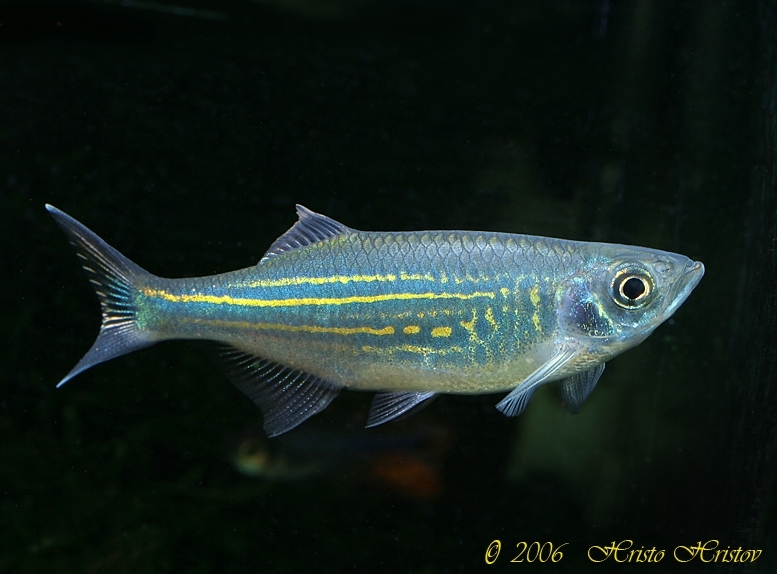
本种体侧主横带延伸至尾鳍分叉处。商品名与学名长期混用,且原生范围存在疑问,不宜把某一产地或某本旧资料的名称当成唯一鉴定依据。
图片
图片来自 SeriouslyFish,版权归各摄影者所有。
English
Overview
The deep-bodied, blue-and-yellow Devario malabaricus is the fish commonly sold as the giant danio. Older labels and aquarium accounts often use another scientific name, making body shape and pattern more useful than the label alone.
Distribution & habitat
Its traditional range includes peninsular India and Sri Lanka, but the true distribution may be much narrower: west-flowing Indian drainages, or possibly Kerala alone, have been suggested. It inhabits clear, well-oxygenated hill streams and upper river sections with gravel, rocks and bankside shelter. Some populations persist in isolated pools during the dry season.
Aquarium setup
Give the group a long swimming area. Smooth stones, gravel, sand and wood can create a river setting, with robust attached plants where desired. Maintain established filtration, clean water, ample oxygen and moderate circulation rather than excessive current. Replace about a third to half of the water weekly and secure the lid against jumping.
Diet & feeding
Insects and larvae are the probable main wild foods, while captive feeding is straightforward. A quality dry staple supplemented with varied small live or frozen items supports good condition and coloration.
Behaviour & compatibility
Ordinarily nonaggressive, it can still disturb slow or timid fish through energetic swimming and feeding. Choose robust partners of similar size and compatible requirements. Eight to ten or more conspecifics in a spacious tank reduce nervousness and allow normal social ranking within the group.
Sexual dimorphism
Mature females are usually larger, fuller-bellied and paler. Males show stronger colors when competing with rivals.
Breeding
General egg-scattering devario methods provide a practical trial: a separate dim tank containing mature water, gentle aeration and egg-protecting mesh, marbles, fine plants or mops. Introduce conditioned adults, observe for spawning and remove them afterward. Removing them after about two days also limits unnoticed egg losses. Begin fry feeding with microscopic organisms, then progress to larger live foods and fine powders.
Notes
The main side stripe reaches the fork of the tail. Longstanding name confusion and unresolved range boundaries mean that neither an old label nor a claimed locality should serve as the sole basis for identification.
来源
- https://www.seriouslyfish.com/species/devario-malabaricus(抓取于 2026-10-10)
devario-malabaricus · 文件: data/species/devario-malabaricus.md · 状态: 草稿