三带无须魮
概要
| 字段 | 值 |
|---|---|
| 类别 | 鱼 |
| 学名 | Desmopuntius trifasciatus |
| 别名 | 三帶無鬚魮、Puntius trifasciatus |
| 分类 | 鲤形目 Cypriniformes › 鲤科 Cyprinidae › Desmopuntius |
| 水体 | 淡水 |
| 原产地 | 印度尼西亚、马来西亚 |
| 成体体长 | 10 cm |
| 饲养难度 | 入门 |
| 最小水体 | 243 L |
| 最小缸长 | 120 cm |
| 群居方式 | 群游 |
| 外部数据 | seriouslyfish desmopuntius-trifasciatus;fishbase 58400 |
水质参数
| 参数 | 耐受范围 | 最适范围 | 单位 |
|---|---|---|---|
| 水温 | 20–25 | — | °C |
| pH | 5–7 | — | — |
| 总硬度 | 1–10 | — | dGH |
概述
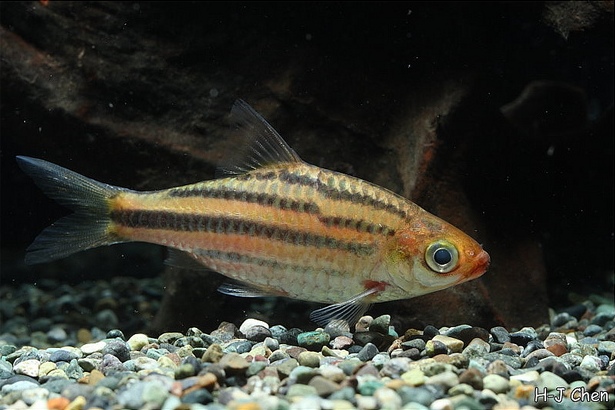
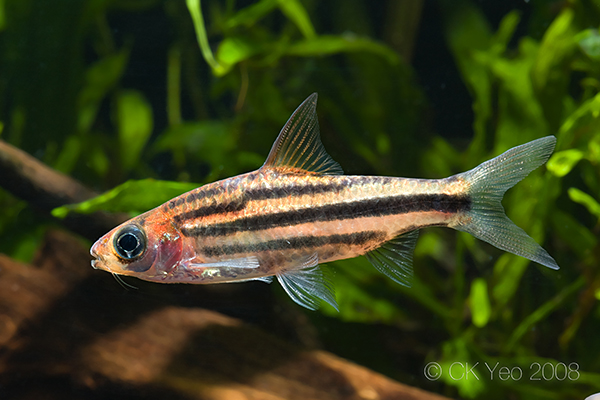
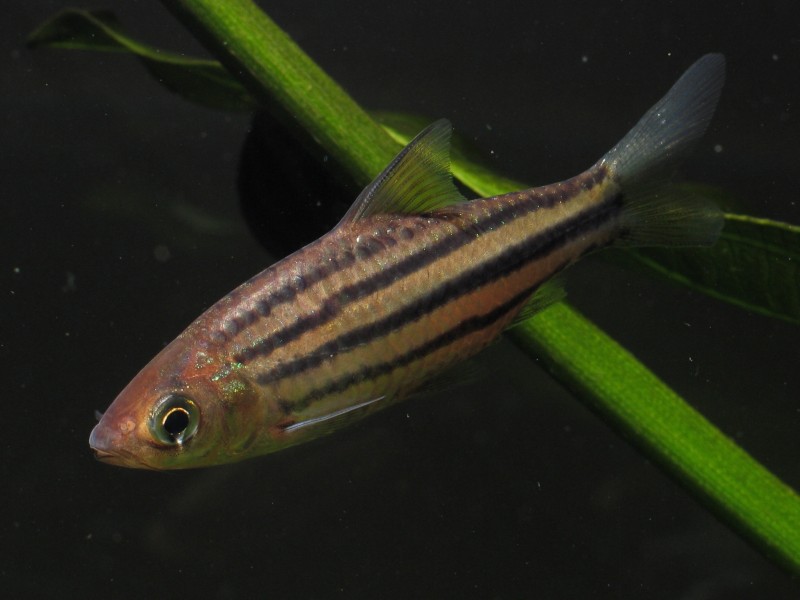
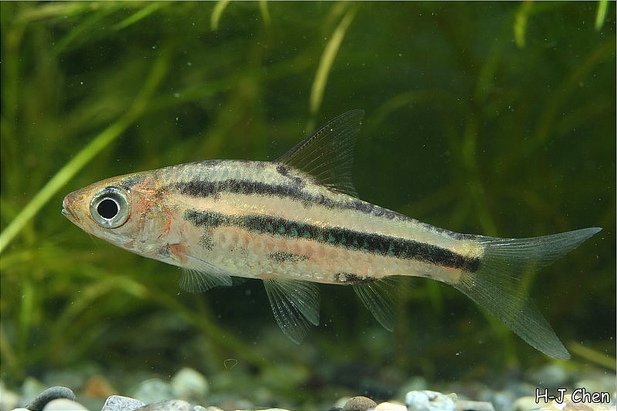
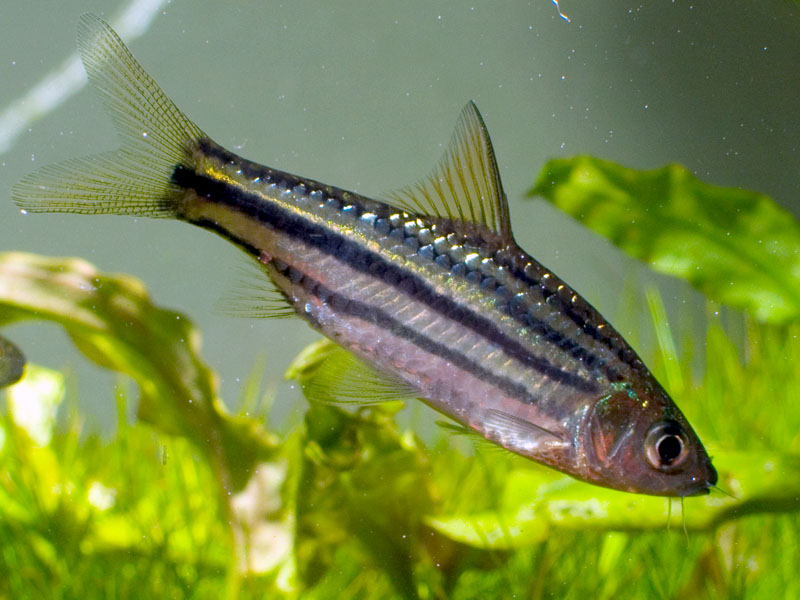
三带无须魮(Desmopuntius trifasciatus)的花纹会随成长改变:幼鱼为深色竖带,较大个体逐步转成横向条纹,中央一条通常最宽。仅凭幼鱼与成鱼花纹不同,不能断定它们属于不同物种。
分布与栖息地
分布于婆罗洲的印度尼西亚及马来西亚部分,模式产地位于西加里曼丹卡普阿斯河的森塔伦湖区,其他记录涉及加里曼丹数个水系及砂拉越南部。通常生活在泥炭沼泽、黑水溪流和其他静水区域,常伴随沉水草、水草及茂密岸边植物,底部覆盖落叶和树根。
饲养环境
适合茂密水草缸,或以柔软底砂、沉木、枝条、落叶和弱光模拟森林溪流。水草应选能适应阴暗环境的种类。
食性与喂食
野外可能利用硅藻、其他藻类、有机碎屑,以及小昆虫、蠕虫、甲壳类和浮游动物。人工饲养通常不挑食,优质薄片和颗粒应配合红虫、水蚤、丰年虾等活饵或冷冻饵,部分干粮宜含植物或藻类成分。
习性与混养
可用于温和的东南亚鱼群落,同伴以体型相近、环境相容的鲤科鱼、鳅类或部分攀鲈类为宜。建议八至十尾成群,足够数量能减少紧张,并让雄鱼在求偶竞争中展示更好的颜色。
雌雄区分
雄鱼成熟后通常较小、修长,色彩也更浓。
补充说明
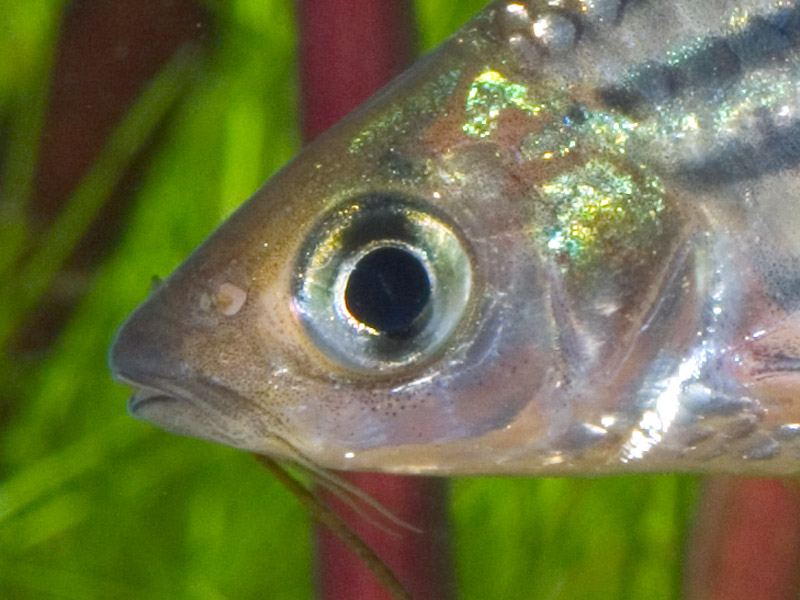
成鱼通常有三至四条宽横纹,并有两对须。幼鱼体侧的四条竖带会随着长大消退并转变,近缘种也可能经历类似变化,鉴定应结合整体特征与成长阶段。
图片
图片来自 SeriouslyFish,版权归各摄影者所有。
English
Overview
The pattern of Desmopuntius trifasciatus changes markedly as it grows. Juvenile bars give way to longitudinal stripes, with the middle stripe usually the broadest. A difference between young and older fish is therefore not, by itself, evidence of different species.
Distribution & habitat
Known from Indonesian and Malaysian Borneo, it was described from the Danau Sentarum lakes of the Kapuas drainage. Other populations occur in several Kalimantan systems and southern Sarawak. Quiet peat swamps and blackwater channels provide submerged vegetation, dense bankside cover, leaf deposits and drowned roots.
Aquarium setup
Use dense planting or a shaded forest-stream arrangement. Soft substrate, wood, branches and leaves provide structure; plants should be selected for tolerance of low light.
Diet & feeding
Algae, diatoms, organic debris and various small invertebrates probably contribute to wild feeding. Captive fish readily take a varied menu. Supplement good flakes or granules with small live or frozen foods, and include some prepared food containing plant or algal ingredients.
Behaviour & compatibility
A peaceful Southeast Asian community can include compatible, similarly sized cyprinids, loaches and appropriate anabantoids. Keep eight to ten or more conspecifics. A proper group improves confidence and encourages colorful displays between males competing for females.
Sexual dimorphism
Adult males generally remain a little smaller and slimmer, with stronger coloration.
Notes
Larger specimens usually show three or four broad side stripes and have two pairs of barbels. The four dark juvenile bars gradually change into this adult pattern. Since related species can undergo similar changes, age and additional identifying features need to be considered together.
来源
- https://www.seriouslyfish.com/species/desmopuntius-trifasciatus(抓取于 2026-10-10)
desmopuntius-trifasciatus · 文件: data/species/desmopuntius-trifasciatus.md · 状态: 草稿