菱斑无须魮 · Snakeskin Barb
概要
| 字段 | 值 |
|---|---|
| 类别 | 鱼 |
| 学名 | Desmopuntius rhomboocellatus |
| 别名 | 菱斑無鬚魮、Puntius rhombo-ocellatus、Barbus kahajani |
| 分类 | 鲤形目 Cypriniformes › 鲤科 Cyprinidae › Desmopuntius |
| 水体 | 淡水 |
| 原产地 | 印度尼西亚 |
| 成体体长 | 5.5 cm |
| 饲养难度 | 入门 |
| 最小水体 | 72 L |
| 最小缸长 | 80 cm |
| 群居方式 | 群游 |
| 外部数据 | seriouslyfish desmopuntius-rhomboocellatus;fishbase 17474 |
| 食性 | 肉食 |
水质参数
| 参数 | 耐受范围 | 最适范围 | 单位 |
|---|---|---|---|
| 水温 | 20–28 | — | °C |
| pH | 4–7 | — | — |
| 总硬度 | 1–5 | — | dGH |
概述
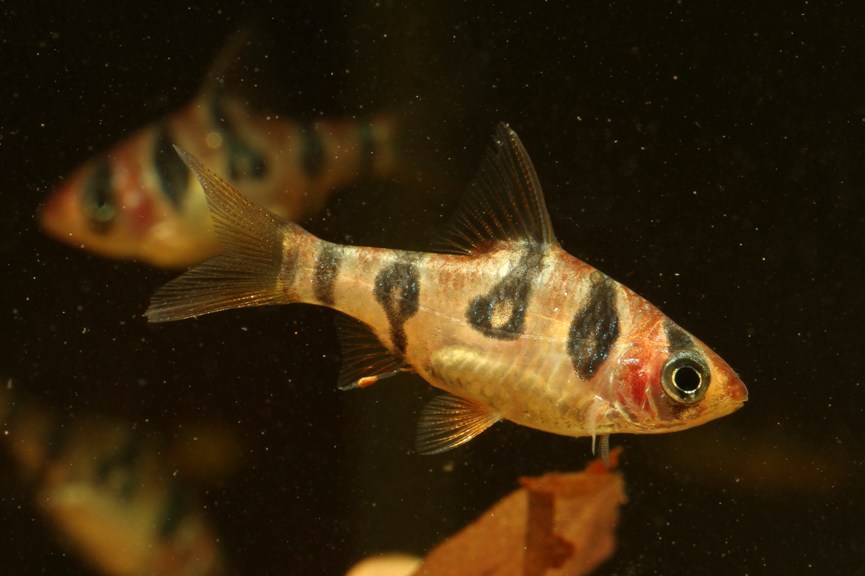
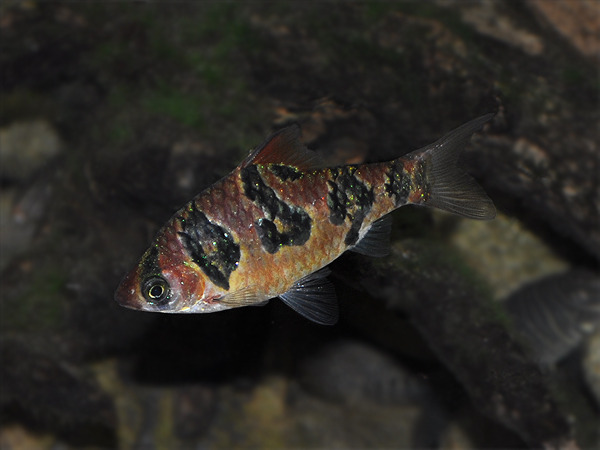
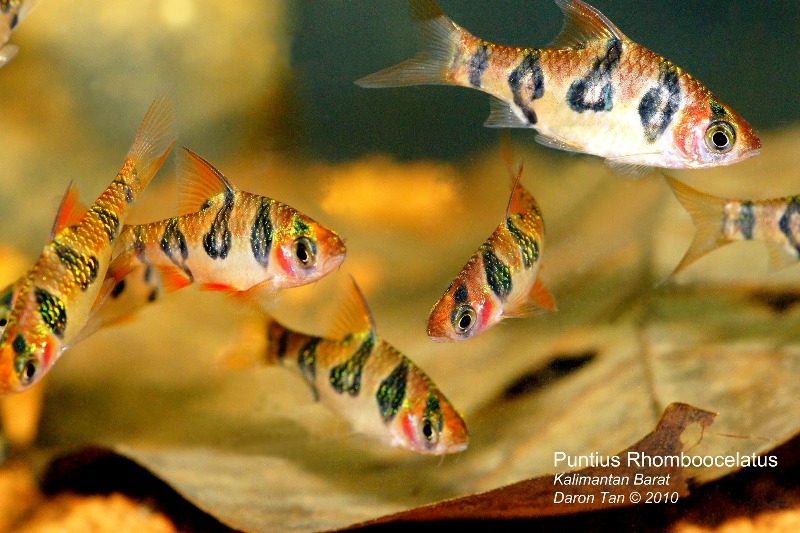
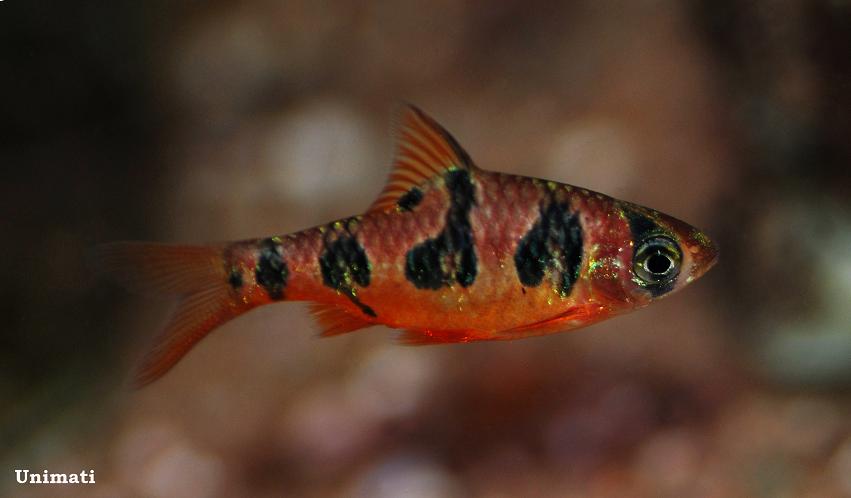
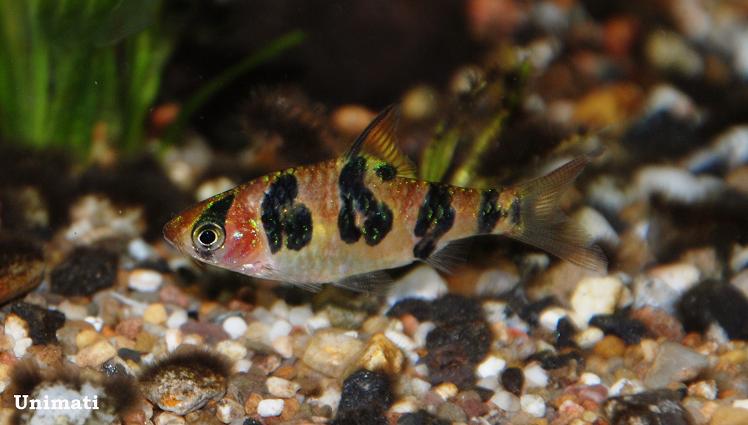
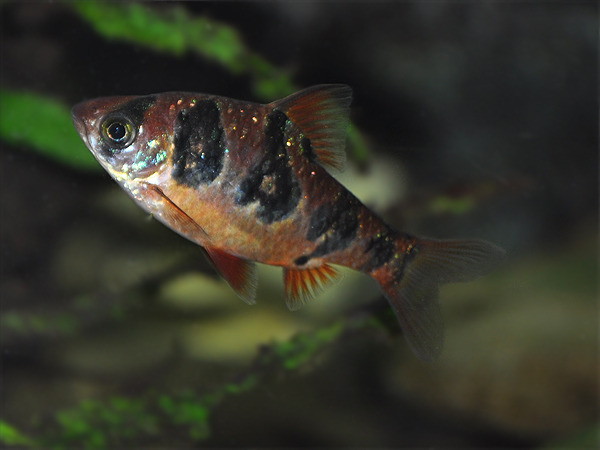
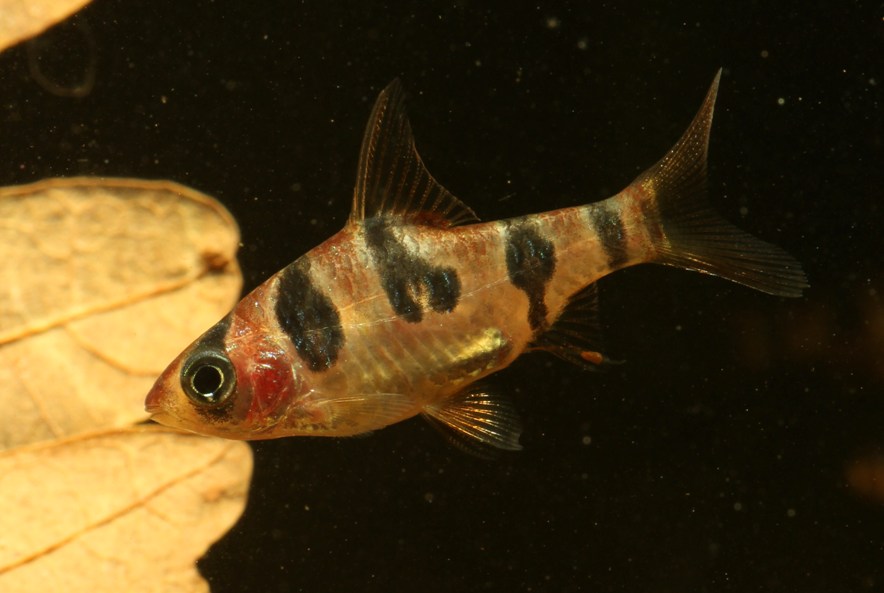
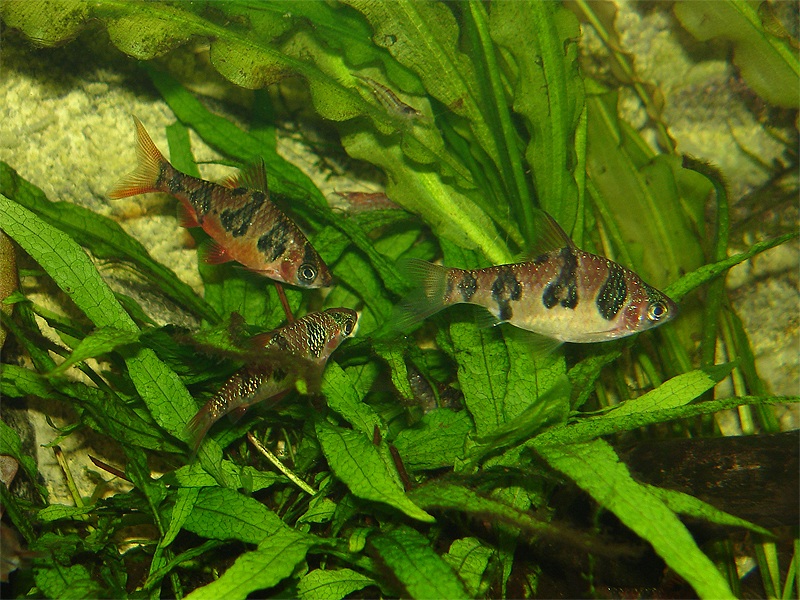
菱斑无须魮(Desmopuntius rhomboocellatus)是适合温和群落的小型群游鱼,体侧斑纹具有眼斑般的形态。它需要同种伙伴带来的安全感,也需要在喂食时不被更强势的鱼压制。
分布与栖息地
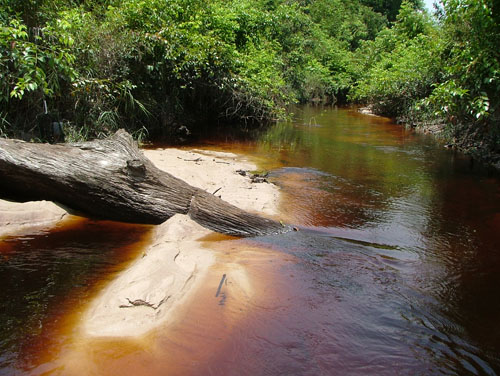
为婆罗洲印度尼西亚部分的加里曼丹南部特有鱼,记录来自卡普阿斯、卡哈扬、巴里托等水系。常在泥炭沼泽、黑水溪流和其他静水环境活动,岸边植被茂密,水中有草丛或水草。腐解植物使水染成褐色,底部常有落叶、枝条和浸水树根。
饲养环境
适合茂密水草缸,也可用柔软底砂、沉木根部、枝条、落叶和昏暗光线布置森林溪流环境。可选择适应弱光的耐养水草,过滤不必产生强流,因为其栖地多为缓水。
食性与喂食
主要捕食小型动物,野外食物包括昆虫、蠕虫、甲壳类和其他浮游动物。会接受尺寸适宜的干粮,但不宜只喂干粮;经常供应水蚤、丰年虾等小型活饵或冷冻饵,有助于发色和亲鱼调养。
习性与混养
可与体型接近、环境需求相容的温和鲤科鱼、鳅类及部分攀鲈类同养。避免过分活跃或抢食凶猛的同伴,以免它吃不到足够食物。建议八至十尾或更多成群,能减少紧张,雄鱼求偶时的竞争展示也更明显。
雌雄区分
成熟雄鱼通常略小、更修长,颜色更浓;雌鱼体形较丰满。
繁殖
本种尚缺明确的专门繁殖记录。可以近缘散卵鱼的做法作为尝试:另设昏暗的成熟水缸,采用温和供氧,以网格、细叶水草或产卵拖把让卵避开亲鱼。亲鱼产卵后移出,先为鱼苗准备极细小的开口饵,再逐渐换成微虫与丰年虾幼体。方法与发育时间仍需针对本种验证。
图片
图片来自 SeriouslyFish,版权归各摄影者所有。
English
Overview
Desmopuntius rhomboocellatus is a small social barb with distinctive eye-like body markings. A suitable community must provide both the security of conspecifics and a fair opportunity to feed without competition from more forceful fishes.
Distribution & habitat
It is endemic to southern Kalimantan on Indonesian Borneo, with records from several river systems, including the Kapuas, Kahajan and Barito. Peat swamps, blackwater streams and other quiet waters are typical habitats. Dense marginal growth, submerged vegetation and deposits of fallen leaves and wood provide cover; decomposing plants stain the water brown.
Aquarium setup
Dense planting works well. Alternatively, build a shaded forest-stream setting with soft substrate, roots, branches and leaf litter. Shade-tolerant plants can be added, and filtration should not create an unnecessarily strong current.
Diet & feeding
Small animal prey dominates the natural menu, including insects, worms, crustaceans and other zooplankton. Appropriately sized dry foods are accepted, but should be complemented by frequent small live or frozen meals. Water fleas and brine shrimp help maintain color and breeding condition.
Behaviour & compatibility
Peaceful fishes of comparable size and compatible needs are suitable partners, including appropriate cyprinids, loaches and some anabantoids. Avoid highly competitive feeders. A group of eight to ten or more reduces nervousness and allows males to show their best colors during social displays.
Sexual dimorphism
Males are generally a little smaller, slimmer and more vividly colored than females.
Breeding
A reliable species-specific account is lacking. Methods for related egg-scattering fishes suggest a possible trial using a dim separate aquarium, mature water, gentle aeration and mesh, fine plants or mops protecting the eggs. Remove adults after spawning and prepare microscopic fry foods before moving to microworms or newly hatched brine shrimp. Both the method and developmental schedule remain to be confirmed for this species.
来源
ID:desmopuntius-rhomboocellatus · 文件: data/species/desmopuntius-rhomboocellatus.md · 状态: 草稿