五带无须魮 · Five-banded Barb
概要
| 字段 | 值 |
|---|---|
| 类别 | 鱼 |
| 学名 | Desmopuntius pentazona |
| 别名 | 五带魮、五帶無鬚魮、五帶魮、Barbus pentazona、Systomus pentazona、Puntius pentazona |
| 分类 | 鲤形目 Cypriniformes › 鲤科 Cyprinidae › Desmopuntius |
| 水体 | 淡水 |
| 原产地 | 马来西亚 |
| 成体体长 | 5.5 cm |
| 饲养难度 | 入门 |
| 最小水体 | 72 L |
| 最小缸长 | 80 cm |
| 群居方式 | 群游 |
| 外部数据 | seriouslyfish desmopuntius-pentazona;fishbase 12143 |
| 食性 | 肉食 |
| 繁殖方式 | 散卵 |
水质参数
| 参数 | 耐受范围 | 最适范围 | 单位 |
|---|---|---|---|
| 水温 | 21–26 | — | °C |
| pH | 4–7 | — | — |
| 总硬度 | 1–5 | — | dGH |
概述
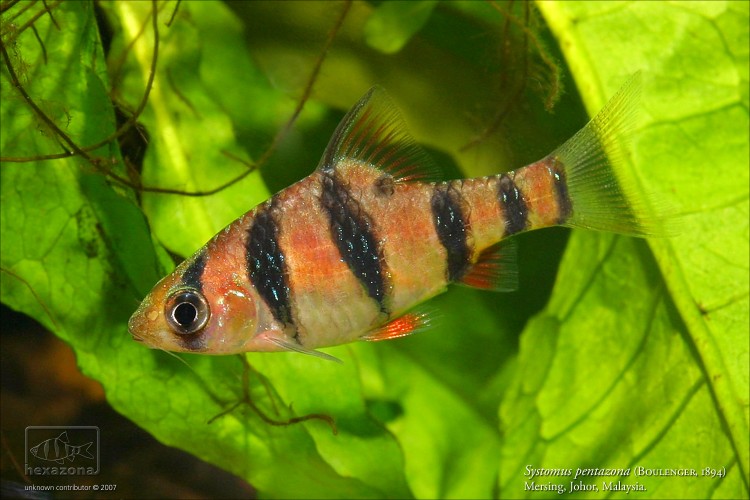
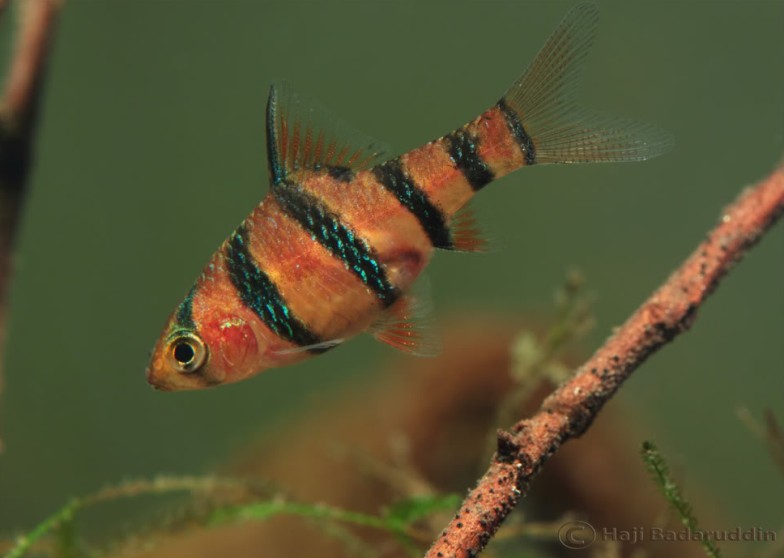
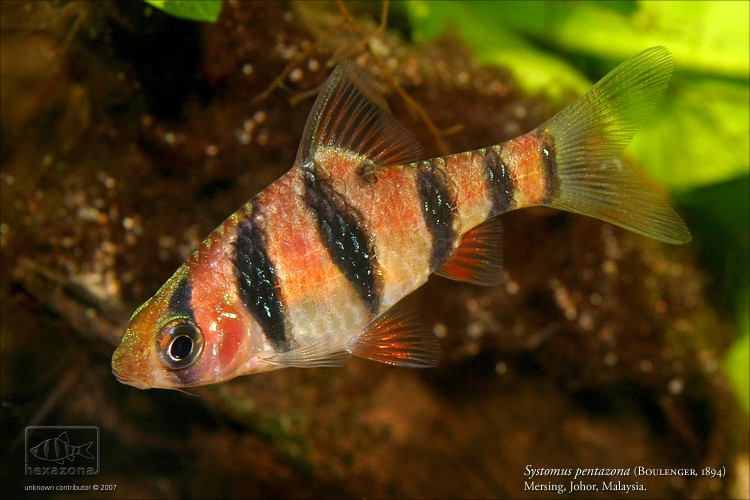
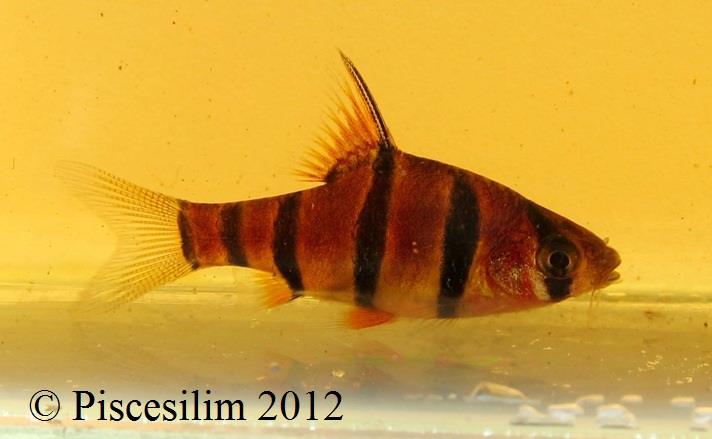
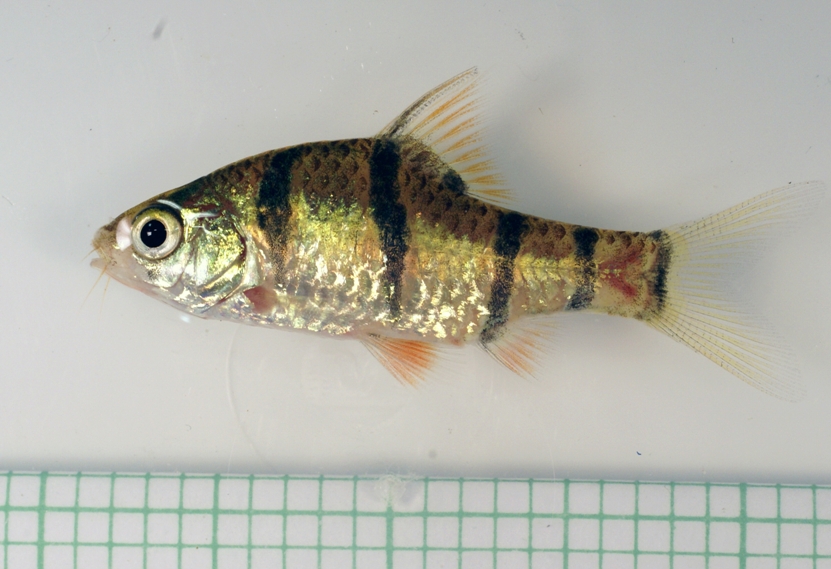
五带无须魮(Desmopuntius pentazona)在市场上比名称出现的频率少得多,许多标作本种的鱼其实是六带无须魮(Desmopuntius hexazona)。本种背鳍基部后端有一小块暗色标记,后者缺少这一标记,是实用的区分线索。
分布与栖息地
通常认为局限于婆罗洲西北部,可能仅在砂拉越,模式产地为巴兰河。也有据称来自马来半岛柔佛州丰盛港附近的个体,外观符合本种,但这些记录与通常认识的范围存在差异。
多栖息于泥炭沼泽、黑水溪流及其他静水环境,周边植被茂密。水色常因腐殖物而褐化,矿物质含量很低,底部覆有落叶、沉枝和树根。
饲养环境
采用茂密草缸,或柔软底砂、弱光、沉木、枝条与落叶组合的森林溪流布置。可选适应弱光的铁皇冠、莫丝或部分椒草。过滤宜温和,不必用强流模拟激流环境。
食性与喂食
主要捕食微小昆虫、蠕虫、甲壳动物及其他浮游动物。会接受合适尺寸的干粮,但最好每天补充水蚤、丰年虾等小型活饵和冷冻饵料,不能仅依赖干粮。
习性与混养
建议至少八至十条一起养,群体能减少紧张并促进发色。体型相近、性情温和的鲤科鱼、鳅类和部分攀鲈类可考虑混养;太活跃或抢食过猛的鱼可能使它长期吃不饱。
雌雄区分
雄鱼一般略小、更苗条、颜色更浓;雌鱼体型相对厚实。
繁殖
散卵,不护卵。若专门繁殖,可用成熟水另设弱光缸,放隔卵网、玻璃珠、细叶草或产卵拖把,辅以温和充氧。水略偏酸,温度取适宜范围上段;调养好的一至两对可用于繁殖,空间充足时也可尝试群体繁殖。
亲鱼可能吃卵,发现卵就应移走。通常一至一天半孵化,约三至四天后可见平游鱼苗。最初几天喂草履虫级别的微小食物,之后再转喂微虫、丰年虾无节幼体。
图片
图片来自 SeriouslyFish,版权归各摄影者所有。
English
Overview
True Desmopuntius pentazona is uncommon in shops; many fish carrying its name are D. hexazona. A small dark mark at the rear of the dorsal-fin base supports identification of pentazona, whereas hexazona lacks that mark. Examine the fish rather than relying on the sales label.
Distribution & habitat
It is generally considered confined to northwestern Borneo, perhaps only Sarawak, with the Baram drainage as its type locality. Specimens reportedly from the Mersing area of Johor show the expected marking, but that reported origin conflicts with the usually accepted range.
Peat swamps, blackwater streams, and vegetated still waters provide characteristic habitat. Decomposing leaves and wood stain the very soft water brown, and submerged debris covers much of the bed.
Aquarium setup
A densely planted aquarium or dim forest-stream display is appropriate. Use soft substrate, roots, branches, and leaf litter, with suitable ferns, mosses, or crypts if desired. Gentle filtration is sufficient; a powerful current is unnecessary.
Diet & feeding
It primarily captures tiny animal foods, including insects, worms, crustaceans, and zooplankton. Dry food of an appropriate size is accepted, but daily small live or frozen portions should accompany it. This variety helps maintain color and breeding condition.
Behaviour & compatibility
Keep a group of eight to ten or more. Social contact encourages confidence and better display. Peaceful cyprinids of similar size, selected loaches, and some anabantoids can be considered. Avoid forceful feeders that may leave it short of food.
Sexual dimorphism
Males tend to be slightly smaller, distinctly slimmer, and more colorful than females.
Breeding
Eggs are scattered without care. For controlled breeding, use a dim separate aquarium with mature water and gentle aeration. Mesh, marbles, fine plants, or spawning mops can shelter eggs. Slightly acidic water near the upper end of the usual temperature range is suggested.
Use well-conditioned pairs, or a group if a larger tank is available. Remove adults when eggs become visible because they may eat them. Hatching generally takes one to one and a half days, with swimming fry appearing after approximately three to four days. Supply microscopic starter foods before progressing to microworms and brine-shrimp nauplii.
来源
- https://www.seriouslyfish.com/species/desmopuntius-pentazona(抓取于 2026-10-10)
desmopuntius-pentazona · 文件: data/species/desmopuntius-pentazona.md · 状态: 草稿