真线无须魮 · Striped Barb
概要
| 字段 | 值 |
|---|---|
| 类别 | 鱼 |
| 学名 | Desmopuntius johorensis |
| 别名 | 尖吻无须魮、真線無鬚魮、尖吻無鬚魮、Barbus tetrazona johorensis、Systomus johorensis、Puntius eugrammus |
| 分类 | 鲤形目 Cypriniformes › 鲤科 Cyprinidae › Desmopuntius |
| 水体 | 淡水 |
| 原产地 | 文莱、印度尼西亚、马来西亚、新加坡、泰国 |
| 成体体长 | 10 cm |
| 饲养难度 | 入门 |
| 最小水体 | 243 L |
| 最小缸长 | 120 cm |
| 群居方式 | 群游 |
| 外部数据 | seriouslyfish desmopuntius-johorensis;fishbase 10808 |
| 繁殖方式 | 散卵 |
水质参数
| 参数 | 耐受范围 | 最适范围 | 单位 |
|---|---|---|---|
| 水温 | 20–25 | — | °C |
| pH | 5–7 | — | — |
| 总硬度 | 1–10 | — | dGH |
概述
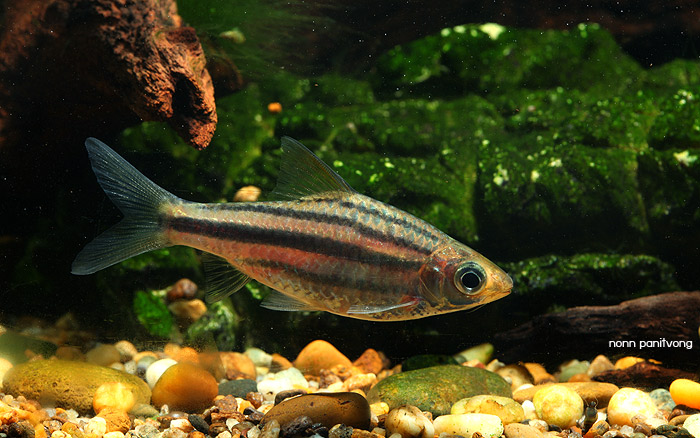
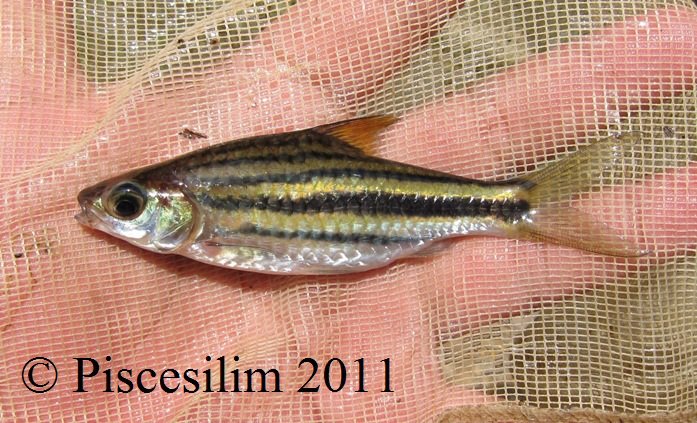
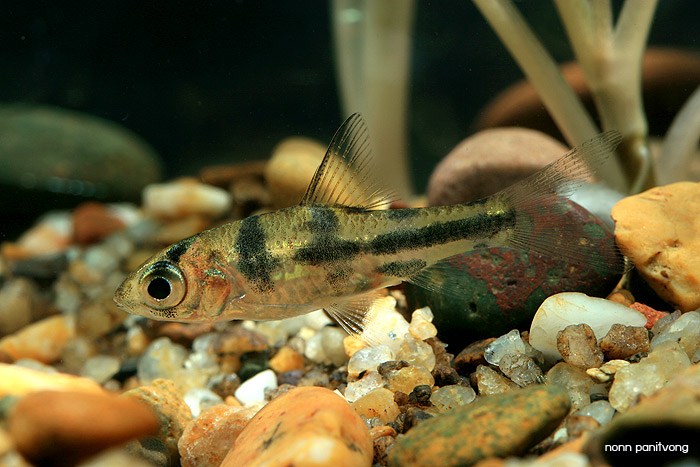
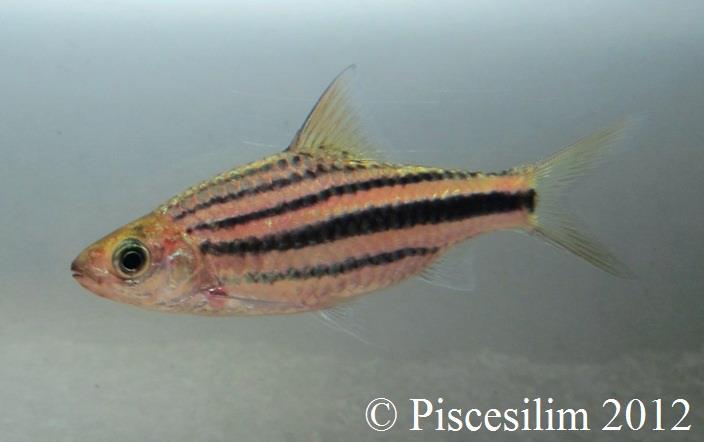
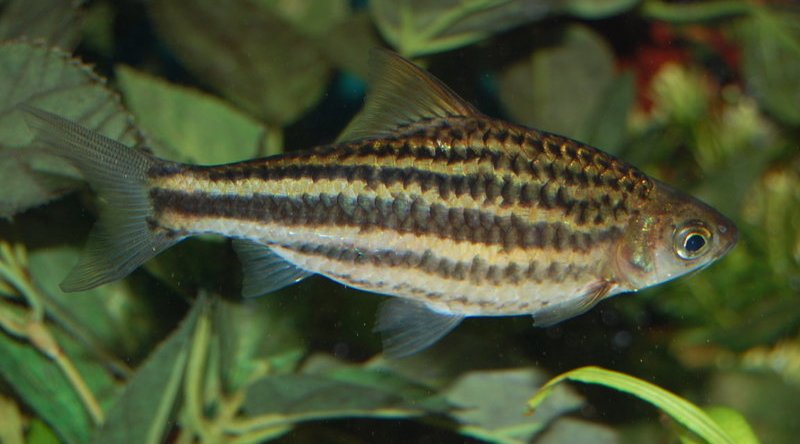
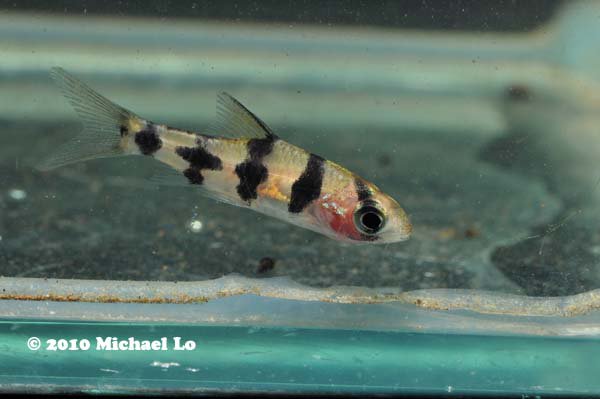
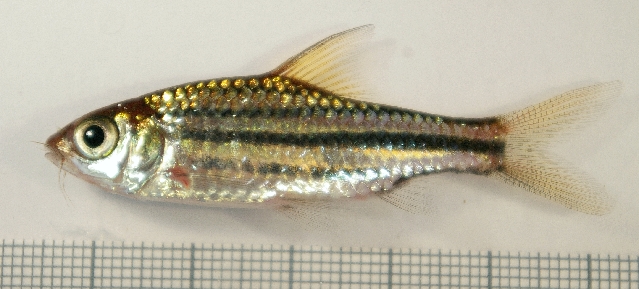
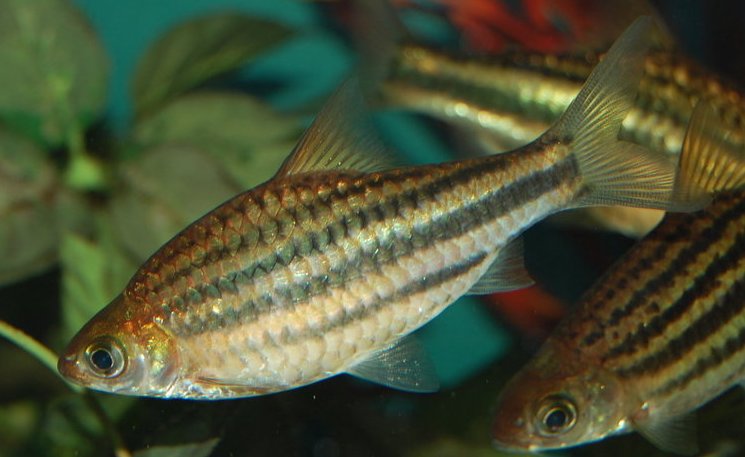
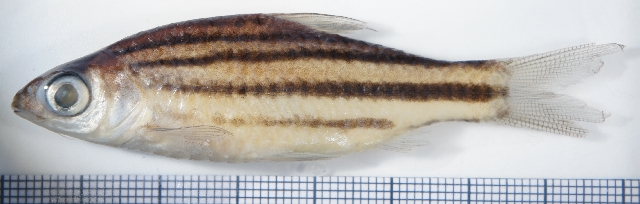
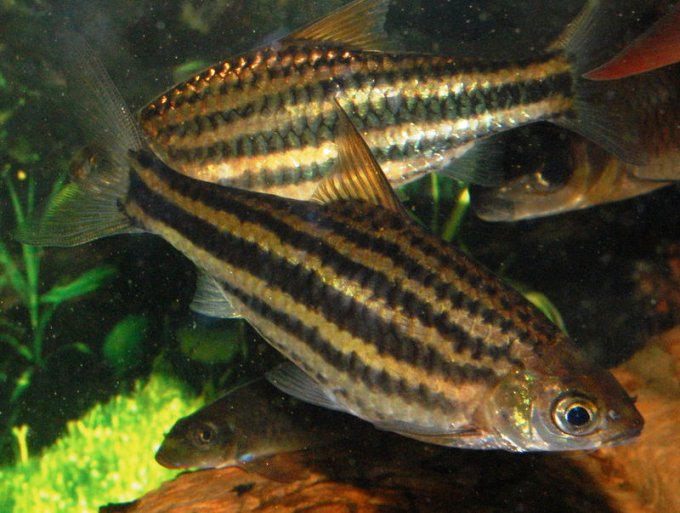
真线无须魮(Desmopuntius johorensis)幼鱼有四条深色竖纹,成长后逐渐变成五至六条较宽的纵带。它是需要宽敞空间的群游鱼,不能把幼鱼花纹或历史上误用的标签当成唯一鉴定依据。
分布与栖息地
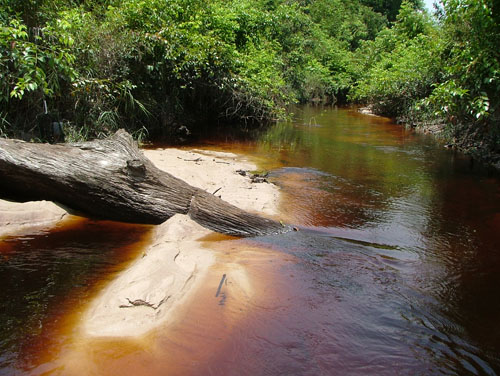
分布于泰国南部、马来半岛、新加坡、苏门答腊和婆罗洲,其中婆罗洲记录涉及马来西亚、印度尼西亚和文莱。主要生活在泥炭沼泽、黑水溪流和植被丰富的静水环境,也有沿海林地缓流中的记录。水被腐殖物染褐,通常很软且偏酸,底部为沙、泥炭及落叶枝条。
饲养环境
适合茂密草缸或林间溪流风格。用柔软底砂、沉木、枝条和落叶形成遮蔽,维持较暗照明;铁皇冠、莫丝及部分椒草可在合适条件下使用,并为群体留下足够活动空间。
食性与喂食
野外可能兼食硅藻、藻类、碎屑及小型昆虫、蠕虫、甲壳动物等。人工饲养可用优质薄片、颗粒,部分应含植物或藻类成分,另定期提供红虫、水蚤、丰年虾等活饵和冷冻饵料。
习性与混养
至少八至十条成群更合适,同伴能减轻紧张,雄鱼也会更充分展示。可搭配体型相称、活动于开阔水域的温和鲤科鱼及小型鳅类,需同时核对水质和空间需求。
雌雄区分
成年雄鱼通常较小、较苗条,体色比雌鱼更鲜明。
繁殖
散卵、不护卵。单设弱光繁殖缸可提高育苗成功率,使用成熟水,铺隔卵网、玻璃珠、细叶草或产卵拖把,并以海绵过滤或气石轻柔充氧。水微酸至中性、温度在适宜范围上段,放入充分调养的一至两对;较大空间也可群体繁殖。
发现卵后移走亲鱼。卵约一至一天半孵化,约三至四天后出现平游鱼苗,先喂微小开口食物,之后再过渡至微虫和丰年虾无节幼体。
补充说明
从竖纹到纵带的转变约在体长 2 cm 开始,通常到 3~4 cm 完成。成鱼的纵带较宽;旧资料可能以不同名称称呼本种,或把本种名称错用于另一种竖纹鱼。
图片
图片来自 SeriouslyFish,版权归各摄影者所有。
English
Overview
The striped barb, Desmopuntius johorensis, undergoes a conspicuous change from four juvenile bars to five or six broad adult stripes. Allow room for a full group, and do not base identification solely on a young fish's pattern or an old trade label.
Distribution & habitat
The range covers southern Thailand, the Malay Peninsula, Singapore, Sumatra, and Borneo, including records from Brunei and both Malaysian and Indonesian Borneo. Peat swamps and associated blackwater channels are important habitats. Other records concern vegetated still water and slow coastal forest streams.
Humic material colors the soft acidic water. Leaves, roots, sand, and peat form much of the submerged environment.
Aquarium setup
Dense planting or a subdued forest-water display suits the species. Combine soft substrate with wood, branches, and leaves, retaining swimming room for the group. Suitable ferns, mosses, and crypts can add vegetation under reduced lighting.
Diet & feeding
Wild fish are thought to gather a mixture of algae, diatoms, detritus, and small invertebrates. Offer good flakes or granules, including some plant-based formulations, together with regular frozen or live foods. Bloodworms, daphnia, and brine shrimp provide useful additions.
Behaviour & compatibility
Eight to ten or more fish encourage confidence and stronger male displays. Comparably sized peaceful open-water cyprinids and small loaches are possible companions when water and space requirements match.
Sexual dimorphism
Adult males are generally smaller and slimmer, with more intense coloration than females.
Breeding
Eggs are scattered without guarding. A separate dim spawning tank with mature water gives greater control over fry production. Provide gentle aeration and egg protection using mesh, marbles, fine plants, or mops. Water can be slightly acidic to neutral, near the warmer end of its usual range.
Condition the adults well, then use pairs or a larger group with sufficient space. Remove them when eggs are found. Hatching usually takes one to one and a half days, and swimming young appear after about three to four days. Start with microscopic foods before introducing microworms and nauplii.
Notes
Pattern transformation begins around 2 cm and is usually complete by 3–4 cm. Broad adult stripes are a useful clue. Historical naming confusion includes both another name for this species and misuse of johorensis for a different barred fish.
来源
- https://www.seriouslyfish.com/species/desmopuntius-johorensis(抓取于 2026-10-10)
desmopuntius-johorensis · 文件: data/species/desmopuntius-johorensis.md · 状态: 草稿