六带无须魮 · 'Pentazona' Barb
概要
| 字段 | 值 |
|---|---|
| 类别 | 鱼 |
| 学名 | Desmopuntius hexazona |
| 别名 | 六帶無鬚魮、Barbus hexazona、Systomus hexazona |
| 分类 | 鲤形目 Cypriniformes › 鲤科 Cyprinidae › Desmopuntius |
| 水体 | 淡水 |
| 原产地 | 印度尼西亚、马来西亚、新加坡 |
| 成体体长 | 5.5 cm |
| 饲养难度 | 入门 |
| 最小水体 | 72 L |
| 最小缸长 | 80 cm |
| 群居方式 | 群游 |
| 外部数据 | seriouslyfish desmopuntius-hexazona;fishbase 17466 |
| 食性 | 肉食 |
| 繁殖方式 | 散卵 |
水质参数
| 参数 | 耐受范围 | 最适范围 | 单位 |
|---|---|---|---|
| 水温 | 20–26 | — | °C |
| pH | 4–7 | — | — |
| 总硬度 | 1–5 | — | dGH |
概述
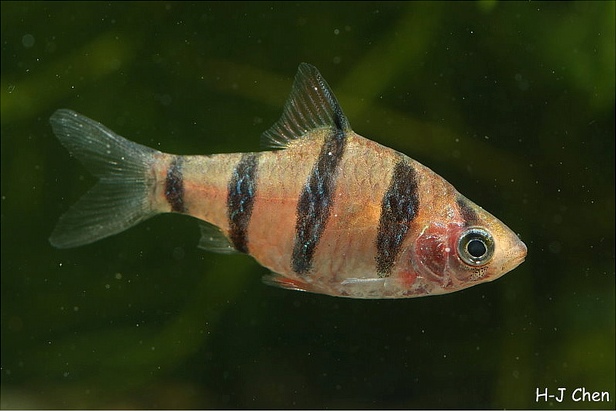
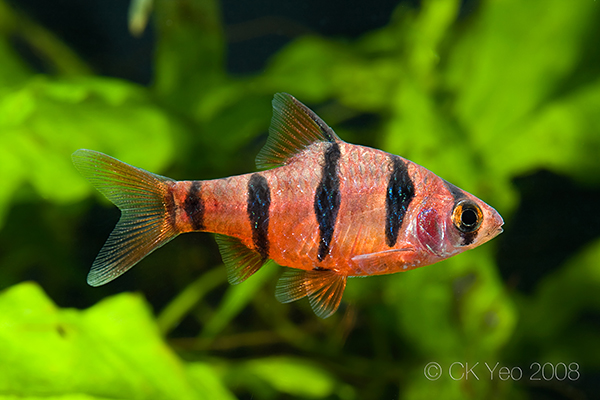
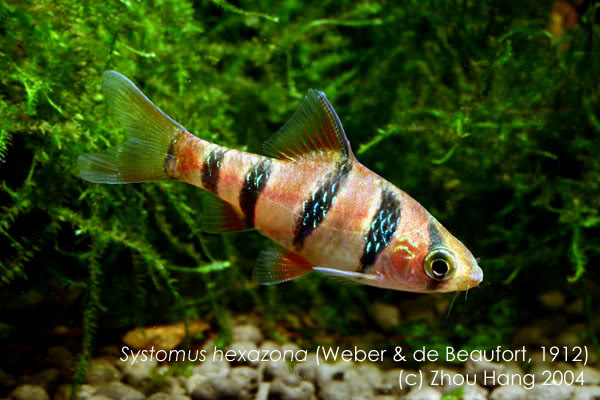
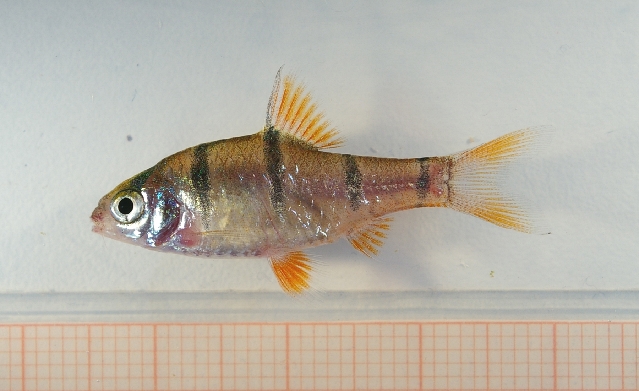
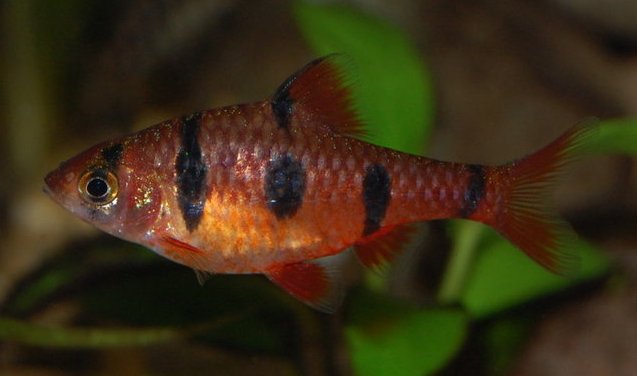
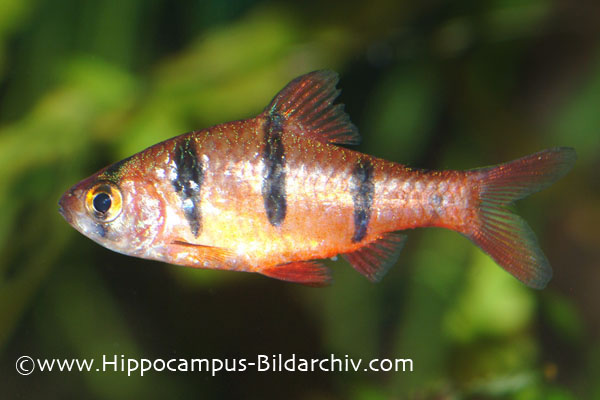
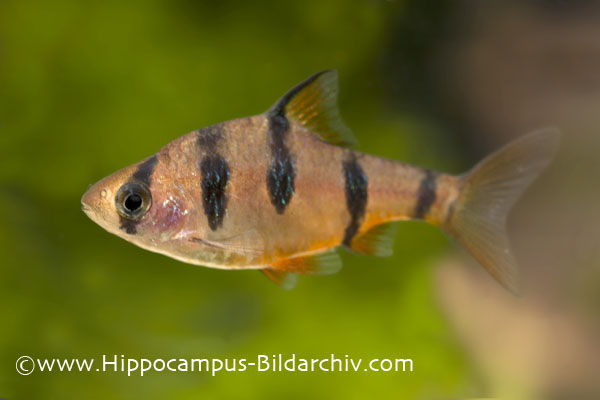
六带无须魮(Desmopuntius hexazona)常被冠以五带无须魮的商品名。区分时可观察背鳍基部后端:五带无须魮(Desmopuntius pentazona)有一个小暗斑,而本种没有。它适合弱光、软酸水和温和的群体环境。
分布与栖息地
原生于婆罗洲南部、苏门答腊东部、新加坡及马来半岛的部分地区。常见于泥炭沼泽、黑水溪流和其他静水环境,岸边植被浓密,水下可有草丛。水通常被腐殖物染褐,矿物质含量低,底部覆有落叶、枝条和树根。
饲养环境
可采用茂密草缸,或柔软底砂、沉木、枝条与落叶组成的林间溪流风格。灯光宜弱,铁皇冠、莫丝和部分椒草可作为种植选择。它多来自缓水环境,过滤不必制造强流。
食性与喂食
野外主要捕食微小昆虫、蠕虫、甲壳动物及其他浮游动物。人工饲养能接受入口尺寸合适的干粮,但应每天补充水蚤、丰年虾等小型活饵或冷冻饵料,帮助发色与繁殖调养。
习性与混养
建议至少八至十条同养,让鱼更放松并增加雄鱼展示。体型相近、性情温和的鲤科鱼、小型鳅类及部分攀鲈类可考虑混养;过于强势或抢食猛烈的鱼应避开。
雌雄区分
成熟雄鱼通常稍小、更苗条、颜色也更浓,雌鱼相对厚实。
繁殖
散卵且不护卵,成熟草缸有时能自然留下少量鱼苗。若专门育苗,应另设弱光缸,使用成熟水与轻柔充氧,铺隔卵网、玻璃珠、细叶草或产卵拖把。放入调养充分的一至两对,也可在更大缸中群体繁殖。
发现卵后移走亲鱼,防止卵被吃。通常一至一天半孵化,约三至四天后可见平游鱼苗;先用草履虫级别的微小饵料,长大后再喂微虫及丰年虾无节幼体。
补充说明
旧文献中的“柔佛”相关旧学名曾误用于本种,购买时不要只凭标签判断。与真线无须魮(Desmopuntius johorensis)不同,本种不会在成年后变为纵带花纹。
图片
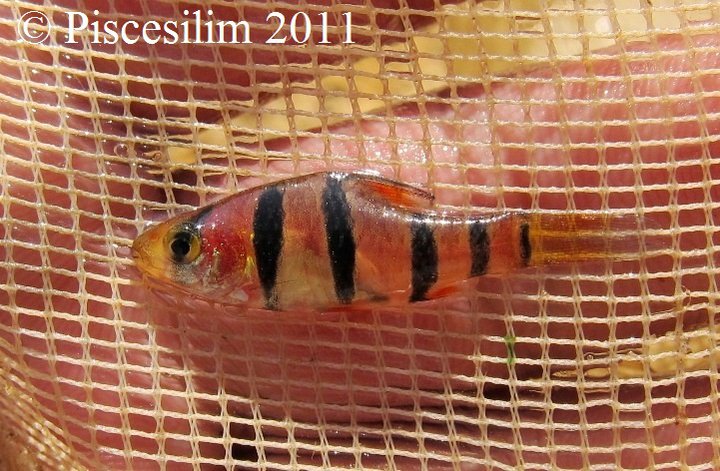
图片来自 SeriouslyFish,版权归各摄影者所有。
English
Overview
Most aquarium fish sold under the pentazona name are actually Desmopuntius hexazona. Look behind the dorsal-fin base: the small dark mark present in D. pentazona is absent here. This fish suits a shaded, peaceful aquarium with soft acidic water.
Distribution & habitat
Its native range includes southern Borneo, eastern Sumatra, Singapore, and parts of the Malay Peninsula. Peat swamps, blackwater creeks, and vegetated still waters are typical. Decaying plant matter colors the mineral-poor water, while leaves and woody debris accumulate across the bed.
Aquarium setup
Use dense planting or a forest-stream layout with soft substrate, branches, roots, and leaves. Subdued light suits the display; ferns, mosses, and selected crypts offer planting options. Strong current is unnecessary for a fish associated mainly with sluggish water.
Diet & feeding
Natural feeding focuses on small animal prey, including insects, worms, crustaceans, and zooplankton. Suitable dry food is accepted, but daily additions of small frozen or live items improve variety and conditioning.
Behaviour & compatibility
Maintain eight to ten or more. A social group reduces nervousness and stimulates colorful male displays. Similar-sized peaceful cyprinids, small loaches, and selected anabantoids are possible companions. Avoid highly vigorous fish that would dominate feeding.
Sexual dimorphism
Males usually remain slightly smaller and slimmer than females and show stronger color.
Breeding
Eggs are scattered without parental protection. A few fry may survive in a mature planted display, while a separate dim enclosure improves control. Use established water, gentle aeration, and mesh, marbles, moss, or mops to protect eggs. Introduce conditioned pairs or a larger breeding group if space permits.
Remove adults after eggs appear. Hatching commonly takes one to one and a half days, with swimming fry appearing after roughly three to four days. Microscopic starter food is needed before they can take microworms and nauplii.
Notes
Historical use of the johorensis name adds another source of confusion. Unlike the true striped barb, this fish does not acquire lengthwise adult stripes. Check the actual pattern rather than trusting an old label.
来源
- https://www.seriouslyfish.com/species/desmopuntius-hexazona(抓取于 2026-10-10)
desmopuntius-hexazona · 文件: data/species/desmopuntius-hexazona.md · 状态: 草稿