Dawkinsia tambraparniei · 'Arulius' Barb
概要
| 字段 | 值 |
|---|---|
| 类别 | 鱼 |
| 学名 | Dawkinsia tambraparniei |
| 别名 | Puntius arulius tambraparniei、Puntius tambraparniei |
| 分类 | 鲤形目 Cypriniformes › 鲤科 Cyprinidae › Dawkinsia |
| 水体 | 淡水 |
| 原产地 | 印度南部泰米尔纳德邦坦布拉帕尼河流域,可能主要限于中游 |
| 成体体长 | 13 cm |
| 饲养难度 | 中等 |
| 最小水体 | 243 L |
| 最小缸长 | 120 cm |
| 群居方式 | 群游 |
| 外部数据 | seriouslyfish puntius-tambraparniei;fishbase 62214 |
| 繁殖方式 | 散卵 |
| 性情 | 温和 |
水质参数
| 参数 | 耐受范围 | 最适范围 | 单位 |
|---|---|---|---|
| 水温 | 18–25 | — | °C |
| pH | 6–8 | — | — |
| 总硬度 | 2–15 | — | dGH |
概述
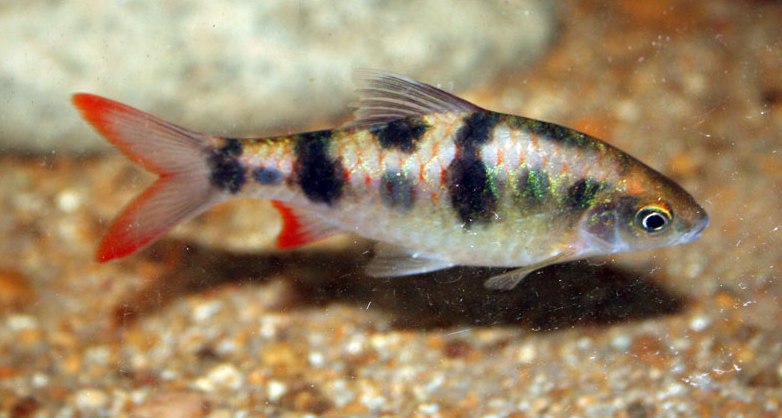
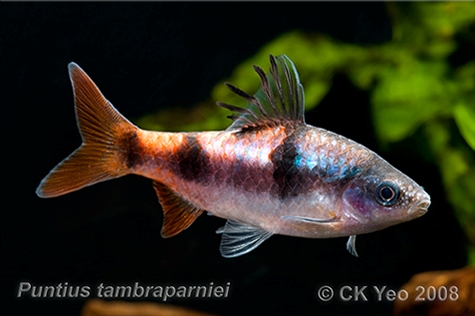
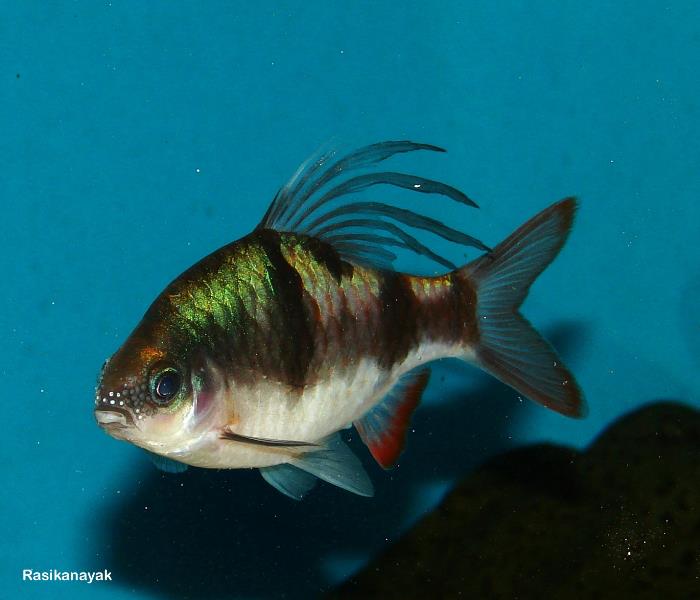
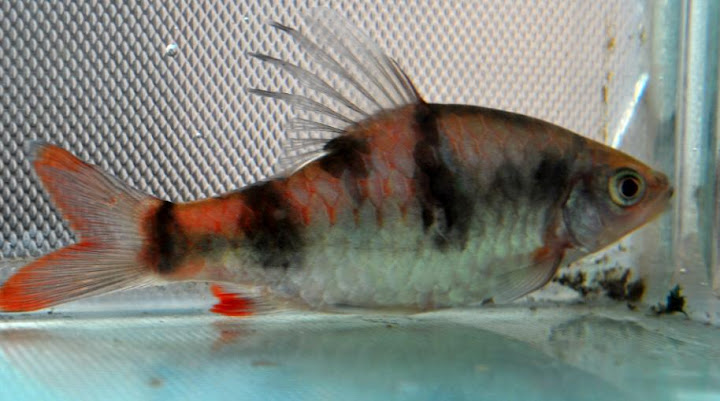
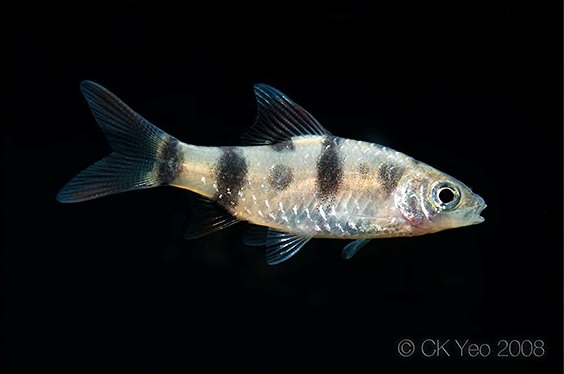
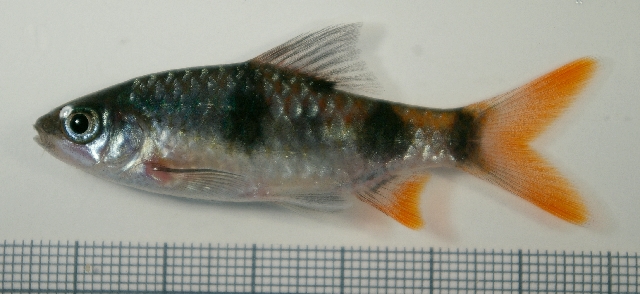
Dawkinsia tambraparniei 是体侧带较大暗斑、雄鱼背鳍可拉出丝状鳍条的活跃群游鱼。它长期以近似鱼名称出现在贸易中,选鱼时应结合体侧斑纹、成年鳍形与来源判断,而不只依赖商品标签。
分布与栖息地
来自印度南部泰米尔纳德邦坦布拉帕尼河水系,可能主要局限于中游。该河起源于西高止山,最终流入马纳尔湾。它在河流开阔水体活动,栖地条件会随地点和季风变化;商品鱼中可能有不少来自商业繁殖。
饲养环境
提供宽敞的群体游动空间,用砂、细砾、圆滑石块和沉木布置,耐附生植物可固定于硬景。不能放任有机污染积累,需高溶氧与适度水流,每周换水约三至五成。急流并非必要,水质稳定清洁更关键。
食性与喂食
天然可能以多种小型动物、植物材料和碎屑为食,杂食判断仍带推测。缸养较容易接受食物,优质薄片、颗粒配合红虫、水蚤、丰年虾等活饵或冷冻饵,可保持均衡。
习性与混养
八至十尾以上能减少紧张,雄鱼主要在群体内部维持等级。混养可选温和、健壮且体型足够大的鱼,避免容易受活动量影响的胆小伙伴。
雌雄区分
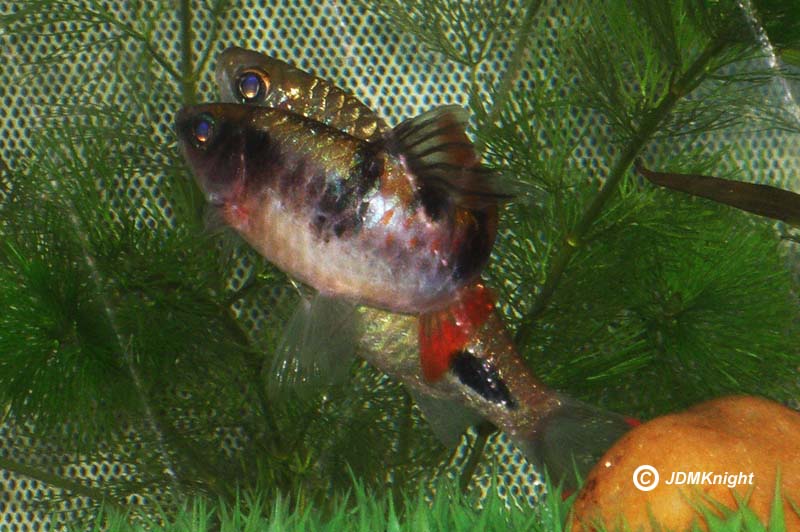
成熟雄鱼背鳍长出丝状鳍条,体色较强,繁殖时头部有明显追星。雌鱼通常稍大、更厚实,颜色较淡。
繁殖
为不护卵的散卵型,成熟缸有时会自行留下少量鱼苗。若想提高成活率,另设昏暗的成熟水繁殖缸,底部用隔卵网、玻璃珠,或大量莫丝和拖把,并以气动海绵过滤或气石轻柔增氧。调理好的成鱼可用一两对,较大群体则需更多空间。
发现卵后移走亲鱼,以免吃卵。约 24–48 小时孵化,再约一天起游,先喂微小食物,几天后视吞咽能力再用微虫或丰年虾无节幼体。
图片
图片来自 SeriouslyFish,版权归各摄影者所有。
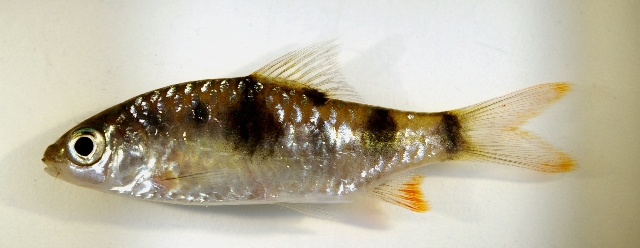
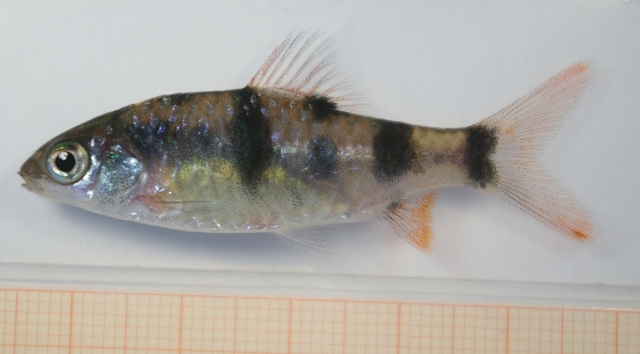
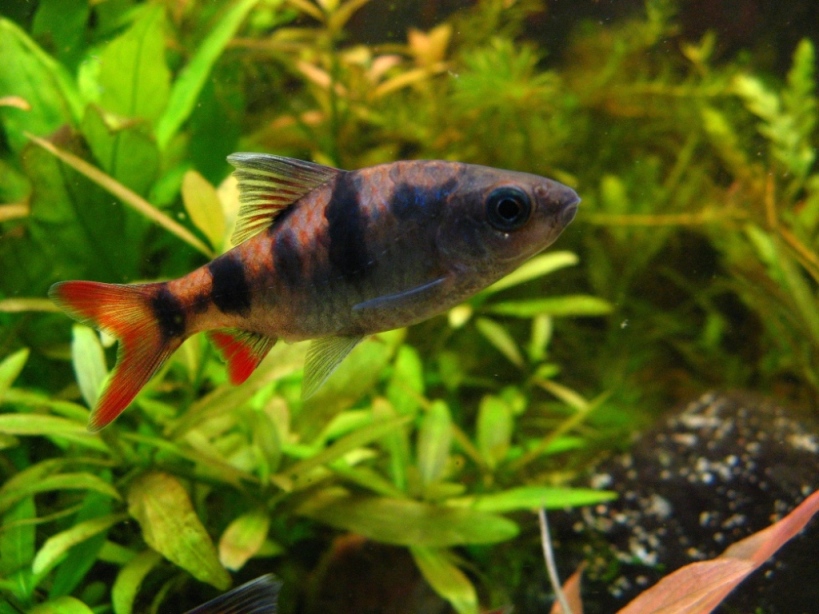
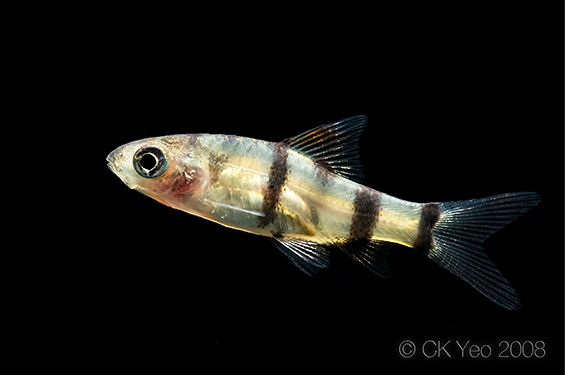
English
Overview
An active shoaling barb, Dawkinsia tambraparniei has large dark body markings and filamentous dorsal rays in adult males. Longstanding use of a related species’ name in trade makes appearance and provenance more useful than a label alone.
Distribution & habitat
It occurs in the Tambraparni basin of Tamil Nadu, southern India, possibly mainly in the middle reaches. The river rises in the Western Ghats and enters the Gulf of Mannar. This open-water river fish experiences local and seasonal habitat variation. Much trade stock may be commercially bred.
Aquarium setup
Leave generous swimming room among sand, fine gravel, smooth stones, and wood, with robust attached plants if desired. Prevent organic waste accumulation through reliable filtration and maintenance. High oxygen, moderate circulation, and weekly changes of around 30–50% are preferable to excessive current.
Diet & feeding
It is thought to forage omnivorously on small animals, plant material, and debris. Captive feeding is straightforward with a balanced mix of quality flakes or granules and regular live or frozen foods.
Behaviour & compatibility
Keep eight to ten or more for confidence and to focus male hierarchy interactions within the shoal. Companions should be peaceful but robust, large enough not to be considered food, and comfortable alongside an active group.
Sexual dimorphism
Adult males develop dorsal filaments, stronger color, and conspicuous head tubercles in spawning condition. Females are usually larger, heavier, and less colorful.
Breeding
It scatters eggs without parental care, and occasional fry may survive in mature tanks. For higher yields, use a separate dim aquarium with aged water, gentle aeration, and mesh, marbles, moss, or mops shielding eggs. Condition breeders first, then use one or two pairs or a larger group with correspondingly more room.
Remove adults when eggs appear. Hatching commonly takes about 24–48 hours, with free swimming approximately a day later. Provide microscopic food initially, then microworms or Artemia nauplii once the young can swallow them.
来源
- https://www.seriouslyfish.com/species/puntius-tambraparniei(抓取于 2026-10-10)
dawkinsia-tambraparniei · 文件: data/species/dawkinsia-tambraparniei.md · 状态: 草稿