Dawkinsia rubrotinctus
概要
| 字段 | 值 |
|---|---|
| 类别 | 鱼 |
| 学名 | Dawkinsia rubrotinctus |
| 别名 | Systomus rubrotinctus、Puntius rubrotinctus |
| 分类 | 鲤形目 Cypriniformes › 鲤科 Cyprinidae › Dawkinsia |
| 水体 | 淡水 |
| 原产地 | 印度南部卡纳塔克、喀拉拉及泰米尔纳德邦的高韦里河流域 |
| 成体体长 | 9 cm |
| 饲养难度 | 入门 |
| 最小水体 | 243 L |
| 最小缸长 | 120 cm |
| 群居方式 | 群游 |
| 外部数据 | seriouslyfish dawkinsia-rubrotinctus;fishbase 66780 |
| 性情 | 温和 |
水质参数
| 参数 | 耐受范围 | 最适范围 | 单位 |
|---|---|---|---|
| 水温 | 18–25 | — | °C |
| pH | 6–7.5 | — | — |
| 总硬度 | 2–10 | — | dGH |
概述
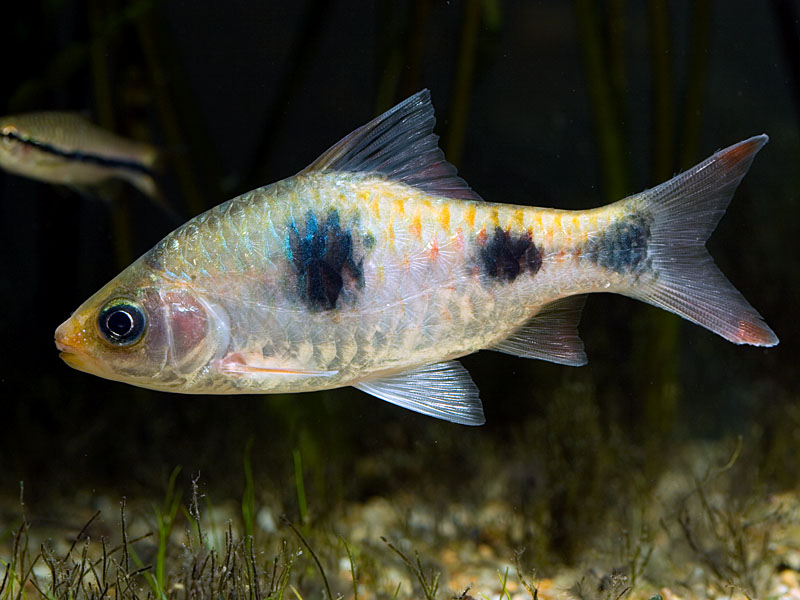
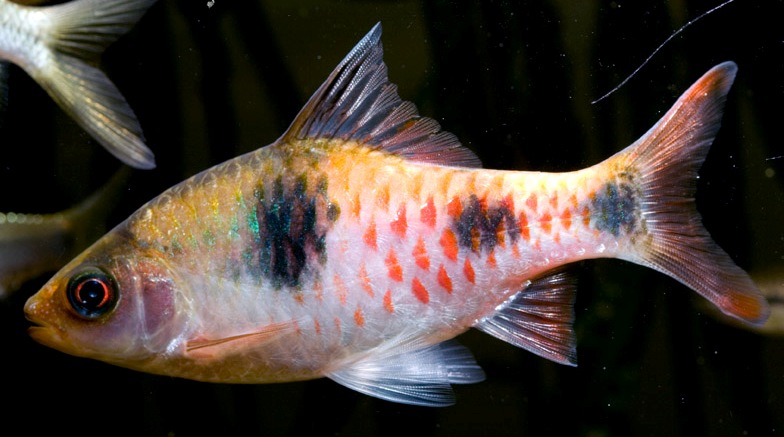
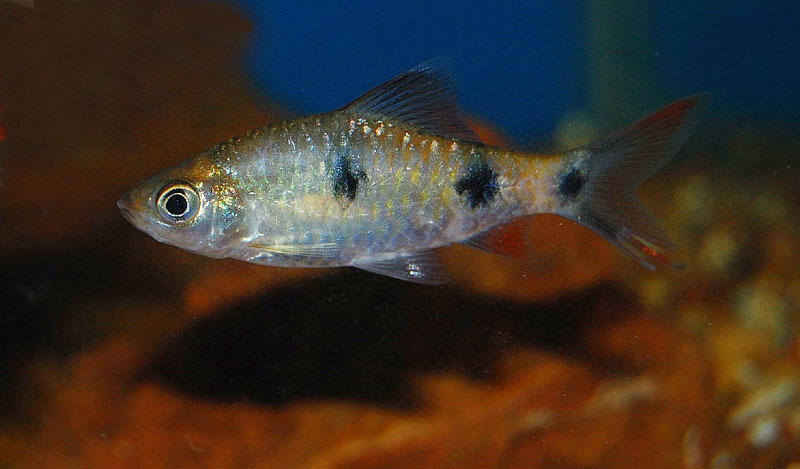
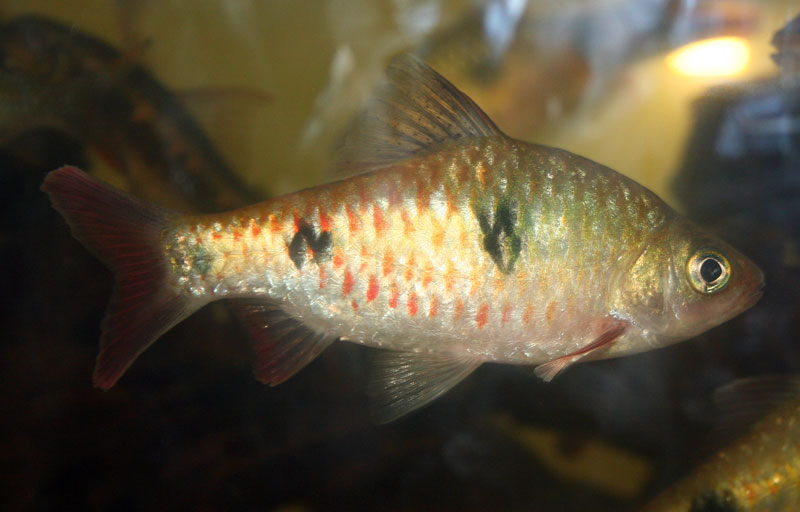
Dawkinsia rubrotinctus 体侧有三块相对小而清晰的暗斑,曾与近似种混淆流通。它是活跃群游鱼,只要有规律维护并保持充氧、清洁水质,造景本身并不苛刻。
分布与栖息地
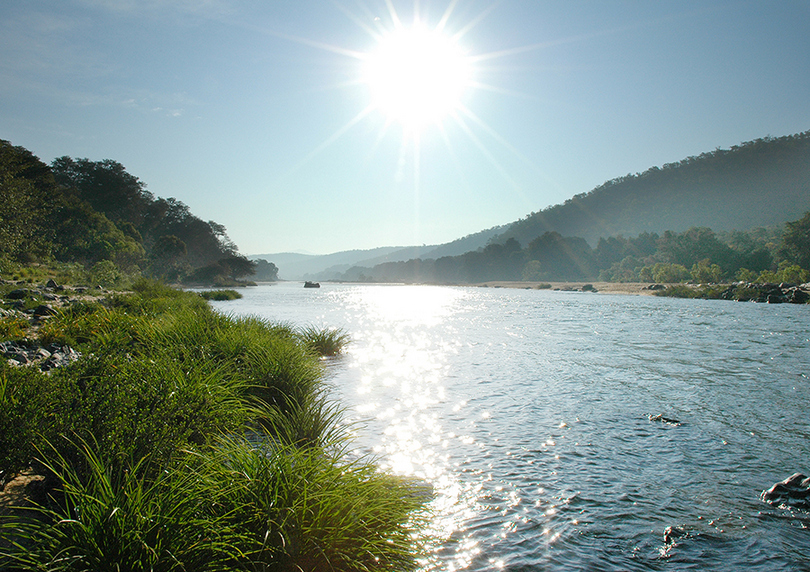
来自印度南部高韦里河流域,范围涉及卡纳塔克、喀拉拉和泰米尔纳德。模式产地位于喀拉拉的马南塔瓦迪河,经卡比尼河汇入高韦里。更远的近似种群身份尚未明确,不能直接并入已确认范围。
饲养环境
砂或细砾、圆滑石块和沉木即可构成自然风格,光线可以偏柔和,莫丝和耐阴附生植物都能使用。保留活动空间,以可靠外置过滤维持溶氧和一定水流,不必追求湍急;每周换水约三至五成。
食性与喂食
可能是杂食性的觅食者,天然食物或包括蠕虫、昆虫、甲壳动物、植物材料与碎屑。人工投喂较容易,以优质薄片或颗粒搭配小型活饵和冷冻饵,避免菜单过分单一。
习性与混养
八至十尾以上的群体能减少紧张,也让等级互动更多留在同种之间。适合搭配温和、健壮、体型足够大的鱼,避免胆小或会被其活跃节奏压迫的伙伴。
雌雄区分
成熟雌鱼通常略大、体形更厚实,抱卵时尤为明显,颜色则比雄鱼淡。
繁殖
本种可能尚无确认的人工繁殖记录。若尝试,可借鉴近亲散卵流程:亲鱼先调理,独立缸使用成熟水、偏暗光线、轻柔增氧,并用细叶植物、拖把、网格或玻璃珠保护可能产下的卵。可用一两对或在足够空间中尝试群体。
若有卵则隔离成鱼,预备微小开口食物,之后再用微虫和丰年虾无节幼体。这些是近亲方法的参考,不能保证本种产卵时间和孵化速度相同。
补充说明
与花纹较大、边缘较模糊的近似鱼相比,本种暗斑更小、更清楚,雄鱼背鳍也不具相同的丝状延长。部分地区疑似杂交或中间型的解释尚未通过遗传证据定论,购入时保留产地和商品记录有助区分。
图片
图片来自 SeriouslyFish,版权归各摄影者所有。
English
Overview
Three relatively small, sharply defined dark body markings help distinguish Dawkinsia rubrotinctus from similar trade fishes. This active shoaling barb is adaptable in decoration, provided regular maintenance keeps water clean and oxygenated.
Distribution & habitat
Its known range spans the Cauvery drainage in Karnataka, Kerala, and Tamil Nadu. The type site is the Mananthavadi River in Kerala, part of the Kabini–Cauvery system. Similar-looking fishes elsewhere do not yet establish a confirmed wider range.
Aquarium setup
Sand or gravel, rounded stones, and wood create a natural arrangement. Subdued light suits moss and robust shade-tolerant attached plants. Retain open swimming space and use effective external filtration for oxygenation and circulation without excessive turbulence. Change around 30–50% weekly.
Diet & feeding
Probably an omnivorous forager, it may consume small invertebrates, plant matter, and organic debris. Captive feeding is generally easy with varied quality dry foods and regular small live or frozen offerings.
Behaviour & compatibility
Eight to ten or more promotes confidence and keeps most dominance interactions within the shoal. Use peaceful but robust tankmates large enough not to offer a feeding opportunity and bold enough to tolerate its activity.
Sexual dimorphism
Adult females are generally larger and thicker-bodied, particularly when gravid, with less intense color than males.
Breeding
Captive reproduction may remain unconfirmed. A trial can adapt relatives’ methods: condition adults, then use a dim, established spawning aquarium with gentle aeration and fine plants, mops, mesh, or marbles protecting eggs. One or two pairs or a larger group with enough room may be tried.
Separate adults if eggs appear and prepare microscopic food before progressing to microworms and Artemia nauplii. The timing and reliability of the related-species procedure are not established here.
Notes
Compared with certain similar fishes, its dark markings are smaller and better defined, and males lack their dorsal filaments. Proposed hybrid or intermediate forms at some localities remain unresolved. Keeping locality and trade records is useful for identification.
来源
- https://www.seriouslyfish.com/species/dawkinsia-rubrotinctus(抓取于 2026-10-10)
dawkinsia-rubrotinctus · 文件: data/species/dawkinsia-rubrotinctus.md · 状态: 草稿