黑点无须魮 · Filament Barb
概要
| 字段 | 值 |
|---|---|
| 类别 | 鱼 |
| 学名 | Dawkinsia filamentosa |
| 别名 | 黑點無鬚魮、Leuciscus filamentosus、Puntius filamentosus、Systomus maderaspatensis |
| 分类 | 鲤形目 Cypriniformes › 鲤科 Cyprinidae › Dawkinsia |
| 水体 | 淡水 |
| 原产地 | 印度 |
| 成体体长 | 12 cm |
| 饲养难度 | 中等 |
| 最小水体 | 243 L |
| 最小缸长 | 120 cm |
| 群居方式 | 群游 |
| 外部数据 | seriouslyfish dawkinsia-filamentosa;fishbase 4473 |
| 繁殖方式 | 散卵 |
| 特征 | 吃小鱼: 是 |
水质参数
| 参数 | 耐受范围 | 最适范围 | 单位 |
|---|---|---|---|
| 水温 | 20–25 | — | °C |
| pH | 6–7 | — | — |
| 总硬度 | 2–15 | — | dGH |
概述
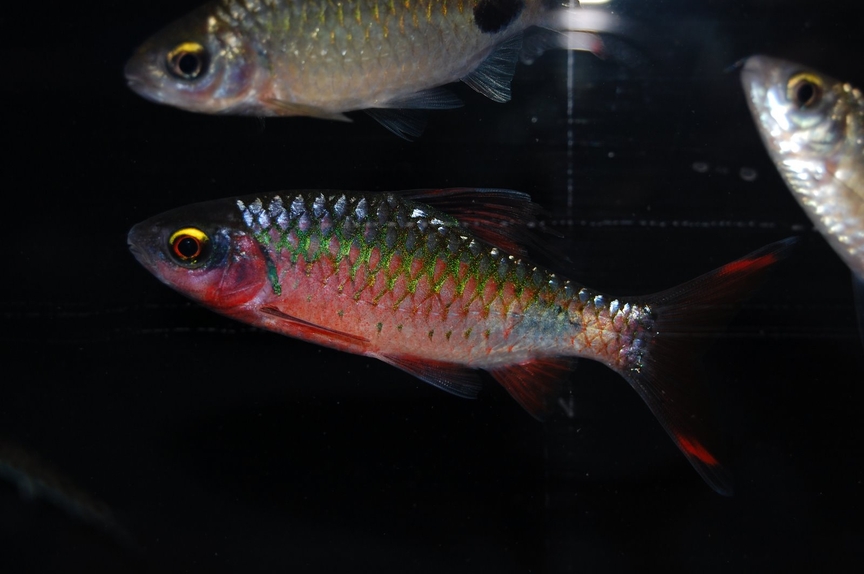
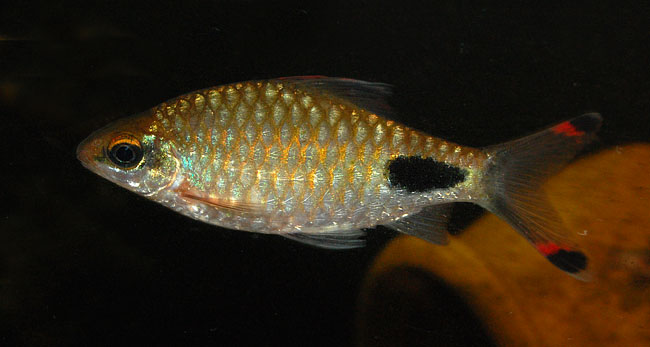
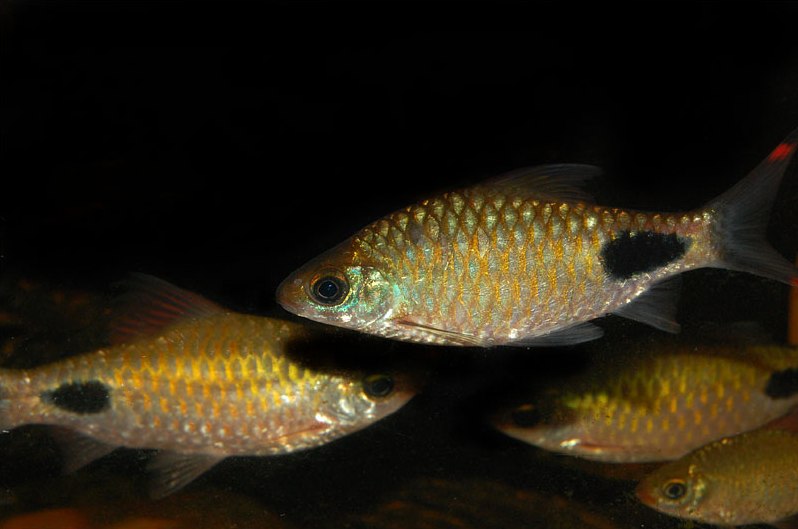
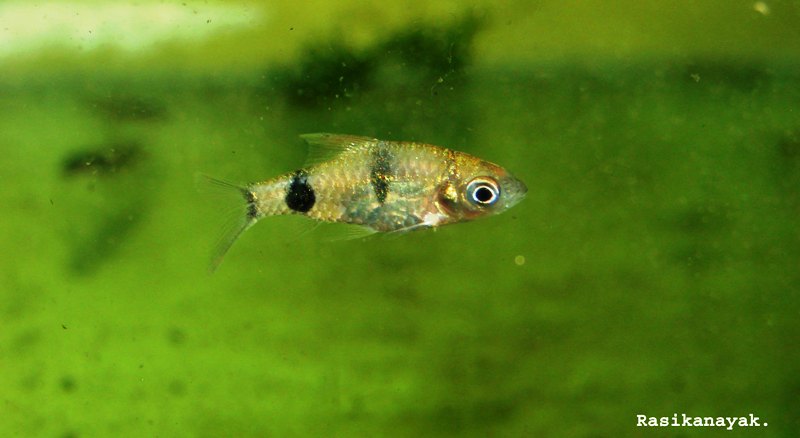
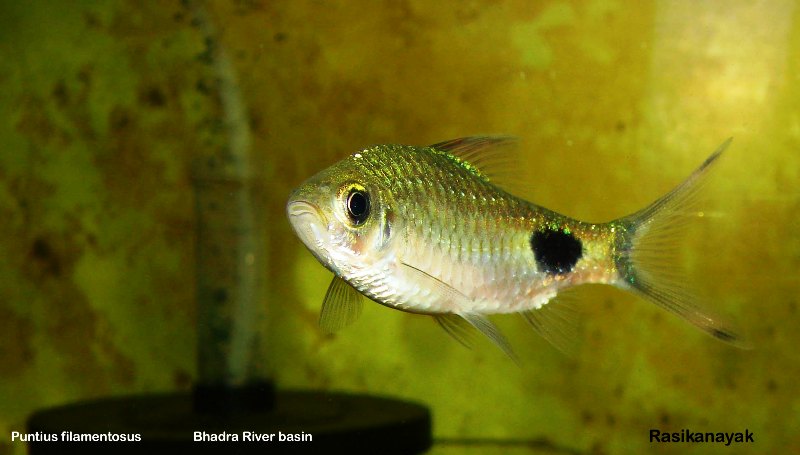
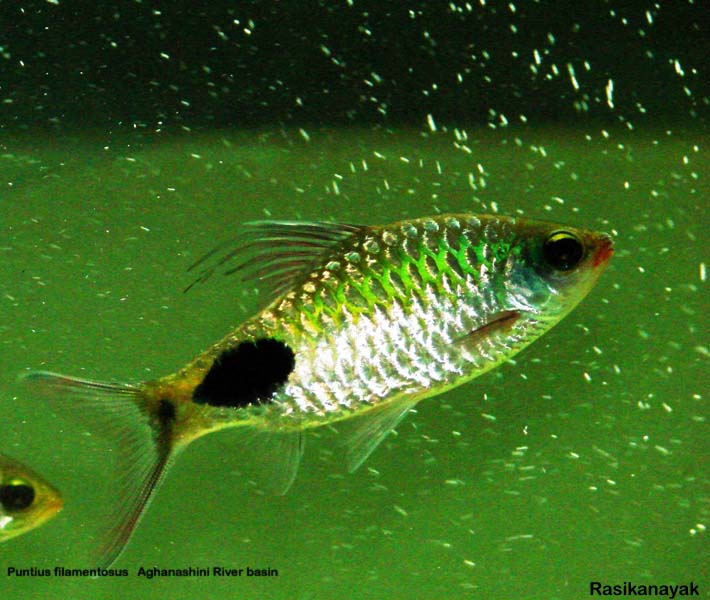
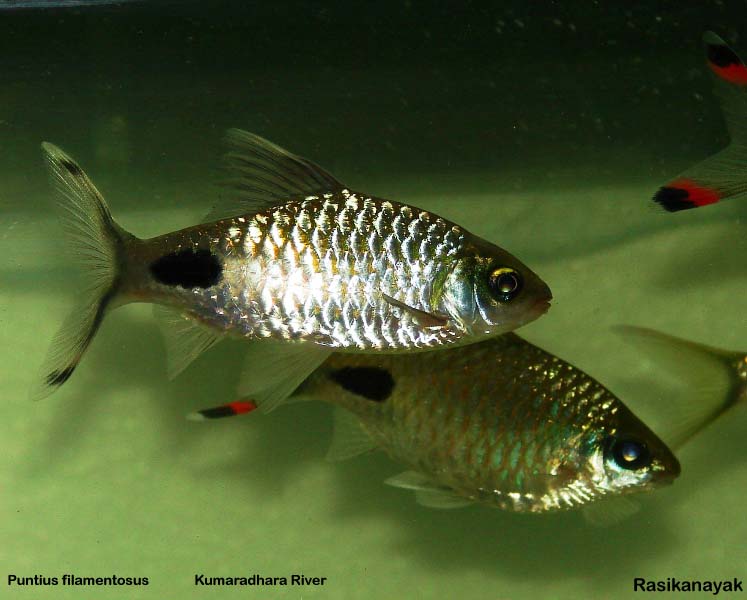
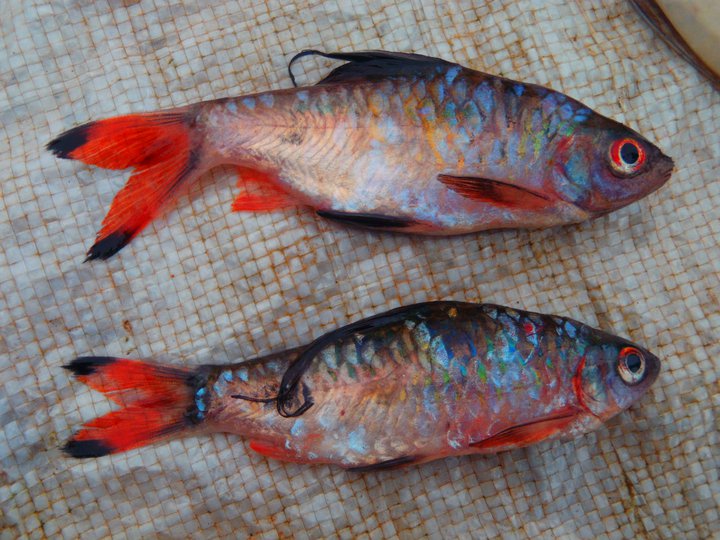
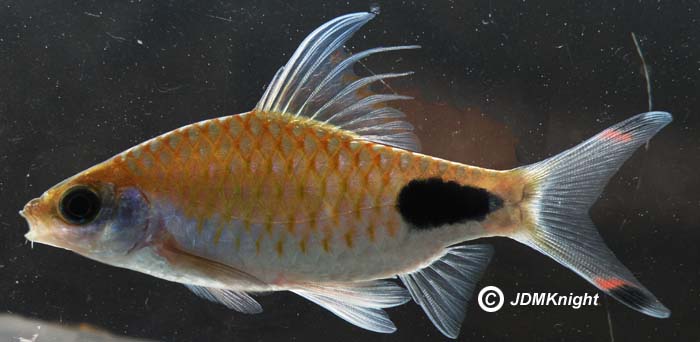
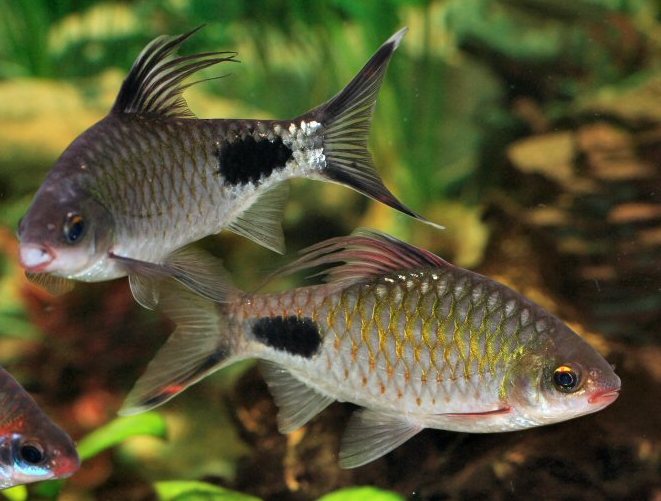
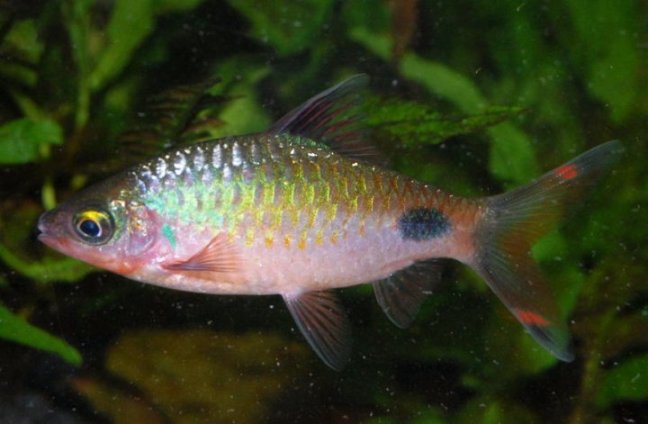
黑点无须魮(Dawkinsia filamentosa)成熟后可长出丝状背鳍鳍条,是活跃且需要成群饲养的鱼。尾鳍两叶近末端的黑带及尾柄暗斑有助于辨认;幼鱼与成鱼的花纹不能简单视为相同。
分布与栖息地
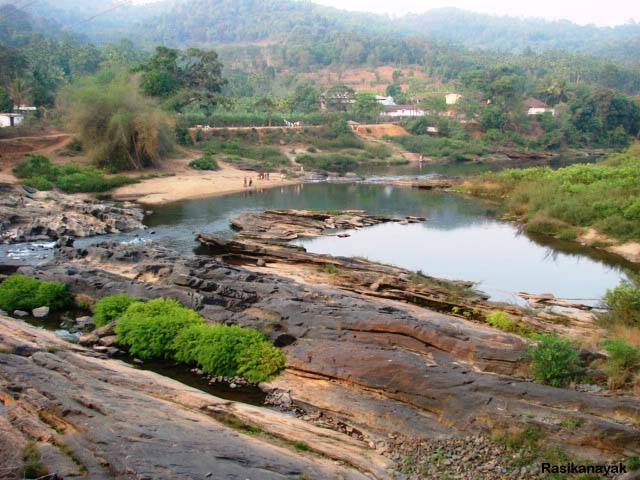
为印度南部西高止山地区特有种,涉及喀拉拉邦、泰米尔纳德邦和卡纳塔克邦。常见于低地沿海洪泛平原,河流、河口、沿海沼泽和水库均有记录,既见于淡水,也见于半咸水。这并不意味着家养时必须加盐。
饲养环境
使用宽敞鱼缸,以沙、细砾、圆石和沉木模拟河流环境,可配附生耐养水草。它需要清洁、富氧的水,对有机污染积累不耐受。保持适度水流,每周换水三成至一半;不必追求湍急水流。
食性与喂食
野外可能以蠕虫、昆虫、甲壳动物、植物材料和其他碎屑组成杂食食谱。人工饲养可用优质干粮,搭配红虫、水蚤、丰年虾等活饵或冷冻饵料,避免长期只有一种食物。
习性与混养
八至十条或更多同养较合适,群体能缓解紧张,也让雄鱼主要在同种之间维持等级。缸友应温和、体型足以避免被当作食物,并能承受它较活跃的游动;胆小、迟缓的小鱼未必适合。
雌雄区分
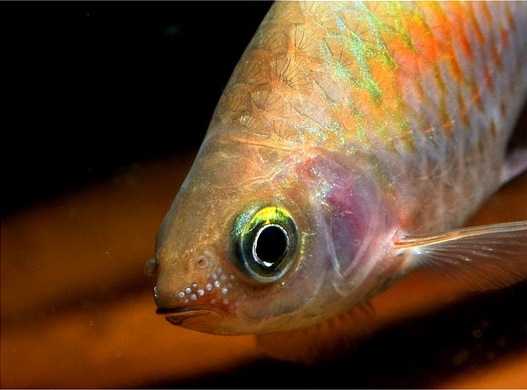
雄鱼一般色彩更强,繁殖期头部有珠星;雌鱼常略大、更厚实。部分种群的两性都可长出背鳍丝状延长,而且非繁殖期可能脱落或吸收,因此不能仅凭有无长鳍判性别。
繁殖
属于散卵型,不提供亲鱼照护。专门繁殖时用成熟水、弱光及温和充氧,铺隔卵网、玻璃珠或细叶草、产卵拖把保护卵。选择微酸至中性水,温度取适宜范围上段,放入调养好的一至两对;空间足够也可群体繁殖。
发现卵后移走亲鱼,避免卵被吃。通常一至两天孵化,约再过一天平游;早期需微小开口饵料,长大后再喂微虫和丰年虾无节幼体。
补充说明
贸易中有时以其他英文商品名出现,部分名称曾与其他种混用。种群间关系和可能的自然杂交仍有待厘清,来源记录对辨认有价值。
图片
图片来自 SeriouslyFish,版权归各摄影者所有。
English
Overview
The filament barb, Dawkinsia filamentosa, develops elongated dorsal rays as it matures. Dark bands near the ends of both tail lobes and a peduncle blotch provide further recognition clues. It is active and social, so a group needs substantial swimming room.
Distribution & habitat
Native to southern India's Western Ghats region, it occurs in Kerala, Tamil Nadu, and Karnataka. Low coastal floodplains are especially important. Records span rivers, reservoirs, estuaries, and coastal marshes, including both fresh and brackish water. Brackish occurrences do not establish a requirement to salt an aquarium.
Aquarium setup
A broad river-inspired aquarium can combine sand, gravel, smooth stones, and wood, with hardy attached plants. Keep oxygen levels high and circulation moderate. Sensitivity to accumulated organic pollution makes water quality a priority. Replace around one-third to one-half of the water each week rather than relying on flow alone.
Diet & feeding
A mixed natural diet of small invertebrates, vegetation, and debris is considered probable. For aquarium feeding, use quality preparations alongside regular small live or frozen foods. Variety is useful for both condition and color.
Behaviour & compatibility
Maintain at least eight to ten where space permits. A group encourages confidence and directs male competitive behavior toward their own hierarchy. Peaceful companions should be confident enough for its activity and large enough not to become food.
Sexual dimorphism
Breeding males show stronger colors and head tubercles; females generally grow larger and heavier. Dorsal filaments are an unreliable sex test because females in some populations also develop them, and extensions may disappear outside reproductive condition.
Breeding
This species disperses eggs without guarding them. A dim separate tank containing mature water, gentle aeration, and an egg-protecting layer of mesh, marbles, moss, or mops improves survival. Use slightly acidic to neutral water near the warm end of the maintenance range.
Introduce conditioned pairs or, with sufficient space, a larger mixed group. Remove adults when eggs are detected. Hatching takes roughly one to two days, followed by about a day before swimming. Begin with microscopic foods and progress to microworms and nauplii as the fry develop.
Notes
Trade names have sometimes confused this fish with other species. Relationships among local forms and possible natural hybridization remain unresolved, making locality information valuable.
来源
- https://www.seriouslyfish.com/species/dawkinsia-filamentosa(抓取于 2026-10-10)
dawkinsia-filamentosa · 文件: data/species/dawkinsia-filamentosa.md · 状态: 草稿