Dawkinsia exclamatio
概要
| 字段 | 值 |
|---|---|
| 类别 | 鱼 |
| 学名 | Dawkinsia exclamatio |
| 别名 | Puntius exclamatio |
| 分类 | 鲤形目 Cypriniformes › 鲤科 Cyprinidae › Dawkinsia |
| 水体 | 淡水 |
| 原产地 | 印度喀拉拉邦南部卡拉达河水系,可能为该水系特有 |
| 成体体长 | 10 cm |
| 饲养难度 | 中等 |
| 最小水体 | 243 L |
| 最小缸长 | 120 cm |
| 群居方式 | 群游 |
| 外部数据 | seriouslyfish puntius-exclamatio;fishbase 62216 |
| 性情 | 温和 |
水质参数
| 参数 | 耐受范围 | 最适范围 | 单位 |
|---|---|---|---|
| 水温 | 19–25 | — | °C |
| pH | 6–7.5 | — | — |
| 总硬度 | 2–10 | — | dGH |
概述
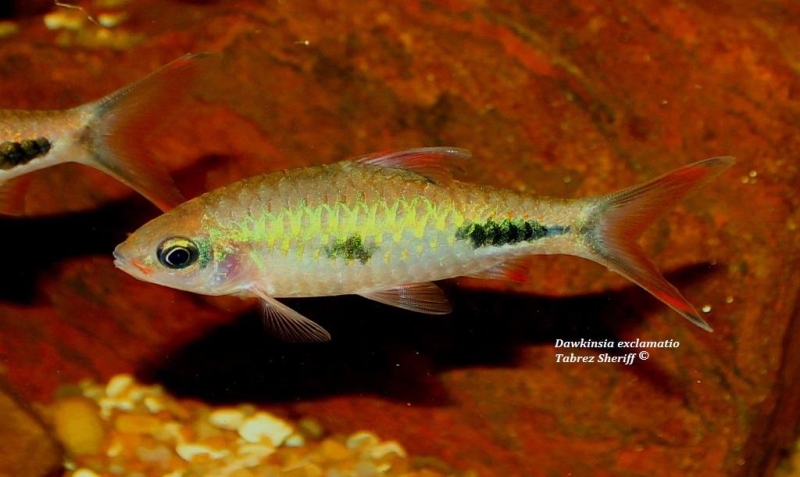
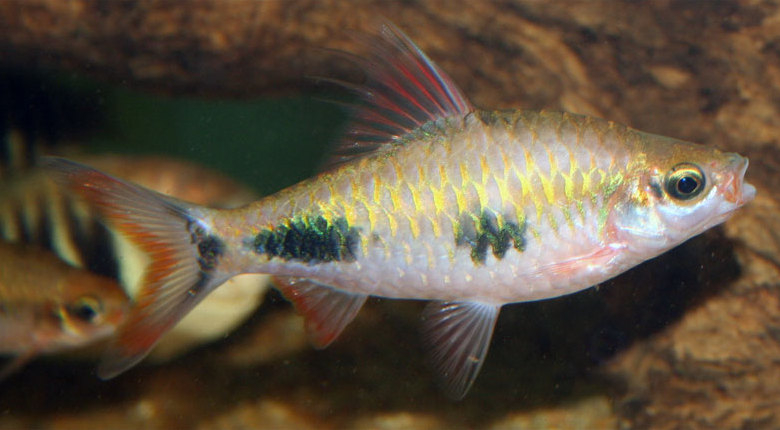
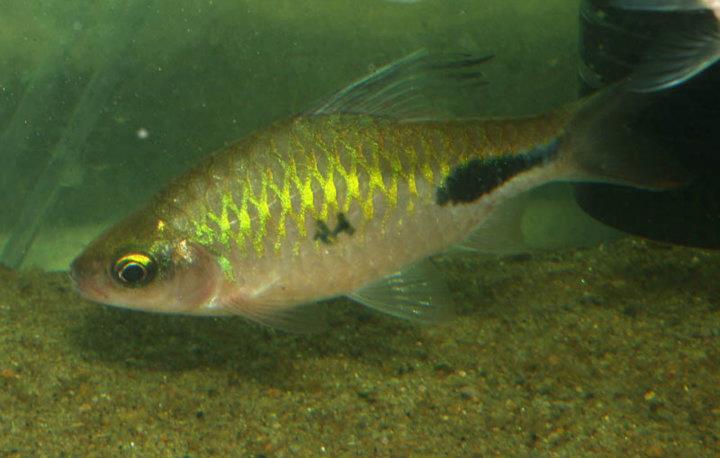
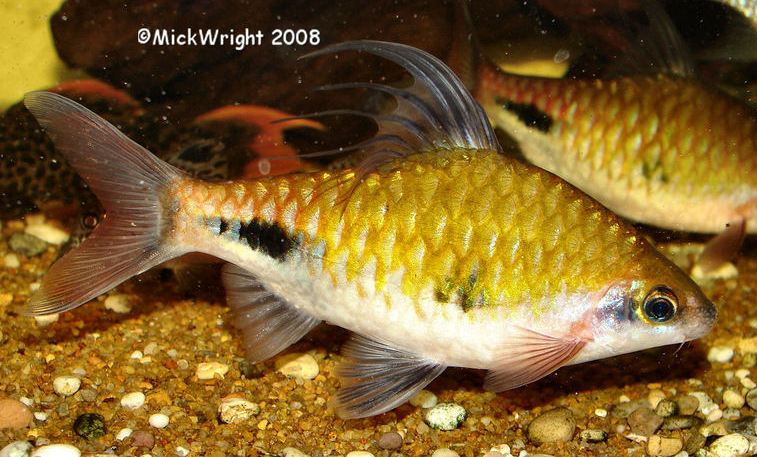
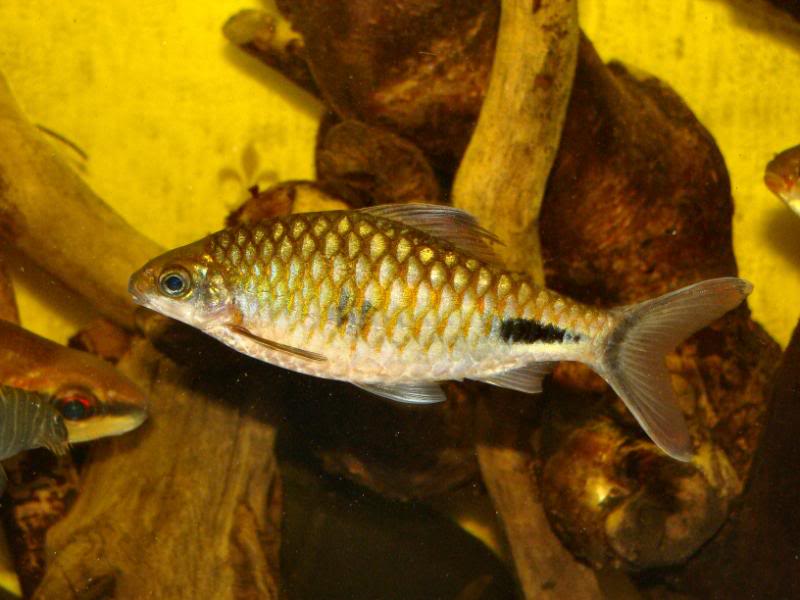
Dawkinsia exclamatio 是水族贸易中不常见的活跃群游鱼,体侧两块黑斑和尾柄延长斑是辨识线索。它有时夹在相似鱼的货群中出现,是否存在天然杂交起源仍只是待验证的解释,饲养时应保留来源记录。
分布与栖息地
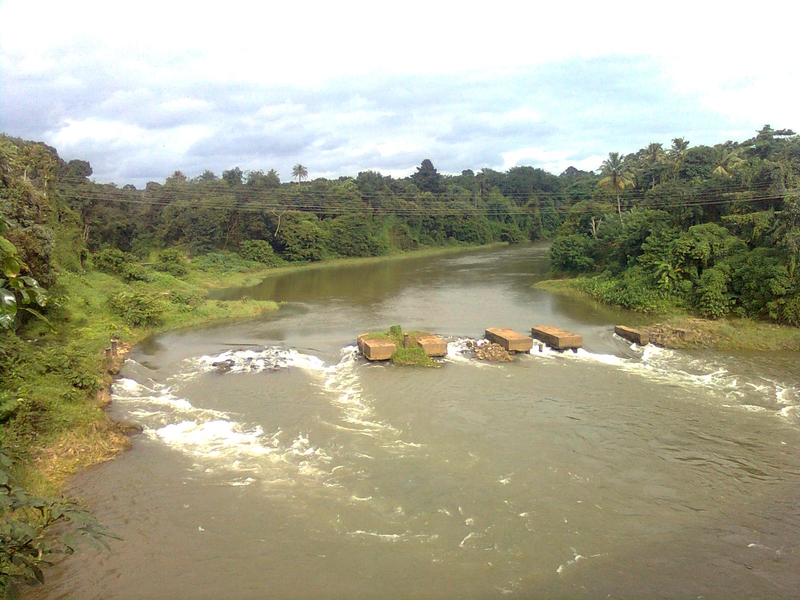
记录来自印度喀拉拉邦南部卡拉达河,可能为该水系特有。模式地点在水坝下游,采集时是清澈、浅而缓流的花岗岩区。季风可能显著改变水量、浑浊度和化学条件,不能把一次旱季观测当全年固定状态。
饲养环境
布置圆滑石块、砂、细砾和沉木,留足群体活动空间;耐附生植物可固定在硬景上。对有机污染积累不耐受,须保持清洁、高溶氧与适度循环,每周换水约三至五成。无需让鱼持续面对激流。
食性与喂食
可能是觅食型杂食鱼,天然菜单或包括小型动物、植物材料和碎屑。缸养较易接受食物,优质薄片、颗粒配合红虫、水蚤、丰年虾等活饵或冷冻饵即可保持多样。
习性与混养
以八至十尾为宜,也可能与近缘鱼一起聚群。混养伙伴应温和而健壮,体型足够大,不易受到它持续游动的干扰。足够数量能减少惊慌,雄鱼多把竞争集中在群内等级上。
雌雄区分
雄鱼颜色更强,繁殖期头部有追星,部分个体背鳍会有延长鳍条;雌鱼通常稍大、更厚实而颜色较淡。
繁殖
本种繁殖可能尚无确认记录,只能借鉴近亲的散卵繁殖方式。若尝试,可先调理亲鱼,另设昏暗成熟缸,以细叶植物、拖把、网格或玻璃珠隔离卵,气动海绵过滤提供轻柔增氧。可尝试一两对或较大群体,后者需要更多空间。
如产卵,移走亲鱼以免卵被吃。预备微小开口食物,再随鱼苗成长提供微虫和丰年虾无节幼体;近亲的孵化时程不能当作本种已验证结果。
图片
图片来自 SeriouslyFish,版权归各摄影者所有。
English
Overview
Rarely offered deliberately, Dawkinsia exclamatio sometimes arrives among similar fishes. Two flank blotches, including an elongated caudal-peduncle mark, help identify it. A proposed natural-hybrid origin remains unresolved, making provenance useful.
Distribution & habitat
Records center on the Kallada system in southern Kerala, India, which may contain its entire range. At the type site below a dam, fish occupied clear, shallow, slowly flowing water among granite boulders. Monsoon changes are likely to alter volume, turbidity, and chemistry.
Aquarium setup
Arrange smooth rocks, sand, fine gravel, and wood around adequate open space, adding robust attached plants where suitable. Avoid accumulated organic pollution. Maintain strong oxygenation, moderate circulation, and weekly changes of about 30–50%, without imposing constant torrent conditions.
Diet & feeding
It is probably an omnivorous forager taking small animals, plant material, and debris. Captive feeding is generally easy with quality flakes and granules plus regular small live or frozen foods.
Behaviour & compatibility
A group of eight to ten promotes confidence, and it may also associate with relatives. Choose peaceful, robust companions that are too large to present a feeding opportunity and are not intimidated by its activity. Most male competition remains focused on the group hierarchy.
Sexual dimorphism
Males become more colorful, develop head tubercles in breeding condition, and sometimes grow dorsal filaments. Females are usually larger, heavier, and less intensely colored.
Breeding
Breeding may remain unrecorded. A trial can borrow the egg-scattering approach used for relatives: condition adults and provide a dim, established aquarium with fine plants, mops, mesh, or marbles to protect eggs, plus gentle aeration. Pairs or a larger group may be tried, with more room for the latter.
Separate adults if spawning occurs. Prepare microscopic first foods, followed by microworms and Artemia nauplii as young develop. Timings from relatives should not be treated as established for this species.
来源
- https://www.seriouslyfish.com/species/puntius-exclamatio(抓取于 2026-10-10)
dawkinsia-exclamatio · 文件: data/species/dawkinsia-exclamatio.md · 状态: 草稿