Dawkinsia assimilis · Mascara Barb
概要
| 字段 | 值 |
|---|---|
| 类别 | 鱼 |
| 学名 | Dawkinsia assimilis |
| 别名 | Systomus assimilis、Puntius assimilis、Puntius lepidus |
| 分类 | 鲤形目 Cypriniformes › 鲤科 Cyprinidae › Dawkinsia |
| 水体 | 淡水 |
| 原产地 | 印度西南部卡纳塔克邦和喀拉拉邦 |
| 成体体长 | 12 cm |
| 饲养难度 | 中等 |
| 最小水体 | 243 L |
| 最小缸长 | 120 cm |
| 群居方式 | 群游 |
| 外部数据 | seriouslyfish dawkinsia-assimilis;fishbase 62222 |
| 食性 | 杂食 |
| 繁殖方式 | 散卵 |
| 性情 | 温和 |
水质参数
| 参数 | 耐受范围 | 最适范围 | 单位 |
|---|---|---|---|
| 水温 | 19–25 | — | °C |
| pH | 6–7 | — | — |
| 总硬度 | 2–10 | — | dGH |
概述
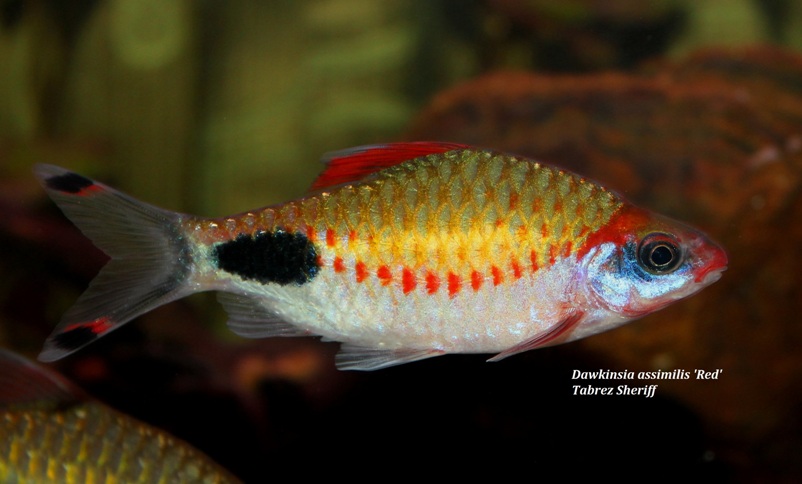
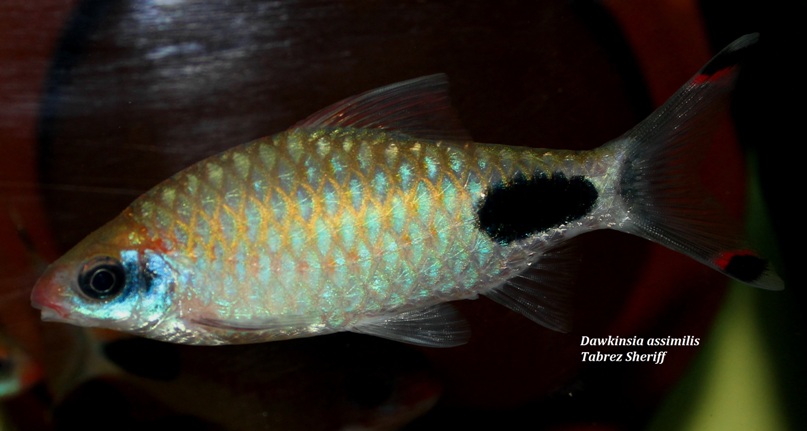
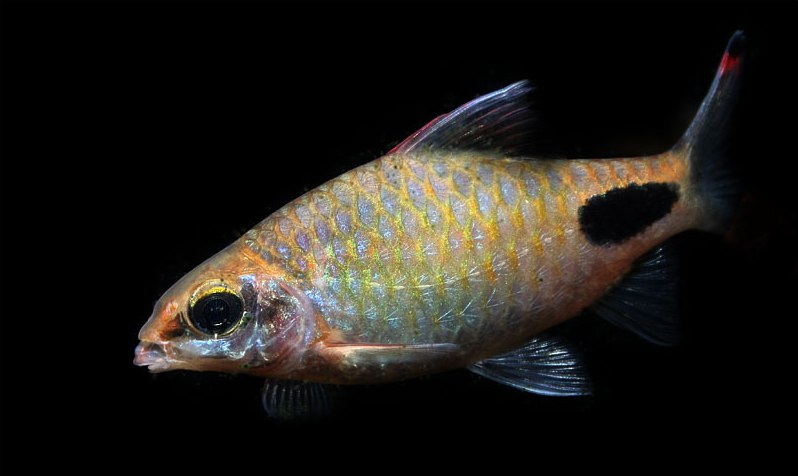
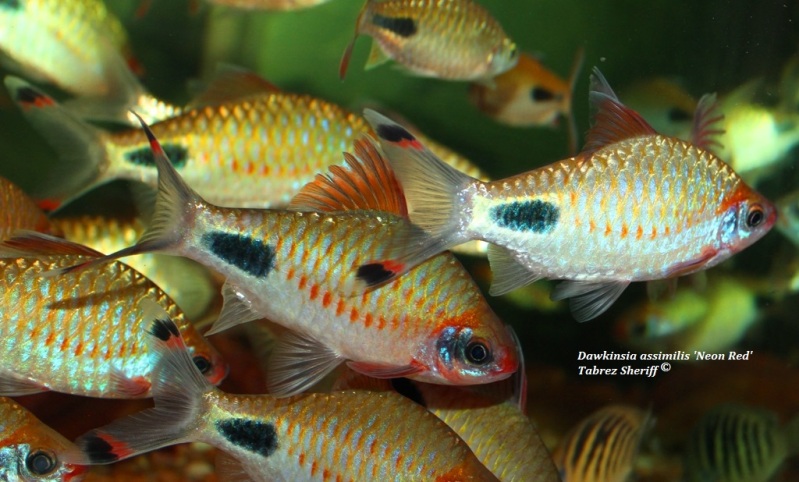
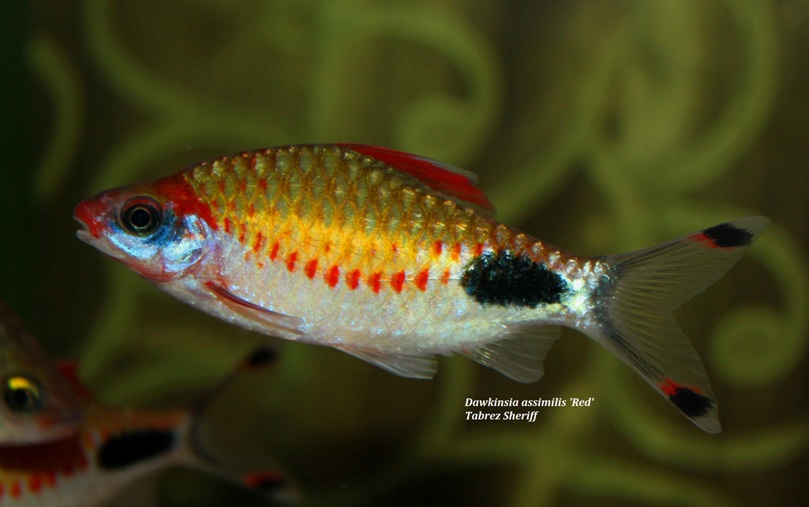
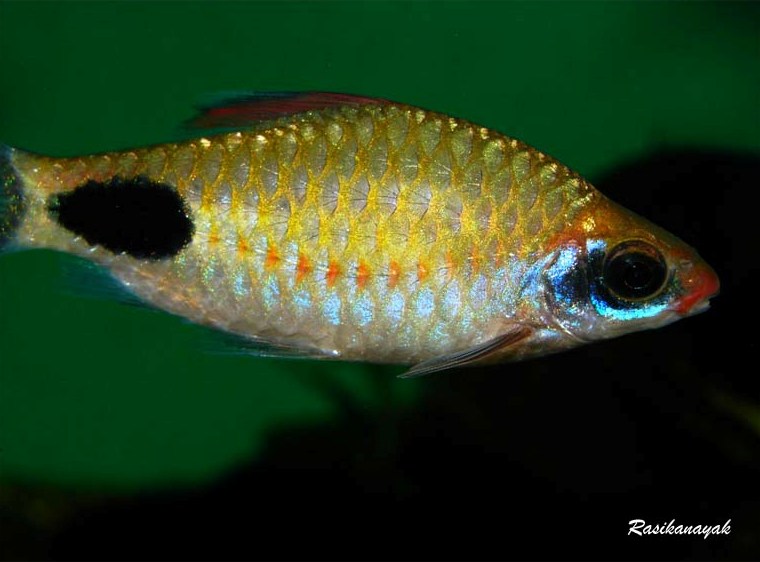
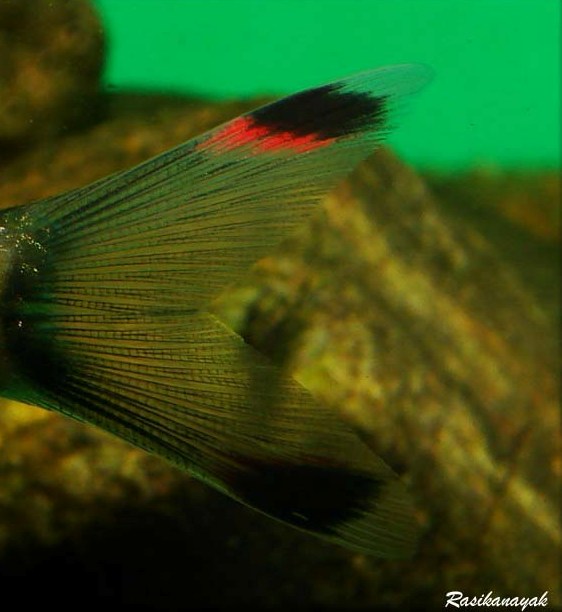
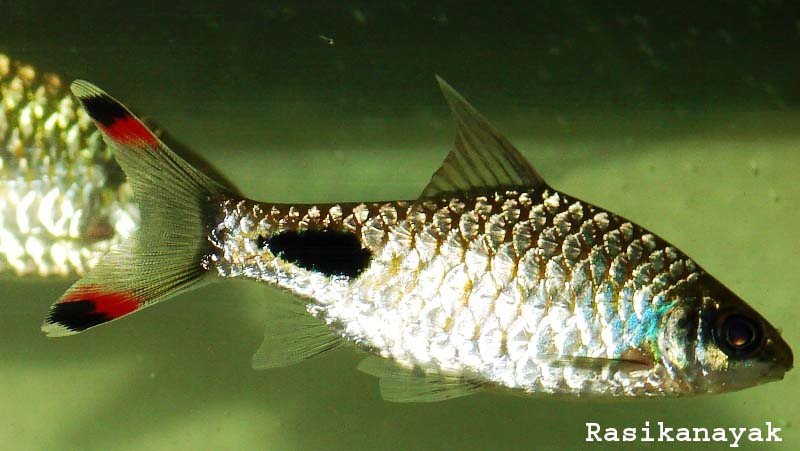
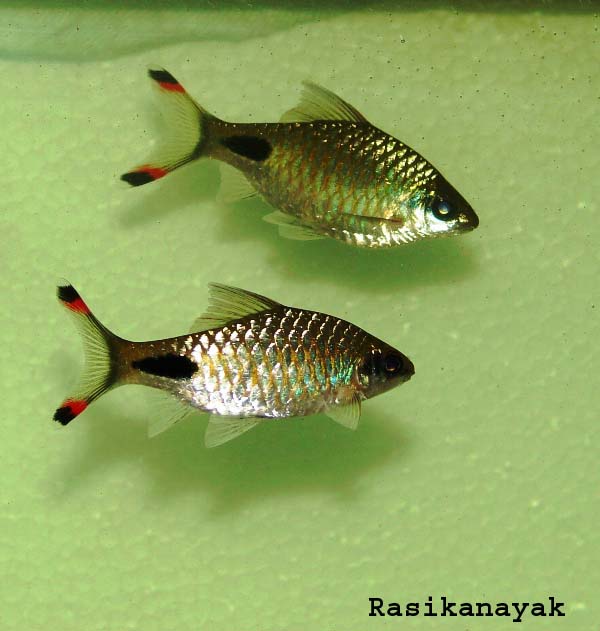
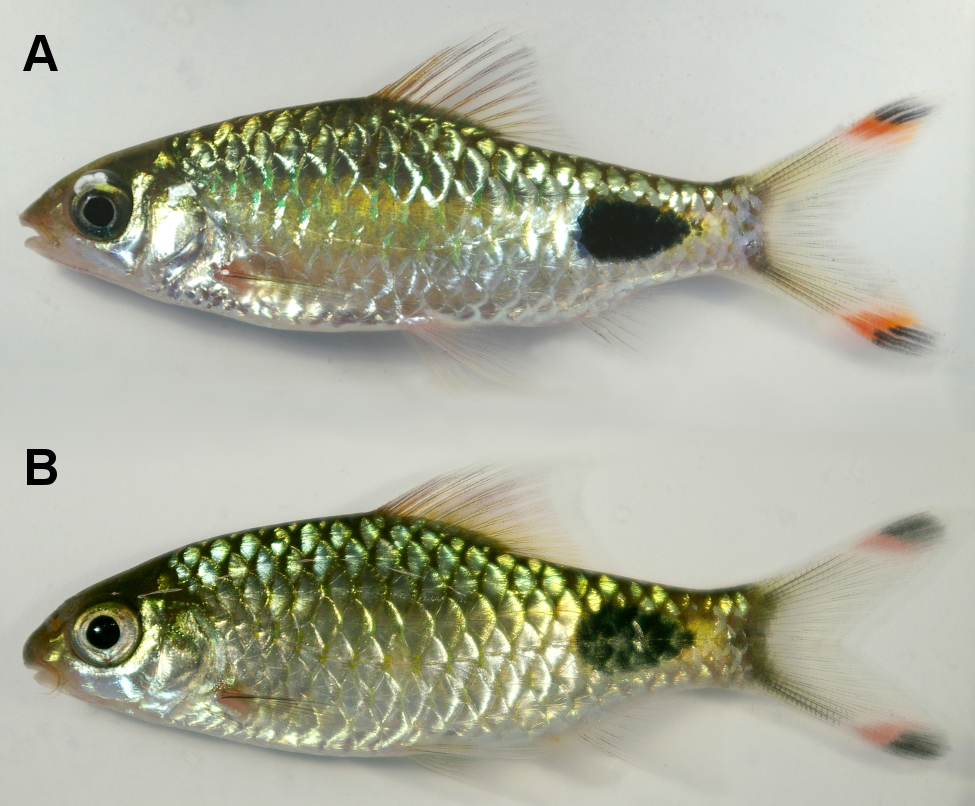
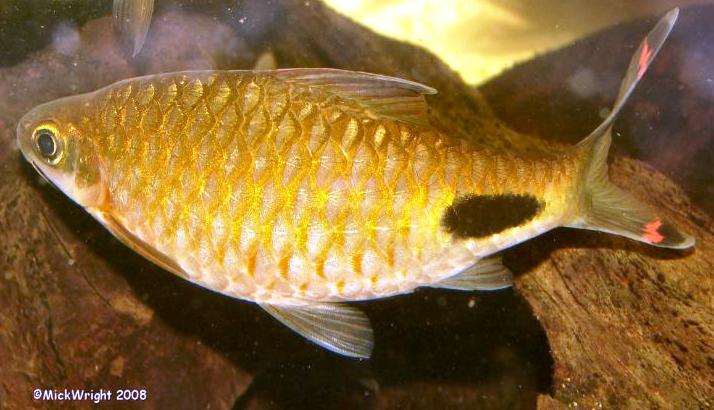
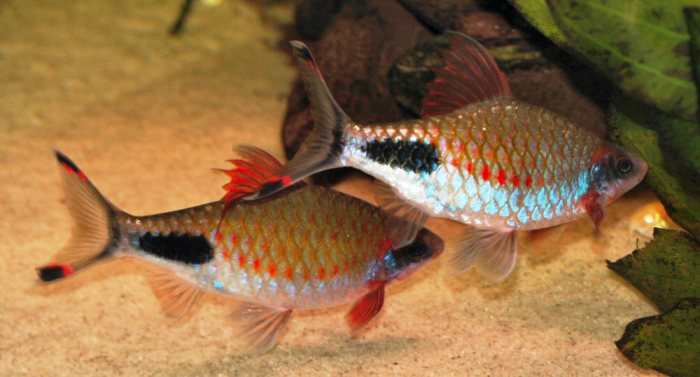
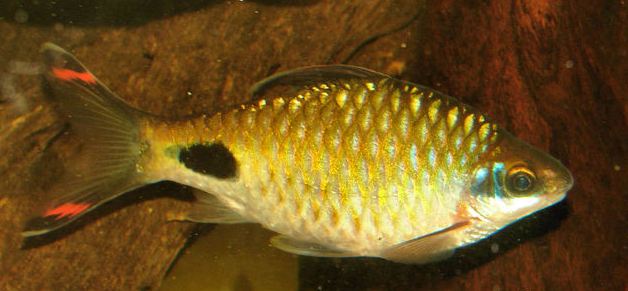
Dawkinsia assimilis 是活跃的群游鱼,长期饲养需重视游泳空间、清洁水和溶氧。尾鳍上下叶尖常有黑带,但不同产地的花纹会变化,商品名和单一外观特征都不足以完全确认身份。
分布与栖息地
来自印度西南部卡纳塔克和喀拉拉,已在内特拉瓦蒂、恰拉库迪和卡拉达河流域采到,精确分布边界仍未厘清。栖地并不单一:有泥底缓流边缘,也有瀑布之间的清澈石质流段,以及浅水花岗岩区。
饲养环境
可用圆滑石块、砂与细砾、沉木布置河流环境,耐附生植物可固定在硬景上。过滤要可靠,不能让有机污物持续积累;保持高溶氧、适度水流,每周换水约三至五成,不需要整缸激流。
食性与喂食
天然为杂食性,觅食蠕虫、昆虫、甲壳动物,也摄取植物材料和有机碎屑。水族箱中较易喂养,用优质薄片或颗粒配合红虫、水蚤、丰年虾等小型活饵和冷冻饵,保持均衡。
习性与混养
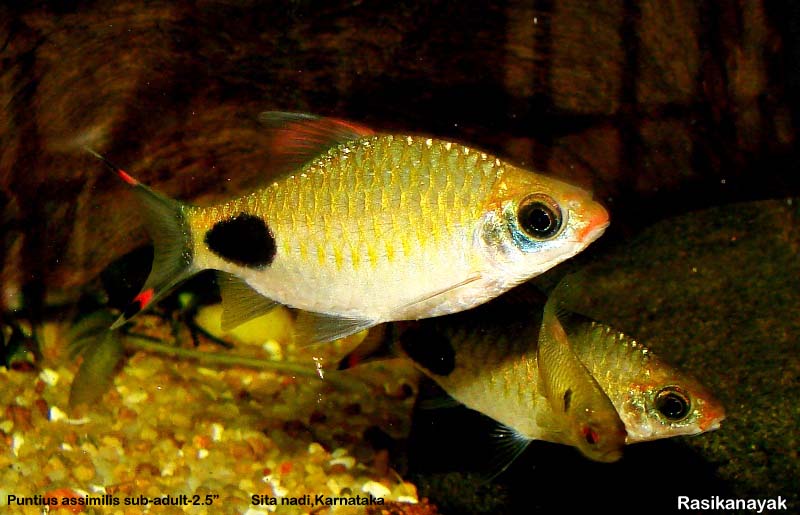
适合与健壮、温和、体型不会轻易成为食物的河流鱼混养。八至十尾以上可降低惊慌,雄鱼大多把竞争集中在群内等级上;胆小或经不起持续活动干扰的伙伴不合适。
雌雄区分
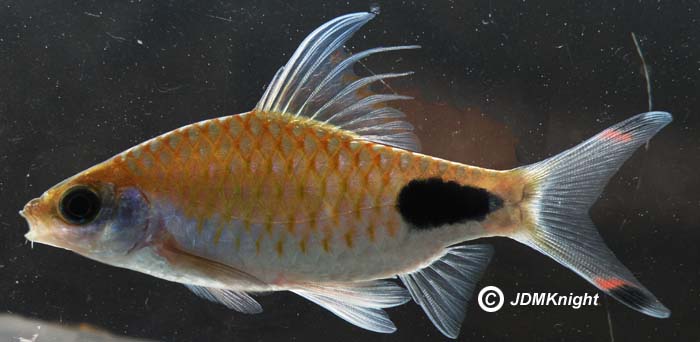
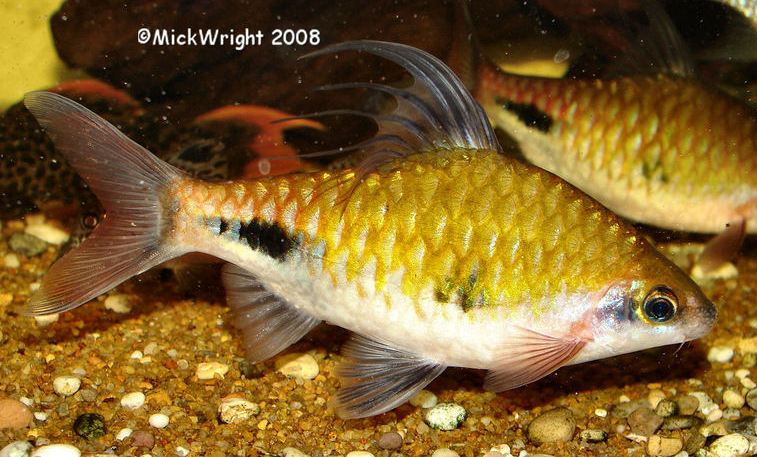
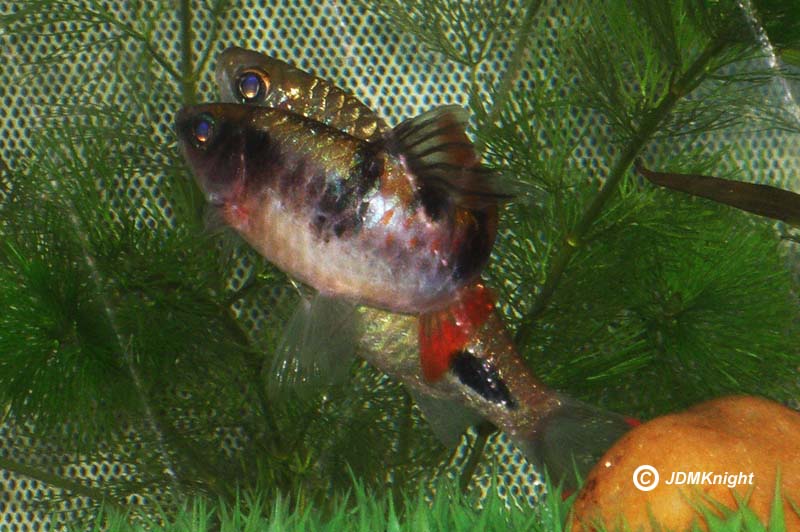
成熟雄鱼颜色更强,繁殖时头部出现明显追星;雌鱼通常稍大、身体更厚实而颜色较淡。某些产地的两性都会长出丝状背鳍条,可能有季节变化,不能只靠长鳍判断性别。
繁殖
散卵而不护卵。提高成活率时,另设成熟水的昏暗繁殖缸,底部用网格、玻璃珠,或大量细叶植物和拖把保护卵,并提供轻柔增氧。调理好的亲鱼可用一两对,也可群体繁殖,但需要相应更大空间。
发现卵后应移走亲鱼,避免被吃。卵约 24–48 小时孵化,再约一天起游,最初几天需要微小食物,之后才能接受微虫和丰年虾无节幼体。
补充说明
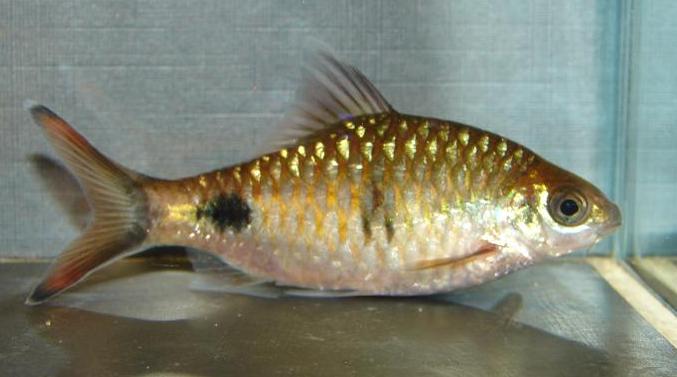
卡拉达种群的尾鳍黑带可能很淡甚至缺失,一些产地鱼是否属于独立种仍有疑问。旧商品名常混用,维持繁殖群时应保留产地信息,避免只凭“红色型”等标签合并不同来源。
图片
图片来自 SeriouslyFish,版权归各摄影者所有。
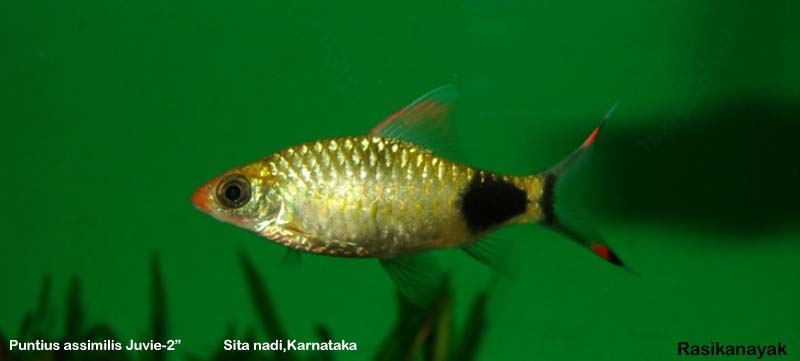
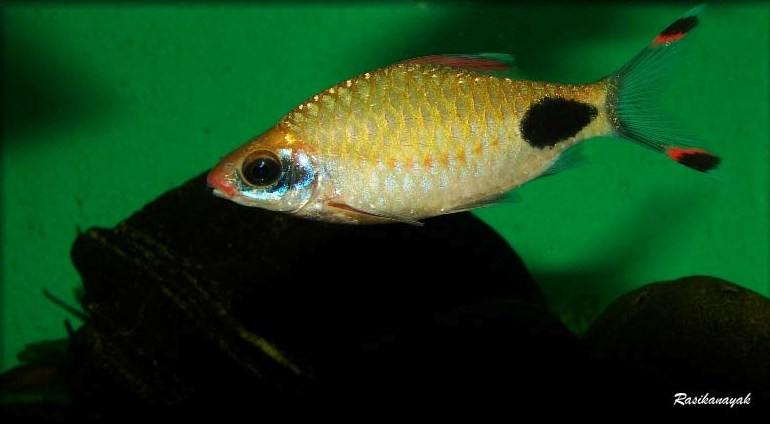
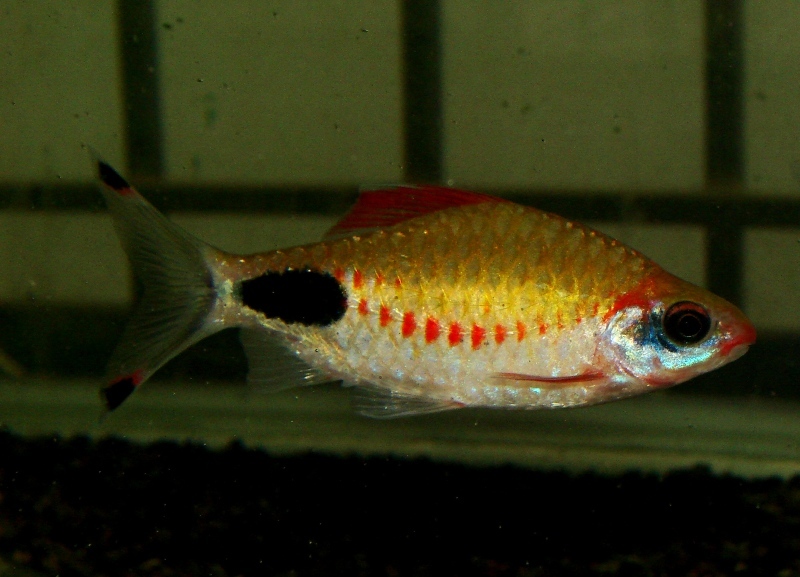
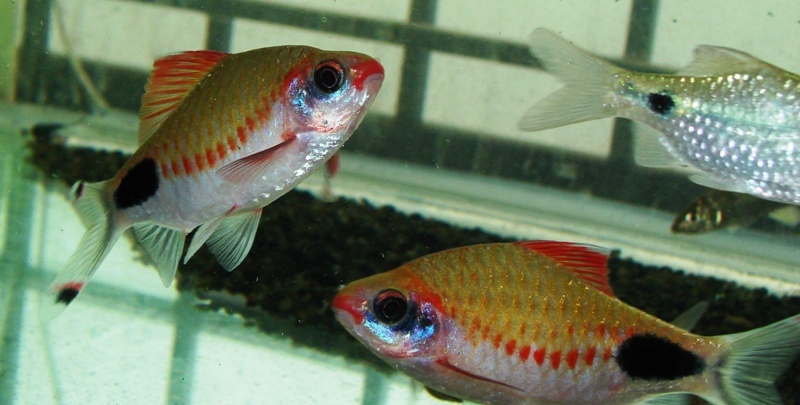
English
Overview
An active schooling barb, Dawkinsia assimilis thrives with swimming room, clean water, and good oxygenation. Dark bands often mark the caudal-lobe tips, but geographic variation complicates identification from appearance or trade labels alone.
Distribution & habitat
Records include the Netravati, Chalakudy, and Kallada basins of Karnataka and Kerala, southwestern India; the full range remains unresolved. Habitats vary from slow muddy margins to clear rocky runs between waterfalls and shallow areas among granite boulders.
Aquarium setup
Use smooth stones, sand, fine gravel, and wood to create a river-style aquarium, with robust plants attached to décor. Prevent organic pollution through reliable filtration and weekly changes of roughly 30–50%. Maintain high oxygen and moderate movement without creating a torrent throughout.
Diet & feeding
A natural omnivore, it forages for worms, insects, crustaceans, plant material, and organic debris. Feed quality flakes or granules with regular small live and frozen items, keeping the overall menu varied.
Behaviour & compatibility
Choose peaceful but confident companions large enough not to present a feeding opportunity. Eight to ten or more encourages confidence and directs most male competition toward the shoal hierarchy. Timid fish may be unsettled by its size and activity.
Sexual dimorphism
Males intensify in color and develop head tubercles in spawning condition. Females tend to be slightly larger, heavier, and less colorful. Both sexes in some populations develop dorsal filaments, possibly seasonally, so these alone do not identify sex.
Breeding
This egg-scatterer does not care for its brood. For better survival, use an established, dim spawning tank with gentle aeration and eggs protected by mesh, marbles, fine plants, or mops. Condition adults first; use one or two pairs, or a larger breeding group with proportionally more room.
Remove breeders when eggs appear. Hatching takes roughly 24–48 hours, followed by free swimming about a day later. Young initially require microscopic foods before taking microworms and Artemia nauplii.
Notes
Kallada fish may have weak or absent caudal-tip bands, and some geographic populations may represent distinct species. Historic trade labels are inconsistent. Retain locality information when establishing breeding groups rather than combining fish solely under color-form labels.
来源
- https://www.seriouslyfish.com/species/dawkinsia-assimilis(抓取于 2026-10-10)
dawkinsia-assimilis · 文件: data/species/dawkinsia-assimilis.md · 状态: 草稿