Danionella priapus
概要
| 字段 | 值 |
|---|---|
| 类别 | 鱼 |
| 学名 | Danionella priapus |
| 分类 | 鲤形目 Cypriniformes › 鲤科 Cyprinidae › Danionella |
| 水体 | 淡水 |
| 原产地 | 印度西孟加拉邦焦尔艾河,布拉马普特拉河水系桑科什河支流 |
| 成体体长 | 1.6 cm |
| 饲养难度 | 中等 |
| 最小水体 | 41 L |
| 最小缸长 | 45 cm |
| 群居方式 | 群游 |
| 外部数据 | seriouslyfish danionella-priapus;fishbase 65212 |
水质参数
| 参数 | 耐受范围 | 最适范围 | 单位 |
|---|---|---|---|
| 水温 | 18–24 | — | °C |
| pH | 6–8 | — | — |
| 总硬度 | 1–8 | — | dGH |
概述
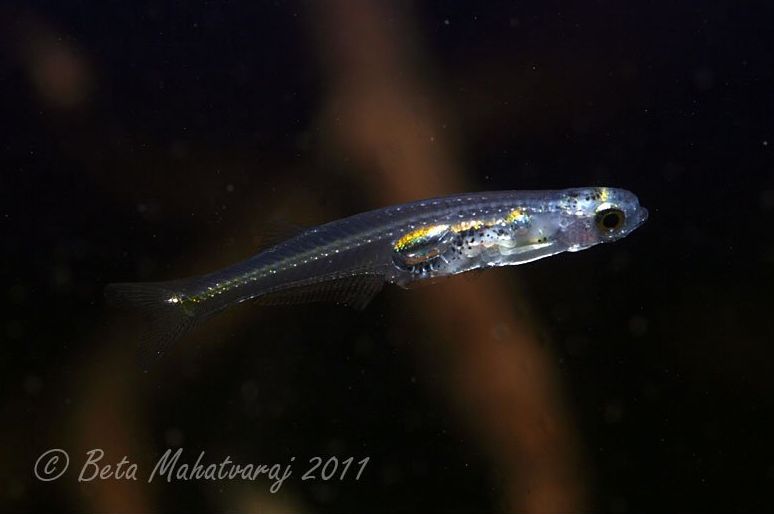
Danionella priapus 是微小型群居鱼,身体较透明,雄鱼腹鳍之间有特殊锥形结构。饲养应围绕成熟水质、轻柔水流和微小饵料安排,独立群体也更利于观察与繁殖尝试。
分布与栖息地
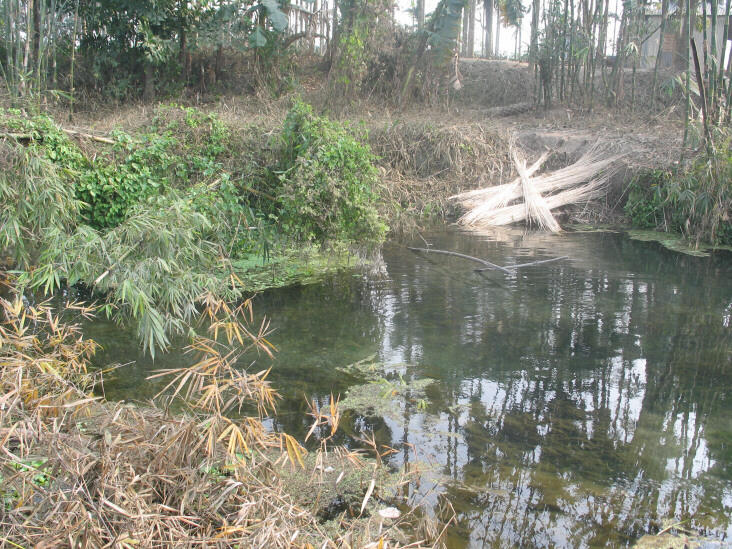
目前只知印度西孟加拉邦焦尔艾河模式产地,属桑科什河及布拉马普特拉河水系。采集处为清澈、缓流、砂底且水草密集的小溪。
饲养环境
多种水草并让部分水面被植物覆盖,以成熟气动海绵过滤维持轻流。莫丝团既能形成遮蔽,也提供成鱼和鱼苗可利用的微生物。应在投放前把缸和过滤养稳定。
食性与喂食
可接受很细的干饲料、切碎水蚯蚓、丰年虾无节幼体、微虫和筛选过的小水蚤。重点是颗粒足够小,并保持食物多样,不能因成鱼体型微小就只投一种粉末饲料。
习性与混养
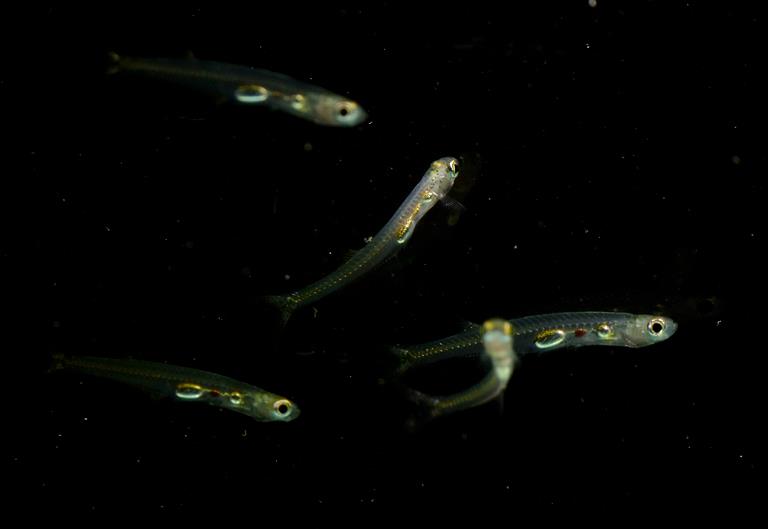
最好单种饲养,至少十二尾形成群体。若尝试混养,伙伴必须同样小型、条件相容;优先让这群微型鱼有稳定进食和展示的空间。
雌雄区分
雌鱼体高较深,抱卵时卵可能从体腔中透出。雄鱼生殖开口位置更靠前,位于腹鳍之间,并有雌鱼没有的锥形生殖乳突。
繁殖
本种水族箱繁殖尚未明确确认。另一种身份未完全确定的同属鱼曾在二十四尾成鱼转入成熟莫丝专缸后连续出现鱼苗,卵以分散的锥状小团直接附在底部。鱼苗先用草履虫和绿水培育,再逐步接受丰年虾无节幼体和微虫,但第二代出现过脊柱畸形。此经历只能作为尝试参考,不是本种已验证的繁殖流程。
图片
图片来自 SeriouslyFish,版权归各摄影者所有。
English
Overview
The miniature Danionella priapus has a delicate, translucent appearance and a distinctive cone-shaped structure between the male’s pelvic fins. Established water, gentle circulation, and tiny foods are central to care. A dedicated shoal also makes observation and breeding trials easier.
Distribution & habitat
It is known from its type locality in the Jorai River, West Bengal, India, within the Sankosh–Brahmaputra drainage. Fish were collected in a clear, sluggish stream with sand and dense aquatic vegetation.
Aquarium setup
Plant the aquarium generously and shade part of the surface with vegetation. Mature moss adds both cover and microorganisms that adults and fry can use. Establish an air-driven sponge filter before stocking and keep movement gentle.
Diet & feeding
Accepted foods include finely crushed dry diets, chopped Tubifex, Artemia nauplii, microworms, and sifted Daphnia. Appropriate particle size and variety matter more than offering a single powdered staple.
Behaviour & compatibility
A species aquarium containing at least twelve is preferable. If a community is attempted, use similarly tiny fishes with matching conditions rather than companions that dominate the display or feeding space.
Sexual dimorphism
Females are deeper-bodied, with eggs sometimes visible when gravid. The male genital opening lies farther forward between the pelvic fins and bears a cone-shaped projection absent in females.
Breeding
Confirmed captive reproduction is uncertain. In an unidentified congener, a group of twenty-four adults began producing fry after transfer to a dedicated aquarium with mature moss. Eggs formed individual cone-like masses on the substrate. Paramecium and green water supported young before Artemia nauplii and microworms were introduced. Second-generation spinal deformities occurred. This related-fish account can guide experiments but does not establish successful breeding of D. priapus.
来源
- https://www.seriouslyfish.com/species/danionella-priapus(抓取于 2026-10-10)
danionella-priapus · 文件: data/species/danionella-priapus.md · 状态: 草稿