Danio tinwini · Gold Ring Danio
概要
| 字段 | 值 |
|---|---|
| 类别 | 鱼 |
| 学名 | Danio tinwini |
| 别名 | Danio tinwini Kullander &、Brachydanio tinwini |
| 分类 | 鲤形目 Cypriniformes › 鲤科 Cyprinidae › Danio |
| 水体 | 淡水 |
| 原产地 | 缅甸北部克钦邦密支那地区莫冈溪水系 |
| 成体体长 | 3 cm |
| 饲养难度 | 入门 |
| 最小水体 | 41 L |
| 最小缸长 | 45 cm |
| 群居方式 | 群游 |
| 性情 | 温和 |
| 特征 | 会跳缸: 是 |
| 外部数据 | seriouslyfish danio-tinwini;fishbase 65187 |
| 繁殖方式 | 散卵 |
水质参数
| 参数 | 耐受范围 | 最适范围 | 单位 |
|---|---|---|---|
| 水温 | 18–26 | — | °C |
| pH | 6.5–7.5 | — | — |
| 总硬度 | 1–5 | — | dGH |
概述
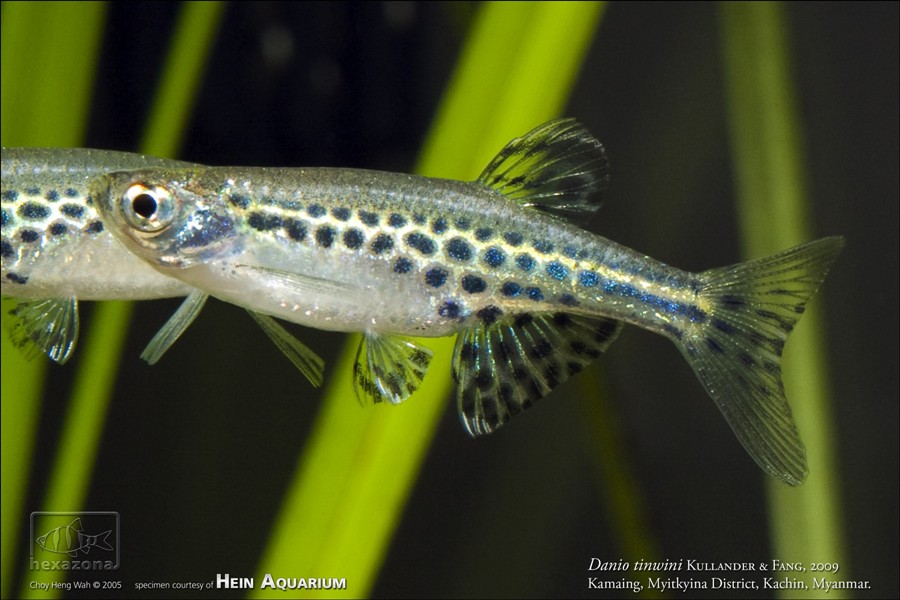
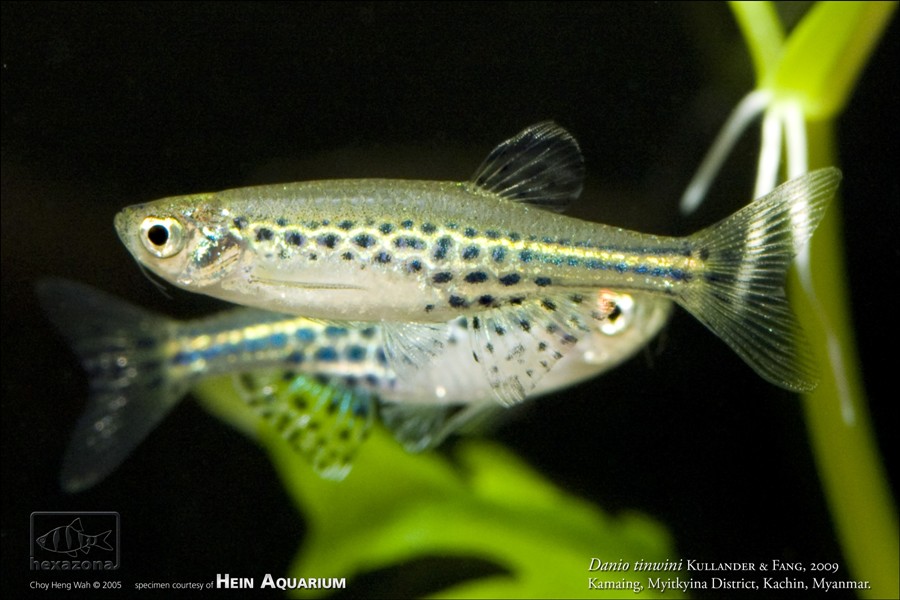
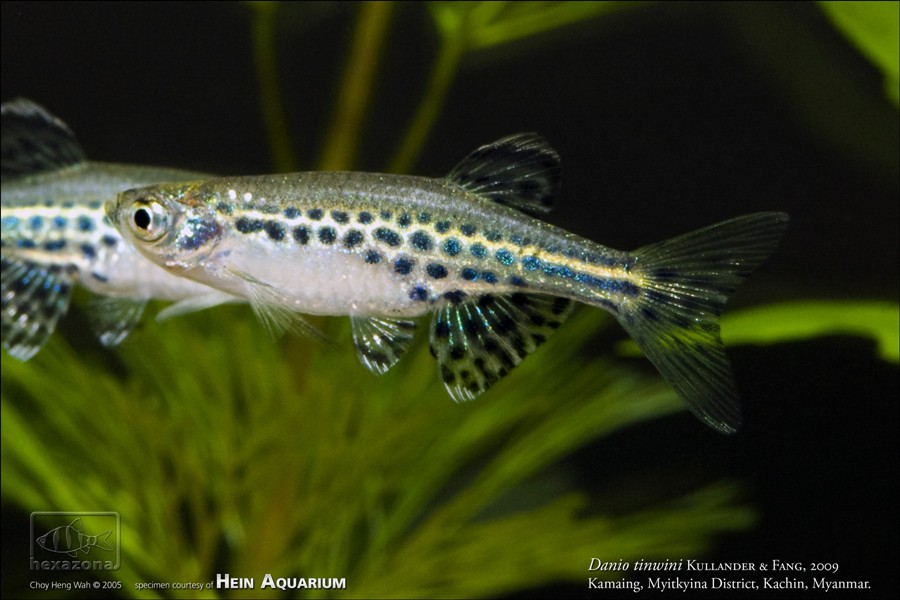
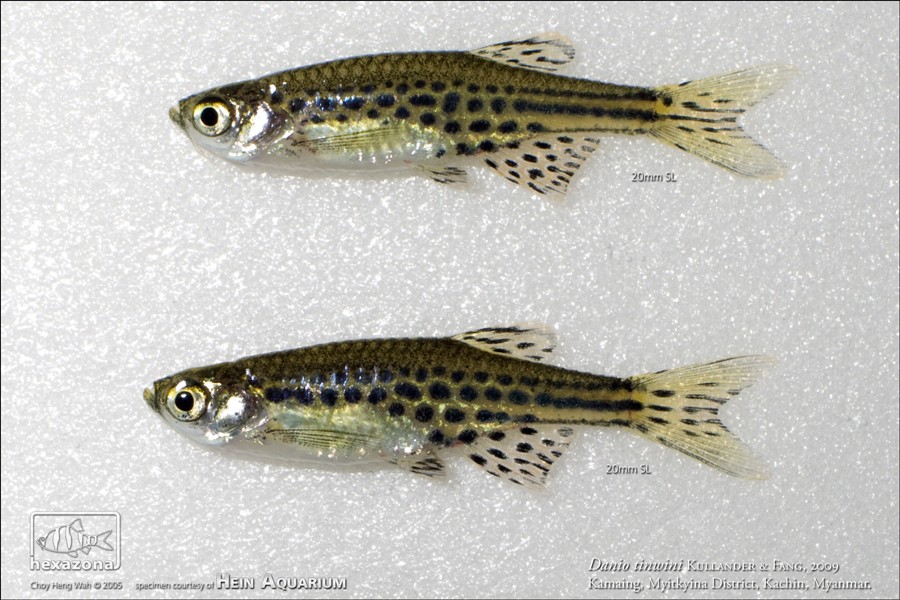
Danio tinwini 是体型很小的温和群游鱼,身体和不成对鳍上的斑点、较短的须有助识别。选混养伙伴时,应以它微小的成年体型为前提,而不是把所有斑马鱼都当作同样强健的大型活跃鱼。
分布与栖息地
已知产于缅甸北部克钦邦密支那地区的莫冈溪,为伊洛瓦底江支流。可能只分布于这一区域,也不能排除商品采集涉及其他地点。具体栖地仍不清楚,溶氧充足溪流的缓流边缘只是参照近亲提出的推测。
饲养环境
深色底砂和茂密植物有助发色,也可用砂砾、圆滑石块、沉木和耐附生植物布置。水要保持良好循环,但留下不受强流冲击的安静位置。缸盖及孔隙应封严,水质以适合它的较软条件为基础。
食性与喂食
天然食物很可能主要是昆虫与幼虫。人工饲养通常接受多种食物,但每一口都要足够小;优质干饲料配合水蚤、丰年虾及细小冷冻饵,有助维持体色和繁殖状态。
习性与混养
至少八至十尾一起养,能减少紧张并让雄鱼展示。混养对象须温和、体型相容,避免抢食或体型压力;相同产地并不自动等于适合一起养。
雌雄区分
成熟雌鱼通常稍大、腹部较圆;繁殖时雌鱼抱卵更明显,雄鱼颜色则增强。
繁殖
散卵、不护卵,密植成熟缸偶尔能自然留下少量鱼苗。若专门繁殖,调理好亲鱼后选一两对,放入昏暗、软水的独立缸,用莫丝、细叶植物或网格保护卵。少量较凉新水及小活饵可作为诱产尝试,雌鱼产后会明显变瘦。
亲鱼会吃卵,应在产卵后移走;过滤改用成熟海绵,防止鱼苗被吸入。卵一般约 24–36 小时孵化,数天后起游,开口先用草履虫级微食物,再随体形增加提供丰年虾无节幼体和微虫。
图片
图片来自 SeriouslyFish,版权归各摄影者所有。
English
Overview
Small spots across the body and unpaired fins, together with short barbels, help identify the diminutive Danio tinwini. Its peaceful nature suits carefully chosen company, but its tiny adult size must guide those choices.
Distribution & habitat
Recorded from Mogaung Chaung in Kachin, northern Myanmar, it belongs to the Ayeyarwaddy drainage. It may be restricted to this region, though other trade-collection sites cannot be excluded. Slow margins of oxygenated streams are a suggested habitat based on relatives, not a documented detailed description.
Aquarium setup
Dark substrate and dense planting improve the display. Gravel, smooth stones, wood, and attached plants can also be used. Keep water circulating while providing sheltered areas away from direct flow. Maintain suitable soft-water conditions and close all cover gaps.
Diet & feeding
Insects and larvae are thought to dominate the natural diet. Most captive foods are accepted when suitably small. Combine quality dry food with live or frozen Daphnia, Artemia, and other tiny offerings for good condition.
Behaviour & compatibility
Keep at least eight to ten to encourage confidence and male displays. Companions should be peaceful and compatible in size and feeding behavior. A shared geographic origin alone does not establish compatibility.
Sexual dimorphism
Females become slightly larger and rounder. In breeding condition their egg-filled abdomen contrasts with the male’s intensified color.
Breeding
Egg scattering occurs without parental care, and a mature planted aquarium may occasionally yield fry. For controlled breeding, condition adults and select one or two pairs for a dim, soft-water aquarium containing moss, fine plants, or egg-protecting mesh. Small cooler-water additions and tiny live foods may help initiate spawning.
Separate adults after spawning and use established sponge filtration. Eggs generally hatch in about 24–36 hours; free swimming follows several days later. Feed infusoria-sized food first, then Artemia nauplii or microworms as fry grow.
来源
- https://www.seriouslyfish.com/species/danio-tinwini(抓取于 2026-10-10)
danio-tinwini · 文件: data/species/danio-tinwini.md · 状态: 草稿