Danio roseus · Rosy Danio
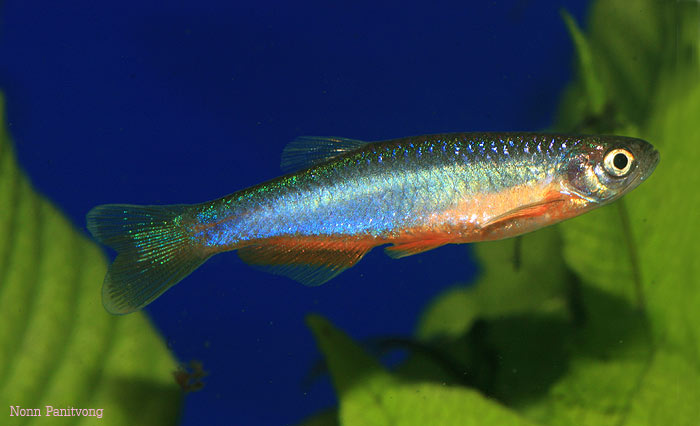
概要
| 字段 | 值 |
|---|---|
| 类别 | 鱼 |
| 学名 | Danio roseus |
| 别名 | Brachydanio rosea |
| 分类 | 鲤形目 Cypriniformes › 鲤科 Cyprinidae › Danio |
| 水体 | 淡水 |
| 原产地 | 老挝、缅甸、泰国 |
| 成体体长 | 5.5 cm |
| 饲养难度 | 入门 |
| 最小水体 | 81 L |
| 最小缸长 | 90 cm |
| 群居方式 | 群游 |
| 性情 | 温和 |
| 特征 | 会跳缸: 是 |
| 外部数据 | seriouslyfish danio-roseus;fishbase 58017 |
| 繁殖方式 | 散卵 |
水质参数
| 参数 | 耐受范围 | 最适范围 | 单位 |
|---|---|---|---|
| 水温 | 18–25 | — | °C |
| pH | 6–7.5 | — | — |
| 总硬度 | 2–15 | — | dGH |
概述
Danio roseus 是体色柔和、性情温和且较易适应水族箱的小型群游鱼。商品群可能包含与近亲的杂交鱼,若希望维持明确的繁殖品系,应注意来源,不能单凭鲜艳颜色判断身份。
分布与栖息地
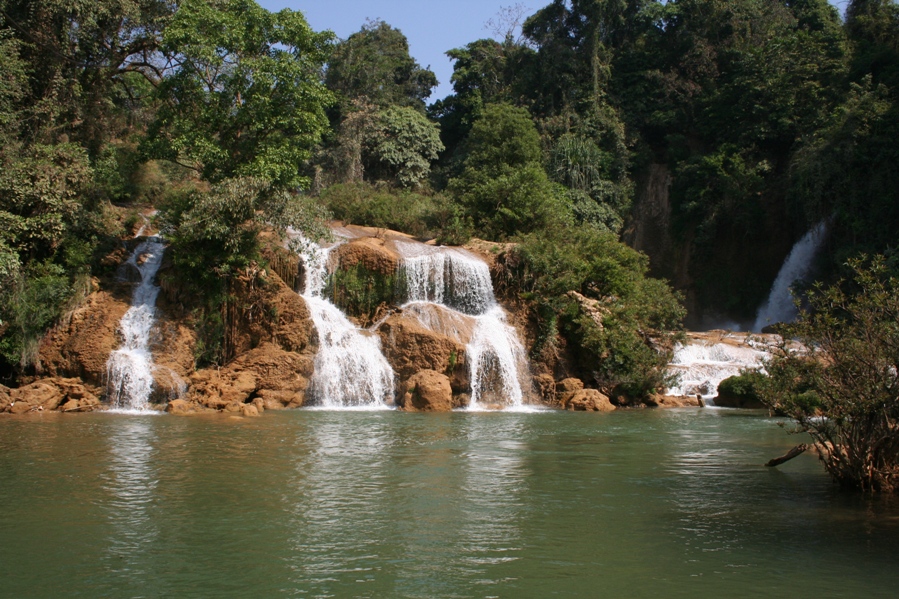
分布于泰国北部、老挝北部湄公河水系,也记录于缅甸北部。主要见于林下溶氧充足的小溪,亦可进入较大河流的缓水区,甚至有主河道记录。水位、流速和水质会随季节变化,栖地并非始终清澈平静。
饲养环境
深色底砂和丰富植物能衬托颜色,但要留出长距离游动空间。圆滑石块、砂砾、沉木与耐附生植物也可组成溪流造景。适度循环并配缓流区,不需要整缸急流;严密缸盖和封好孔隙有助防跳。
食性与喂食
野外很可能主要吃昆虫及幼虫。人工饲养通常不挑食,合口干饲料可作基础,再规律搭配水蚤、丰年虾、红虫等活饵或冷冻饵,改善体色及状态。
习性与混养
至少八至十尾成群可降低惊慌,并让雄鱼自然展示。适合与其他体型相近、同样温和且水质要求兼容的鱼混养;选伙伴仍要考虑成年体型与活动程度。
雌雄区分
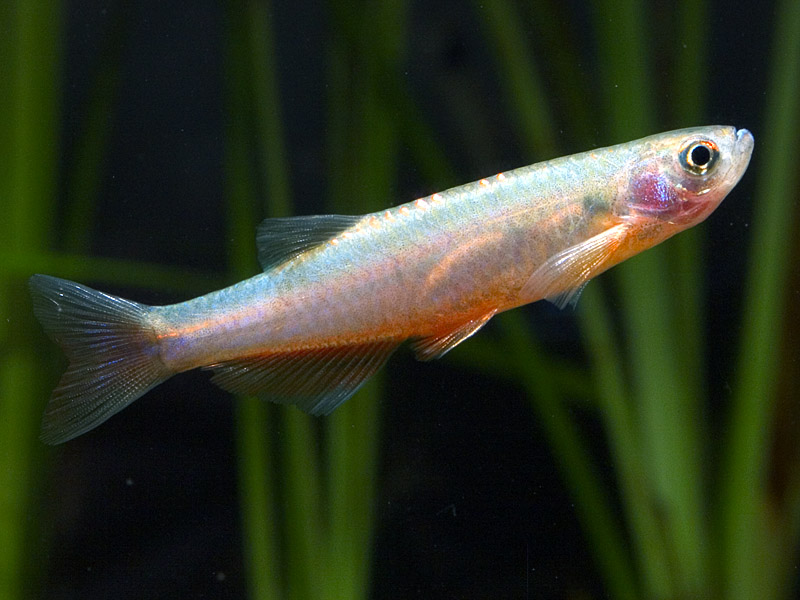
雌鱼通常更大、体高较深,抱卵后尤其明显。
繁殖
本种散卵且不照顾后代,成熟密植缸可能偶尔留下少量鱼苗。专门繁殖时先调理成鱼,使用昏暗繁殖缸,以网格、莫丝或细叶植物保护卵,再选一两对状态好的鱼。小量加入较凉新水并投喂小活饵,有时可促成次晨产卵;雌鱼腹部明显消瘦可作为线索。
成鱼会吃卵,产后移走,以成熟海绵过滤保护幼鱼。约 24–36 小时孵化,几天后起游;先喂草履虫级微小食物,长大后再转用丰年虾无节幼体和微虫。
补充说明
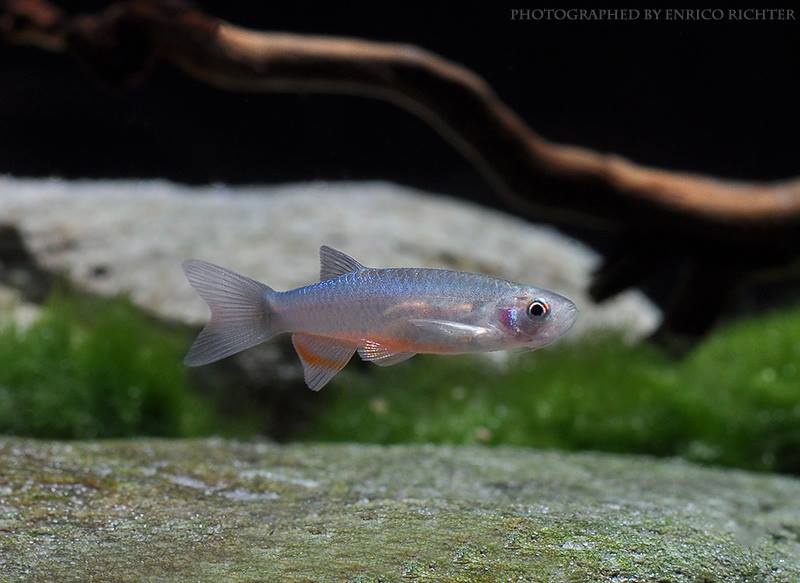
本种后半身缺少明显暗条纹,身体较纤细,吻须相对较短。近似鱼已有人成功杂交,市场鱼可能混有杂交后代;粉蓝体色和强红鳍本身不能证明是纯种。
图片
图片来自 SeriouslyFish,版权归各摄影者所有。
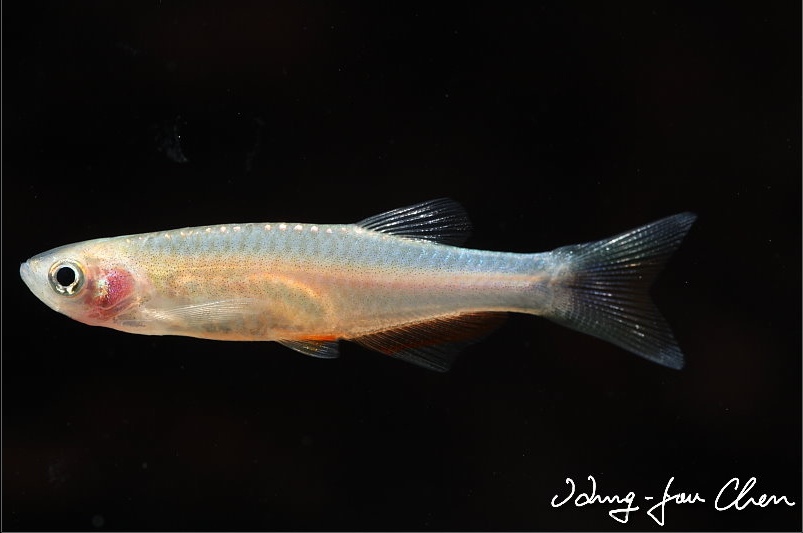
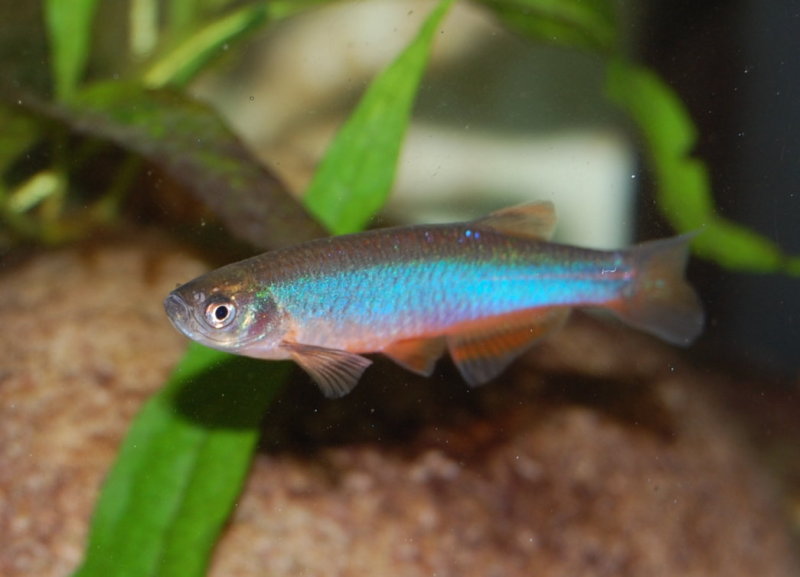
English
Overview
Hardy and peaceful, Danio roseus adapts readily to a planted community aquarium. Fish of mixed ancestry may occur in trade, so provenance matters when maintaining a clearly identified breeding line.
Distribution & habitat
It occurs in the Mekong basin of northern Thailand and Laos, with additional localities in northern Myanmar. Well-oxygenated forest streams are typical, but backwaters and a main-channel record show broader habitat use. Depth, flow, and chemistry vary seasonally, and some occupied streams are turbid.
Aquarium setup
Dark substrate and substantial planting show the fish well, provided open swimming length remains. A stream arrangement with smooth stones, gravel, wood, and attached plants is another option. Supply moderate circulation with sheltered areas and a tightly sealed cover.
Diet & feeding
Insects and larvae are considered likely wild foods. Aquarium feeding is usually easy: offer suitably sized quality dry food plus regular small live and frozen foods to support color and condition.
Behaviour & compatibility
A group of eight to ten or more promotes confidence and male displays. Select peaceful companions of compatible adult size, activity, and water requirements.
Sexual dimorphism
Females tend to be larger and deeper-bodied, particularly when carrying eggs.
Breeding
It scatters eggs and provides no care, so a mature planted tank may occasionally yield a few survivors. To raise more, condition adults and place one or two ready pairs in a dim spawning aquarium with mesh or fine plants protecting eggs. Small cooler-water additions and tiny live foods may encourage spawning the next morning; a slimmer female can indicate that eggs were released.
Separate adults afterward and protect young with established sponge filtration. Eggs commonly hatch in about 24–36 hours, with free swimming several days later. Begin with infusoria-sized food, later adding Artemia nauplii and microworms.
Notes
A slim body, relatively short rostral barbels, and absence of dark rear-body stripes help distinguish it from a close relative. Crosses have been produced, and suspected hybrid fish circulate in the hobby; powdery blue bodies and strongly red fins do not establish pure identity.
来源
- https://www.seriouslyfish.com/species/danio-roseus(抓取于 2026-10-10)
danio-roseus · 文件: data/species/danio-roseus.md · 状态: 草稿