克氏斑马鱼 · Blue Danio
概要
| 字段 | 值 |
|---|---|
| 类别 | 鱼 |
| 学名 | Danio kerri |
| 别名 | 克氏斑馬魚、Brachydanio kerri |
| 分类 | 鲤形目 Cypriniformes › 鲤科 Cyprinidae › Danio |
| 水体 | 淡水 |
| 原产地 | 泰国 |
| 成体体长 | 4.5 cm |
| 饲养难度 | 入门 |
| 最小水体 | 72 L |
| 最小缸长 | 80 cm |
| 群居方式 | 群游 |
| 性情 | 温和 |
| 特征 | 会跳缸: 是 |
| 外部数据 | seriouslyfish danio-kerri;fishbase 12066 |
| 食性 | 肉食 |
| 繁殖方式 | 散卵 |
水质参数
| 参数 | 耐受范围 | 最适范围 | 单位 |
|---|---|---|---|
| 水温 | 18–26 | — | °C |
| pH | 6.5–7.5 | — | — |
| 总硬度 | 2–12 | — | dGH |
概述
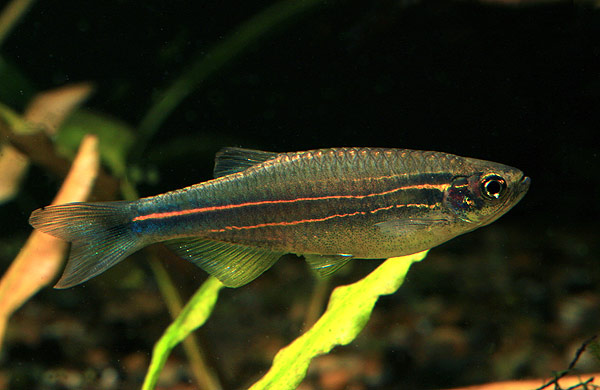
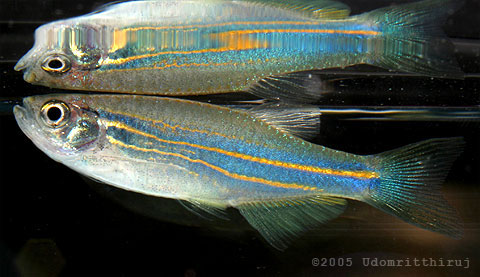
克氏斑马鱼(Danio kerri)带有粉蓝或黄绿色底色,以及粉黄的体侧条纹。北部种群往往较蓝、南部偏黄,因此体色并不是简单的雌雄区分依据。它温和而活跃,但在商店未必常见。
分布与栖息地
模式产地在泰国西南部攀牙府的大长岛,周边岛屿和泰国南部大陆也有记录,分布记录还涉及兰卡威。栖息在清澈的林间溪流和小河,底部多岩石、砾石及圆石;水生高等植物不多,但岸边植被茂密,水下表面有丰富生物膜。
饲养环境
可采用深色底砂的草缸,或以圆石、砾石、沉木模拟溪流。适度造流即可,留出缓流区域;附着生长的铁皇冠、黑木蕨和水榕能提供遮蔽。鱼缸需要足够横向游动空间,盖板必须严密,避免鱼从细小缝隙跳出。
食性与喂食
野外主要吃昆虫和幼虫;胃中的少量植物与碎屑可能只是猎物肠道内容物。人工鱼一般接受干粮,可用优质薄片或小颗粒作主食,定期补充小型活饵、冷冻饵料。
习性与混养
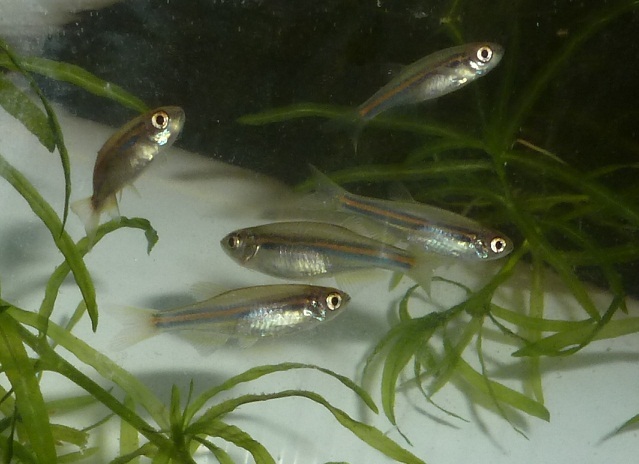
至少八至十条成群饲养更自然,同伴能减少紧张,雄鱼展示时颜色也更好。可搭配体型、性情及环境要求合适的小型鲤科鱼、灯鱼、鳅类等。
雌雄区分
成熟雌鱼通常稍大,腹部圆润,颜色略淡;繁殖状态下更易看出差别。
繁殖
散卵且无亲鱼照护,浓密成熟草缸中可能自然留下少量鱼苗。若专门繁殖,可设独立缸,放入莫丝、产卵拖把或隔卵网,水偏微酸至中性,温度在适宜范围上端。调养后引入一至两对亲鱼,通过逐次补入少量较凉水,或傍晚较大比例换水,配合少量活饵诱导。
发现卵后移走会吃卵的亲鱼,并改用成熟海绵过滤。卵一般一至一天半孵化,再过几天平游,开口可用丰年虾无节幼体或相近大小的食物。
补充说明
本种曾与其他蓝色斑马鱼混淆。其粉黄体侧条纹从鳃盖延伸至尾柄;选购时应结合条纹形态和来源判断,不能只看“蓝色”商品描述。
图片
图片来自 SeriouslyFish,版权归各摄影者所有。
English
Overview
Color in Danio kerri varies geographically: northern populations tend toward powder blue, while southern ones can be more yellow-green. Pinkish-yellow flank lines complete the appearance. These differences should not automatically be interpreted as male and female coloration.
Distribution & habitat
Originally described from Ko Yao Yai in southwestern Thailand, it has additional records from nearby islands, the southern Thai mainland, and Langkawi. Clear forest streams and small rivers over stones and gravel are typical. Aquatic plants are often scarce, but banks are densely vegetated and submerged surfaces carry biofilm.
Aquarium setup
Use a planted aquarium with dark substrate or a stream arrangement of gravel, rounded rocks, and wood. Moderate circulation is appropriate; retain calm areas rather than creating relentless current. Attached ferns and anubias can provide cover. Ample swimming length and a tightly secured lid are essential, since fish can escape through small gaps.
Diet & feeding
Insect remains dominate examinations of wild stomachs. Minor plant and detritus traces may originate in prey guts. Captive feeding is straightforward: a quality dry staple should be accompanied by regular small frozen or live meals.
Behaviour & compatibility
Eight to ten or more fish provide an effective social group. Their presence encourages confidence and stronger male display colors. Many peaceful, suitably sized community species can be considered once environmental requirements are matched.
Sexual dimorphism
Adult females usually grow slightly larger, carry a rounder belly, and show somewhat subdued colors. Reproductive condition makes the differences easier to see.
Breeding
Eggs are dispersed and receive no parental care. Dense planting may shelter a few offspring without intervention. A separate spawning tank with moss, mops, or an egg grid improves control. Use slightly acidic to neutral water toward the warm end of the normal range, then introduce one or two conditioned pairs.
Gradual cooler-water additions or a substantial evening water change, accompanied by small live-food meals, can stimulate laying. Remove adults as soon as eggs are seen and protect the young with mature sponge filtration. Hatching normally takes about one to one and a half days. Once swimming freely a few days later, fry can take brine-shrimp nauplii or comparable food.
Notes
Other blue danios have been confused with this species. Assess the flank markings and provenance rather than relying on a retailer's color-based label.
来源
- https://www.seriouslyfish.com/species/danio-kerri(抓取于 2026-10-10)
danio-kerri · 文件: data/species/danio-kerri.md · 状态: 草稿