Danio feegradei · Yoma Danio
概要
| 字段 | 值 |
|---|---|
| 类别 | 鱼 |
| 学名 | Danio feegradei |
| 别名 | Brachydanio feegradei |
| 分类 | 鲤形目 Cypriniformes › 鲤科 Cyprinidae › Danio |
| 水体 | 淡水 |
| 原产地 | 缅甸西部若开邦若开山脉西坡 |
| 成体体长 | 6 cm |
| 饲养难度 | 中等 |
| 最小水体 | 243 L |
| 最小缸长 | 120 cm |
| 群居方式 | 群游 |
| 特征 | 会跳缸: 是 |
| 外部数据 | seriouslyfish danio-feegradei;fishbase 61454 |
| 繁殖方式 | 散卵 |
水质参数
| 参数 | 耐受范围 | 最适范围 | 单位 |
|---|---|---|---|
| 水温 | 18–25 | — | °C |
| pH | 6.5–7.5 | — | — |
| 总硬度 | 2–12 | — | dGH |
概述
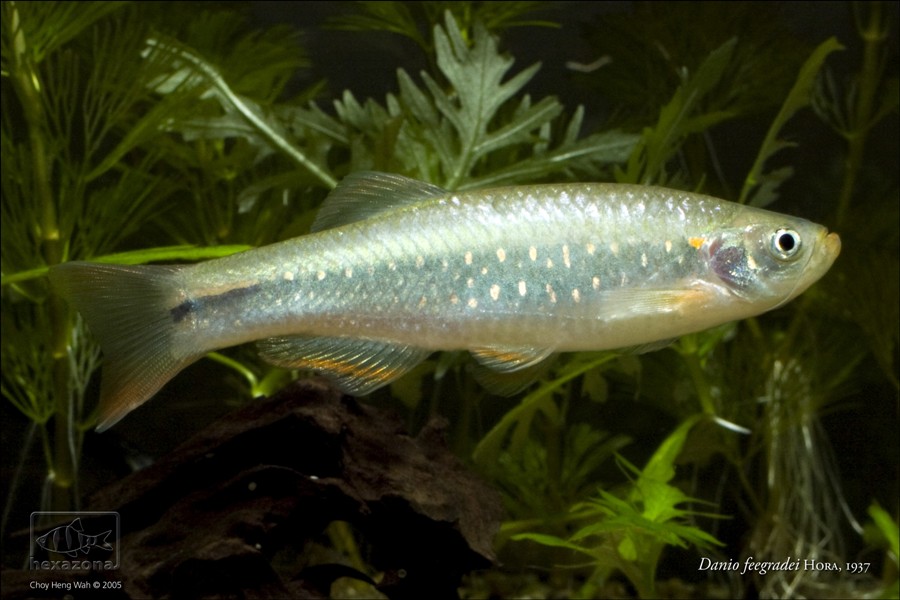
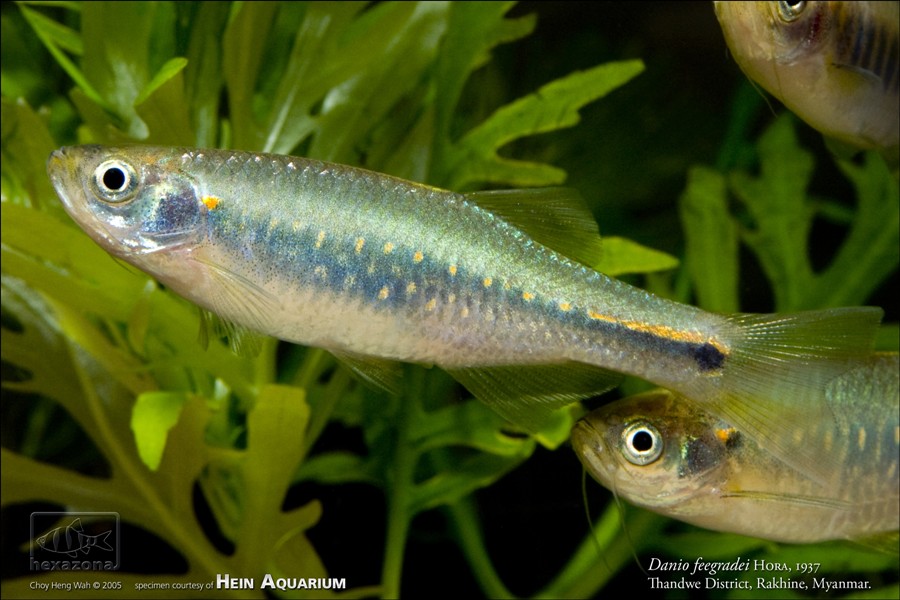
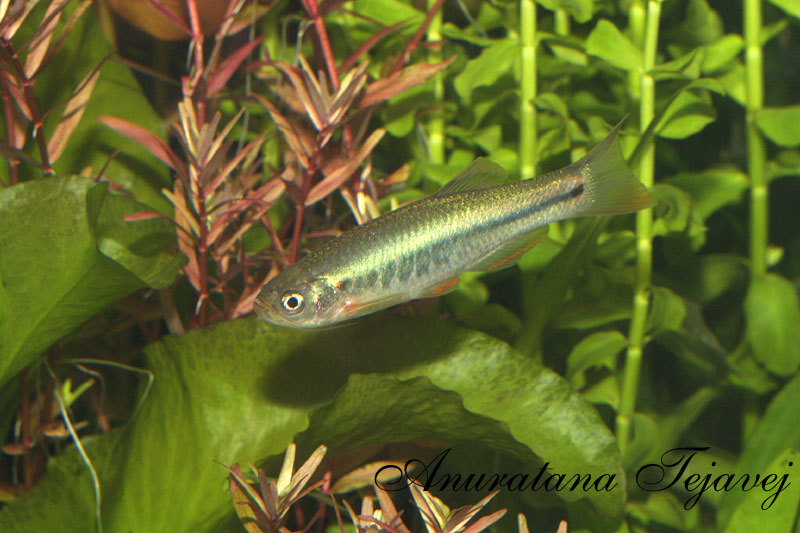
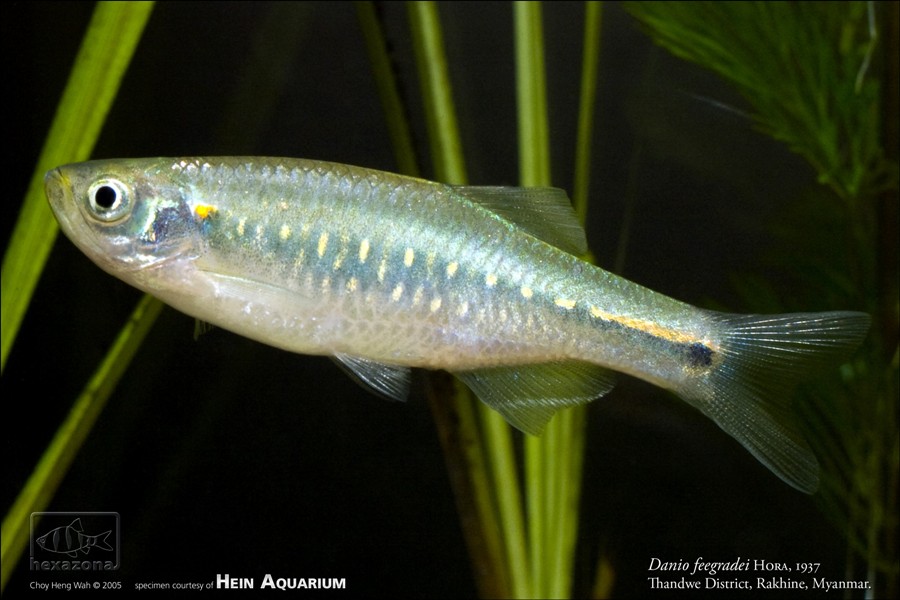
Danio feegradei 是活动量很大的群居鱼,体侧斑点变化明显,有些个体几乎没有斑点。即使体长不算大,也应使用宽敞水族箱;优势个体会压制弱势同伴,不能仅凭对异种通常不主动攻击就认为容易混养。
分布与栖息地
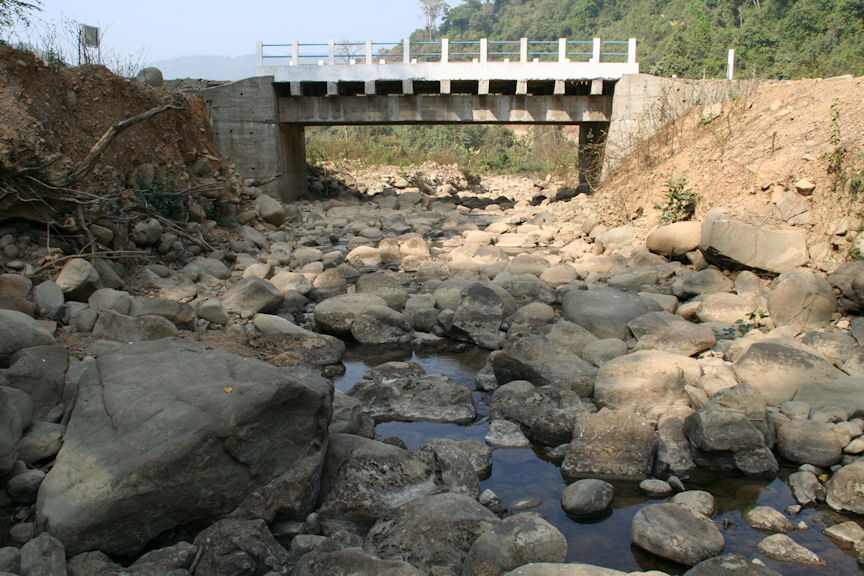
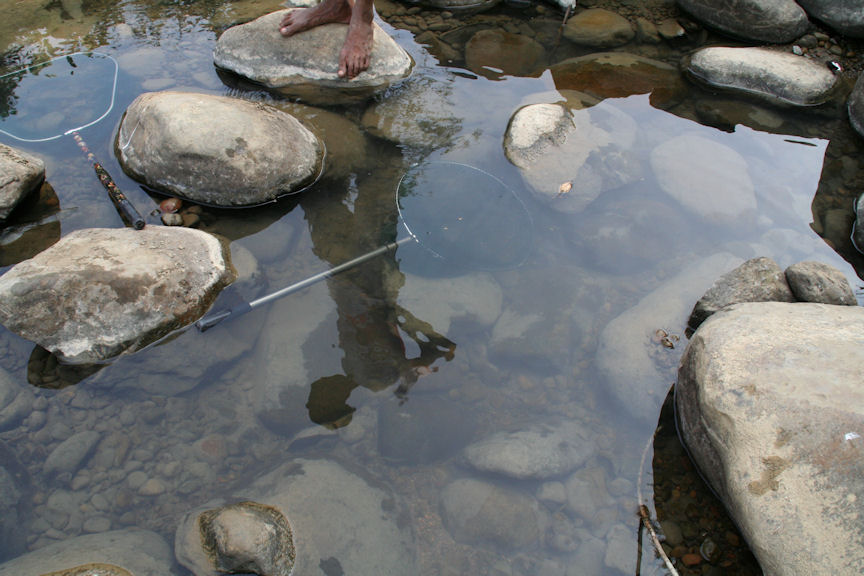
目前视为缅甸若开山脉西坡特有鱼,记录在丹兑南北的森林小溪。旱季溪水可能只剩相连的小池,清澈而缓流或几乎静止,底部为石块与砂砾,岸边有灌木和树林。季风期水位、流速明显增加,因此不能只用旱季池水推断全年环境。
饲养环境
深色底砂和茂密植物有利发色,也可用圆滑石块、砂砾、沉木及耐附生植物布置溪流环境。提供水流,但保留缓流避让区,不做整缸强冲流。盖好所有缝隙,防止跳缸;充足的缸长同样是减少同种冲突的条件。
食性与喂食
天然食物可能以昆虫和幼虫为主。人工饲养通常不挑食,可用优质干饲料作基础,定期搭配红虫、水蚤和丰年虾等活饵、冷冻饵,支持体色和繁殖状态。
习性与混养
宜与相近体型、健壮而不迟缓的鱼在大缸混养,避免胆小或慢吞吞的伙伴。至少十尾有助于分散优势鱼施加的压力,但不能保证没有损伤:弱势个体可能被咬鳍,甚至有健康鱼死亡的饲养经历。群体只在受惊时明显聚紧,平时雄鱼常争斗,要留意弱势鱼能否进食和休息。
雌雄区分
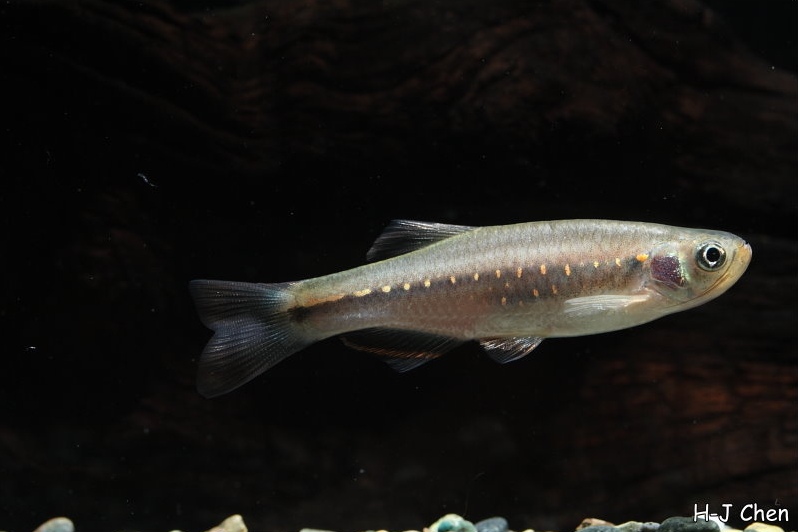
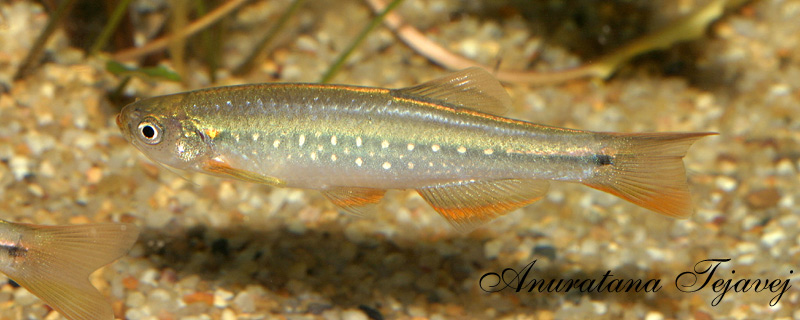
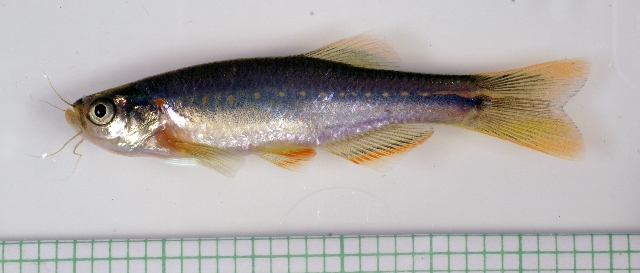
雄鱼更纤细、颜色更强,腹鳍及臀鳍边缘偏橙;雌鱼相应边缘偏白。优势雄鱼通常格外鲜艳。
繁殖
本种为不护卵的散卵型。若尝试专缸育苗,可参考较小同属鱼的流程并扩大空间:以莫丝、拖把或隔卵网保护卵,先调理亲鱼,再放入一两对。添加少量较凉新水或在晚间换水可能有助诱产,但这是借鉴流程,不能保证每一环节对本种都相同。
发现卵后移走成鱼,改用成熟海绵过滤以免吸入鱼苗。参考孵化时间为三至七天,其后约一两天起游;起游后可试丰年虾无节幼体或适当细度的育苗食物。
图片
图片来自 SeriouslyFish,版权归各摄影者所有。
English
Overview
Highly active Danio feegradei needs a spacious aquarium despite its modest body size. Flank spotting varies and may disappear entirely in some individuals. Strong social dominance within the group is a significant husbandry concern.
Distribution & habitat
Known from the western slopes of Myanmar’s Rakhine mountains, it inhabits small forest streams north and south of Thandwe. Dry-season channels may contract into interconnected clear pools over stones and gravel, bordered by shrubs and forest. Monsoon rains markedly increase depth and flow.
Aquarium setup
Dark substrate and substantial planting encourage color. Alternatively, combine smooth rocks, gravel, wood, and robust attached plants in a stream-style layout. Provide circulation with calmer retreats rather than a uniform torrent. Cover gaps securely and retain generous swimming length to help reduce pressure on subordinate fish.
Diet & feeding
Insects and larvae probably form much of its natural food. Captive fish generally accept a range of diets. Quality dry foods can form the base, supplemented with small live and frozen foods to support color and condition.
Behaviour & compatibility
Robust, similarly sized fish are more suitable companions than timid or slow-moving species. Keep ten or more to distribute pressure from dominant individuals, while recognizing that fin damage and even losses have occurred. Fish gather tightly when threatened but males regularly spar at other times. Monitor subordinates for feeding access and respite.
Sexual dimorphism
Males are slimmer and more colorful, with orange edging on the pelvic and anal fins; females have white edges. Dominant males can become especially intense in color.
Breeding
This species scatters eggs and provides no parental care. A controlled attempt can adapt methods used for smaller congeners, with more room, fine spawning material or egg-protecting mesh, and one or two conditioned pairs. Small cooler-water additions or an evening water change may stimulate spawning, but this adapted procedure should not be treated as a guaranteed species-specific protocol.
Remove adults when eggs appear and switch to established sponge filtration to protect young. The suggested incubation interval is three to seven days, followed by free swimming roughly one or two days later. Try Artemia nauplii or sufficiently fine nursery food at that stage.
来源
- https://www.seriouslyfish.com/species/danio-feegradei(抓取于 2026-10-10)
danio-feegradei · 文件: data/species/danio-feegradei.md · 状态: 草稿