Danio aesculapii · Panther Danio
概要
| 字段 | 值 |
|---|---|
| 类别 | 鱼 |
| 学名 | Danio aesculapii |
| 别名 | Brachydanio aesculapii |
| 分类 | 鲤形目 Cypriniformes › 鲤科 Cyprinidae › Danio |
| 水体 | 淡水 |
| 原产地 | 缅甸西部若开邦若开山脉 |
| 成体体长 | 3 cm |
| 饲养难度 | 入门 |
| 最小水体 | 54 L |
| 最小缸长 | 60 cm |
| 群居方式 | 群游 |
| 性情 | 温和 |
| 特征 | 会跳缸: 是 |
| 外部数据 | seriouslyfish danio-aesculapii;fishbase 65026 |
| 繁殖方式 | 散卵 |
水质参数
| 参数 | 耐受范围 | 最适范围 | 单位 |
|---|---|---|---|
| 水温 | 22–27 | — | °C |
| pH | 6.9–7.1 | — | — |
| 总硬度 | 1–5 | — | dGH |
概述
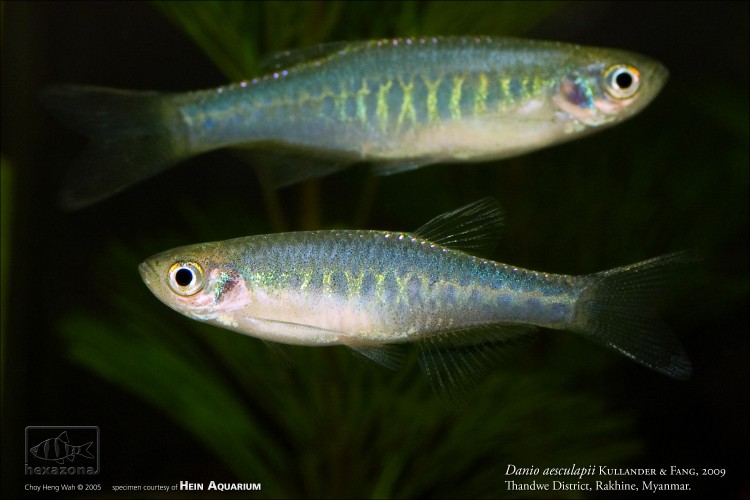
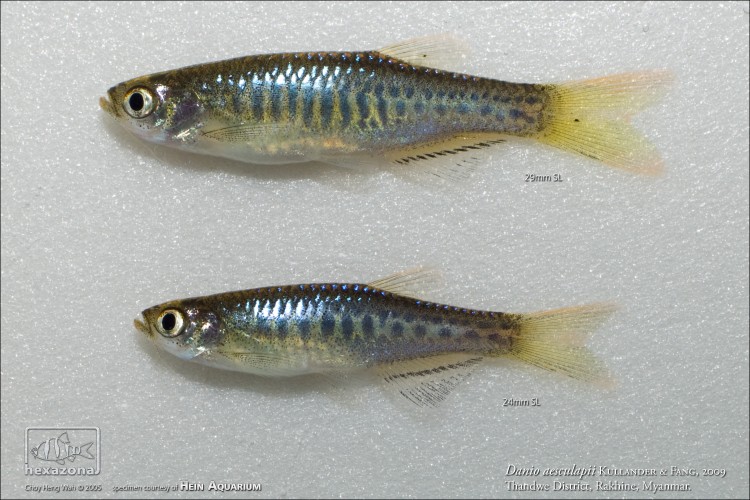
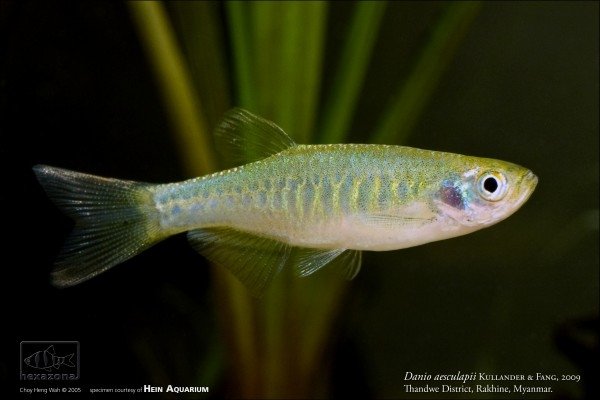
Danio aesculapii 是来自缅甸西部的小型群居鱼,体侧前半部有竖纹,后半部转为两排褐色小斑。种植丰富、有缓流和充足溶氧的水族箱更适合它,不能把溪流鱼一概理解为需要强烈冲流。
分布与栖息地
分布限于缅甸若开山脉,与流向孟加拉湾的沿海水系有关。采集地点包括林地与农地间清澈的小溪,底部有砂砾、石块和落叶,鱼常处在缓流池段;也有季节性静水池的记录。旱季采集到的浅水状态不能代表全年,季风期水位与流量都会明显增加。
饲养环境
用深色底砂、植物和沉木提供遮蔽,可配圆滑卵石营造溪流边缘。保持清洁和良好溶氧,同时留出不受水流直接冲击的安静位置。缸盖必须严密,它能从很小的缝隙跳出。
食性与喂食
野外食物很可能以昆虫及其幼虫为主,但不能视为已完全确认。缸养通常接受细小干饲料,另搭配红虫、水蚤和丰年虾等活饵或冷冻饵,尤其有助于繁殖调理。
习性与混养
性情温和,至少八至十尾一起养更容易稳定和展现自然行为。混养伙伴须按成年体型及水质要求挑选,避免强势或过于活跃、会压制这类小鱼的种类。
雌雄区分
成熟雌鱼通常更大、更圆润,身体前方的竖纹也较细长;雄鱼体色通常更鲜明。
繁殖
属于不护卵的散卵型,成熟而种植茂密的缸偶尔会自然留下少量鱼苗。若要提高成活率,先充分调理成鱼,再将一两对移到昏暗、过滤成熟的繁殖缸,用网格、细叶植物或莫丝让卵离开成鱼可及的位置。保持软水、接近中性的稳定条件。
小量加入较凉的新水并投喂小活饵,有时能促进产卵。成鱼会吃卵,产后及时移走;水泵式过滤应换成不易吸入鱼苗的海绵过滤。卵约 36 小时孵化,之后约三四天起游,先喂草履虫级微小食物,长大后再给丰年虾无节幼体和微虫。
图片
图片来自 SeriouslyFish,版权归各摄影者所有。
English
Overview
The small shoaling Danio aesculapii combines vertical markings toward the head with two rows of spots farther back. A planted aquarium with gentle circulation suits it better than a torrent-style setup.
Distribution & habitat
Native to the Rakhine mountains of western Myanmar, it occupies coastal drainages entering the Bay of Bengal. Collection sites include clear, shallow streams between forest and farmland, with gravel, stones, and leaf litter. Fish occur in quiet pools; a seasonal, stagnant pool is also recorded. Monsoon increases in depth and flow mean dry-season observations describe only part of the annual cycle.
Aquarium setup
Dark substrate, plants, wood, and rounded stones provide cover and encourage color. Maintain oxygenated, clean water while allowing sheltered areas away from direct current. Seal lid gaps carefully: these fish can escape through surprisingly small openings.
Diet & feeding
Insects and their larvae are thought to dominate its natural diet. Small dry foods are generally accepted in captivity; bloodworms, Daphnia, and Artemia add useful variety and help condition breeders.
Behaviour & compatibility
Keep at least eight to ten together to support normal social behavior. Peaceful companions should match its adult size and water requirements without overwhelming it through activity or competition.
Sexual dimorphism
Mature females are usually larger and fuller, with slimmer, longer anterior bars. Males tend to show stronger color.
Breeding
As an egg-scatterer without parental care, it may produce a few surviving fry in a mature planted aquarium. For a larger yield, condition adults well and use one or two pairs in a dim, established spawning tank. Mesh or dense fine plants can keep eggs beyond the adults’ reach.
Small additions of cooler water and tiny live foods may encourage spawning. Remove egg-eating adults after spawning and use gentle sponge filtration to protect fry. Eggs hatch in roughly 36 hours; free swimming follows about three or four days later. Begin with infusoria-sized food, progressing to Artemia nauplii and microworms as the fry grow.
来源
- https://www.seriouslyfish.com/species/danio-aesculapii(抓取于 2026-10-10)
danio-aesculapii · 文件: data/species/danio-aesculapii.md · 状态: 草稿