斜口圆唇鱼
概要
| 字段 | 值 |
|---|---|
| 类别 | 鱼 |
| 学名 | Cyclocheilichthys repasson |
| 别名 | 斜口圓唇魚、Barbus repasson、Cyclocheilichthys megalops、Cyclocheilichthys coolidgei |
| 分类 | 鲤形目 Cypriniformes › 鲤科 Cyprinidae › Cyclocheilichthys |
| 水体 | 淡水 |
| 原产地 | 柬埔寨、印度尼西亚、老挝、马来西亚、缅甸、泰国、越南 |
| 成体体长 | 28 cm |
| 饲养难度 | 中等 |
| 最小水体 | 365 L |
| 最小缸长 | 180 cm |
| 群居方式 | 群游 |
| 外部数据 | seriouslyfish cyclocheilichthys-repasson;fishbase 16123 |
| 食性 | 杂食 |
| 繁殖方式 | 产卵 |
水质参数
| 参数 | 耐受范围 | 最适范围 | 单位 |
|---|---|---|---|
| 水温 | 20–26 | — | °C |
| pH | 5–8 | — | — |
| 总硬度 | 1–20 | — | dGH |
概述
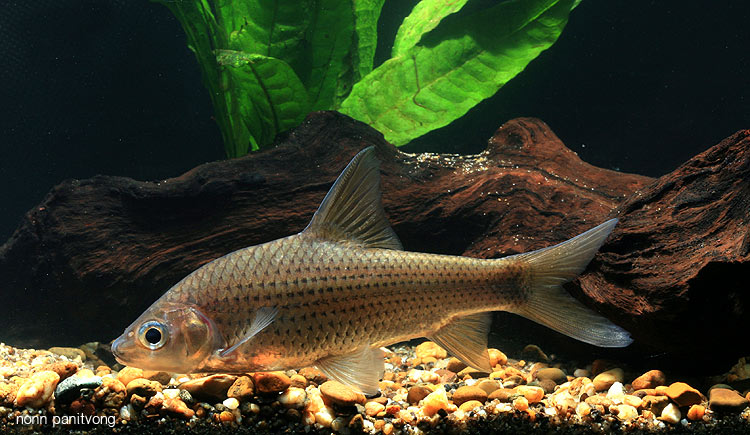
斜口圆唇鱼(Cyclocheilichthys repasson)在观赏市场并不常见。多数种群有尾柄暗斑、鳞片暗纹组成的体侧纵线,以及两对须。不同产地的外观可能有变化,饲养时仍应按大型群居鱼安排空间。
分布与栖息地
分布广及中南半岛、马来半岛、婆罗洲和苏门答腊。偏好河流缓水或静水区,也见于沼泽、湖泊、沟渠,偶尔出现在较急的岩石河段。常在水下树根、枝条和植物表面寻找生物膜中的食物。雨季会进入淹水的平原和森林,部分水域的分布与人工引入或河流改造有关。
饲养环境
应使用大型鱼缸,铺柔软细沙,并用沉木营造阴影。弱光和浮水植物有助于形成较暗环境;可选铁皇冠、莫丝或合适的椒草,宽叶水草也提供取食表面。不宜因幼鱼小而省略长期空间规划。
食性与喂食
主要捕食昆虫、甲壳动物和软体动物,也吃部分藻类及植物材料。优质薄片、颗粒可搭配红虫、水蚤和丰年虾;较大个体可接受切碎虾肉和小蚯蚓。啃食植物表面的生物膜,不等于能靠缸内藻类满足所有营养需求。
习性与混养
建议至少六条群养,同伴能减轻紧张并改善发色。适合布置充分的大型混养缸,但体型本身可能惊扰迟缓、胆小的鱼。缸友需在体型和水质要求上相称。
雌雄区分
成熟雌鱼可能比雄鱼更厚实。
繁殖
野外会在雨季末于淹水区产卵,尚没有明确的水族箱成功繁殖记录。
图片
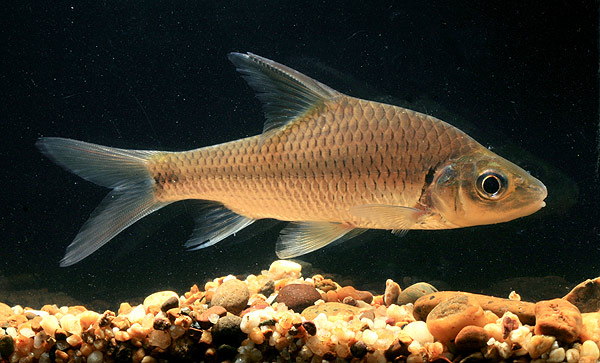
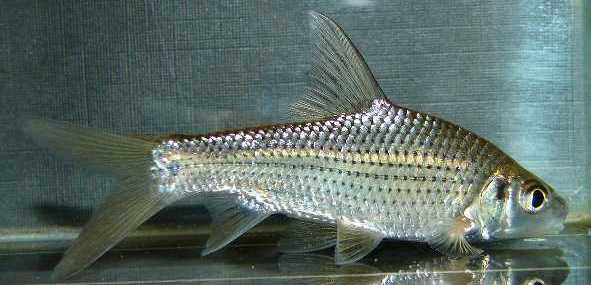
图片来自 SeriouslyFish,版权归各摄影者所有。
English
Overview
Two pairs of barbels, a dark peduncle spot, and scale markings arranged into lengthwise lines characterize many populations of Cyclocheilichthys repasson. It is an infrequent aquarium import, and locality-related variation can complicate identification. Plan accommodation for a substantial social fish.
Distribution & habitat
Its range crosses mainland Southeast Asia and reaches the Malay Peninsula, Borneo, and Sumatra. Quiet river sections, swamps, lakes, and channels are favored, although rocky flowing reaches are also used. Submerged vegetation and wood offer surfaces rich in food-bearing biofilm.
Seasonal floods open access to plains and forest. Some modern populations occupy waters altered by dams or farming, while others result from deliberate stocking.
Aquarium setup
A spacious aquarium with sand and significant pieces of wood suits its habits. Provide shade and subdued lighting, optionally using floating plants. Ferns, mosses, and selected crypts are possible choices; broad leaves can supply additional browsing surfaces. Small juveniles should not obscure the need for adequate long-term room.
Diet & feeding
Wild fish take predominantly insects, crustaceans, and mollusks, alongside some algae and plant matter. Offer varied frozen or live foods with good prepared granules or flakes. Larger specimens can take chopped shrimp and small earthworms. Surface browsing should not be mistaken for a complete algae-only diet.
Behaviour & compatibility
Keep a group of six or more to promote confidence and coloration. Many suitably sized community fishes can share its aquarium, but hesitant or slow companions may find a large adult intimidating. Match environmental needs as well as adult proportions.
Sexual dimorphism
A mature female is likely to be more heavily built than a male.
Breeding
In the wild, eggs are laid in flooded areas late in the rainy season. Confirmed aquarium breeding has not been established.
来源
- https://www.seriouslyfish.com/species/cyclocheilichthys-repasson(抓取于 2026-10-10)
cyclocheilichthys-repasson · 文件: data/species/cyclocheilichthys-repasson.md · 状态: 草稿