Cyclocheilichthys apogon · Beardless Barb
概要
| 字段 | 值 |
|---|---|
| 类别 | 鱼 |
| 学名 | Cyclocheilichthys apogon |
| 别名 | Barbus apogon、Systomus apogonoïdes、Cyclocheilichthys rubripinnis、Cyclocheilichthys rubripinnis var. microcephala、Rohteichthys macrolepis |
| 分类 | 鲤形目 Cypriniformes › 鲤科 Cyprinidae › Cyclocheilichthys |
| 水体 | 淡水 |
| 原产地 | 柬埔寨、印度尼西亚、老挝、马来西亚、缅甸、泰国、越南 |
| 成体体长 | 18 cm |
| 饲养难度 | 中等 |
| 最小水体 | 365 L |
| 最小缸长 | 180 cm |
| 群居方式 | 群游 |
| 外部数据 | seriouslyfish cyclocheilichthys-apogon;fishbase 10313 |
| 食性 | 肉食 |
| 特征 | 吃小鱼: 是 |
| 性情 | 温和 |
水质参数
| 参数 | 耐受范围 | 最适范围 | 单位 |
|---|---|---|---|
| 水温 | 20–27 | — | °C |
| pH | 5.5–8 | — | — |
| 总硬度 | 1–20 | — | dGH |
概述
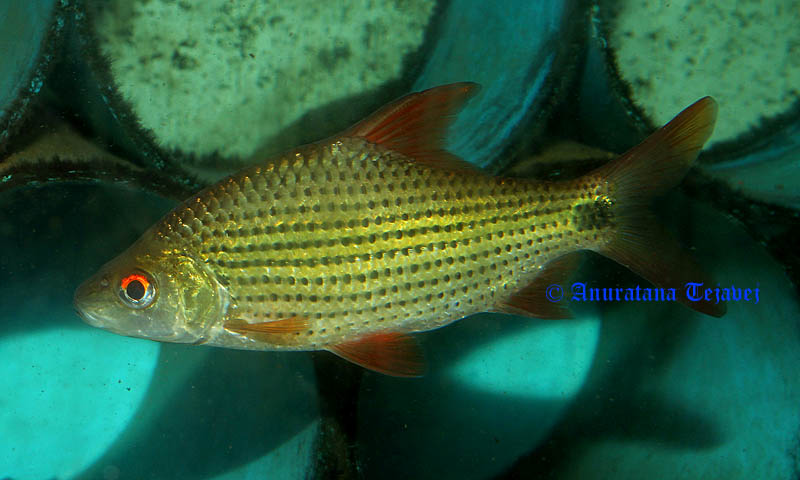
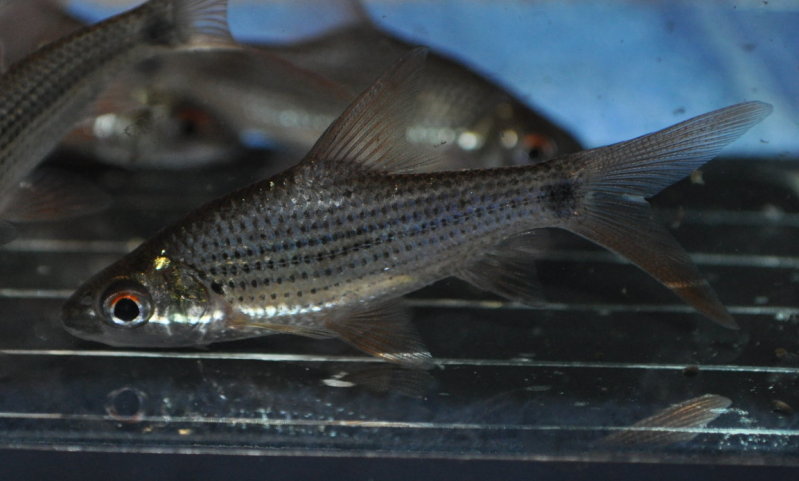
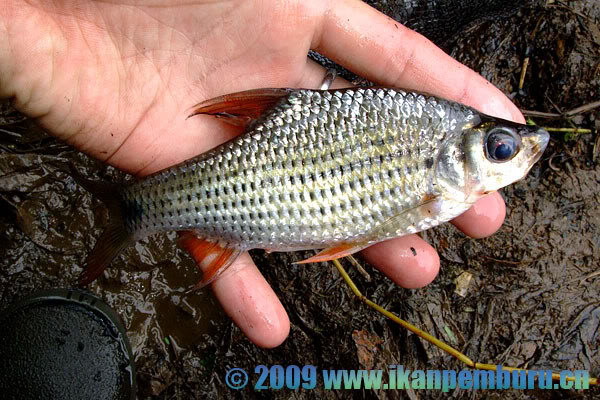
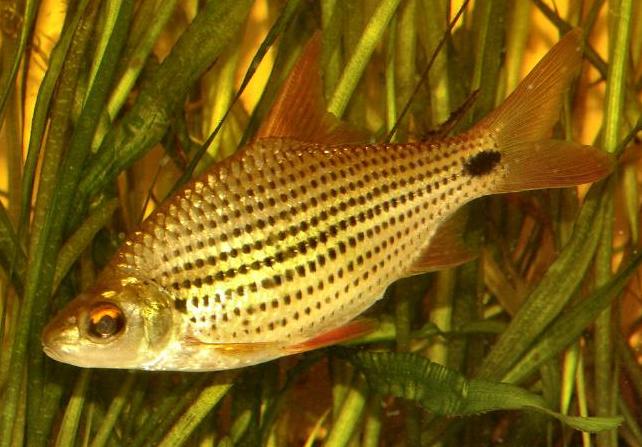
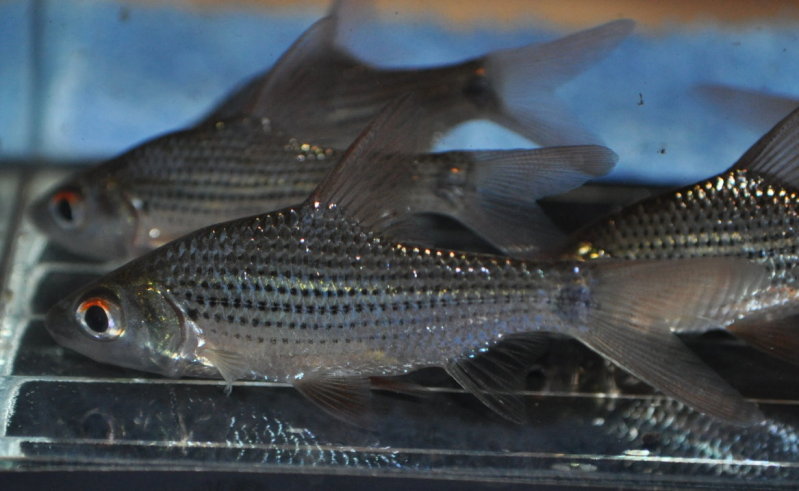
Cyclocheilichthys apogon 是分布广泛、总体温和的东南亚鲤科鱼,适合较大型、有遮蔽的群体缸。它没有须,尾鳍基部有黑斑,鳞片纵列沿线还有暗点;会从附着生物膜中寻找小型动物。
分布与栖息地
分布从缅甸经泰国、老挝、柬埔寨延伸至越南,向南涉及马来半岛、婆罗洲和苏门答腊。部分地区有人工引入,原生与引入分布的精确边界并不清楚。
多见于河流较慢或近静水地带,也进入沼泽、沟渠、湖库,另有急流石质水段及泥炭沼泽林记录。沉水根枝和植物表面的生物膜是重要取食场所;雨季会进入被淹没的洪泛平原和森林。
饲养环境
长期饲养至少需要 180 × 45 cm 的底面积。照明柔和,铺细砂,用较大沉木构成阴影。耐阴植物及浮水植物能加强遮蔽,宽叶表面也可供它寻找附着食物。
食性与喂食
天然主要摄食附着生物中的小型动物,包括昆虫、甲壳动物及其他鱼的鱼苗。人工饲养可用优质薄片、颗粒,定期搭配红虫、水蚤、丰年虾等小型活饵或冷冻饵。
习性与混养
总体温和,但较大的成鱼可能让缓慢或特别胆小的伙伴紧张。至少 6 尾同养更合适,同种伙伴能减少紧张、改善体色。选择混养鱼时还要考虑其捕食鱼苗的习性。
雌雄区分
成熟雌鱼可能比雄鱼更厚实,外观判断仍有不确定性。
繁殖
野外在雨季后段于淹水区域产卵。人工环境中的繁殖尚缺乏确认记录,不能仅凭这一季节规律给出固定操作流程。
补充说明
无须、尾基黑斑与沿鳞列分布的暗点可结合用于识别。其广阔范围内存在体色和斑纹差异,也有人推测可能涉及多个近缘类群,目前不宜将这一推测当成已确定的物种拆分。
图片
图片来自 SeriouslyFish,版权归各摄影者所有。
English
Overview
Cyclocheilichthys apogon is a widespread Southeast Asian cyprinid suited to larger, sheltered group aquariums. Generally peaceful, it lacks barbels and carries a dark tail-base blotch with rows of spots along the scales. It searches surface growth for small animal foods.
Distribution & habitat
The range extends from Myanmar across Thailand, Laos, and Cambodia to Vietnam, and south through the Malay Peninsula to Borneo and Sumatra. Human introductions have occurred, but the exact boundary between native and introduced populations is unclear.
Slower river sections, swamps, canals, lakes, and reservoirs are commonly used, although rocky faster-flowing sections and peat-swamp forests also have records. Submerged roots, branches, and plants provide feeding surfaces. Fish enter flooded plains and forest during the wet season.
Aquarium setup
Long-term accommodation requires at least a 180 by 45 cm footprint. Use subdued light, fine sand, and substantial wood to create shade. Suitable low-light plants and floating vegetation add cover, while broad leaves provide surfaces on which food organisms can develop.
Diet & feeding
The natural diet chiefly comprises small animals found among surface growth, including insects, crustaceans, and other fishes' fry. Combine good flakes or granules with regular small live or frozen bloodworms, water fleas, and brine shrimp.
Behaviour & compatibility
Although peaceful overall, large adults may unsettle especially timid or slow companions. Keep at least six to reduce nervousness and encourage coloration. Its capacity to consume fry remains relevant when choosing tankmates.
Sexual dimorphism
Mature females are thought likely to be fuller-bodied than males. External sexing should therefore be treated cautiously.
Breeding
Wild spawning takes place in inundated areas late in the rainy season. Captive reproduction lacks confirmation, so this seasonal information does not establish a repeatable aquarium method.
Notes
Absence of barbels, the tail-base blotch, and rows of scale spots are useful combined identification features. Geographic variation has prompted suggestions of a species complex, but this remains a hypothesis rather than a settled division into multiple species.
来源
- https://www.seriouslyfish.com/species/cyclocheilichthys-apogon(抓取于 2026-10-10)
cyclocheilichthys-apogon · 文件: data/species/cyclocheilichthys-apogon.md · 状态: 草稿