兰氏穗唇魮 · Siamese Algae Eater
概要
| 字段 | 值 |
|---|---|
| 类别 | 鱼 |
| 学名 | Crossocheilus langei |
| 别名 | 蘭氏穗唇魮、Crossocheilos langei |
| 分类 | 鲤形目 Cypriniformes › 鲤科 Cyprinidae › Crossocheilus |
| 水体 | 淡水 |
| 原产地 | 印度尼西亚、马来西亚、泰国 |
| 成体体长 | 15 cm |
| 饲养难度 | 中等 |
| 最小水体 | 304 L |
| 最小缸长 | 150 cm |
| 群居方式 | 群游 |
| 性情 | 温和 |
| 水流偏好 | 高 |
| 外部数据 | seriouslyfish crossocheilus-langei;fishbase 17379 |
水质参数
| 参数 | 耐受范围 | 最适范围 | 单位 |
|---|---|---|---|
| 水温 | 20–26 | — | °C |
| pH | 6–7.5 | — | — |
| 总硬度 | 1–15 | — | dGH |
概述
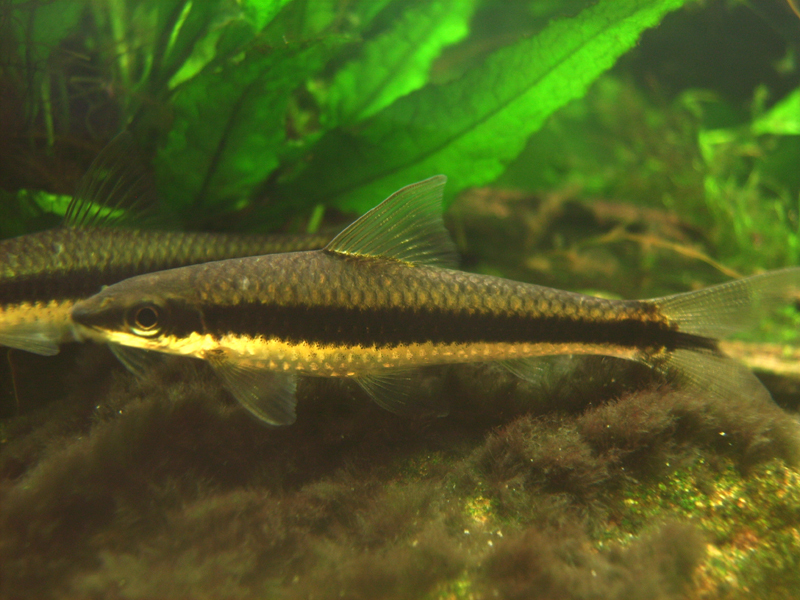
兰氏穗唇魮(Crossocheilus langei)属于常被统称为暹罗食藻鱼的一组相似鱼。它会啃食藻类,但商品名混用、个体状态和可获得食物都会影响除藻表现,不能把购买它当作必然解决黑毛藻的办法。
分布与栖息地
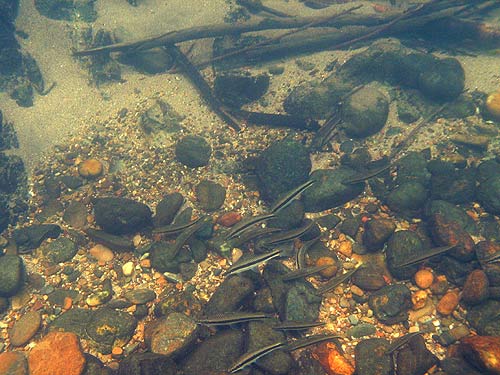
记录涉及婆罗洲、马来半岛和泰国南部、西部,缅甸南部仅属可能分布。模式产地在苏门答腊。栖地多为浅而清的流水,底部有石砾、沙和浸水根木,光照促进附着生物膜生长;季节性进入更深浑水的迁移仍属推测。
饲养环境
用大小不同的石块、砾石、大圆石和沉木组成流水环境,既留空间,也用缝隙与阴影提供退避处。耐受的附生水草可固定在硬景上,较亮光照能帮助养出附着藻。保持成熟过滤、充分供氧和水流,避免有机废物堆积。
食性与喂食
天然食物为附着藻、硅藻及伴生微生物。应以含藻类的优质干粮和新鲜蔬菜为重要组成,搭配去壳豌豆、烫软西葫芦或菠菜,避免长期高蛋白投喂。广义本种常被认为较擅长吃黑毛藻,但有报告仅见它吃较嫩的部分,不能保证清除成熟藻丛。
习性与混养
总体温和,可和适应相同环境的鱼混养。建议至少 6 条同养;自然状态为松散群体,内部有等级,数量太少时弱鱼可能反复挨追,单养也容易胆怯。
雌雄区分
成熟雌鱼通常较厚实,幼鱼不能靠外观可靠分性别。
繁殖
家庭水族箱中的自然繁殖尚未确证,商品幼鱼被推测来自激素催产养殖。该属野外繁殖与季节迁移有关,但这不能直接转成家养繁殖流程。
补充说明
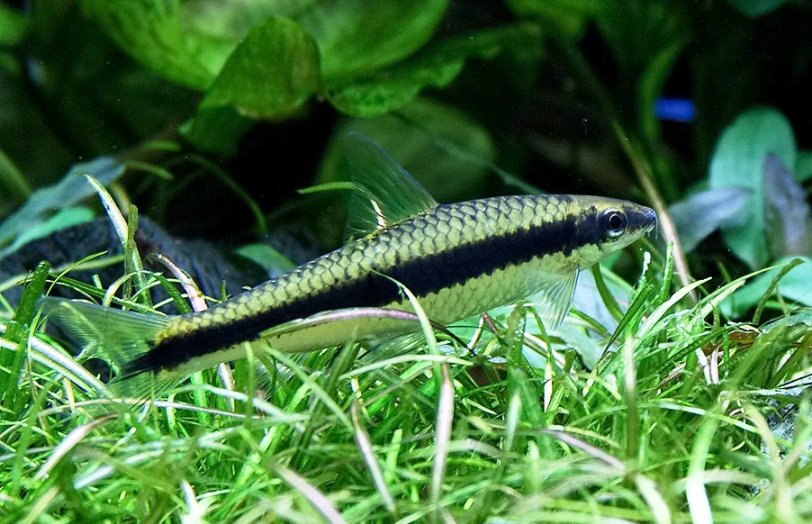
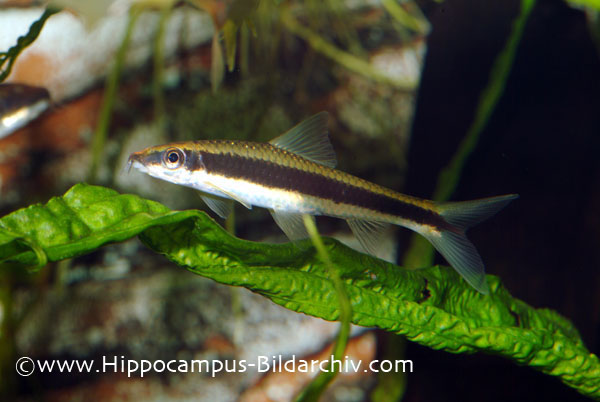
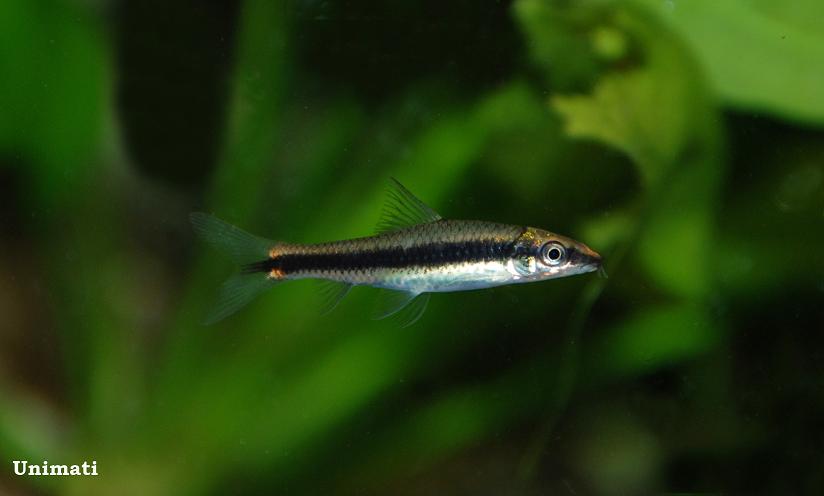
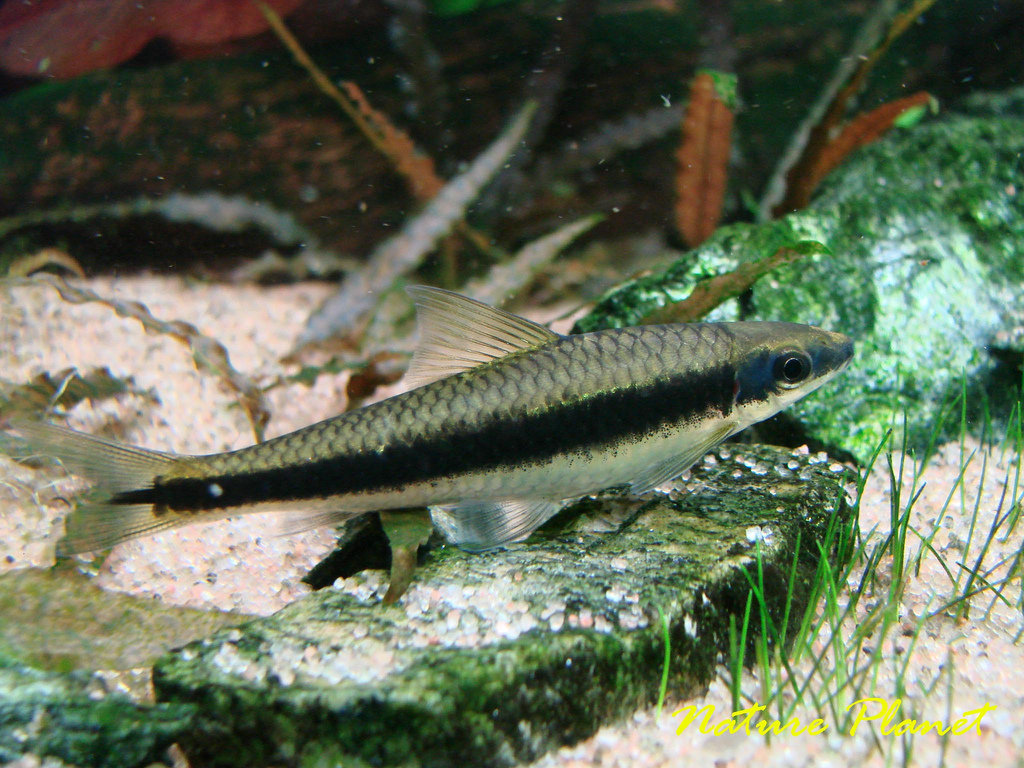
识别常用线索包括两对须、相对笔直并穿过黑带的侧线,以及臀鳍前腹面黑斑。常见商品型与严格意义上的本种仍有差异,可能涉及未描述种,故保留现有名称并谨慎看待商品标签。
图片
图片来自 SeriouslyFish,版权归各摄影者所有。
English
Overview
Crossocheilus langei is one of several similar fishes sold as Siamese algae eaters. Algae grazing is an important part of its behavior, but uncertain trade identities and differences in feeding response make guaranteed algae-control claims unreliable.
Distribution & habitat
Records include Borneo, Peninsular Malaysia and southern or western Thailand, with possible extension into southern Myanmar; the type locality is on Sumatra. Clear streams with exposed mineral and woody surfaces support the biofilm it browses. Seasonal use of deeper turbid water has been suggested.
Aquarium setup
A rocky stream arrangement offers both grazing surfaces and shelter. Position roots to make shaded retreats and attach robust plants where desired. Good light encourages surface growth, while filtration and circulation should keep oxygen available and prevent organic waste from accumulating.
Diet & feeding
Offer algae-based prepared food and vegetables rather than a protein-rich diet. Peas without skins and softened zucchini or spinach are useful additions. Fish assigned broadly to this species are often effective black-brush-algae grazers, yet some observations suggest a preference for young softer growth. Established outbreaks may therefore persist.
Behaviour & compatibility
A group of six or more is preferable to isolated keeping. Social ranking is normal; in a small group the weakest fish may be repeatedly targeted. Choose companions compatible with its flowing-water setup and substantial adult size.
Sexual dimorphism
Adult females are usually fuller-bodied. External appearance does not allow dependable sexing of juveniles.
Breeding
Hobby breeding has not been established. Commercial juveniles are assumed to originate from hormonally induced production, while natural reproduction in the genus involves seasonal movements. Neither point provides a demonstrated home spawning method.
Notes
Useful characters include two barbel pairs, a fairly straight lateral line within the body stripe, and a dark ventral mark before the anal fin. Common trade material may not correspond exactly to the narrowly defined species, so identification remains unsettled.
来源
- https://www.seriouslyfish.com/species/crossocheilus-langei(抓取于 2026-10-10)
crossocheilus-langei · 文件: data/species/crossocheilus-langei.md · 状态: 草稿