康吉魮 · Congo Barb
概要
| 字段 | 值 |
|---|---|
| 类别 | 鱼 |
| 学名 | Clypeobarbus congicus |
| 分类 | 鲤形目 Cypriniformes › 鲤科 Cyprinidae › Clypeobarbus |
| 水体 | 淡水 |
| 原产地 | 刚果民主共和国、刚果共和国 |
| 成体体长 | 6 cm |
| 饲养难度 | 中等 |
| 最小水体 | 81 L |
| 最小缸长 | 90 cm |
| 群居方式 | 群游 |
| 性情 | 温和 |
| 外部数据 | seriouslyfish clypeobarbus-congicus;fishbase 11343 |
| 食性 | 杂食 |
水质参数
| 参数 | 耐受范围 | 最适范围 | 单位 |
|---|---|---|---|
| 水温 | 22–26 | — | °C |
| pH | 6–7 | — | — |
| 总硬度 | 2–10 | — | dGH |
概述
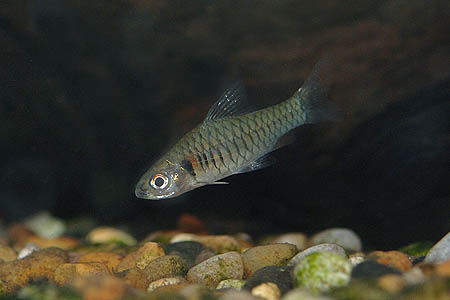
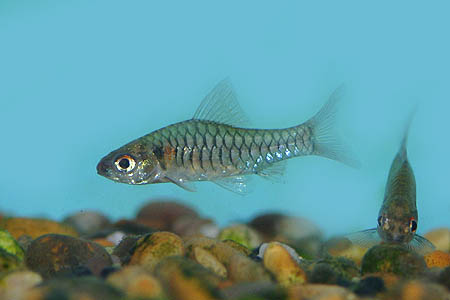
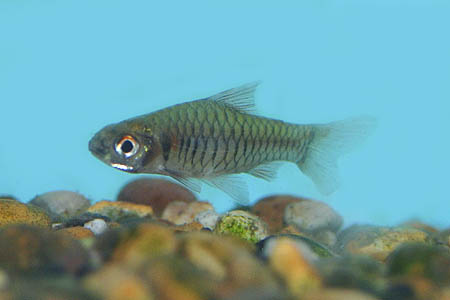
康吉魮(Clypeobarbus congicus)是少见的非洲小型鲤科鱼,体侧中部一列较大的盾状鳞片是所属类群的特点。它需要同种伙伴,却也有雄鱼等级,空间与遮挡不足时弱鱼可能持续被追赶。
分布与栖息地
原产刚果共和国与刚果民主共和国境内的刚果河流域,模式标本来自博马、马塔迪附近。具体栖地尚未明确,可能偏向支流及较小河流,而不是急流主河道。
饲养环境
它容易受惊,密植水草、深色底砂与浮水植物有助于稳定情绪和发色。可加入沉木、惰性石块与干落叶,把视线分隔成多个区域,让低等级鱼有退避处。不要用狭小空间强行容纳群体。
食性与喂食
属于杂食性,野外可能取食小型水生无脊椎动物、微生物和藻类。通常愿意接受优质薄片或颗粒,也应搭配丰年虾、水蚤和红虫等活饵或冷冻饵料。
习性与混养
至少 8 条同养,混养伙伴应温和、体型接近,避开很大或过分活跃的鱼。单养、小群或拥挤环境都可能使它紧张退缩,等级较低的个体还可能受到反复欺负。
雌雄区分
雄鱼颜色较亮,怀卵雌鱼体形明显更圆。
繁殖
散卵繁殖被认为很可能,但缺少确定的本种人工繁殖记录。可参考近缘非洲鲃类尝试:设安静弱光的软水、酸性繁殖缸,加入浮水植物、细叶植物和轻缓海绵过滤,亲鱼以活饵充分调养后选一对放入。若产卵,及时移走亲鱼以降低吃卵风险;没有反应时可换配对。应预先培养微型开口饵,鱼苗长大再换丰年虾无节幼体;卵量和孵化时间不宜当作本种保证。
补充说明
出口名单上的名称不一定与实物一致,购买前应核对鉴定。它曾被放在广义鲃属中,旧文献名称与现有属名可能不同。
图片
图片来自 SeriouslyFish,版权归各摄影者所有。
English
Overview
Clypeobarbus congicus is an uncommon Congo-basin barb belonging to a group with enlarged shield-like scales along the middle of each side. Group living does not eliminate competition: males establish rank, making space and broken sight lines important.
Distribution & habitat
It occurs in parts of the Congo drainage in both Congos, with original specimens collected around Boma and Matadi. Smaller rivers and tributaries are plausible habitats, but this remains an inference rather than a confirmed detailed habitat description.
Aquarium setup
Provide dense cover from plants, wood and floating vegetation, with a dark substrate and subdued light. Inert rocks and dried leaves can add further retreats. Arrange the layout so weaker fish can leave a dominant male’s view, while retaining adequate usable space.
Diet & feeding
An omnivorous diet is indicated, although the precise natural mixture is uncertain. Quality flakes or pellets are readily accepted. Add small live or frozen foods such as brine shrimp, water fleas and bloodworms for variety.
Behaviour & compatibility
Keep at least eight in a suitably spacious aquarium. Avoid very large or boisterous companions. Too few conspecifics or cramped quarters can produce nervous withdrawal and persistent harassment of subordinate fish despite an otherwise relatively peaceful disposition.
Sexual dimorphism
Males show brighter color, while females carrying eggs are noticeably fuller-bodied.
Breeding
Captive breeding has not been securely established, and egg scattering is considered highly likely rather than proven. A trial can follow methods for similar African barbs: condition adults, introduce a selected pair to a quiet dim aquarium with soft acidic water, fine plants and gentle sponge filtration, and remove them if eggs are produced. Prepare microscopic fry food in advance. Expected egg numbers and developmental timings from relatives should not be treated as confirmed outcomes for this species.
Notes
Exporter lists do not always identify the actual fish correctly. Older accounts also place it within the broad historical Barbus grouping, so nomenclature and specimen identity both require care.
来源
- https://www.seriouslyfish.com/species/clypeobarbus-congicus(抓取于 2026-10-10)
clypeobarbus-congicus · 文件: data/species/clypeobarbus-congicus.md · 状态: 草稿