背点波鱼 · Eyespot Rasbora
概要
| 字段 | 值 |
|---|---|
| 类别 | 鱼 |
| 学名 | Brevibora dorsiocellata |
| 别名 | 背點波魚、Rasbora dorsiocellata |
| 分类 | 鲤形目 Cypriniformes › 鲤科 Cyprinidae › Brevibora |
| 水体 | 淡水 |
| 原产地 | 印度尼西亚、马来西亚、泰国 |
| 成体体长 | 2.3 cm |
| 饲养难度 | 入门 |
| 最小水体 | 41 L |
| 最小缸长 | 45 cm |
| 群居方式 | 群游 |
| 性情 | 温和 |
| 外部数据 | seriouslyfish brevibora-dorsiocellata;fishbase 10368 |
| 食性 | 肉食 |
| 繁殖方式 | 散卵 |
水质参数
| 参数 | 耐受范围 | 最适范围 | 单位 |
|---|---|---|---|
| 水温 | 20–25 | — | °C |
| pH | 5–7.5 | — | — |
| 总硬度 | 1–10 | — | dGH |
概述
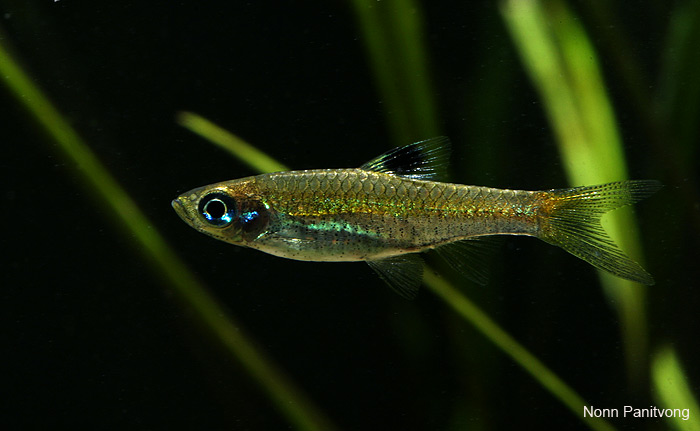
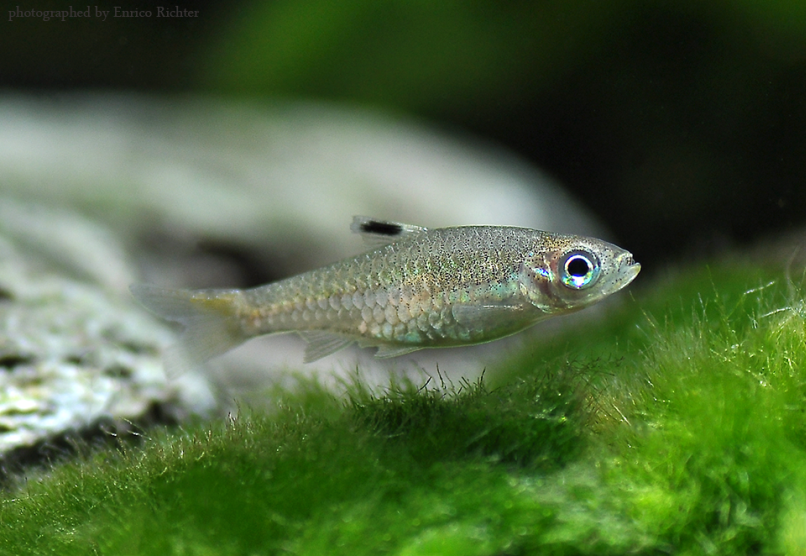
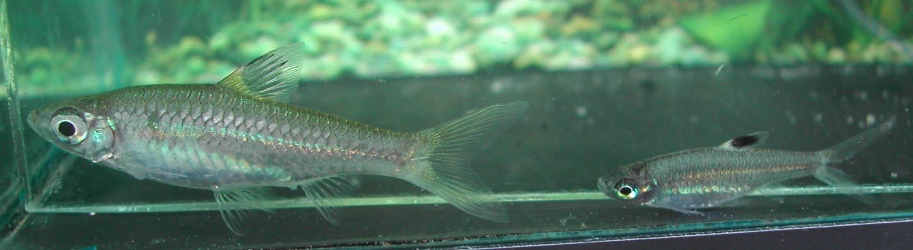
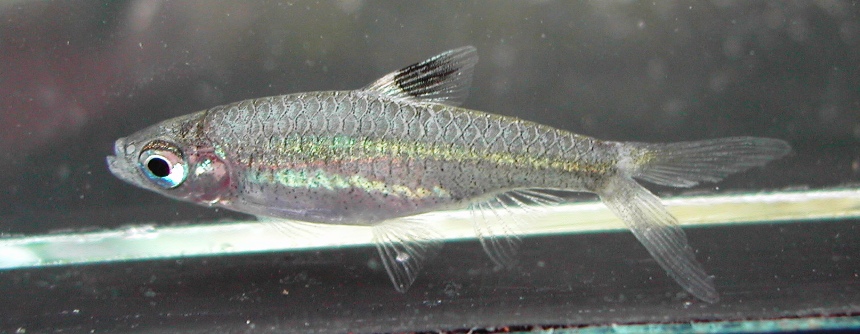
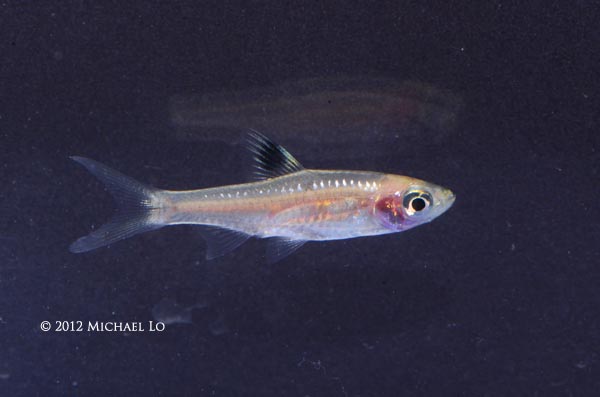
背点波鱼(Brevibora dorsiocellata)体色不算浓艳,眼下方的蓝绿色反光和背鳍黑斑却很显眼。市售多为人工繁殖鱼,适应性较好;偶见尾柄带红的个体可能来自野外,不能假定所有来源要求完全相同。
分布与栖息地
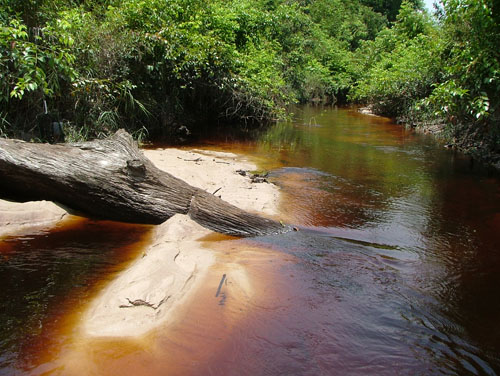
分布记录涉及泰国南部、马来半岛、苏门答腊和婆罗洲,但婆罗洲部分记录可能属于近缘种,范围仍需核对。典型环境是森林泥炭沼泽相连的缓流黑水河溪,落叶与枝条多,水软而酸,光照偏弱。
饲养环境
水质比造景形式更重要,密植水草与深色底砂能衬托体色。细沙、沉木、落叶可增加隐蔽处,采用较弱光照,种耐阴水草。人工鱼可适应较宽水质范围;野生鱼更宜偏酸的环境,不能把人工鱼的适应性一概套用。
食性与喂食
天然食物是小型昆虫、蠕虫、甲壳类和其他浮游动物。接受适口干粮,但每天补充小型活饵或冷冻饵料更合适,例如水蚤和丰年虾。
习性与混养
性情温和,可用于仔细选择的混养缸,仍须考虑它很小的成鱼体型。建议至少 8~10 条同养,既减少紧张,也有利于雄鱼展示;同域鱼名单不等于任意混养都安全。
雌雄区分
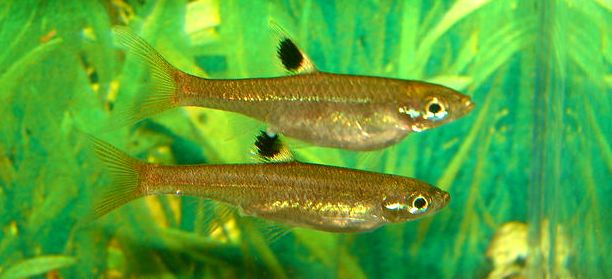
成熟雌鱼腹部更圆,常略大于雄鱼。
繁殖
连续散卵且不护卵,成熟密植缸可能自然留苗。专门繁殖时设弱光小缸,用植物及隔卵网保护卵;亲鱼调养后成对放入,可少量多次加入凉水并加强活饵投喂尝试催产。约两天后移出成鱼,原先动力过滤换为成熟海绵过滤,防止吸苗。近缘种孵化常需 18~48 小时,随后再过一两天平游,这只能作观察参考。开口用草履虫等微型食物,长大后再加丰年虾无节幼体。
补充说明
市售常见的普通体色型和偶见的红尾型存在外观差异,红色也会随状态与成熟度改变。来自婆罗洲的相似鱼不能仅按眼部反光鉴定。
图片
图片来自 SeriouslyFish,版权归各摄影者所有。
English
Overview
The appeal of Brevibora dorsiocellata lies in its reflective blue-green eye patch and dark dorsal marking rather than an intensely colored body. Most aquarium stock is commercially bred. Less common red-tailed forms are probably wild-sourced and may need more acidic conditions.
Distribution & habitat
Records extend from southern Thailand and Peninsular Malaysia to Sumatra and Borneo. Some Bornean identifications remain questionable. Gently moving peat-forest waters, shaded from above and rich in fallen vegetation, form the characteristic habitat.
Aquarium setup
Prioritize clean stable water, then add plants, a dark base and shaded retreats to show the fish well. Wood and leaves offer a natural layout, while shade-tolerant plants suit subdued lighting. Captive-bred stock is relatively adaptable; wild fish are more likely to benefit from distinctly acidic water.
Diet & feeding
Small animal prey forms the natural menu, supported by stomach-content observations. Feed appropriately fine prepared food together with regular portions of tiny live or frozen invertebrates.
Behaviour & compatibility
Keep a group of at least eight to ten. Its peaceful nature suits many carefully chosen communities, but adult size remains an important limit when selecting companions. Adequate group size encourages confident swimming and male display.
Sexual dimorphism
Adult females tend to be somewhat larger and rounder through the abdomen.
Breeding
Frequent egg scattering can yield occasional fry in mature planted aquaria. For more controlled production, use a shaded spawning tank with fine cover and an egg barrier. Condition adults first; small additions of cooler water and frequent live food may encourage spawning. Remove adults after about two days and replace any powered intake with a mature sponge unit. Related species hatch in roughly 18–48 hours and swim freely later, so treat those timings as a guide rather than a species-specific guarantee. Start with microscopic foods before larger live prey.
Notes
The intensity of red in uncommon tail-colored forms can change with condition and maturity. Geographic and taxonomic uncertainty means an eye reflection alone cannot establish the identity of every similar imported fish.
来源
- https://www.seriouslyfish.com/species/brevibora-dorsiocellata(抓取于 2026-10-10)
brevibora-dorsiocellata · 文件: data/species/brevibora-dorsiocellata.md · 状态: 草稿