拟尾斑泰波鱼
概要
| 字段 | 值 |
|---|---|
| 类别 | 鱼 |
| 学名 | Boraras urophthalmoides |
| 别名 | 睛尾波鱼、似睛尾波鱼、擬尾斑泰波魚、睛尾波魚、似睛尾波魚、Rasbora urophthalmoides |
| 分类 | 鲤形目 Cypriniformes › 鲤科 Cyprinidae › Boraras |
| 水体 | 淡水 |
| 原产地 | 柬埔寨、泰国、越南 |
| 成体体长 | 1.6 cm |
| 饲养难度 | 中等 |
| 最小水体 | 41 L |
| 最小缸长 | 45 cm |
| 群居方式 | 群游 |
| 性情 | 温和 |
| 水流偏好 | 低 |
| 外部数据 | seriouslyfish boraras-urophthalmoides;fishbase 12211 |
| 食性 | 肉食 |
| 繁殖方式 | 散卵 |
水质参数
| 参数 | 耐受范围 | 最适范围 | 单位 |
|---|---|---|---|
| 水温 | 20–28 | — | °C |
| pH | 6–7 | — | — |
| 总硬度 | 1–10 | — | dGH |
概述
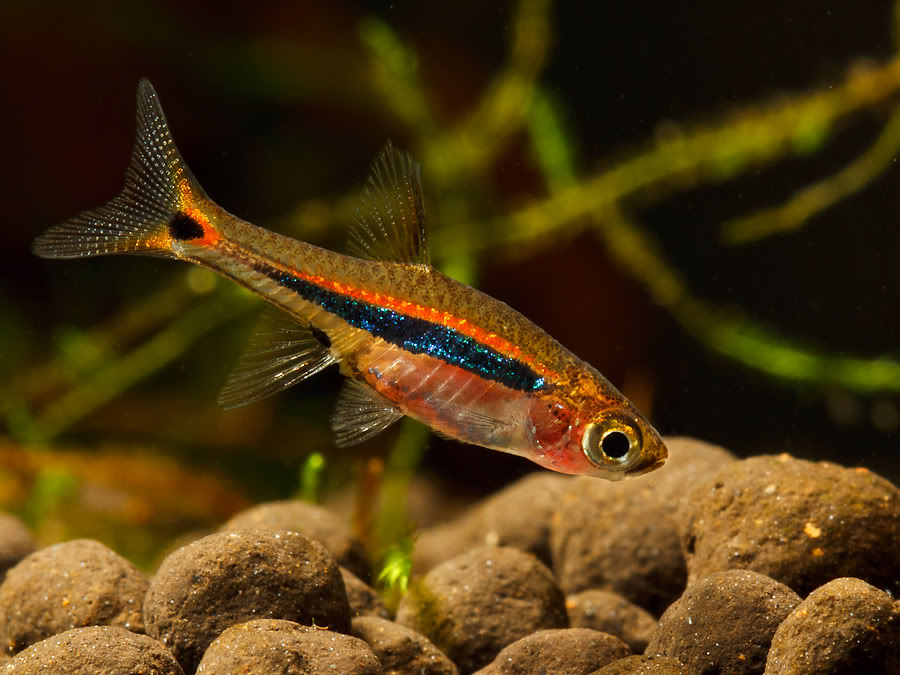
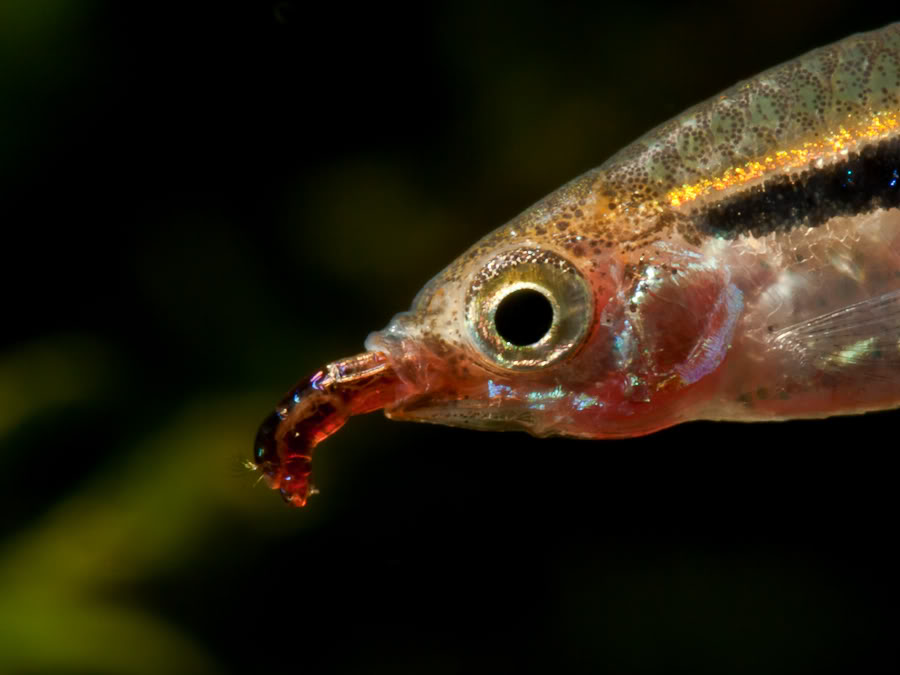
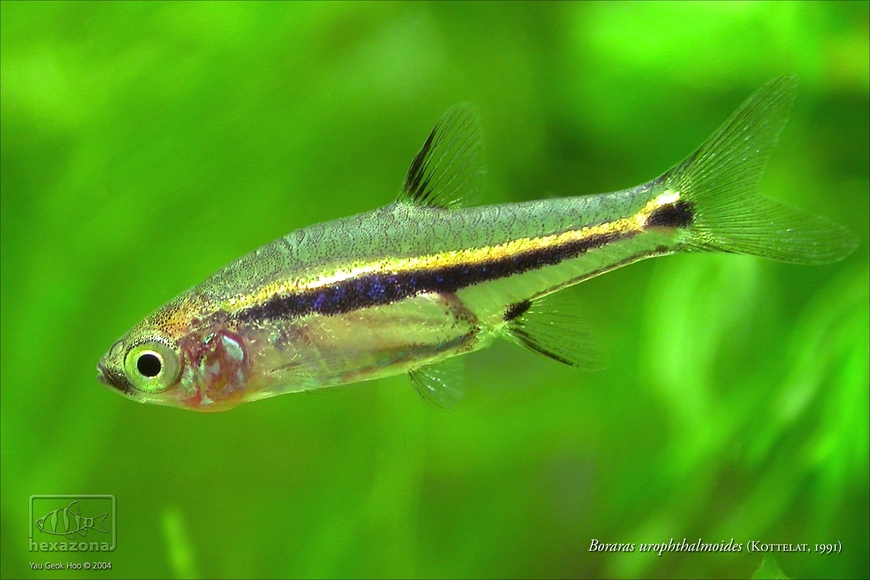
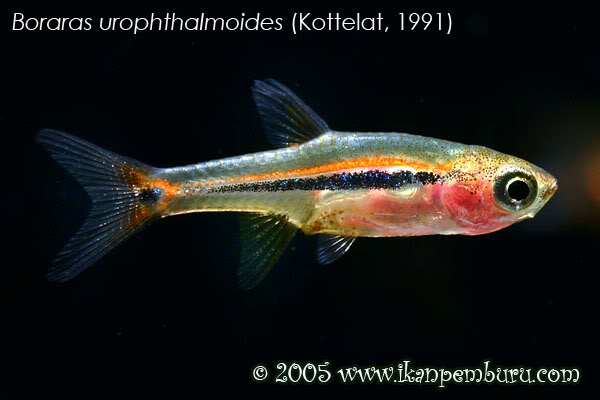
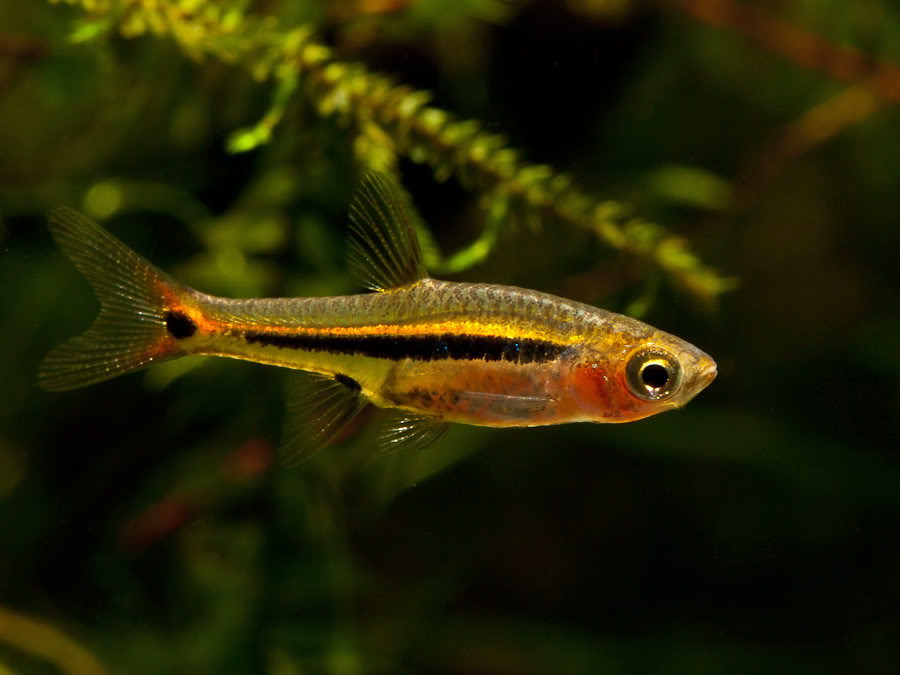
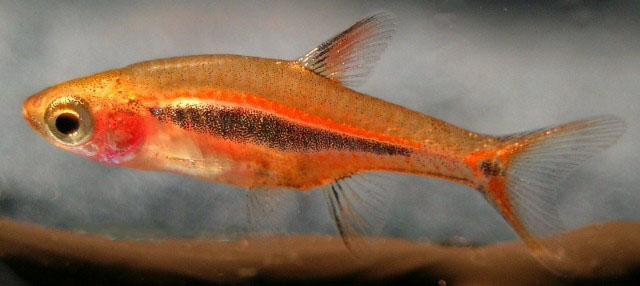
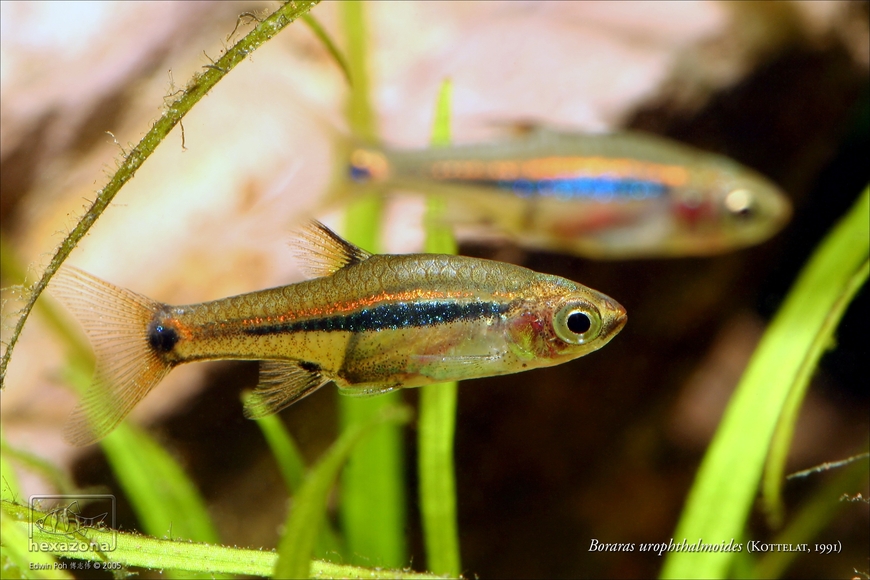
拟尾斑泰波鱼(Boraras urophthalmoides)体侧的长黑条与尾柄圆黑斑构成醒目标记。某些种群状态好时还会出现橙红色条纹,容易和其他红色泰波鱼混淆,不能只按发色识别。
分布与栖息地
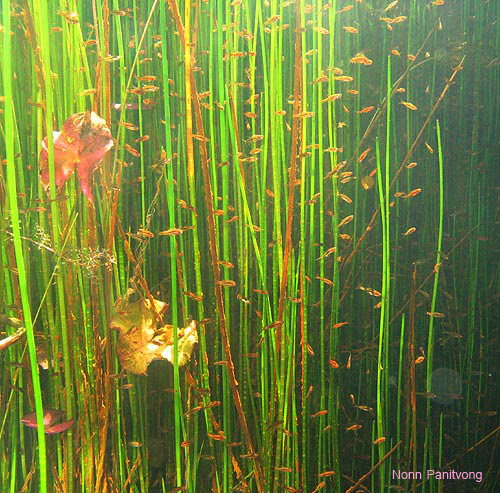
原产泰国南部和中部,并在柬埔寨、越南有记录,柬埔寨吴哥窟周边护城河与池塘也有种群。常生活在水草茂密的清澈浅水,如沼泽、泛滥平原和稻田,雨季可进入新淹水区域。
饲养环境
适合密植草缸,浮水植物与沉木可削弱光照。保持柔和水流,避免将它放入生物过滤尚未成熟的缸。布局须兼顾遮蔽和游动空间,优势雄鱼繁殖时会形成暂时小领地。
食性与喂食
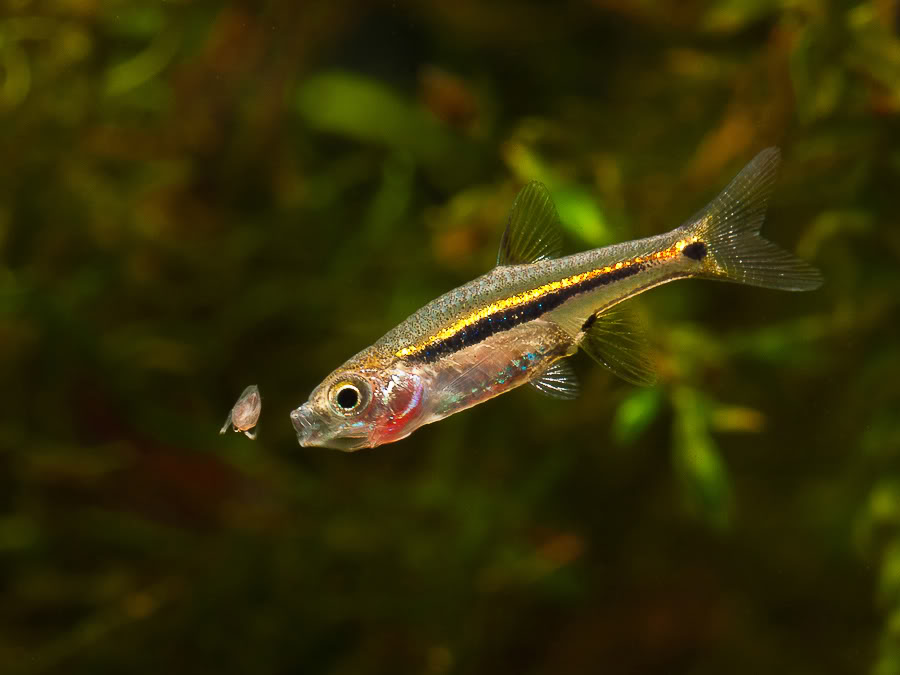
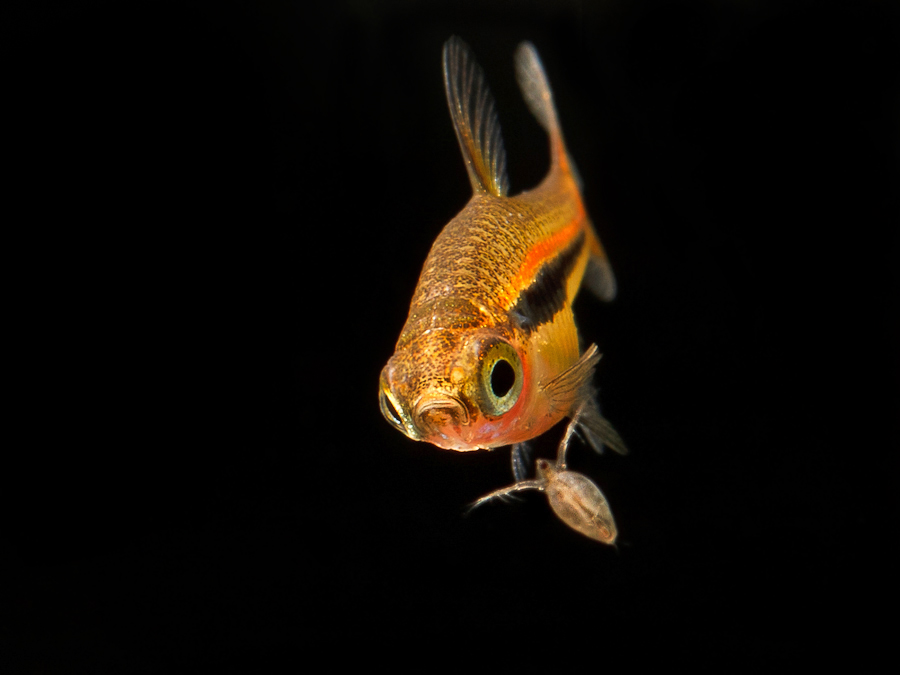
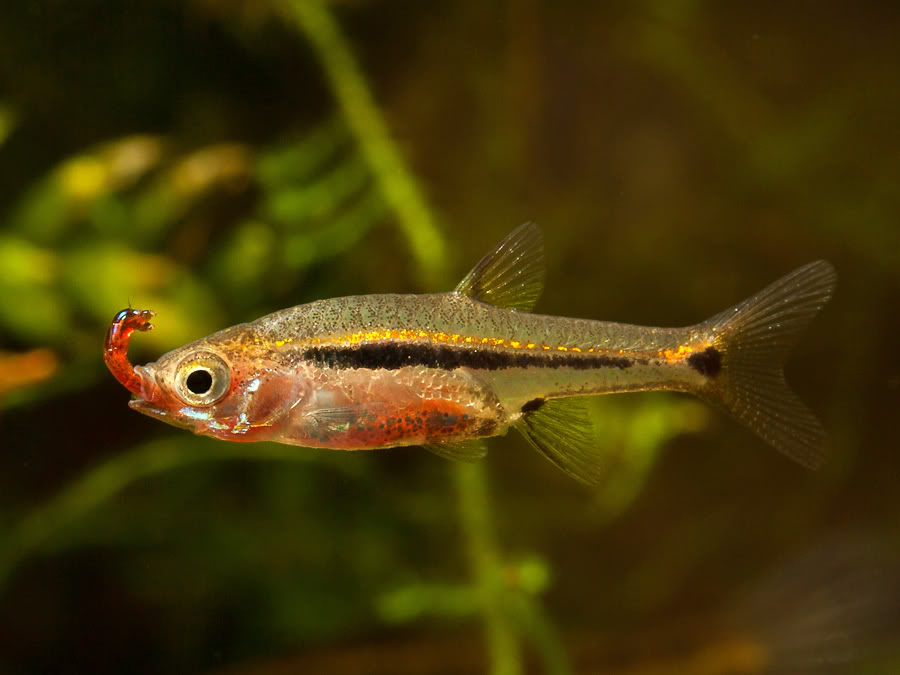
胃内容物研究显示它取食微小昆虫、蠕虫、甲壳类和其他浮游动物。适口干粮可作为一部分食谱,日常还应搭配水蚤、丰年虾等小型活饵或冷冻饵料。
习性与混养
至少 8~10 条一群,胆怯程度会下降,群体展示也更自然。可选其他微型温和鱼或小型淡水虾作伴。为避免可能的杂交,不建议和其他泰波鱼属物种混养。
雌雄区分
成熟雌鱼通常略大、腹部更圆,雄鱼则稍微鲜艳一些。
繁殖
状态良好时会连续少量散卵,不照顾后代。若要提高育苗数量,可设弱光独立繁殖缸,放细叶植物及隔卵网,以成熟海绵过滤轻缓运行。两三对亲鱼缓慢适应后入缸,产卵后约两天内移走,避免吃卵。卵约第二天孵化,卵黄再供养约一天,之后需草履虫等微型开口饵;约一周至十天后才逐步换成更大活饵。幼苗初期尤其要避免水质骤变。
图片
图片来自 SeriouslyFish,版权归各摄影者所有。
English
Overview
A long dark stripe and a separate rounded caudal-peduncle spot help identify Boraras urophthalmoides. Some populations develop a strong orange-red line when settled, which can cause confusion with redder relatives in the trade.
Distribution & habitat
Its range covers southern and central Thailand, with additional records in Cambodia and Vietnam. One population inhabits waters around Angkor Wat. Clear shallow wetlands, flooded fields and marshes with submerged vegetation are typical habitats, with seasonal movement into inundated areas.
Aquarium setup
Use dense planting and overhead shade, leaving open spaces between shelter. Gentle circulation suits its wetland origins. Introduce fish only after filtration and water chemistry have stabilized; courting males still need room despite the species’ tiny dimensions.
Diet & feeding
Wild stomach contents indicate a diet of tiny animal prey. In captivity, provide small live or frozen invertebrates regularly and supplement with finely sized prepared food. Varying the diet supports both coloration and reproductive condition.
Behaviour & compatibility
Eight to ten or more fish make a more confident group than a few isolated specimens. Peaceful miniature companions and small freshwater shrimp are options. Avoid mixing different Boraras species because hybridization is considered possible.
Sexual dimorphism
Females usually grow slightly larger and fuller-bodied, while males show somewhat stronger color.
Breeding
Repeated small egg batches receive no parental care. For controlled breeding, use a dim separate aquarium with fine plants, egg protection and gentle mature filtration. Acclimate conditioned pairs gradually and remove them within approximately two days. Early eggs can hatch around the second day; microscopic prey is needed after yolk absorption. Introduce brine-shrimp nauplii or microworms only when the young can manage them, often after seven to ten days. Keep early water changes restrained and gradual.
来源
- https://www.seriouslyfish.com/species/boraras-urophthalmoides(抓取于 2026-10-10)
boraras-urophthalmoides · 文件: data/species/boraras-urophthalmoides.md · 状态: 草稿