Boraras naevus
概要
| 字段 | 值 |
|---|---|
| 类别 | 鱼 |
| 学名 | Boraras naevus |
| 分类 | 鲤形目 Cypriniformes › 鲤科 Cyprinidae › Boraras |
| 水体 | 淡水 |
| 原产地 | 泰国 |
| 成体体长 | 2 cm |
| 饲养难度 | 中等 |
| 最小水体 | 41 L |
| 最小缸长 | 45 cm |
| 群居方式 | 群游 |
| 性情 | 温和 |
| 水流偏好 | 低 |
| 外部数据 | seriouslyfish boraras-naevus;fishbase 66258 |
| 繁殖方式 | 散卵 |
| 领地性 | 是 |
水质参数
| 参数 | 耐受范围 | 最适范围 | 单位 |
|---|---|---|---|
| 水温 | 20–28 | — | °C |
| pH | 5–7 | — | — |
| 总硬度 | 1–10 | — | dGH |
概述
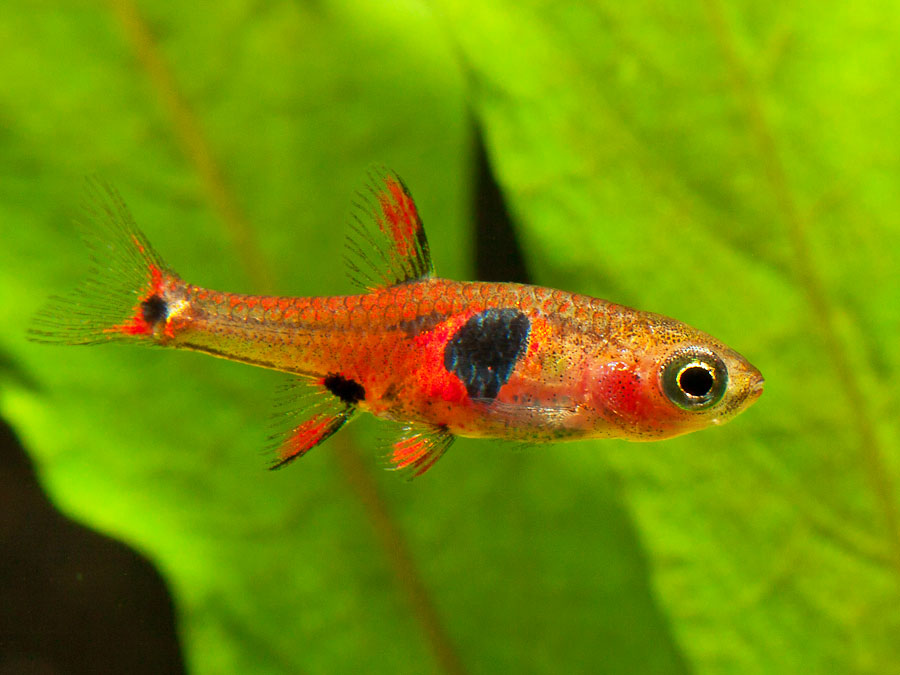
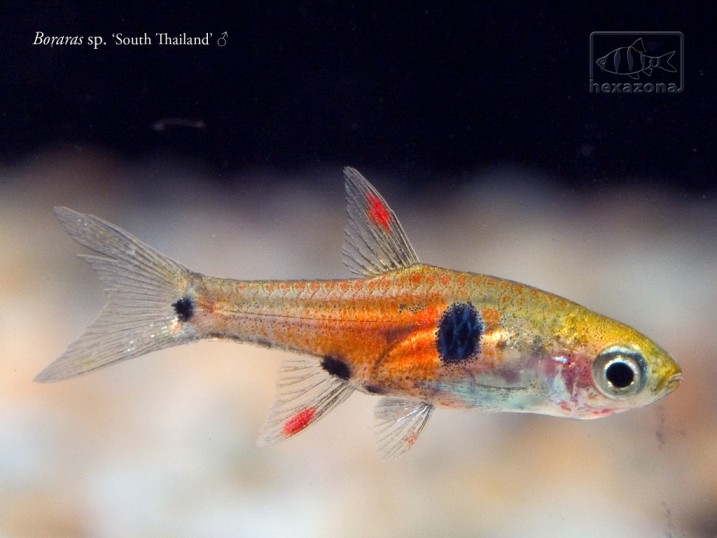
Boraras naevus 是泰国南部的小型鲤科鱼,性情温和而胆怯,适合安静、密植的水草缸。雄鱼前半段体侧的深色斑明显大于雌鱼,是辨认本种的重要线索。
分布与栖息地
可靠记录集中在素叻他尼府塔比河下游,位于马来半岛朝向泰国湾的一侧。生活在浅而清澈的沼泽、湿地水域,不少潜在栖息地已变为稻田。半岛另一侧董里附近有相似鱼,但是否为同种尚待确认。
饲养环境
虽体型很小,仍应提供至少 45 × 30 cm 的缸底空间。水草密植,搭配浮水植物、根枝遮光,留出游动空间。繁殖时优势雄鱼会占据暂时领地,布景要让个体能够避让。
过滤轻缓,不宜强流。使用成熟系统后再入鱼,避免水质突然变化。
食性与喂食
自然食物可能包括微小昆虫、蠕虫、甲壳动物及其他浮游动物。可喂适口薄片、微粒,但应每天搭配水蚤、丰年虾等小型活饵或冷冻饵料,不能长期只用干粮。
习性与混养
宜单种成群饲养,或搭配其他微小、温和的鱼。至少 8–10 尾能减少紧张,雄鱼也会在互动中更好地显色。可以在水草缸中与小型淡水虾搭配,但避免与其他同属鱼混养繁殖,以免发生杂交。
雌雄区分
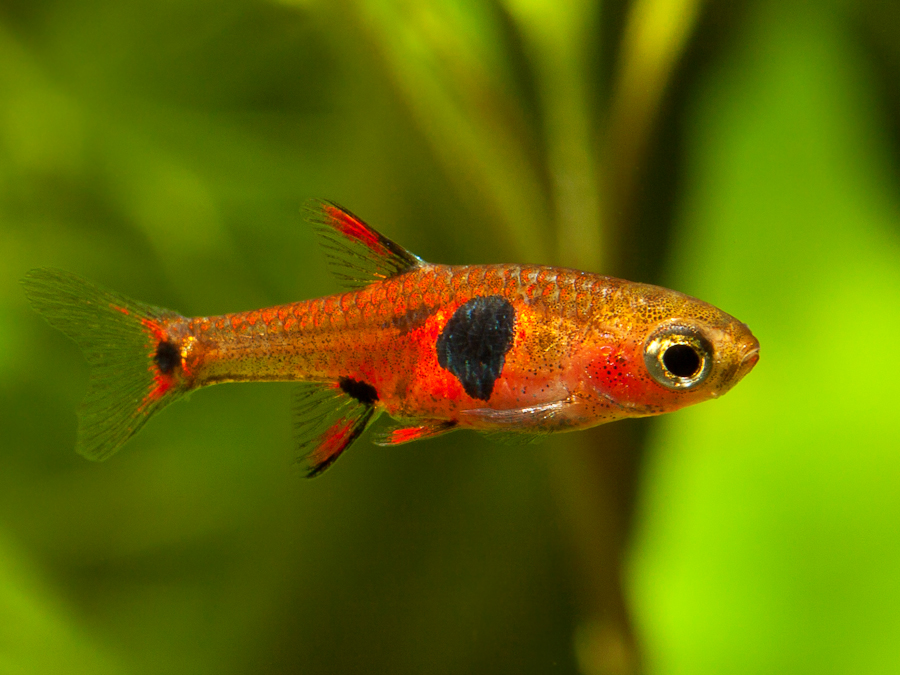
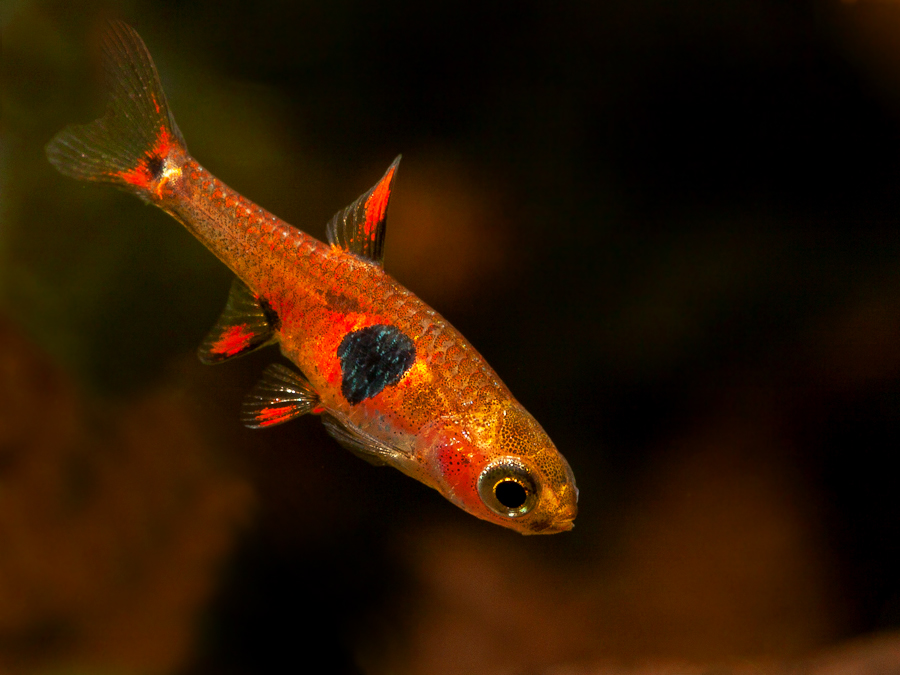
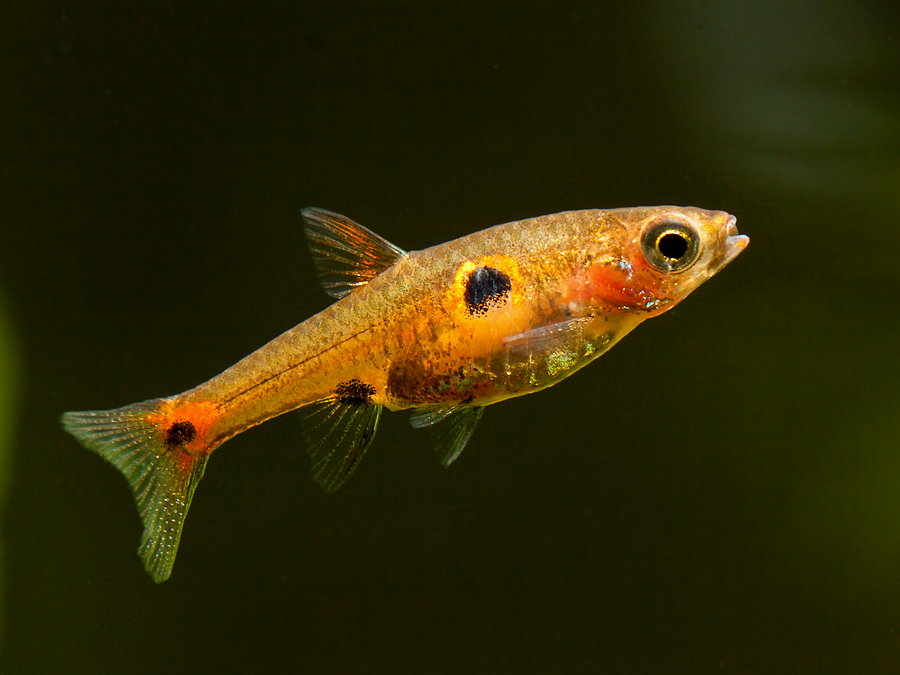
成熟雌鱼腹部更圆、通常略大而颜色较淡。雄鱼体侧前方的黑斑明显更大,不能把不同性别的斑点大小差异误认成不同物种。
繁殖
本种持续少量散卵,不照顾卵和鱼苗。成熟、遮蔽充足的水草缸可能自然出现后代;若要提高产量,可设独立、弱光的繁殖环境,放入莫丝等细叶植物及能让卵落下、阻止亲鱼接触的网层。
用软而偏酸的水,温度接近日常适宜范围的较暖端,将两三对调养好的亲鱼缓慢转入。条件合适时可能次晨开始产卵。亲鱼确实会吃卵,应在产卵后不超过两天移走。
卵约两天孵化,幼鱼继续利用卵黄约一天,再喂草履虫等微小食物;一周至十天后可尝试丰年虾无节幼体或微虫。小量换水应谨慎开始,避免骤变。
补充说明
本种曾以不同暂定名称和“草莓”相关英文商品名出售。旧销售名称存在混用,判断时应结合雌雄斑块差异,而非仅凭红色深浅。
图片
图片来自 SeriouslyFish,版权归各摄影者所有。
English
Overview
A peaceful miniature cyprinid from southern Thailand, Boraras naevus is best suited to quiet, densely planted surroundings. The dark patch on the front of each flank is substantially larger in males than females, making sexual differences useful for identification.
Distribution & habitat
Confirmed localities lie in the lower Tapi drainage of Surat Thani province, on the Gulf of Thailand side of the peninsula. Shallow, clear swamps and marshes provide habitat, although many potential sites have become rice fields. Similar fish near Trang on the opposite coast have not been conclusively assigned to the same species.
Aquarium setup
Despite its tiny size, provide at least a 45 by 30 cm footprint. Dense planting, floating cover, and branching wood soften the light while leaving swimming room. Dominant males establish temporary spawning territories, so ensure that other individuals can move out of view.
Gentle filtration is preferable to strong current. Use a mature system and avoid sudden changes in water chemistry.
Diet & feeding
Small insects, worms, crustaceans, and other zooplankton are considered likely natural prey. Offer suitable flakes or microgranules alongside daily small live or frozen foods, such as water fleas and brine shrimp, rather than relying exclusively on dried products.
Behaviour & compatibility
A species group or carefully chosen companions of similarly tiny, peaceful fish works best. Keep eight to ten or more to reduce nervousness and encourage male displays. Small freshwater shrimp can share a planted setup. Avoid combining different members of the genus for breeding because hybridization is possible.
Sexual dimorphism
Mature females usually have fuller abdomens, slightly greater size, and less intense color. The anterior flank blotch is distinctly enlarged in males. This sex-linked difference should not be confused with a difference between species.
Breeding
Small egg batches are scattered repeatedly without parental attention. Some offspring may survive in a mature planted aquarium. Controlled breeding uses a separate dim setup with fine plants and a mesh barrier that allows eggs to escape adult access.
Use soft, acidic water toward the warmer end of the normal range and gradually introduce two or three conditioned pairs. Spawning may begin the next morning. Adults eat eggs, so remove them within a couple of days.
Hatching takes about two days, followed by roughly another day of yolk use. Provide microscopic starter foods before progressing to brine-shrimp nauplii or microworms after around a week to ten days. Start small water changes cautiously.
Notes
The fish circulated under provisional names and strawberry-related trade labels before description. Male and female blotch differences are more useful than overall redness when evaluating such labels.
来源
- https://www.seriouslyfish.com/species/boraras-naevus(抓取于 2026-10-10)
boraras-naevus · 文件: data/species/boraras-naevus.md · 状态: 草稿