三斑泰波鱼
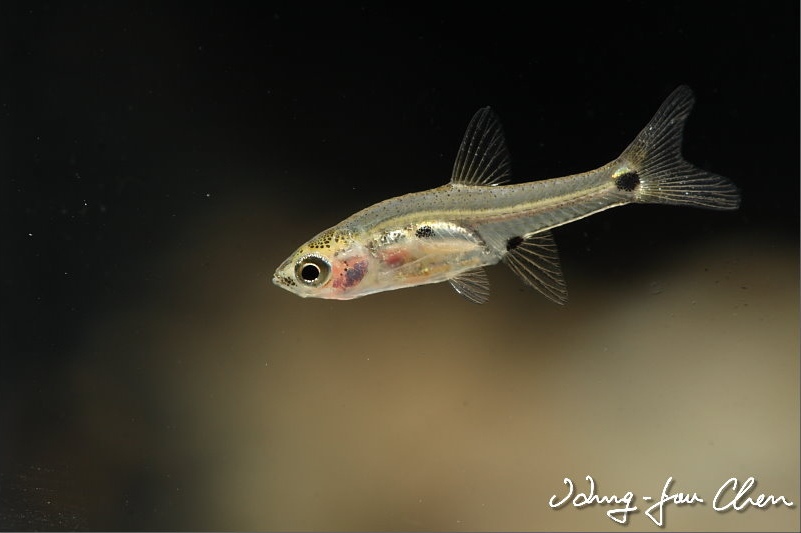
概要
| 字段 | 值 |
|---|---|
| 类别 | 鱼 |
| 学名 | Boraras micros |
| 别名 | 三斑泰波魚 |
| 分类 | 鲤形目 Cypriniformes › 鲤科 Cyprinidae › Boraras |
| 水体 | 淡水 |
| 原产地 | 泰国 |
| 成体体长 | 1.3 cm |
| 饲养难度 | 中等 |
| 最小水体 | 41 L |
| 最小缸长 | 45 cm |
| 群居方式 | 群游 |
| 性情 | 温和 |
| 水流偏好 | 低 |
| 外部数据 | seriouslyfish boraras-micros;fishbase 52295 |
| 繁殖方式 | 散卵 |
水质参数
| 参数 | 耐受范围 | 最适范围 | 单位 |
|---|---|---|---|
| 水温 | 20–28 | — | °C |
| pH | 6–7 | — | — |
| 总硬度 | 2–10 | — | dGH |
概述
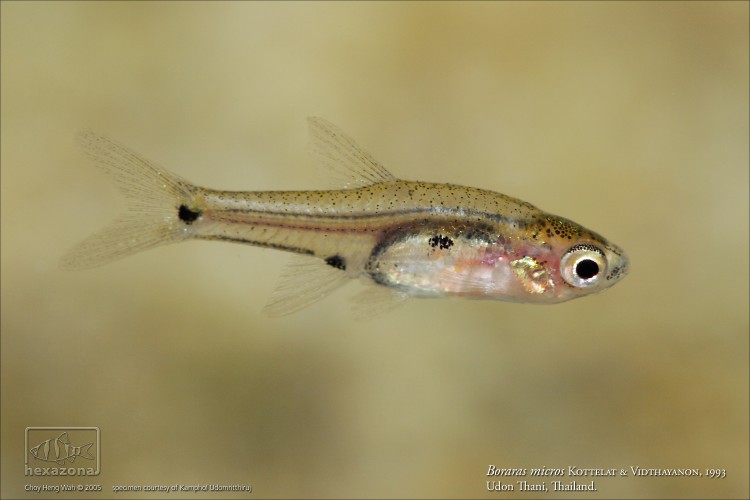
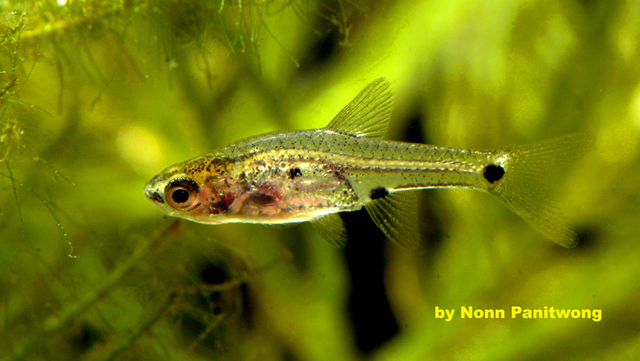
三斑泰波鱼(Boraras micros)体型极小,真正的本种花纹较朴素,在贸易中并不常见。标成该种的鲜红商品鱼可能是其他泰波鱼,购买时应先核对身份。
分布与栖息地
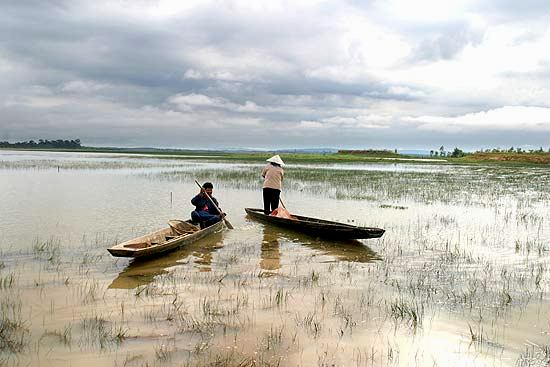
确定记录集中在泰国东北部湄公河流域的廊开、乌隆和沙功那空等府,老挝记录尚未确认。它生活在清澈、浅水且沉水植物茂密的沼泽、泛滥平原和稻田,雨季会进入临时淹水区。
饲养环境
宜用密植水草、浮水植物和沉木创造遮蔽,水流应轻缓。体型小仍需游动空间,繁殖雄鱼也会暂时占区。只在生物过滤成熟、状态稳定后放鱼,避免新缸水质波动。
食性与喂食
野外可能捕食极小的昆虫、蠕虫、甲壳类及浮游动物。投喂要特别注意口径,可用细碎干粮配合适口的水蚤、丰年虾等活饵或冷冻饵料,不宜只依赖干粮。
习性与混养
至少 8~10 条同养更有安全感,能看到雄鱼之间的求偶展示。它温和而胆小,适合单养或同样微小的温和鱼;自然同域记录不能直接当作混养名单。
雌雄区分
成年雌鱼往往略大,腹部比雄鱼圆润。
繁殖
被描述为连续少量散卵、没有亲代照料,但人工繁殖是否已经成功尚不明确。可尝试同属鱼使用的办法:亲鱼先充分调养,缓慢放入弱光小缸,布置细叶植物和隔卵网,采用轻缓的成熟海绵过滤。约两天内移出亲鱼以保护卵;若孵化成功,先准备草履虫等微型开口饵,再按鱼苗大小逐渐换较大活饵。借鉴流程预计约两天孵化,卵黄耗尽后开口,但这些时间不能当作本种已验证的固定结果。
补充说明
商品名中的“红色型”不能证明是本种变异。辨识仍应以本种淡雅花纹及可靠产地信息为依据。
图片
图片来自 SeriouslyFish,版权归各摄影者所有。
English
Overview
True Boraras micros is a very small, rather plainly patterned fish that is rarely encountered in commerce. Bright red fishes sold under its name commonly belong to other species, so identity deserves attention before husbandry or breeding comparisons are made.
Distribution & habitat
Confirmed records are concentrated in northeastern Thailand, particularly Nong Khai, Udon Thani and Sakon Nakhon. A reported Laotian occurrence remains uncertain. Shallow, mostly clear wetlands with dense submerged vegetation are characteristic, including rice paddies and seasonally flooded ground.
Aquarium setup
Provide abundant plants and shaded spaces without filling every swimming route. Keep the filter return gentle and establish biological stability before introduction. Small adult size does not remove the need for adequate floor area, especially when males are displaying.
Diet & feeding
It is thought to take minute animal prey in nature. Food size is especially important: combine finely divided prepared food with suitable tiny live or frozen items. A varied menu is preferable to relying on flakes alone.
Behaviour & compatibility
A group of eight to ten or more reduces nervous behavior and allows social displays. Select only gentle, diminutive companions, or keep a dedicated group. Other fishes found at the same wild locality are not automatically compatible in an aquarium.
Sexual dimorphism
Mature females generally have a fuller abdomen and are often slightly larger than males.
Breeding
Its reproductive strategy is described as repeated egg scattering without parental care, but captive success remains uncertain. A reasonable trial follows methods used for related species: condition adults, acclimate them gradually to a dim planted spawning container, protect eggs with mesh, and remove adults within about two days. Have microscopic first foods ready before attempting this. A roughly two-day incubation followed by yolk feeding is an expectation from the suggested procedure, not a demonstrated timetable for this species.
Notes
A red trade label does not establish a color variety of this species. Its understated pattern and reliable collection information are more useful evidence.
来源
- https://www.seriouslyfish.com/species/boraras-micros(抓取于 2026-10-10)
boraras-micros · 文件: data/species/boraras-micros.md · 状态: 草稿