小泰波鱼
概要
| 字段 | 值 |
|---|---|
| 类别 | 鱼 |
| 学名 | Boraras merah |
| 别名 | 红体波鱼、小泰波魚、紅體波魚、Rasbora merah |
| 分类 | 鲤形目 Cypriniformes › 鲤科 Cyprinidae › Boraras |
| 水体 | 淡水 |
| 原产地 | 印度尼西亚 |
| 成体体长 | 2 cm |
| 饲养难度 | 中等 |
| 最小水体 | 41 L |
| 最小缸长 | 45 cm |
| 群居方式 | 群游 |
| 性情 | 温和 |
| 水流偏好 | 低 |
| 外部数据 | seriouslyfish boraras-merah;fishbase 22603 |
| 繁殖方式 | 散卵 |
水质参数
| 参数 | 耐受范围 | 最适范围 | 单位 |
|---|---|---|---|
| 水温 | 20–28 | — | °C |
| pH | 4–6.5 | — | — |
| 总硬度 | 1–5 | — | dGH |
概述
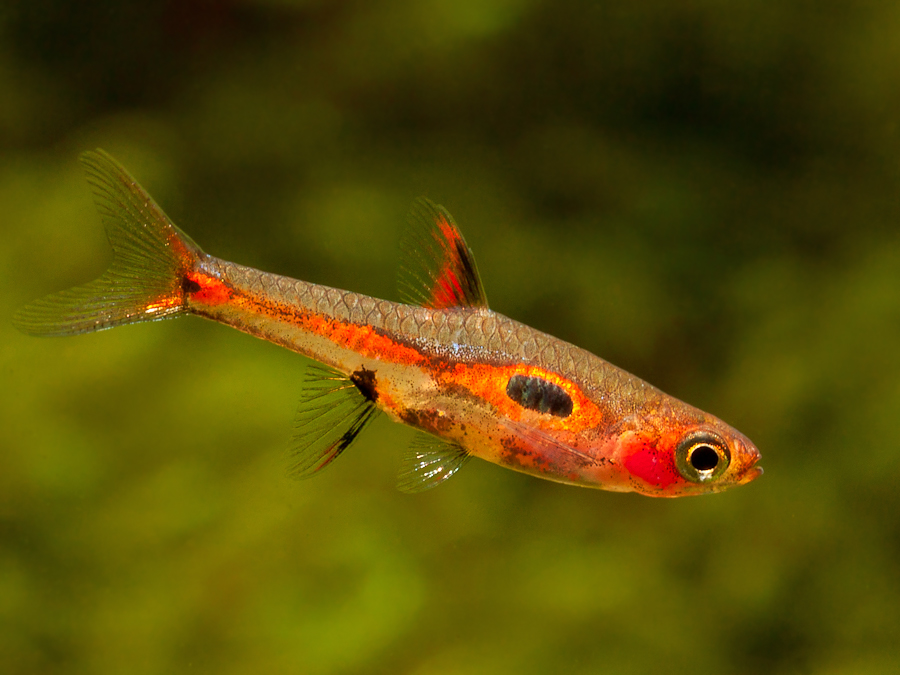
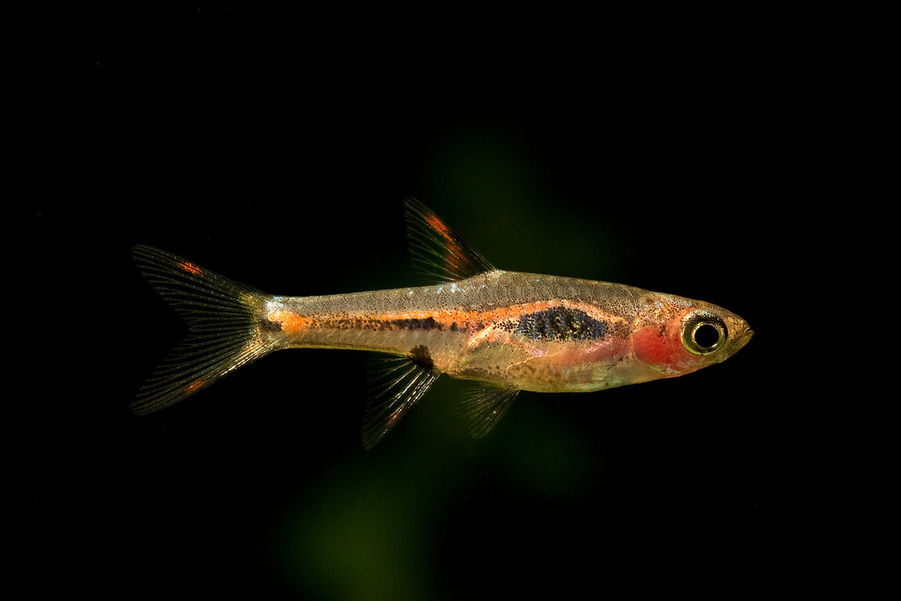
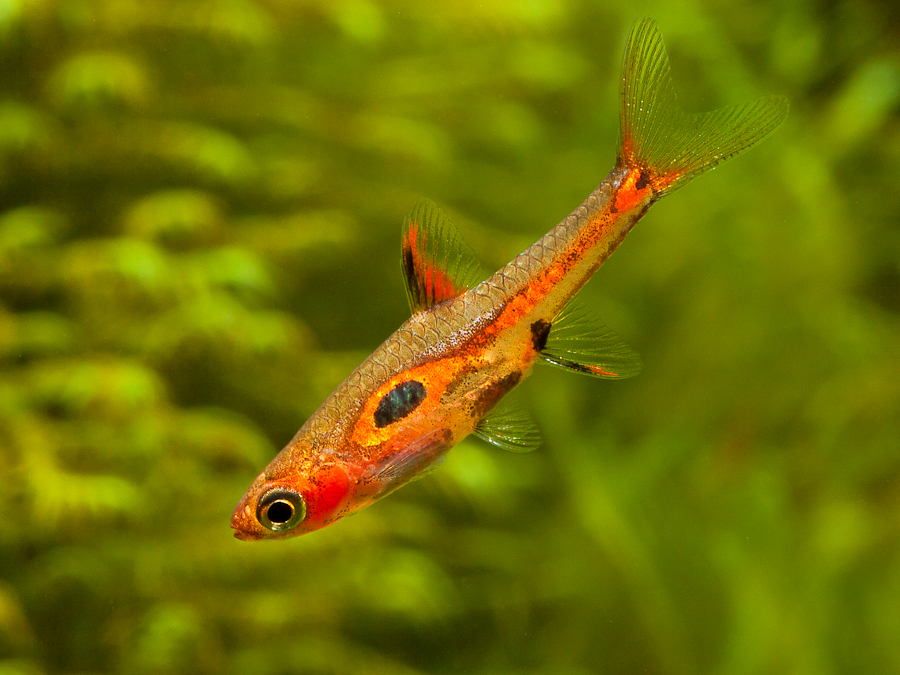
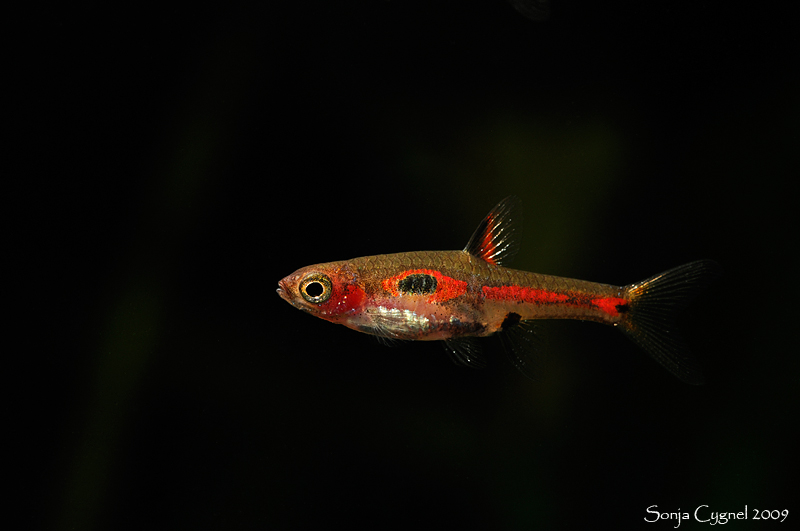
小泰波鱼(Boraras merah)的红色往往集中在深色斑纹周围,身体其他部位相对淡雅。它是适合小型安静群落的微型鱼,群养、弱光与稳定水质比追求强烈造流更重要。
分布与栖息地
似乎为婆罗洲南部特有种,模式标本来自印度尼西亚中加里曼丹苏卡马拉附近的杰莱比拉河流域,分布向该流域以西延伸。栖息在森林泥炭沼泽中的黑水河溪,软而酸的水体被林冠遮蔽,底部堆有落叶与枝条。
饲养环境
宜用密植水草和浮水植物减弱光线,沉木、细沙和落叶提供遮蔽。落叶分解形成的微生物可辅助育苗,但不能代替正常投喂。过滤不必形成强流,缸内生物系统必须成熟,避免水质骤变,并留出游动与求偶空间。
食性与喂食
可能在野外捕食微小昆虫、蠕虫、甲壳类和浮游动物。人工饲养可接受适口薄片、颗粒,最好每天搭配少量水蚤、丰年虾等小型活饵或冷冻饵料。
习性与混养
温和、胆小,建议至少 8~10 条同养。适合与微型温和鱼或草缸小型淡水虾搭配;群体足够大时更放松,雄鱼也更愿意展示。繁殖时优势雄鱼会暂时占据小范围。
雌雄区分
成年雌鱼通常稍大、腹部圆润。雄鱼颜色更艳,优势雄鱼发色最明显。
繁殖
属于连续少量散卵、不护卵的鱼。成熟密植缸可能自行留下少量后代,专门繁殖则可另置弱光小缸,加入细叶植物、隔卵网及成熟海绵过滤。亲鱼缓慢适应后放入,产卵约两天内移走以减少吃卵。首批卵约两天孵化,卵黄再维持约一天;开口需草履虫等微型食物,约一周至十天后再按大小加入丰年虾无节幼体或微虫。初期避免突然大量换水。
补充说明
通常深色斑纹呈点斑而不是完整条带,但确有全条纹雄鱼,因而与白氏泰波鱼(Boraras brigittae)的界限曾有争议。不能仅凭有没有条纹就把两者合并或鉴定。
图片
图片来自 SeriouslyFish,版权归各摄影者所有。
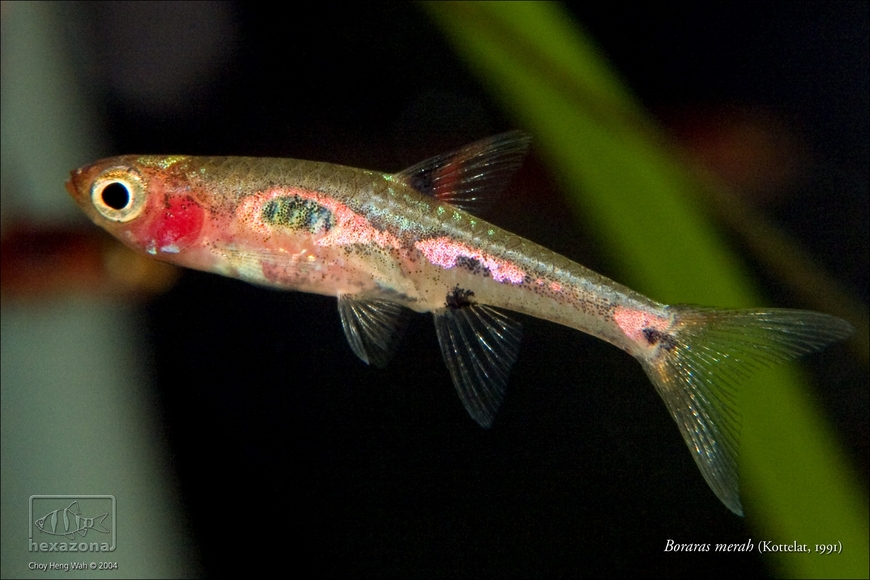
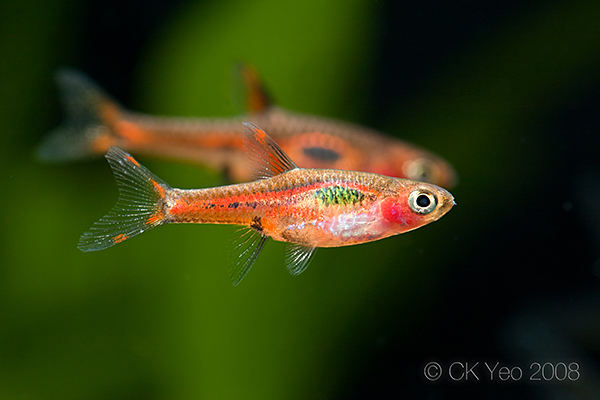
English
Overview
In Boraras merah, red tends to frame the dark markings while much of the body remains comparatively pale. This miniature fish rewards quiet surroundings, group keeping and stable conditions rather than a busy conventional community.
Distribution & habitat
Locality information points to southern Borneo, including the Jelai Bila basin near Sukamara in Central Kalimantan and areas westward. Its forest-swamp streams have dark, very soft acidic water with leaves and branches beneath heavy shade.
Aquarium setup
Plant densely, soften overhead light and use wood or leaf litter to create sheltered spaces. Gentle filtration suits its sluggish natural waters. Stock only a stable, mature aquarium; leaf-associated microorganisms can supplement fry nutrition but do not replace deliberate feeding.
Diet & feeding
Tiny invertebrates are thought to form the natural diet. Offer fine prepared food together with appropriately small live or frozen prey. Regular variety is useful for bringing adults into breeding condition and developing their color.
Behaviour & compatibility
Maintain eight to ten or more to encourage confident activity and courtship. A species aquarium or peaceful miniature-fish community is suitable; small freshwater shrimp can also be considered. Dominant males establish brief spawning territories despite the generally gentle temperament.
Sexual dimorphism
Females become fuller through the abdomen and may exceed males slightly in size. Dominant males usually carry the most intense coloration.
Breeding
Eggs are released in small recurring batches without parental attention. A separate dim aquarium with fine vegetation and an egg-protecting mesh improves recovery. Acclimate conditioned adults gradually and remove them after no more than about two days. The first larvae may hatch around day two and use yolk for approximately another day. Start with microscopic food, progressing to larger live prey as their mouths allow; changes of water should be small and cautious.
Notes
Some males develop a continuous dark stripe, complicating separation from Boraras brigittae. The relationship has been debated, so a striped specimen alone is insufficient grounds for treating the two names as interchangeable.
来源
- https://www.seriouslyfish.com/species/boraras-merah(抓取于 2026-10-10)
boraras-merah · 文件: data/species/boraras-merah.md · 状态: 草稿