白氏泰波鱼 · Mosquito Rasbora
概要
| 字段 | 值 |
|---|---|
| 类别 | 鱼 |
| 学名 | Boraras brigittae |
| 别名 | 布里奇波鱼、白氏泰波魚、布里奇波魚、Rasbora urophthalma brigittae |
| 分类 | 鲤形目 Cypriniformes › 鲤科 Cyprinidae › Boraras |
| 水体 | 淡水 |
| 原产地 | 印度尼西亚 |
| 成体体长 | 2 cm |
| 饲养难度 | 中等 |
| 最小水体 | 41 L |
| 最小缸长 | 45 cm |
| 群居方式 | 群游 |
| 性情 | 温和 |
| 水流偏好 | 低 |
| 外部数据 | seriouslyfish boraras-brigittae;fishbase 22509 |
| 繁殖方式 | 散卵 |
水质参数
| 参数 | 耐受范围 | 最适范围 | 单位 |
|---|---|---|---|
| 水温 | 20–28 | — | °C |
| pH | 4–7 | — | — |
| 总硬度 | 1–10 | — | dGH |
概述
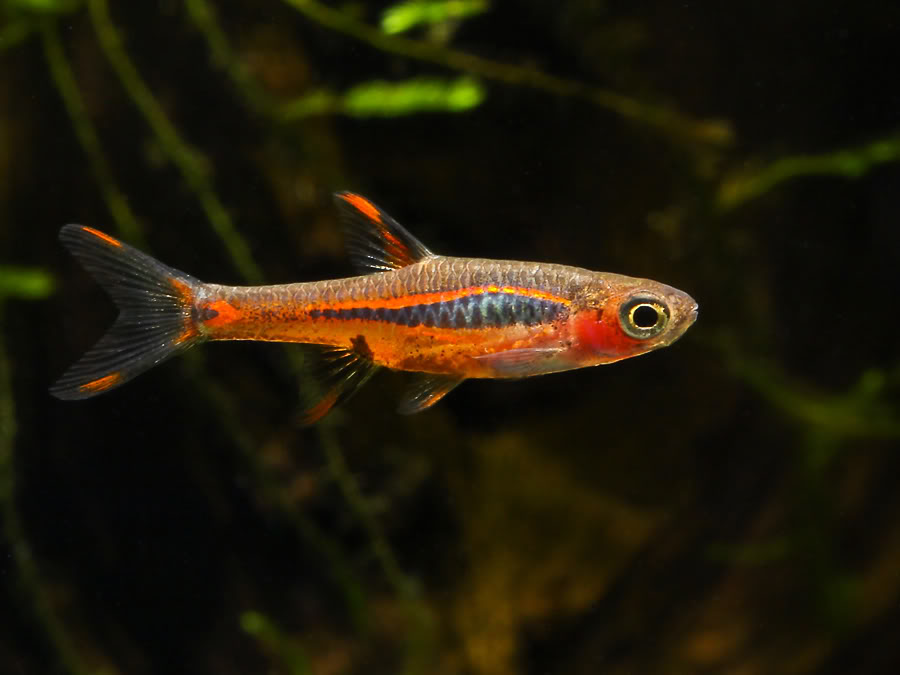
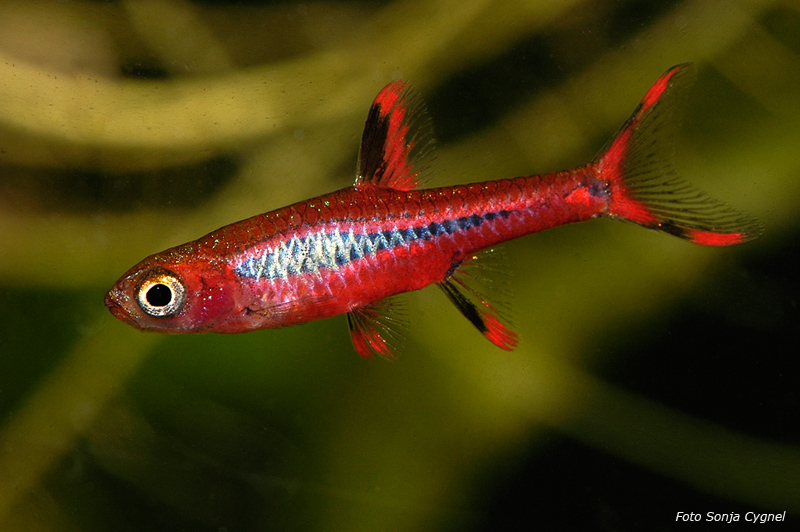
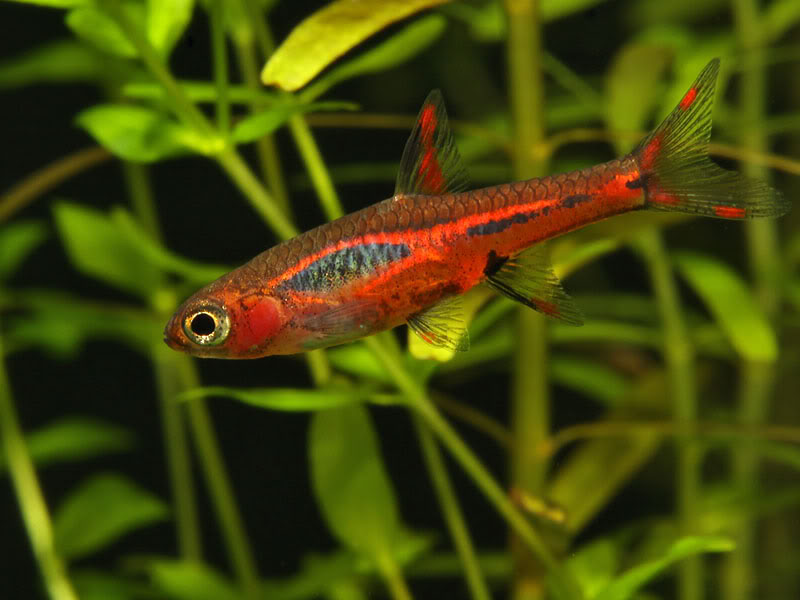
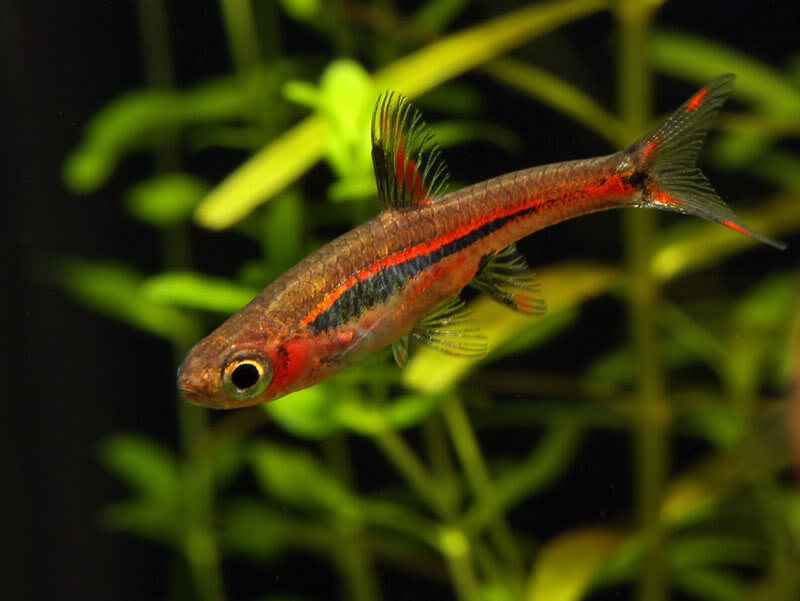
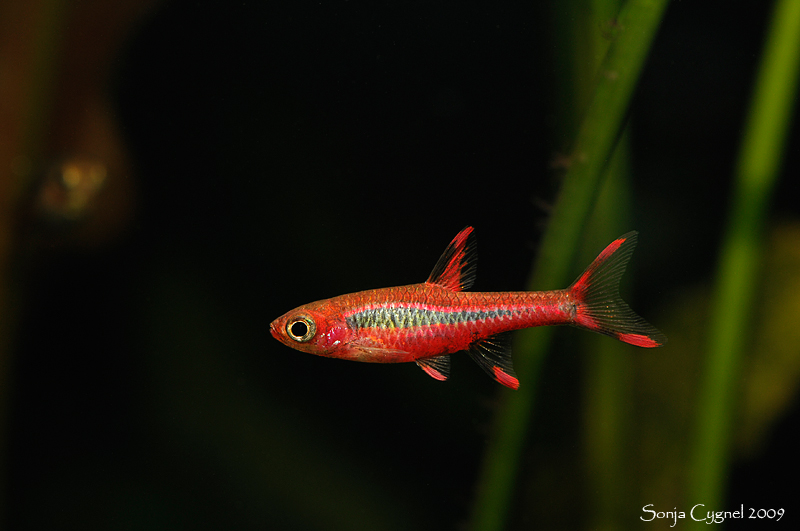
白氏泰波鱼(Boraras brigittae)是色彩鲜明的微型群游鱼,状态良好的个体可呈浓郁红色。它性情温和而胆小,微小体型并不意味着能省去群体空间或水质稳定性。
分布与栖息地
似乎为婆罗洲西南部特有种,模式产地在印度尼西亚南加里曼丹的班贾尔马辛,具体分布记录有限。栖息于森林泥炭沼泽相关的黑水溪流和水潭,落叶、枝条与树根丰富,水质很软且偏酸,林冠使光线昏暗。
饲养环境
适合密植水草、浮水植物与沉木共同遮光的环境,水流应柔和。沙底上铺少量落叶可增加遮蔽,分解时产生的微生物能给鱼苗提供补充食物。只放入过滤成熟、水质稳定的缸;即使体型小,也需保留游动及雄鱼繁殖期短暂占区的空间。
食性与喂食
野外可能捕食微小昆虫、蠕虫、甲壳类与浮游动物。可接受适口碎粮,但不宜只喂干粮,日常搭配小型水蚤、丰年虾等活饵或冷冻饵料,有助于发色和繁殖准备。
习性与混养
建议至少 8~10 条同养,数量充足时更少紧张,也更易看到雄鱼展示。可与同样微小、温和的鱼及草缸小型淡水虾搭配,避免让强势或大型鱼抢走食物。
雌雄区分
成年雌鱼腹部较圆,常略大;雄鱼颜色更醒目,优势个体尤其鲜艳。
繁殖
连续少量散卵,不护卵。成熟密植缸可能自然出现少量鱼苗;提高成活率可另设弱光繁殖缸,放细叶植物和隔卵网,以成熟海绵过滤维持轻缓水流。亲鱼缓慢过水入缸,产卵后最多停留约两天便移出,减少吃卵。卵约第二天开始孵化,卵黄再供养约一天,之后先用草履虫等微小活饵,约一周至十天后按鱼苗口径换丰年虾无节幼体或微虫。初期换水要小而缓,避免骤变。
补充说明
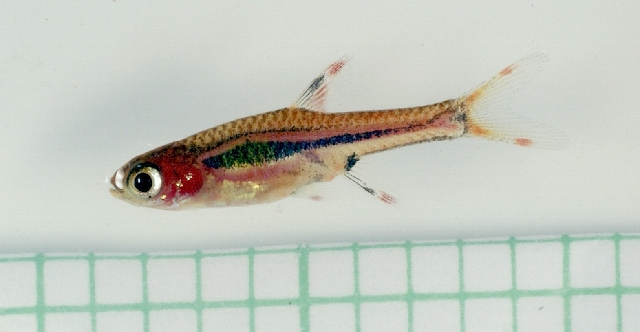
本种在商品名下可能混入拟尾斑泰波鱼(Boraras urophthalmoides);本种通常更红,尾柄没有独立明显的圆黑斑。与小泰波鱼(Boraras merah)的斑纹也有重叠,不能把红色或条纹单独当作绝对鉴别依据。
图片
图片来自 SeriouslyFish,版权归各摄影者所有。
English
Overview
The red coloration of Boraras brigittae is most rewarding in a settled group with subdued surroundings. This miniature, timid fish belongs in a carefully planned small-fish community or species aquarium, where feeding competition and abrupt water changes are minimized.
Distribution & habitat
The known range points to southwestern Borneo, although locality records are sparse. Peat-swamp forest waters provide shaded pools and channels with submerged woody debris and leaves. Decaying vegetation stains the exceptionally soft, acidic water.
Aquarium setup
Use established biological filtration with a gentle return, dense planting and overhead shade. Roots, sand and leaf litter can recreate useful shelter; the litter also supports microscopic life for fry. Leave swimming room between cover, since courting males briefly defend small areas.
Diet & feeding
Its natural diet is thought to comprise tiny animal prey. Supply appropriately sized prepared particles along with small live or frozen foods such as brine shrimp and water fleas. Variety supports condition and color better than an exclusively dry menu.
Behaviour & compatibility
Keep eight to ten or more together. A settled group shows more confident behavior and male displays. Other miniature peaceful fishes and small freshwater shrimp can work in a planted aquarium, whereas larger or pushier companions undermine its suitability for community keeping.
Sexual dimorphism
Males are usually more vividly colored, especially dominant individuals. Mature females tend to be slightly larger and noticeably rounder through the abdomen.
Breeding
Small batches of eggs can be scattered repeatedly without parental care. For greater survival, move conditioned pairs gradually into a dim separate aquarium containing fine vegetation and an egg barrier. Remove them within about two days, before the earliest young become vulnerable. Eggs may hatch around the second day, followed by roughly a day of yolk feeding. Begin with microscopic live food, then introduce newly hatched brine shrimp or microworms when the fry can take them, often after seven to ten days. Early water changes should be gentle and limited.
Notes
Trade lots may contain Boraras urophthalmoides, which has a distinct round caudal-peduncle blotch and a longer stripe. Color-pattern overlap with Boraras merah has also prompted taxonomic debate; red intensity alone is not a reliable identification test.
来源
- https://www.seriouslyfish.com/species/boraras-brigittae(抓取于 2026-10-10)
boraras-brigittae · 文件: data/species/boraras-brigittae.md · 状态: 草稿