印度真马口波鱼
概要
| 字段 | 值 |
|---|---|
| 类别 | 鱼 |
| 学名 | Barilius canarensis |
| 别名 | 印度真馬口波魚、Opsarius canarensis |
| 分类 | 鲤形目 Cypriniformes › 鲤科 Cyprinidae › Barilius |
| 水体 | 淡水 |
| 原产地 | 印度 |
| 成体体长 | 13 cm |
| 饲养难度 | 中等 |
| 最小水体 | 540 L |
| 最小缸长 | 150 cm |
| 群居方式 | 群游 |
| 特征 | 会跳缸: 是;吃小鱼: 是 |
| 外部数据 | seriouslyfish barilius-canarensis;fishbase 24326 |
| 食性 | 肉食 |
水质参数
| 参数 | 耐受范围 | 最适范围 | 单位 |
|---|---|---|---|
| 水温 | 18–26 | — | °C |
| pH | 6–7.5 | — | — |
| 总硬度 | 2–10 | — | dGH |
概述
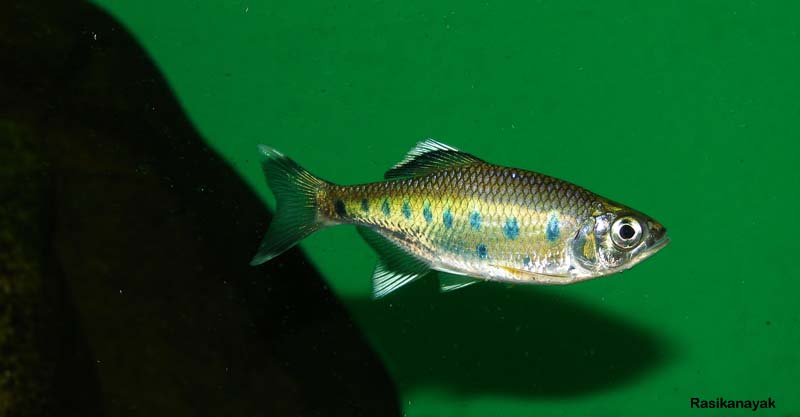
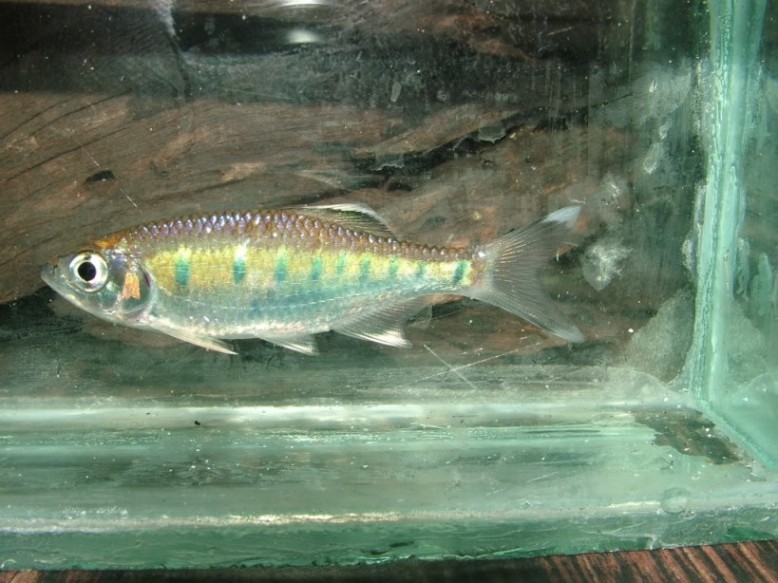
印度真马口波鱼(Barilius canarensis)的辨识重点是两列蓝绿色斑纹,以及背鳍、臀鳍宽阔的白边。市场上这个名字曾被套用于其他近缘种,购买时应连同斑纹和产地核对,不能只看标签。
分布与栖息地
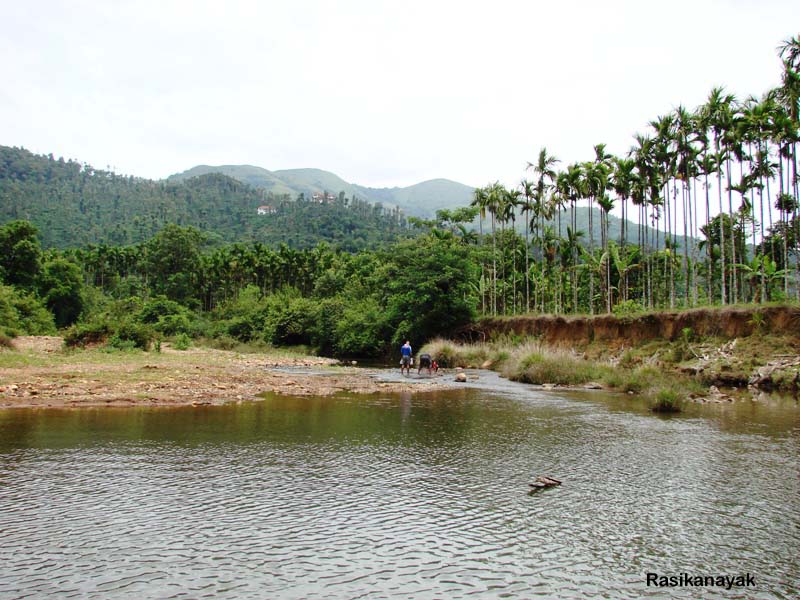
确定记录来自印度卡纳塔克邦的内特拉瓦蒂河和通加巴德拉河水系,可能还见于该邦南部与喀拉拉邦北部其他河流。栖地为含氧充足的流水,底部常有砾石、卵石和大石;部分河流受到污染、外来物种与采砂影响。
饲养环境
优先保证宽阔泳道,再用沙砾、圆石与少量沉木布置溪流景观。水流与供氧要充足,耐受的附生植物可固定在硬景上。等过滤系统成熟、水质稳定后放鱼,防止污物堆积;每周换水约 30%~50%,并用严密缸盖防跳。
食性与喂食
以水面附近的昆虫为主要天然食物,可能也吃小鱼及底栖小动物。干粮之外定期提供红虫、丰年虾、切碎蚯蚓;果蝇、小蟋蟀也可使用,投喂前先给饵虫喂食。
习性与混养
游速快、抢食积极,容易压制胆小或慢吞吞的混养鱼。应选体型相近、健壮的流水鱼,并避开很小的鱼。至少 5 条同养;两三条的小群容易反复欺负弱鱼,单养也可能对相似鱼表现攻击。
雌雄区分
成熟雌鱼较厚实、颜色较淡,通常也略大。繁殖雄鱼头部有追星,腹侧出现橙色。
繁殖
据称大量凉水换水可诱发产卵,但育苗成功情况尚未得到确认。
补充说明
该种在 2015 年重新描述后,旧有商品鉴定与分布记录需谨慎使用。上排斑点较多,下排只有身体前部的少数小斑点,是观察外形时的实用线索。
图片
图片来自 SeriouslyFish,版权归各摄影者所有。
English
Overview
Barilius canarensis combines two lines of blue-green markings with broad pale edging on its dorsal and anal fins. Its name has been applied to other fishes in commerce, so markings and collection information matter more than a dealer label alone.
Distribution & habitat
Confirmed localities lie in Karnataka in the Netravathi and Tungabhadra systems. A wider range across southern Karnataka and northern Kerala is possible but unresolved. The fish occupies oxygen-rich rocky rivers and streams; pollution and physical habitat degradation affect some sites.
Aquarium setup
Reserve most of the aquarium for swimming. Rounded rockwork, mixed sand and gravel, and a few branches provide a suitable river setting without crowding it. Use established filtration, maintain good circulation and oxygen availability, and carry out weekly changes of about 30–50%. Secure every opening against jumping.
Diet & feeding
Offer prepared foods alongside regular small invertebrate meals. Insects captured near the surface form the natural dietary basis, with other animal prey possibly taken. Bloodworms, brine shrimp and earthworm pieces are useful, as are appropriately small insects that have first been well fed.
Behaviour & compatibility
A hierarchy forms within the group, making at least five individuals preferable. Too few can concentrate aggression on one subordinate fish. Equally vigorous, similarly sized river fishes are the most promising companions. Avoid both very small prey-sized fish and timid species that cannot compete at feeding time.
Sexual dimorphism
A ripe female is noticeably fuller than a male and usually less vivid. Males in reproductive condition acquire tubercles on the head and orange coloration below.
Breeding
Cooler replacement water in a substantial water change has reportedly encouraged spawning. This should not be mistaken for a proven method of raising the young.
Notes
A 2015 redescription clarified the species after a history of trade misidentifications. The upper row has numerous spots, whereas the lower series consists of only a few smaller anterior marks.
来源
- https://www.seriouslyfish.com/species/barilius-canarensis(抓取于 2026-10-10)
barilius-canarensis · 文件: data/species/barilius-canarensis.md · 状态: 草稿