Barilius ardens
概要
| 字段 | 值 |
|---|---|
| 类别 | 鱼 |
| 学名 | Barilius ardens |
| 分类 | 鲤形目 Cypriniformes › 鲤科 Cyprinidae › Barilius |
| 水体 | 淡水 |
| 原产地 | 印度 |
| 成体体长 | 10.5 cm |
| 饲养难度 | 中等 |
| 最小水体 | 540 L |
| 最小缸长 | 150 cm |
| 群居方式 | 群游 |
| 特征 | 会跳缸: 是 |
| 外部数据 | seriouslyfish barilius-ardens;fishbase 68016 |
水质参数
| 参数 | 耐受范围 | 最适范围 | 单位 |
|---|---|---|---|
| 水温 | 18–26 | — | °C |
| pH | 6–7.5 | — | — |
| 总硬度 | 2–10 | — | dGH |
概述
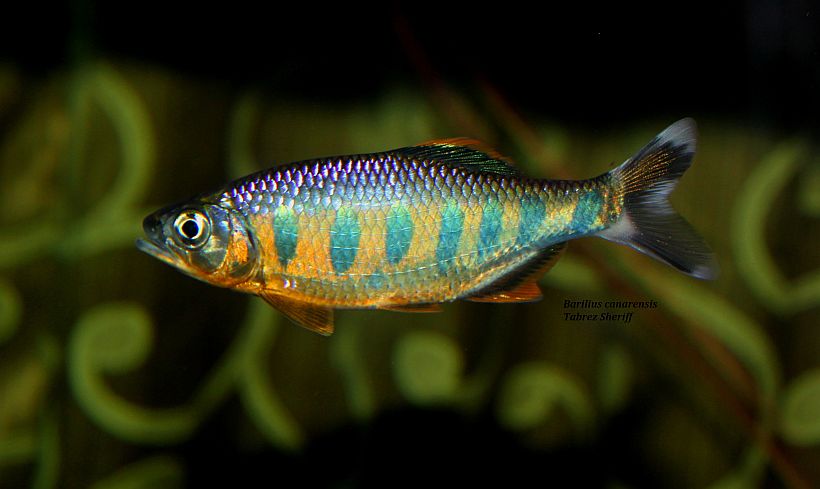
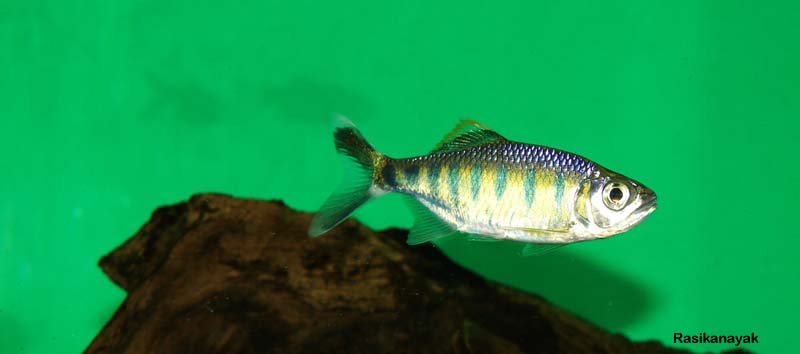
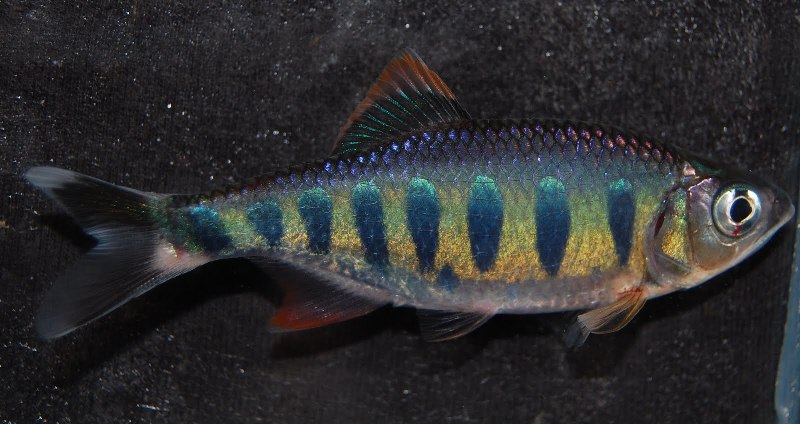
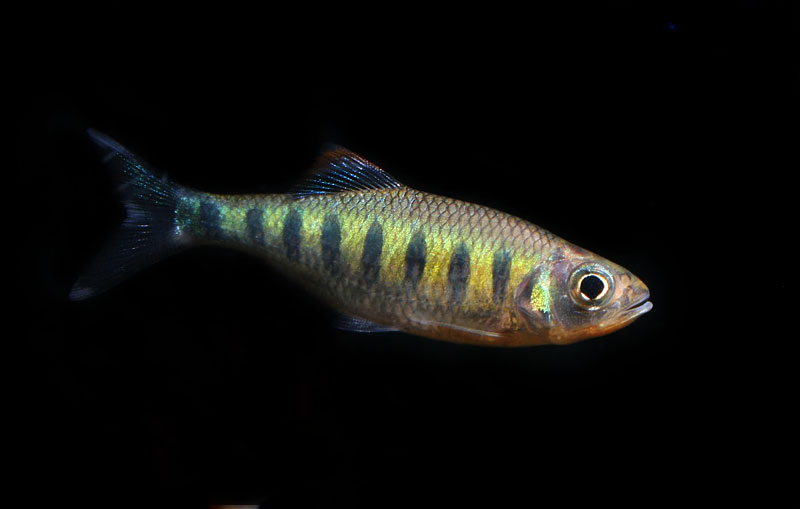
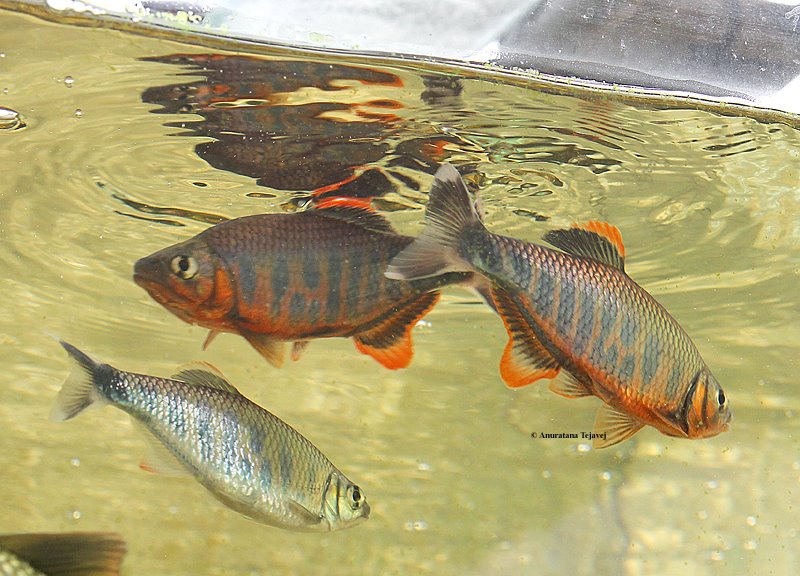
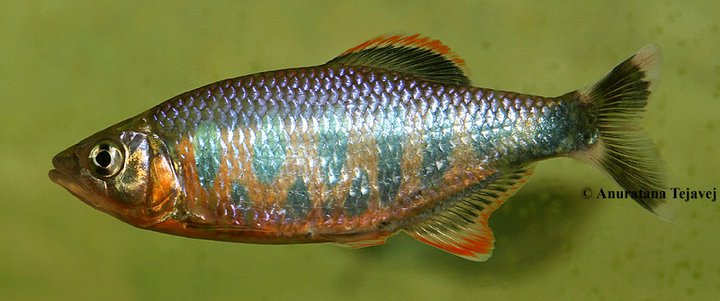
Barilius ardens 是印度西南部的快速游泳鲤科鱼,体侧蓝绿色竖斑与背鳍、臀鳍宽阔的橙色边缘颇显眼。它需要开阔泳道和清洁富氧的流水环境,抢食积极,不适合常规小型混养缸。
分布与栖息地
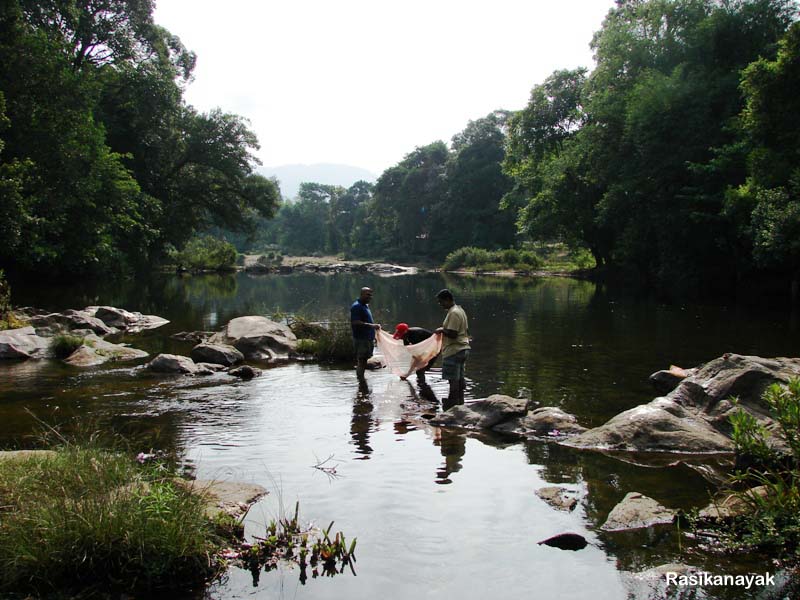
已知来自卡纳塔克邦西高止山西坡的西塔河及斯瓦尔纳河水系。生活在坡度较缓至中等、流速中等至快的溪河中,底部为砾石、卵石、大石及裸露基岩。
饲养环境
缸底至少 150 × 60 cm。以砂砾、大小不一的水磨石和根枝模拟河道,同时留出足够连续泳道。耐受流水的附生水草可固定在布景上。
使用成熟的过滤系统,保持高溶氧及适度水流,避免有机废物积累。每周换水 30%–50%,新建缸不宜直接入鱼。缸盖应严密,防止跳出。
食性与喂食
同属鱼通常在水面捕食水生或陆生昆虫,这可以作为安排食物的参考。人工饲养可用优质干粮,定期搭配红虫、丰年虾、切碎蚯蚓等活饵或冷冻饵,也可提供事先充分喂养的小蟋蟀、果蝇。
习性与混养
游速快、抢食强,容易让行动缓慢或胆怯的鱼处于劣势,体型很小的鱼也有被捕食风险。混养对象应体型接近、健壮,并适应同样的流水和溶氧条件。
至少 5 尾同养,群体中会建立等级。只养两三尾可能使弱势个体持续被追逐,单养也可能转而攻击外形相似的鱼。
雌雄区分
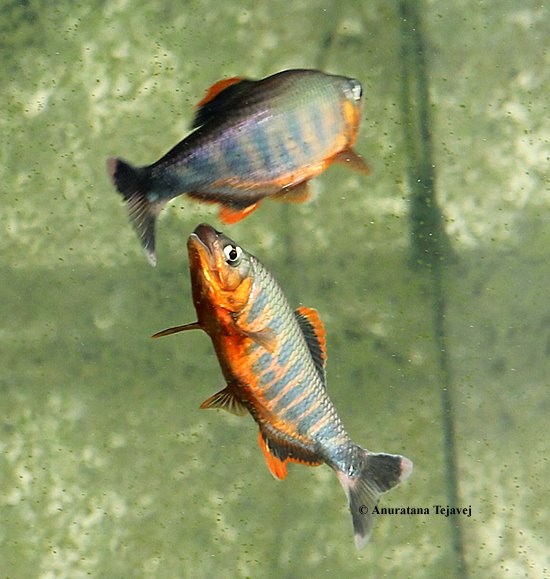
成年雌鱼较大、体态厚实,颜色通常不及雄鱼鲜艳,抱卵时更明显。繁殖期雄鱼头部出现珠星,体侧和腹部下方的橙色加深。
补充说明
本种正式描述前曾被当成其他同属鱼出售。蓝绿色侧纹形态与橙色鳍缘有助于辨认,但仅凭旧贸易名称不可靠。尚无可据以整理的人工繁殖记录。
图片
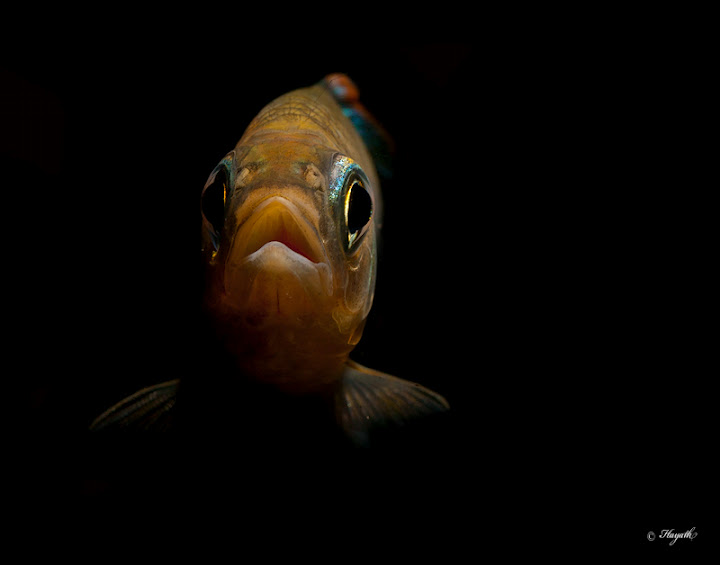
图片来自 SeriouslyFish,版权归各摄影者所有。
English
Overview
Fast swimming and vigorous feeding characterize Barilius ardens, a southwestern Indian cyprinid with blue-green flank markings and broad orange edges to the dorsal and anal fins. It needs open swimming room and clean, oxygenated water rather than a conventional small community setup.
Distribution & habitat
Known localities lie in the Sita and Swarna drainages on the western side of the Western Ghats in Karnataka. Occupied streams and rivers have moderate to rapid flow, low to moderate gradients, and beds of gravel, cobbles, boulders, or exposed rock.
Aquarium setup
Provide at least a 150 by 60 cm footprint. Use sand, gravel, rounded stones, and optional roots to suggest a riverbed while retaining uninterrupted swimming lanes. Tough attached plants can be secured to the furnishings.
Employ established biological filtration, good oxygenation, and suitable circulation. Organic waste must not accumulate. Change 30–50% of the water weekly, avoid immature aquariums, and fit a secure lid against jumping.
Diet & feeding
Surface insect feeding is described for the genus generally and provides a useful basis for food selection. Combine quality dry products with regular bloodworms, brine shrimp, chopped earthworms, or similar live and frozen foods. Small crickets and fruit flies should be well fed before being offered.
Behaviour & compatibility
Slow or timid companions may lose access to food, while very small fish risk predation. Select robust fish of similar size that tolerate the same flowing, oxygen-rich conditions.
Keep five or more conspecifics. A social hierarchy develops, and tiny groups can concentrate harassment on subordinate fish. Solitary specimens may direct aggression toward similar-looking species.
Sexual dimorphism
Mature females are generally larger, fuller, and less colorful, especially when carrying eggs. Breeding males develop head tubercles and stronger orange on their sides and lower body.
Notes
Historical trade identifications often assigned this fish to another congener. Its flank pattern and orange fin margins are useful clues, but old sales names alone are unreliable. Confirmed captive breeding information is unavailable.
来源
- https://www.seriouslyfish.com/species/barilius-ardens(抓取于 2026-10-10)
barilius-ardens · 文件: data/species/barilius-ardens.md · 状态: 草稿