'Barbus' jae
概要
| 字段 | 值 |
|---|---|
| 类别 | 鱼 |
| 学名 | 'Barbus' jae |
| 分类 | 鲤形目 Cypriniformes › 鲤科 Cyprinidae › 'Barbus' |
| 水体 | 淡水 |
| 原产地 | 喀麦隆、刚果民主共和国、赤道几内亚、加蓬、刚果共和国 |
| 成体体长 | 4 cm |
| 饲养难度 | 中等 |
| 最小水体 | 41 L |
| 最小缸长 | 45 cm |
| 群居方式 | 群游 |
| 水流偏好 | 低 |
| 外部数据 | seriouslyfish barbus-jae |
| 繁殖方式 | 散卵 |
水质参数
| 参数 | 耐受范围 | 最适范围 | 单位 |
|---|---|---|---|
| 水温 | 17–24 | — | °C |
| pH | 5–6.5 | — | — |
| 总硬度 | 1–5 | — | dGH |
概述
'Barbus' jae 是体型小巧、较胆怯的非洲鲃类,适合安静的软水草缸。不同产地的斑纹与繁殖体色差异明显,已知产地的种群应分别保存,避免混养繁殖后丢失来源信息。
分布与栖息地
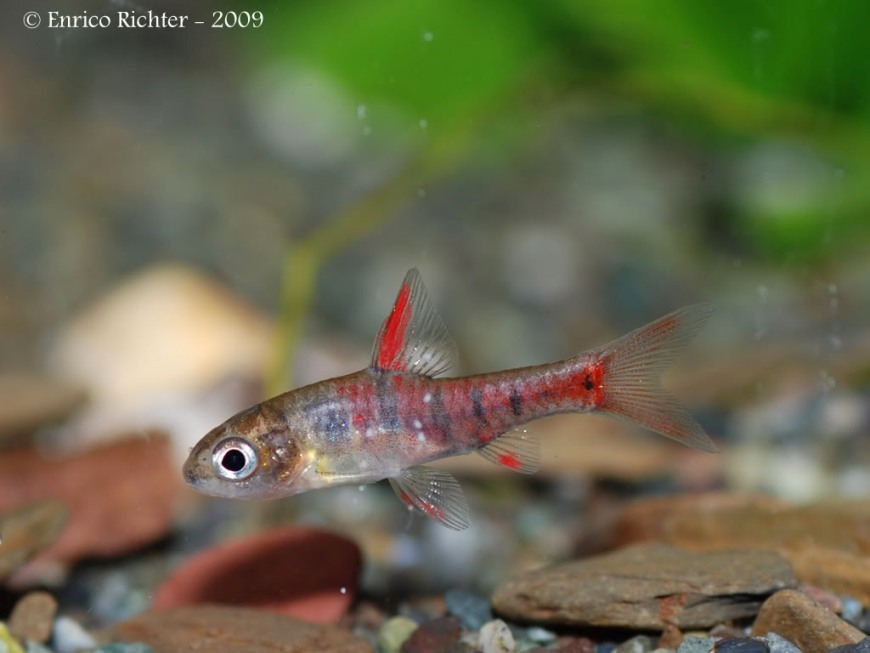
原产喀麦隆、赤道几内亚、加蓬及刚果共和国、刚果民主共和国。喀麦隆尼永河不同地点的雄鱼,繁殖时可能全身变红,也可能仅后半身明显变红。
生活在浅而缓慢的雨林溪流、沼泽,岸边植被浓密,水底散布落叶、枝条。林冠遮阴,腐败植物让较凉、柔软且偏酸的水呈褐色。
饲养环境
缸底至少 45 × 30 cm,使用细砂、沉木根枝与落叶制造阴影和退避处。微生物在落叶上生长,可成为鱼苗的补充食物。带单宁的水有助于表现体色。
搭配耐阴水草及浮水植物,保持弱光和轻缓过滤。应等过滤系统成熟后再入鱼,避免水质骤变,不适合偏碱环境。
食性与喂食
自然食物可能主要是昆虫幼虫和小型甲壳动物。人工环境下可以吃适口干粮,但不能只喂干粮;每天补充小型活饵、冷冻饵,如水蚤与丰年虾,有助于维持体色和繁殖状态。
习性与混养
容易被大鱼或活跃伙伴压制、抢食,宜与同样小型而温和的鱼搭配。建议至少 8 尾,雄鱼间有等级关系,布景应打断视线并留出退避空间。
单养、数量太少或拥挤时会变得退缩,弱势鱼也可能持续遭到欺压。不同产地的色型不要混在一起繁殖。
雌雄区分
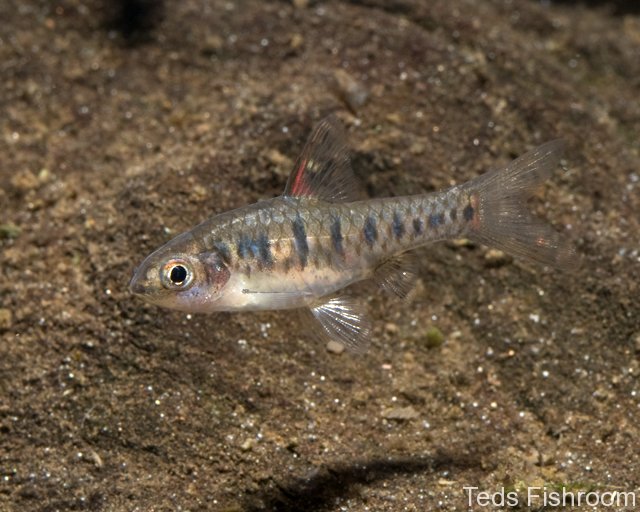
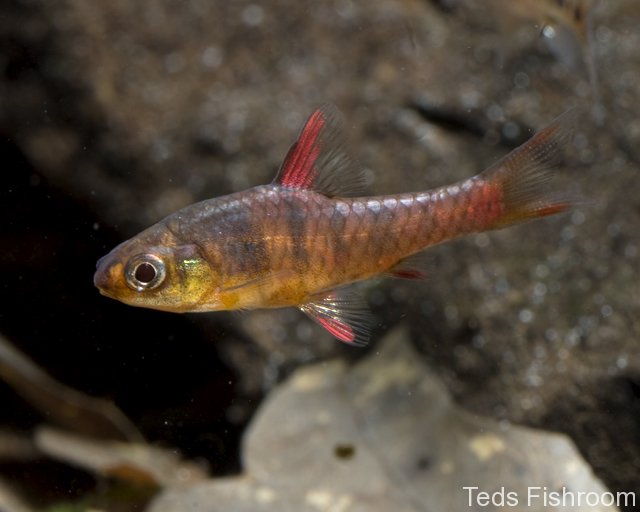
雄鱼通常更鲜艳,繁殖状态下尤为突出;雌鱼颜色较淡,身体更厚实。
繁殖
繁殖观察显示,每年 3–6 月及 9–11 月为主要产卵期,人工繁殖后代也保持这种季节性。期间会连续少量散卵,不照顾后代,成熟水草缸中可能自然出现鱼苗。
为提高成活率,可把调养好的一对亲鱼缓慢转入独立环境,布置沉底产卵拖把或莫丝、少量落叶,并保持轻缓过滤。合适条件下常在傍晚产卵,植物也可让雌鱼避开雄鱼纠缠。亲鱼是否吃卵尚不清楚。
出现自由游动的鱼苗后移走成鱼。幼鱼最初依靠卵黄,随后喂草履虫等微小食物,再逐步转向丰年虾无节幼体、微虫。初期换水应少量而谨慎。
图片
图片来自 SeriouslyFish,版权归各摄影者所有。
English
Overview
A small, retiring African barb, 'Barbus' jae suits quiet aquariums with soft water and abundant cover. Local populations differ substantially in markings and breeding color. Keep known collection forms separate so that captive breeding preserves their provenance.
Distribution & habitat
The range includes Cameroon, Equatorial Guinea, Gabon, Republic of Congo, and Democratic Republic of Congo. Even different locations within Cameroon's Nyong drainage produce males whose spawning red may cover either most of the body or mainly its rear half.
Shallow forest streams and swamps provide slow water, dense bankside vegetation, and accumulations of leaves and branches. Canopy shade and decaying plants create dim, brown-stained water that is cool, soft, and acidic.
Aquarium setup
Allow at least a 45 by 30 cm footprint. Sand, roots, and leaves create shaded refuges; microorganisms on the leaves can supplement fry nutrition. Tannin-colored water helps reveal the fish's colors.
Use floating cover and plants suited to weak illumination, with gentle filtration. Introduce fish only after the biological system is established. Abrupt chemistry changes and alkaline conditions are unsuitable.
Diet & feeding
Insect larvae and small crustaceans are considered likely natural foods, rather than a fully confirmed wild diet. Suitable dry products are accepted, but daily small live or frozen foods, including water fleas and brine shrimp, provide useful conditioning and variety.
Behaviour & compatibility
Large or busy tankmates may intimidate the fish and dominate feeding. Choose small, peaceful companions and maintain at least eight conspecifics. Male ranking makes broken sight lines and accessible retreats important.
Too little space, isolation, or inadequate group numbers can produce withdrawal and persistent bullying of weaker individuals. Do not combine locality forms for breeding.
Sexual dimorphism
Males are more vividly colored, particularly when reproductively active. Females usually look duller and fuller-bodied.
Breeding
Breeding observations identify March–June and September–November as the principal seasons, a pattern retained by captive-bred fish. Small quantities of eggs are scattered repeatedly without parental care. Some fry may survive spontaneously in mature planted surroundings.
For more controlled production, gradually transfer a conditioned pair to a quiet setup with sinking mops or moss, leaves, and gentle filtration. Evening spawning may follow. Vegetation also shelters the female from persistent courtship. Whether adults eat the eggs is unresolved.
Remove the pair once swimming fry appear. Following early yolk use, provide microscopic foods such as paramecia, later moving to brine-shrimp nauplii or microworms. Begin water changes cautiously and keep them small.
来源
- https://www.seriouslyfish.com/species/barbus-jae(抓取于 2026-10-10)
barbus-jae · 文件: data/species/barbus-jae.md · 状态: 草稿