'Barbus' hulstaerti · African Butterfly Barb
概要
| 字段 | 值 |
|---|---|
| 类别 | 鱼 |
| 学名 | 'Barbus' hulstaerti |
| 分类 | 鲤形目 Cypriniformes › 鲤科 Cyprinidae › 'Barbus' |
| 水体 | 淡水 |
| 原产地 | 刚果民主共和国 |
| 成体体长 | 3.5 cm |
| 饲养难度 | 中等 |
| 最小水体 | 41 L |
| 最小缸长 | 45 cm |
| 群居方式 | 群游 |
| 水流偏好 | 低 |
| 外部数据 | seriouslyfish barbus-hulstaerti |
| 食性 | 肉食 |
| 繁殖方式 | 散卵 |
水质参数
| 参数 | 耐受范围 | 最适范围 | 单位 |
|---|---|---|---|
| 水温 | 17–24 | — | °C |
| pH | 5–6.5 | — | — |
| 总硬度 | 1–5 | — | dGH |
概述
'Barbus' hulstaerti 是刚果盆地的小型鲤科鱼,性情胆怯,在阴暗、柔和水流的软水环境中更能表现体色。它需要同种伙伴,也需要足够遮挡让弱势个体避开雄鱼间的追逐。
分布与栖息地
特有于刚果民主共和国,已确认产地集中在刚果河主河道以南、以东的赤道雨林区,包括蒙博约河、楚阿帕河及马林加河支流等。不同产地的颜色和斑纹可能有差异,已知来源的个体宜保留产地标签,避免混杂繁殖血统。
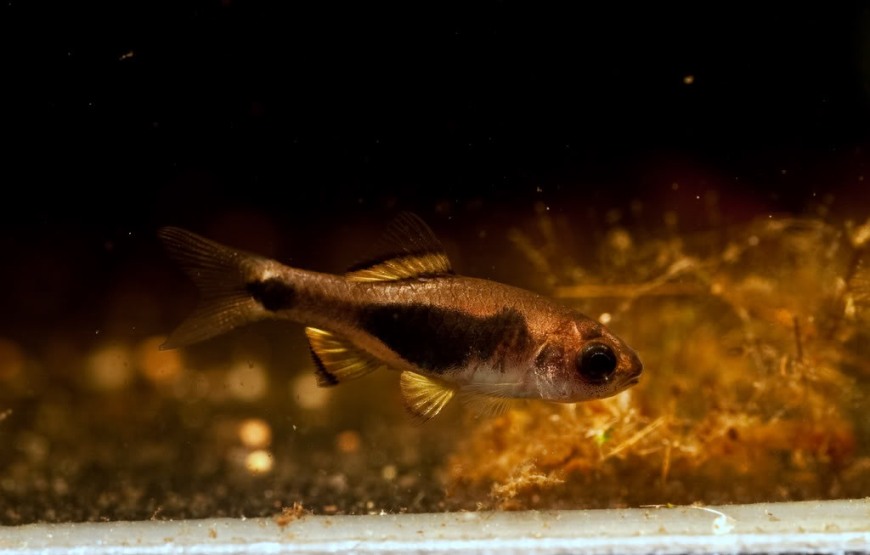
栖息在浅而缓流的雨林溪流和沼泽,岸边植被茂密,底部散布落叶、枝条。林冠遮光,腐殖质把柔软、偏酸而较凉的水染成褐色。
饲养环境
缸底至少 45 × 30 cm,细砂、沉木根枝和干燥落叶可组成遮阴环境。落叶表面的微生物还能给鱼苗提供补充食物。耐阴水草配合浮水植物,照明保持柔和,过滤水流不宜强烈。
必须使用成熟的过滤系统,避免水质骤变和偏碱性条件。带单宁的水通常能使体色更鲜明。
食性与喂食
野生个体主要吃水生昆虫幼虫及微小甲壳动物。可接受适口干粮,但应每天搭配小型活饵或冷冻饵料,如水蚤、丰年虾,帮助维持体况及繁殖状态。
习性与混养
大鱼或过分活跃的伙伴容易让它退缩、抢不到食物,宜选择同样小型而温和的鱼。建议至少 8 尾,并以植物和枝根打断视线。
其群居较松散,雄鱼会建立等级;单养、群体过小或空间拥挤,都可能让弱势鱼长期受压制。
雌雄区分
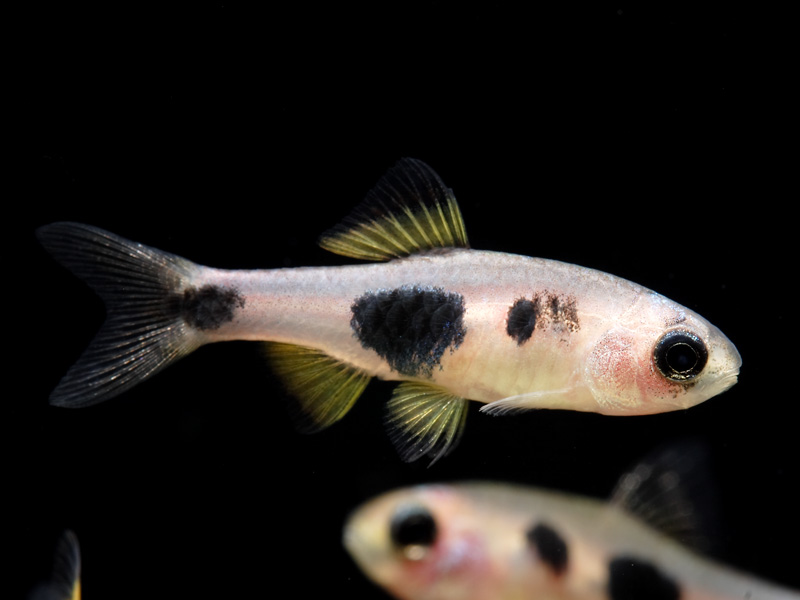
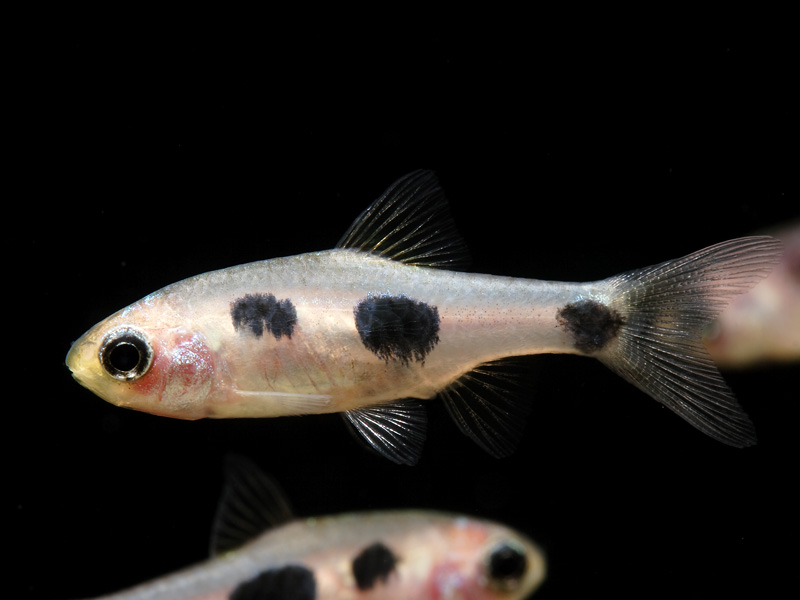
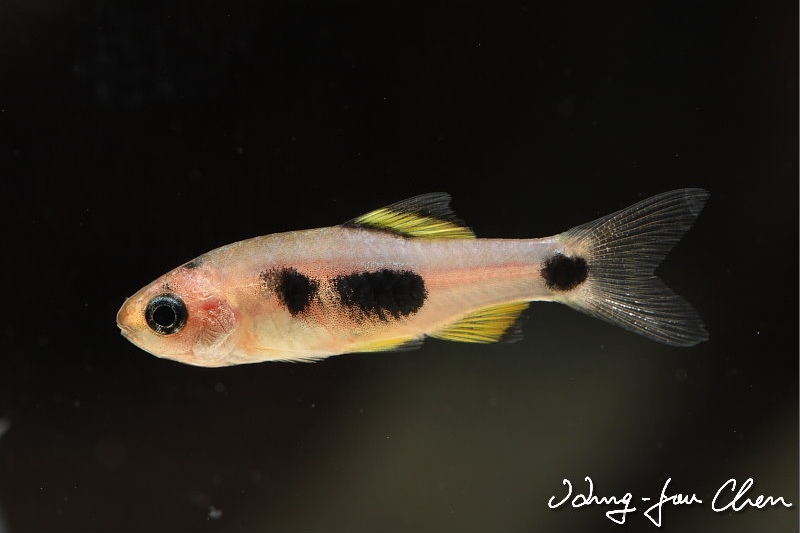
雄鱼颜色更鲜艳,繁殖时尤其明显。雌鱼体色较淡,鱼鳍缺少雄鱼的黄色,腹部也更圆厚。
繁殖
观察到的繁殖季集中在 3–6 月及 9–11 月,期间会持续少量散卵,没有亲鱼照护。状态良好的水草缸可能自然出现鱼苗。
受控繁殖可使用一对调养充分的亲鱼、沉底产卵拖把或莫丝,水流轻缓并提供落叶。缓慢过水后,合适条件下可能傍晚产卵;产卵材料也能给雌鱼躲避雄鱼纠缠。亲鱼是否吃卵尚不明确,不宜假定它们完全安全。
繁殖者观察到温度与后代性别比例有关:卵和鱼苗维持在 17–20 °C 时比例通常较均衡,较暖条件容易偏向雄鱼。这是饲养观察,不能保证每窝结果。
发现自由游动的鱼苗后移走亲鱼。幼鱼早期消耗卵黄,随后需要草履虫等微小食物,长大后转为丰年虾无节幼体或微虫;换水宜小量、谨慎,避免剧烈变化。
补充说明
金沙萨、马莱博池及加蓬的某些旧记录尚未确认,不应当成可靠分布。相近外观的其他非洲鲃类也需要分别识别,不能只按颜色或销售名称认定产地。
图片
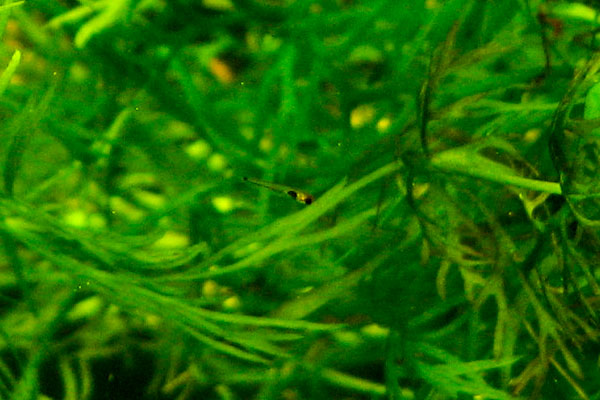
图片来自 SeriouslyFish,版权归各摄影者所有。
English
Overview
A small Congo-basin cyprinid, 'Barbus' hulstaerti shows best in shaded, soft-water surroundings with gentle circulation. Its retiring temperament requires careful companion selection, while male rank disputes make cover important even within a suitable group.
Distribution & habitat
Confirmed records are restricted to Democratic Republic of Congo, in equatorial rainforest south and east of the main Congo channel. Localities include the Momboyo, Tshuapa, and tributaries of the Maringa. Local differences in pattern and color make provenance labels useful for keeping breeding lines distinct.
Shallow forest streams and swamps have slow water, thick marginal growth, and bottoms scattered with leaves and woody debris. Canopy shade and decomposing vegetation produce dim, brown-stained conditions with cool, very soft, acidic water.
Aquarium setup
Use at least a 45 by 30 cm footprint. Sand, branching wood, and dried leaves create shaded retreats. Microbial growth on decaying leaves supplies supplementary food for young fish. Shade-tolerant plants and floating vegetation help soften the light.
Keep filtration gentle and biologically mature. Sudden chemistry changes and alkaline conditions are unsuitable. Tannin staining commonly improves the intensity of the fish's colors.
Diet & feeding
Examination of wild fish found aquatic insect larvae and minute crustaceans to be the principal foods. Appropriately sized dry foods are accepted, but daily small live or frozen offerings, including water fleas and brine shrimp, provide useful variety and conditioning.
Behaviour & compatibility
Larger or boisterous neighbors can intimidate these fish or monopolize food. Select small, peaceful companions and keep at least eight conspecifics with abundant interrupted sight lines.
The loose social group contains a male hierarchy. Isolation, insufficient numbers, or cramped housing can leave subordinate individuals withdrawn or persistently harassed.
Sexual dimorphism
Males are more strongly colored, particularly in breeding condition. Females have duller bodies, fuller abdomens, and lack the yellow fin coloration of males.
Breeding
Recorded breeding seasons run from March through June and September through November. During these periods, small batches of scattered eggs may be produced repeatedly without parental care. Some fry can survive unaided in a well-established planted aquarium.
For controlled breeding, introduce a conditioned pair gradually into a quiet setup containing sinking mops or moss and some leaves. Spawning may occur in the evening. The same vegetation gives the female somewhere to escape persistent courtship. Egg predation by the adults remains uncertain.
Breeders have observed more balanced offspring sex ratios when eggs and fry are kept at 17–20 °C; warmer rearing conditions tend to produce more males. This observation does not guarantee the outcome of an individual brood.
Remove the adults when swimming fry appear. After initial yolk use, the young require microscopic foods such as paramecia before they can handle brine-shrimp nauplii or microworms. Introduce water changes cautiously and in small amounts.
Notes
Historical records near Kinshasa, Pool Malebo, and in Gabon remain unconfirmed. Similar-looking African barbs should be identified individually rather than assigned a locality solely from color or a sales label.
来源
- https://www.seriouslyfish.com/species/barbus-hulstaerti(抓取于 2026-10-10)
barbus-hulstaerti · 文件: data/species/barbus-hulstaerti.md · 状态: 草稿