'Barbus' holotaenia · Spotscale Barb
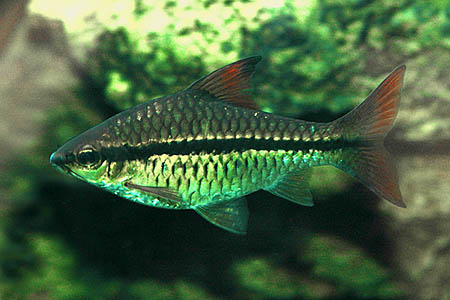
概要
| 字段 | 值 |
|---|---|
| 类别 | 鱼 |
| 学名 | 'Barbus' holotaenia |
| 分类 | 鲤形目 Cypriniformes › 鲤科 Cyprinidae › 'Barbus' |
| 水体 | 淡水 |
| 原产地 | 安哥拉、喀麦隆、刚果民主共和国、加蓬 |
| 成体体长 | 12 cm |
| 饲养难度 | 中等 |
| 最小水体 | 243 L |
| 最小缸长 | 120 cm |
| 群居方式 | 群游 |
| 外部数据 | seriouslyfish barbus-holotaenia |
| 食性 | 肉食 |
| 特征 | 吃虾: 是 |
水质参数
| 参数 | 耐受范围 | 最适范围 | 单位 |
|---|---|---|---|
| 水温 | 24–30 | — | °C |
| pH | 6–7 | — | — |
| 总硬度 | 2–8 | — | dGH |
概述
'Barbus' holotaenia 是非洲中西部河流中的活跃群居鱼,需要宽裕空间、清洁富氧的水和同种伙伴。它在野外会随季节摄食不同动物,人工饲养不宜长期只给干粮。
分布与栖息地
主要分布在奥果韦河与刚果河水系,在刚果民主共和国从东部伊图里河到西部卢基河都有记录,也见于加蓬、喀麦隆南部及安哥拉北部飞地卡宾达。刚果共和国马夸、韦索附近亦有记录。
它似乎主要生活在河流中;分布虽广,各地具体微生境并没有同样充分的记录。
饲养环境
至少提供 120 × 45 cm 的底面积。保持水体清洁、充足溶氧和适度水流,使用光滑石块、根枝与水草搭建有掩护的环境。较深色底砂配合良好照明有助于显色,过于空旷的缸会使体色显得暗淡。
食性与喂食
野外胃含物研究记录:雨季以底栖及落水昆虫为主,旱季则摄食小虾和其他鱼的鳞片。人工饲养宜以适口活饵、冷冻饵料为主要部分,搭配多样食物,避免完全依赖干粮。
吃鳞行为在少数混养观察中没有出现,可能与食物短缺有关,但这一解释仍属推测。混养后应留意其他鱼的体表状态。
习性与混养
至少饲养 8–10 尾,同种群体能减轻紧张,也让等级互动主要发生在群体内部。伙伴应性情温和、体型足够大,并能适应它的活跃程度;太小或特别胆怯的鱼不合适。
雌雄区分
雄鱼预计比雌鱼更鲜艳、纤细且略小,这些差异尚不宜作为确定无疑的鉴别标准。
补充说明
人工繁殖经验仍不足,近缘鱼的繁殖方法只能作为探索方向。其与某些洞穴鱼的亲缘关系曾有猜测,不能据此推定本种的水层或特殊饲养需求。
图片
图片来自 SeriouslyFish,版权归各摄影者所有。
English
Overview
An active, social river fish from central western Africa, 'Barbus' holotaenia requires room, oxygen-rich water, and companions of its own kind. Its animal diet changes seasonally, and captive feeding should not depend entirely on dry products.
Distribution & habitat
The main range covers the Ogooué and Congo drainage systems. Records extend across Democratic Republic of Congo, from the Ituri in the east to the Luki basin in the west, as well as Gabon, southern Cameroon, and Angola's northern Cabinda enclave. Makoua and Ouesso provide records for Republic of Congo.
It appears primarily riverine. Its broad distribution does not mean that detailed habitat information is available for every locality.
Aquarium setup
Allow a footprint of at least 120 by 45 cm. Maintain clean water, high oxygen availability, and some current. Smooth stones, tangled roots, and plants provide a suitable setting. A darker bottom under good lighting helps show the colors; extremely bare surroundings can leave fish looking pale.
Diet & feeding
A field study found bottom-dwelling and terrestrial insects prominent during the wet season, with small shrimp and fish scales taken during the dry season. Offer a varied menu dominated by suitable live or frozen foods. Exclusive reliance on dried foods has apparently caused problems.
Scale feeding was not observed in a few captive community experiences. Food shortage has been proposed as a trigger, but this remains an explanation rather than an established rule; monitor companions for damage.
Behaviour & compatibility
Keep at least eight to ten. Social numbers reduce nervousness, and rank-related interactions tend to remain within the group. Choose peaceful fish large enough to avoid being regarded as food and confident enough to cope with an energetic neighbor.
Sexual dimorphism
Brighter coloration, a slimmer build, and slightly smaller size are expected in males. These remain proposed tendencies rather than firmly established sexing criteria.
Notes
Captive breeding information is limited, so methods used for related fish should be treated as experimental starting points. Speculation about relationships with cave fishes does not establish a swimming layer or unusual care requirement for this species.
来源
- https://www.seriouslyfish.com/species/barbus-holotaenia(抓取于 2026-10-10)
barbus-holotaenia · 文件: data/species/barbus-holotaenia.md · 状态: 草稿