'Barbus' fasciolatus · African Banded Barb
概要
| 字段 | 值 |
|---|---|
| 类别 | 鱼 |
| 学名 | 'Barbus' fasciolatus |
| 分类 | 鲤形目 Cypriniformes › 鲤科 Cyprinidae › 'Barbus' |
| 水体 | 淡水 |
| 原产地 | 安哥拉、博茨瓦纳、刚果民主共和国、纳米比亚、赞比亚、津巴布韦 |
| 成体体长 | 6 cm |
| 饲养难度 | 入门 |
| 最小水体 | 68 L |
| 最小缸长 | 75 cm |
| 群居方式 | 群游 |
| 性情 | 温和 |
| 水流偏好 | 低 |
| 外部数据 | seriouslyfish barbus-fasciolatus |
| 食性 | 杂食 |
| 繁殖方式 | 产卵 |
水质参数
| 参数 | 耐受范围 | 最适范围 | 单位 |
|---|---|---|---|
| 水温 | 20–26 | — | °C |
| pH | 5–6.5 | — | — |
| 总硬度 | 1–12 | — | dGH |
概述
'Barbus' fasciolatus 体侧有蓝黑色竖带,在较暗、带单宁染色的水中能表现出鲜明体色。它总体温和,需要同种伙伴,但雄鱼之间存在等级关系,水草和空间能帮助弱势鱼躲开追逐。
分布与栖息地
广布于非洲中南部,记录涉及安哥拉、纳米比亚、博茨瓦纳、赞比亚、津巴布韦及刚果民主共和国。已知水域包括库内内河、奥卡万戈河系、卡富埃河、卡里巴湖,以及姆韦鲁湖和卢阿普拉河等。
常见于湖湾、浅水和洪泛平原潟湖,也生活在雨林溪河中。典型环境水流缓慢、植被浓密而溶氧良好,部分水域因腐殖质呈深褐色。据观察,它可能在最明亮的白天藏于植物间,清晨及傍晚前后出来取食。
饲养环境
一群鱼至少需要约 75 × 30 cm 的底面积,过于狭小会加重同种冲突。使用细砂、沉木和根枝形成阴影,加入适量干燥落叶,为鱼和鱼苗提供掩护及附着微生物。
照明较暗,水草可选耐阴种类,并用浮水植物进一步遮光。过滤保持轻缓,注意成熟系统和稳定水质,尤其刚进口的个体不宜投入新建缸。
食性与喂食
天然为杂食性,摄食小型水生无脊椎动物、微生物和藻类。干粮可与丰年虾、水蚤、红虫等活饵或冷冻饵交替使用,并偶尔提供含植物成分的饲料或烫熟菠菜。
习性与混养
可搭配性情温和、体型相近的鱼,避免明显更大或过于活跃的同伴。建议至少 8 尾,布置出被遮挡的视线和退避处。它属于松散群居,不能把需要伙伴误解为可以密集摆放;单养、群体过小或拥挤都可能加重退缩和欺压。
雌雄区分
雄鱼在繁殖或展示时颜色尤其浓烈。雌鱼通常稍大,抱卵时腹部圆鼓,露出的银色腹部区域更多,因此整体看上去较浅。
繁殖
成熟水草缸中可能自然出现鱼苗,也有较受控的人工繁殖方法。可在温度 24–26 °C、pH 6–6.5 的软水中,用弱光、浮水植物和大量细叶产卵材料安排一对调养充分的亲鱼,水妖精提供轻缓过滤。
产卵可能发生在植物间,一次可有数百粒卵。亲鱼可能吃卵,产后应移走。卵通常不到 48 小时孵化,鱼苗在约一周内自由游动,最初需要草履虫等级的微小食物,随后再转丰年虾无节幼体或微虫。
补充说明
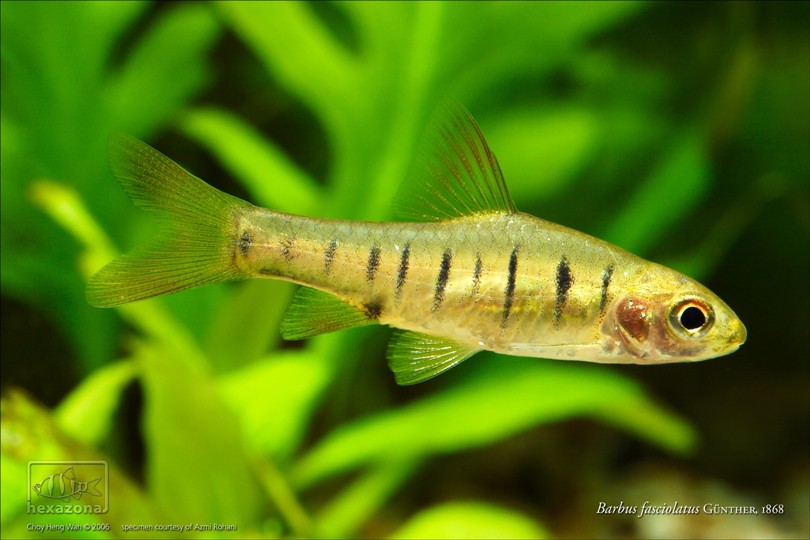
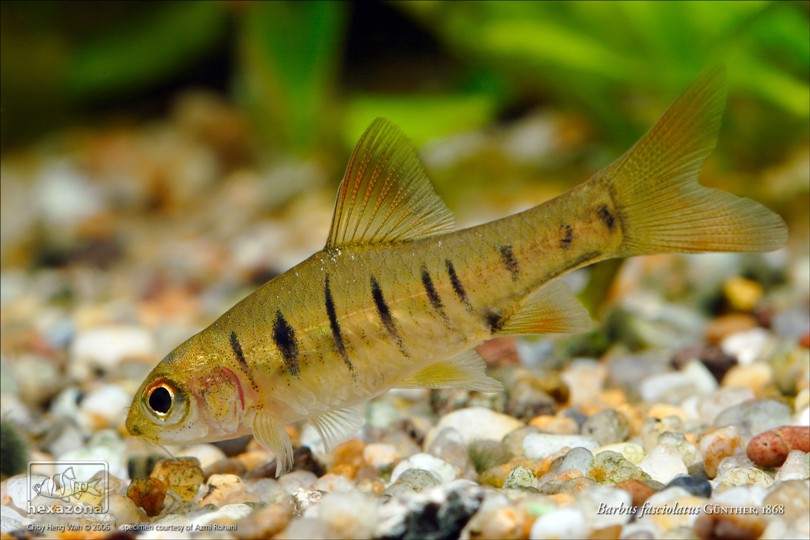
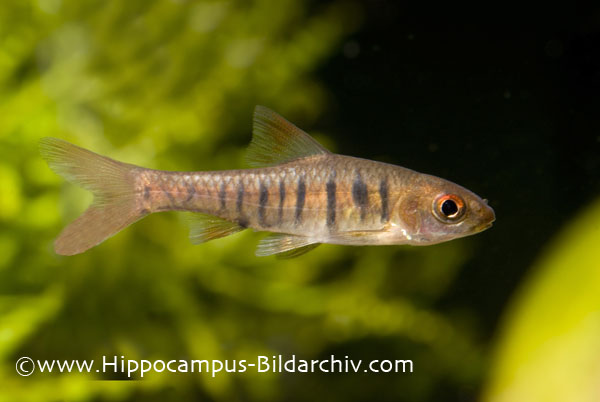
本种曾长期以其他学名出售,体侧约 10–15 条蓝黑竖带、尾柄处深色斑等特征有助于识别。不同旧属名的使用反映分类历史,不应据此更改个体身份或假定所有非洲鲃类的饲养方法相同。
图片
图片来自 SeriouslyFish,版权归各摄影者所有。
English
Overview
Blue-black vertical markings and strong color distinguish well-conditioned 'Barbus' fasciolatus. This generally peaceful African barb benefits from conspecific company, while male hierarchy requires room and cover for subordinate fish to retreat.
Distribution & habitat
Records span Angola, Namibia, Botswana, Zambia, Zimbabwe, and Democratic Republic of Congo. Occupied waters include the Cunene, Okavango, Kafue, Kariba, Mweru, and Luapula systems.
Lake bays, shallows, and floodplain lagoons are common habitats, alongside rainforest streams. Slow flow, dense vegetation, and good oxygenation are typical. Humic staining darkens many sites. Fish apparently shelter during the brightest hours and emerge to feed in the morning or late afternoon.
Aquarium setup
A group needs at least about a 75 by 30 cm footprint; restricted quarters intensify disputes. Sand, roots, branches, and dried leaves provide shade and refuges. Microorganisms developing in the leaves can supplement fry nutrition.
Use low light, floating cover, and suitable shade-tolerant plants. Gentle filtration is adequate. Stable, mature conditions are particularly useful for newly imported fish, which can be delicate during acclimation.
Diet & feeding
The natural omnivorous diet includes small aquatic invertebrates, microorganisms, and algae. Combine quality dry foods with live or frozen brine shrimp, water fleas, and bloodworms. Occasional vegetable-based foods or softened spinach provide further variety.
Behaviour & compatibility
Choose peaceful companions of comparable size rather than much larger or boisterous fish. Keep at least eight with interrupted sight lines and usable retreats. Loose shoaling does not eliminate rank disputes, and isolation, tiny groups, or cramped accommodation may leave weaker fish under persistent pressure.
Sexual dimorphism
Males become more intensely colored during breeding and displays. Females grow slightly larger and develop rounded bellies when carrying eggs; more exposed silver abdominal scales can make them look paler overall.
Breeding
Occasional fry may appear in an established planted aquarium. A more controlled method uses a conditioned pair in a quiet, dim setting with abundant fine plants, floating cover, and gentle filtration. Soft water around pH 6.0–6.5 and 24–26 °C has been used.
Several hundred eggs may be deposited, probably among vegetation. Remove adults after spawning because they may consume eggs. Hatching generally takes less than 48 hours, with free swimming within about a week. Start the tiny fry on infusoria-sized foods before progressing to brine-shrimp nauplii or microworms.
Notes
Historical trade names have differed from the name used here. Approximately ten to fifteen dark vertical bars, including a tail-base marking, help characterize the fish. The history of broad barb classifications should not be mistaken for evidence that all African forms share identical care requirements.
来源
- https://www.seriouslyfish.com/species/barbus-fasciolatus(抓取于 2026-10-10)
barbus-fasciolatus · 文件: data/species/barbus-fasciolatus.md · 状态: 草稿