'Barbus' candens
概要
| 字段 | 值 |
|---|---|
| 类别 | 鱼 |
| 学名 | 'Barbus' candens |
| 分类 | 鲤形目 Cypriniformes › 鲤科 Cyprinidae › 'Barbus' |
| 水体 | 淡水 |
| 原产地 | 刚果民主共和国 |
| 成体体长 | 3.5 cm |
| 饲养难度 | 中等 |
| 最小水体 | 41 L |
| 最小缸长 | 45 cm |
| 群居方式 | 群游 |
| 水流偏好 | 低 |
| 外部数据 | seriouslyfish barbus-candens |
| 繁殖方式 | 散卵 |
水质参数
| 参数 | 耐受范围 | 最适范围 | 单位 |
|---|---|---|---|
| 水温 | 17–24 | — | °C |
| pH | 5–7 | — | — |
| 总硬度 | 1–5 | — | dGH |
概述
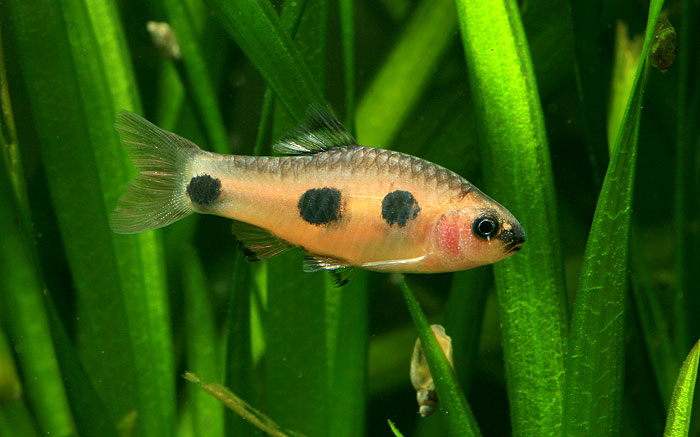
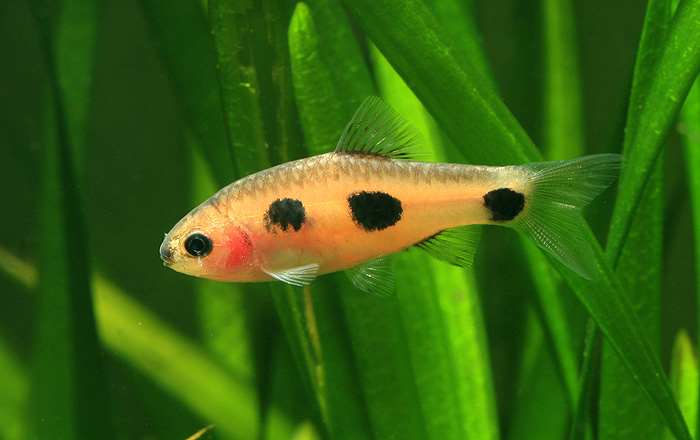
'Barbus' candens 是来自刚果盆地的小型非洲鲃类,喜欢阴暗、安静的软水环境。它胆怯且不善争食,虽然需要同种伙伴,却不是整齐群游的鱼,布置时还要给弱势个体留下退避路线。
分布与栖息地
主要记录位于刚果民主共和国北部和中部,尤以刚果河主河道以北、利萨拉至基桑加尼一带为中心,也有一些较南方记录。部分远离主分布区的采集地点可能涉及误认;有明确采集地的鱼应保留产地标签,避免不同血系混杂。
典型环境是浅而缓慢的雨林溪流和沼泽,岸边植被浓密,底部有落叶、枝条及沉木。腐殖质使水呈褐色,林冠遮光,水体通常偏凉、很软且呈酸性。
饲养环境
缸底至少 45 × 30 cm,可用细砂、沉木和根枝形成多处阴影,加入适量干燥落叶。落叶分解形成的微生物可给鱼苗补充食物,带单宁染色的水也有利于表现体色。
使用弱光、浮水植物和耐阴水草,过滤不宜过强,缓慢运转的水妖精即可。需要成熟且稳定的水族环境,不要放入尚未建立生物过滤或水化学容易波动的新缸。
食性与喂食
可以接受颗粒大小合适的干粮,但不宜单一投喂。每天搭配水蚤、丰年虾等小型活饵或冷冻饵,有助于体色和繁殖状态。
习性与混养
选择同样小型、温和的伙伴,避免大型或过于活跃的鱼压过它抢食。建议至少 8 尾,但仍要留出足够空间和遮挡,让弱者能避开优势雄鱼。单尾、太小的群体或拥挤空间都可能加重退缩和持续欺压。
雌雄区分
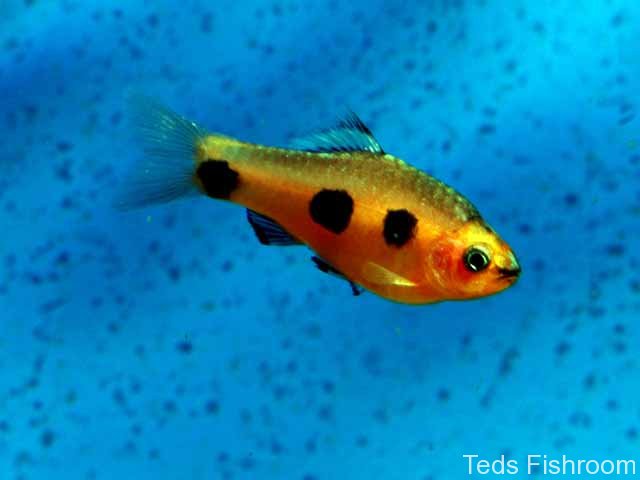
雄鱼颜色更鲜艳,背鳍、腹鳍和臀鳍带深色条状斑,腹鳍与臀鳍还有红色。雌鱼体形稍厚,鳍近乎透明,抱卵时腹部更饱满。
繁殖
有本种人工繁殖记录,属于不护卵的连续散卵鱼,状态好时可每天产少量卵。成熟、遮蔽充足的缸中可能自然出现少量鱼苗;提高存活量时,可用一对充分调养的亲鱼和下沉产卵拖把、莫丝及落叶安排独立繁殖环境。
一项成功记录使用 24 °C。应缓慢转移亲鱼,产卵材料也要给雌鱼提供避开追逐的掩护。群体中未参与产卵的鱼会吃其他鱼的卵,不能以亲鱼不主动搜卵就认定所有卵都安全。
首次出现自由游动鱼苗可能需约 10–12 天,此时移走亲鱼。鱼苗先依靠卵黄,之后可尝试微虫,再转丰年虾无节幼体。早期对水化学变化敏感,换水宜谨慎、少量,避免突然改变环境。
补充说明
近似种在体色、深色斑块大小和雄鱼鳍色上不同,产地信息能辅助辨认。学名前带引号的属名反映历史分类尚待厘清,不应把旧的广义鲃属划分当作已经确认的亲缘关系。
图片
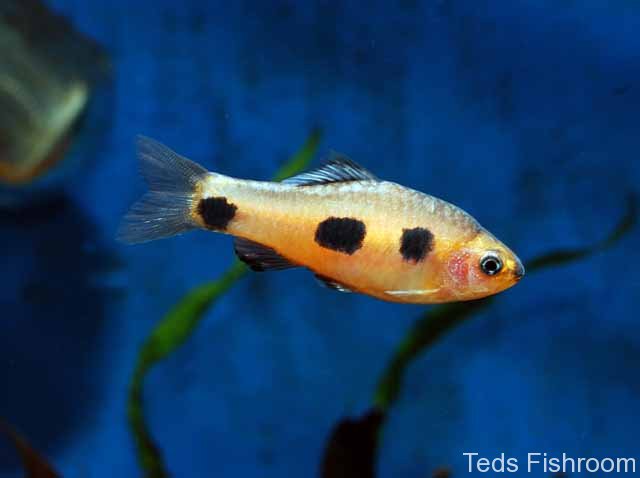
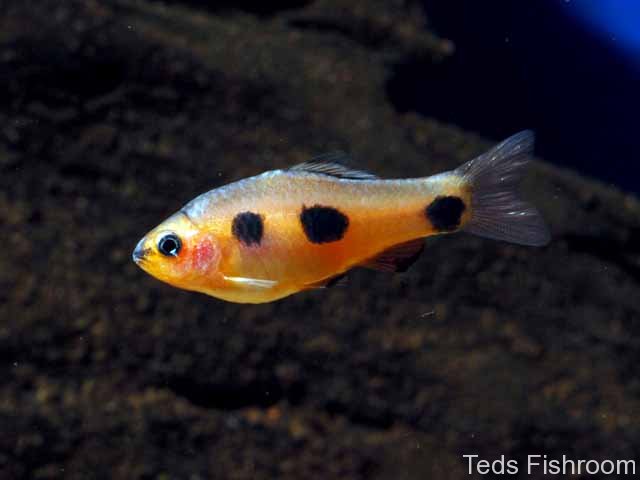
图片来自 SeriouslyFish,版权归各摄影者所有。
English
Overview
A shy Congo-basin barb, 'Barbus' candens needs a quiet, shaded aquarium with soft water and reliable feeding access. Conspecific company is useful, but male rank disputes require refuges. It forms loose social groups rather than a tightly coordinated school.
Distribution & habitat
The principal range lies in northern and central Democratic Republic of Congo, especially north of the main Congo channel between Lisala and Kisangani. Some additional southern records exist. More distant reports may involve misidentification, making locality labels valuable for preserving separate stocks.
Shallow rainforest streams and swamps provide slow, cool, acidic water stained brown by decaying vegetation. Leaves, branches, and roots cover the bottom beneath dense shade.
Aquarium setup
Allow at least a 45 by 30 cm footprint. Sand, wood, roots, and dried leaves create shaded refuges. Microorganisms developing among the leaves can supplement fry feeding, while tannin-stained water encourages stronger coloration.
Use dim light, floating cover, and shade-tolerant plants. Gentle sponge filtration is sufficient; strong current is inappropriate. Introduce fish only to a mature, stable aquarium because abrupt chemical changes are poorly tolerated.
Diet & feeding
Appropriately small dry foods are accepted but should be supplemented daily with small live or frozen prey such as water fleas and brine shrimp. Dietary variety supports coloration and breeding condition.
Behaviour & compatibility
Choose comparably small, peaceful companions. Larger or boisterous fish readily intimidate it and monopolize food. Keep at least eight with sufficient space and interrupted sight lines for subordinate males to withdraw. Isolation, very small groups, and crowding can all worsen withdrawal or concentrated bullying.
Sexual dimorphism
Males are brighter, with dark markings in the dorsal, pelvic, and anal fins and additional red in the latter two. Females are heavier-bodied, especially when carrying eggs, and have nearly clear fins.
Breeding
Confirmed captive reproduction involves frequent small batches of scattered eggs without parental care. An established, well-furnished aquarium may yield occasional fry. For more controlled breeding, condition a pair and provide sinking mops, moss, and leaves in separate accommodation.
A successful account used 24 °C. Transfer adults gradually, and provide enough spawning material for the female to evade persistent attention. Nonspawning members of a group have been observed eating other fish's eggs, even though active searching by the breeding pair is uncertain.
The first freely moving young may appear after roughly ten to twelve days, when adults can be removed. Early nourishment comes from yolk; suitably small live foods such as microworms can follow, with brine-shrimp nauplii offered later. Avoid sudden water changes during the sensitive early period, introducing small changes cautiously.
Notes
Related forms differ in overall color, dark body markings, and male fin pigmentation. Collection data support identification. The quoted generic name reflects unresolved historical classification rather than a reason to assume that all fishes formerly called barbs are close relatives.
来源
- https://www.seriouslyfish.com/species/barbus-candens(抓取于 2026-10-10)
barbus-candens · 文件: data/species/barbus-candens.md · 状态: 草稿